Who Wrote The Necklace Short Story? Literary Roots of Diamond Trends
Discover who wrote The Necklace short story and how Guy de Maupassant's tale of a borrowed diamond still shapes modern necklace trends and styling.

The Literary Mystery: Who Wrote The Necklace Short Story?
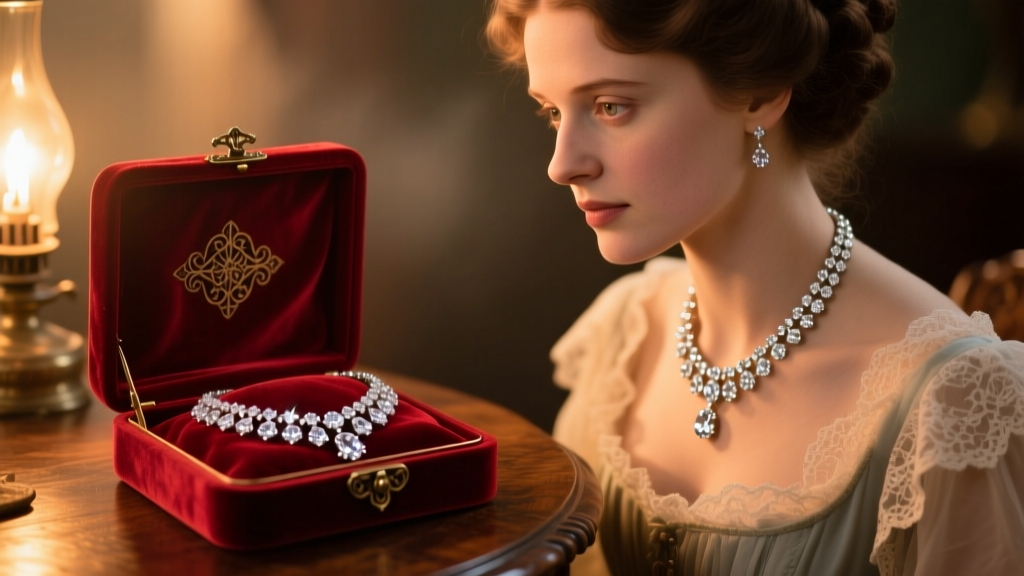
If you have ever found yourself asking who wrote the necklace short story, you are about to uncover one of the most devastating plot twists in literary history—and one that holds a profound mirror to the jewelry industry. The answer is French author Guy de Maupassant, who published La Parure (The Necklace) in 1884. The tale follows Mathilde Loisel, a woman who borrows what she believes to be a breathtaking diamond necklace from a wealthy friend, Madame Forestier, to attend a high-society ball. After losing the piece, Mathilde and her husband plunge into a decade of grueling poverty to replace it with a 36,000-franc diamond equivalent, only to discover years later that the original was merely "paste" (lead glass) worth 500 francs.
While literary scholars analyze the story as a critique of bourgeois vanity and the cruel irony of fate, jewelry historians and style analysts view it through a different lens. Maupassant’s masterpiece inadvertently documented the 19th-century obsession with diamond rivières, the deceptive brilliance of early simulants, and the psychological weight of the "statement necklace." Today, as we navigate the 2026 landscape of lab-grown diamonds and advanced simulants, the Mathilde Loisel archetype remains remarkably relevant to how we style, value, and wear high-impact neckwear.
Deconstructing the 1884 Diamond Rivière
To understand the gravity of Mathilde’s mistake, we must examine the exact style of necklace she borrowed. In 1880s Paris, a "superb diamond necklace" from a high-end jeweler would almost certainly be a rivière—a continuous strand of individually set diamonds of uniform or gradually tapering size. According to the Victoria & Albert Museum, the rivière was the ultimate status symbol of the late 19th century, designed to catch the flickering gaslight and early electric illumination of Parisian ballrooms.
The Collet Setting vs. The Modern Prong
Because Maupassant wrote the story in 1884, the diamonds in Madame Forestier’s necklace would have been secured in collet settings (early bezel or rub-over settings made of silver or silver-topped gold). The modern six-prong Tiffany setting was not patented until 1886. Collet settings used more metal, which slightly reduced the diamond's light return compared to modern prong-set tennis necklaces, but they offered superior security. A 15-to-20-carat total weight rivière in 1884 would easily command the 36,000 francs (roughly equivalent to $150,000 today) that ruined the Loisels.
The Metallurgy of Illusion: Silver-Topped Gold
To achieve the stark white brilliance required to mimic the fire of a diamond, 19th-century Parisian jewelers utilized a complex metallurgical technique known as "silver-topped gold." Pure yellow gold was found to cast a warm, unwanted reflection into the colorless stones, dulling their icy fire. However, solid silver tarnished rapidly against the skin and ruined the silk gowns of the Parisian elite. The solution was to forge the structural mount in 18-karat yellow gold, and then fuse a thin veneer of sterling silver over the top surface. Over a century later, this technique is entirely obsolete, replaced by rhodium-plated 18k white gold and platinum alloys (specifically 950 Platinum mixed with 5% ruthenium for hardness). Understanding this historical context highlights just how far jewelry engineering has come since Maupassant first penned his tragic tale.
The Illusion of Carat: Paste vs. Modern Simulants
The tragic irony of The Necklace hinges on the visual similarity between diamonds and "paste." In the 19th century, paste was a high-lead-content glass that mimicked the high refractive index of a diamond. However, it was soft (Mohs 5-6) and prone to scratching. Today, the Gemological Institute of America (GIA) notes that modern simulants and lab-grown stones have completely eradicated the "paste deception," offering consumers ethical, durable, and optically identical alternatives.
| Material | Era of Prominence | Mohs Hardness | Refractive Index | Avg. Cost per Carat (2026) |
|---|---|---|---|---|
| 19th-Century Paste (Lead Glass) | 1700s–1890s | 5.0 - 6.0 | 1.52 - 1.70 | $5 - $20 (Antique value) |
| Cubic Zirconia (CZ) | 1970s–Present | 8.0 - 8.5 | 2.15 - 2.18 | $1 - $15 |
| Moissanite | 1990s–Present | 9.25 | 2.65 (Doubly Refractive) | $50 - $150 |
| Lab-Grown Diamond | 2010s–Present | 10.0 | 2.42 (Identical to Mined) | $150 - $400 |
Had Mathilde Loisel been living in 2026, she could have replaced the lost necklace with a high-quality lab-grown diamond rivière for a fraction of the cost, or simply purchased a moissanite replica that would pass any visual inspection at a gala. The democratization of diamond optics means the "statement necklace" is no longer gated behind generational wealth.
How to Style a Statement Rivière Without the Tragic Irony
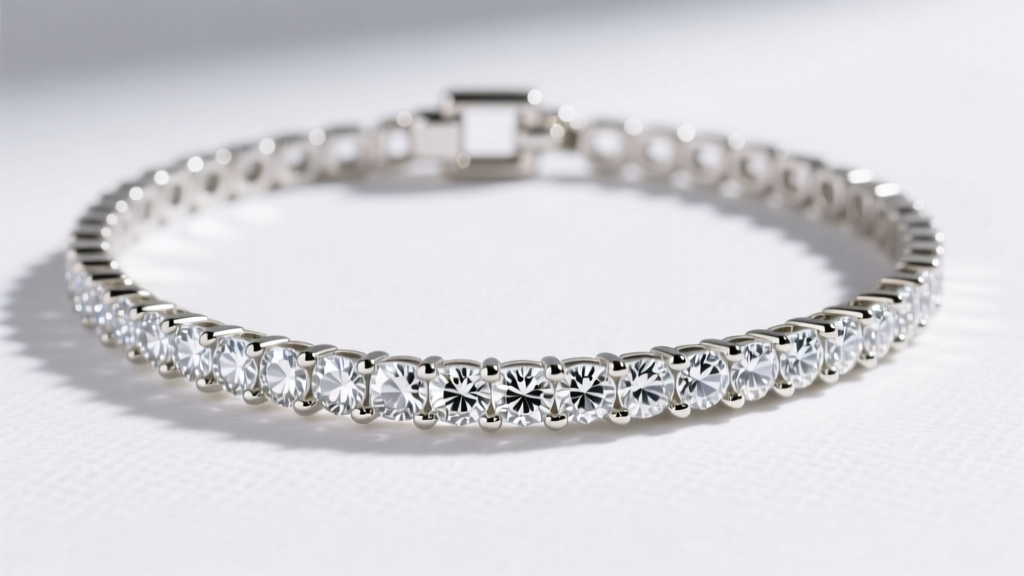
The modern descendant of Maupassant’s rivière is the diamond tennis necklace. While it remains a high-impact piece, contemporary styling rules dictate that it should be integrated into a curated, layered aesthetic rather than worn as a solitary, untouchable artifact. Here is how to style a 16-inch princess-length diamond or lab-diamond tennis necklace in 2026 without looking like you are trying too hard.
1. The Mixed-Metal Layering Technique
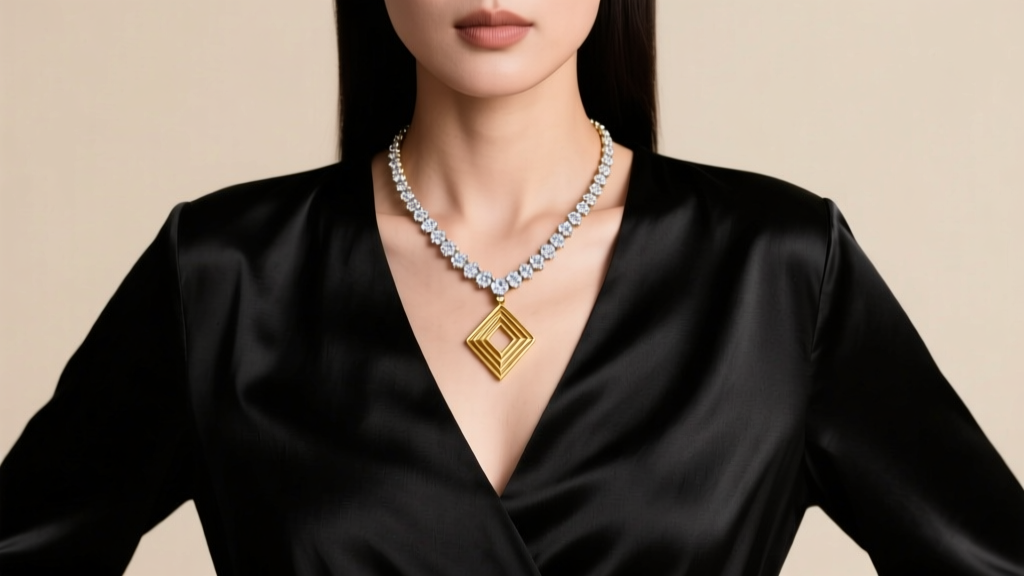
Contrast the icy brilliance of a white gold or platinum tennis necklace with the warmth of yellow gold. Pair your 16-inch diamond rivière with a 20-inch 14k yellow gold paperclip chain (2.5mm to 3.0mm gauge). The 4-inch drop creates a cascading effect that draws the eye downward, elongating the neck. Add a solid 18k gold pendant—such as a minimalist geometric disc or a vintage signet—to the longer chain to anchor the look.
2. Neckline Pairings for Maximum Impact
- The Deep V-Neck: A silk or satin V-neck blouse provides a seamless canvas that mirrors the geometric plunge of a princess-length necklace. The fabric's drape prevents the collet or prong settings from snagging.
- The Off-The-Shoulder Sweater: For autumn/winter styling, a chunky knit off-the-shoulder sweater exposes the collarbone, allowing a 15-inch choker-length rivière to sit flush against the skin, maximizing light return.
- The Structured Blazer: Worn over a simple white ribbed tank top, an unbuttoned tailored blazer frames the diamond strand perfectly, blending masculine tailoring with hyper-feminine brilliance.
- Avoid: High ruffled collars, intricate lace bodices, or heavy beading. These compete with the diamond's scintillation and risk damaging the delicate 18-gauge links of the tennis necklace chain.
3. Clasp Security: The Unsung Hero
Mathilde lost her necklace because 19th-century clasps were notoriously insecure, often relying on simple C-hooks or early barrel clasps. When investing in a modern tennis necklace (whether mined or lab-grown), always inspect the clasp hardware. Demand a hidden box clasp equipped with a figure-eight double safety catch. This mechanical redundancy ensures that even if the primary latch fails, the secondary wire catch will hold the 20-carat weight of the stones, saving you from a decade of metaphorical (or literal) poverty.
The Modern Mathilde: Jewelry Rentals and the Experience Economy
In 1884, borrowing a necklace was a perilous, high-stakes endeavor reserved for the desperate or the deeply connected. Today, the "Mathilde Loisel" scenario has been entirely disrupted by the luxury experience economy. Platforms like Vivrelle and various high-end consignment rental services allow consumers to borrow authenticated, insured diamond tennis necklaces and vintage rivières for a fraction of their retail value. A 15-carat lab-grown diamond rivière that retails for $6,000 can be rented for a weekend gala for under $150, complete with comprehensive insurance policies that cover accidental loss. This paradigm shift means the modern jewelry enthusiast can experience the psychological thrill of wearing a high-carat statement piece without assuming the catastrophic financial risk that doomed the Loisels. The anxiety of the "lost necklace" has been replaced by the convenience of a prepaid return label.
The Enduring Legacy of La Parure
So, who wrote the necklace short story? Guy de Maupassant did. But in a broader sense, the story was written by the enduring human fascination with adornment, status, and the illusion of wealth. As we analyze jewelry trends in 2026, the line between "real" and "replica" continues to blur, not through deception, but through technological triumph. Lab-grown diamonds and advanced moissanite allow us to reclaim the Mathilde Loisel fantasy without the devastating reality. By understanding the historical anatomy of the rivière and applying modern, layered styling techniques, we can wear the ultimate statement piece with confidence, irony, and impeccable taste.
For further reading on the history of literary jewelry and historical gemology, explore the archives at Project Gutenberg and the gemological databases of the GIA.


