Meaning of St Christopher Necklace: Symbolism, Metals & Wear Guide
Discover the meaning of St Christopher necklace pendants, exploring historical symbolism, ideal metal grades, chain gauges, and engraving techniques.

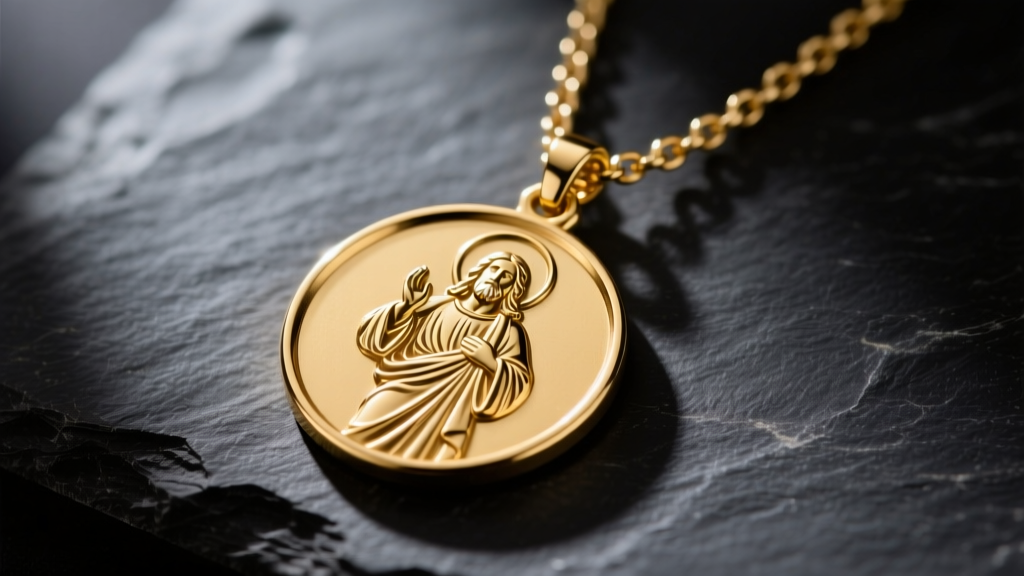
When exploring the meaning of St Christopher necklace pendants, most guides focus solely on the spiritual lore of the patron saint of travelers. However, as a piece of jewelry meant to be worn daily as a protective talisman, its true significance is deeply intertwined with its physical endurance. A protective amulet must survive the very journeys it is meant to safeguard. In 2026, understanding the intersection of historical iconography and modern metallurgical engineering is essential for selecting a St. Christopher medal that will outlast its wearer and become a genuine heirloom.
The Historical & Spiritual Meaning of St Christopher Necklace
The legend of Saint Christopher originates from early Christian apocrypha, detailing a giant who dedicated his life to carrying travelers across a treacherous river. According to Britannica, his most famous trial involved carrying a child who grew impossibly heavy, eventually revealing himself as the Christ child bearing the weight of the world. This narrative cemented Christopher as the ultimate protector of wayfarers, sailors, and commuters.
From a jewelry design perspective, this meaning dictates the structural requirements of the pendant. Because it is a talisman for travel and movement, the necklace is subjected to high kinetic stress, frequent contact with the skin, and exposure to diverse environmental elements. The spiritual meaning of the St. Christopher necklace is compromised if the physical artifact snaps, tarnishes beyond recognition, or suffers relief wear that erases the saint’s face. Therefore, material selection is not merely an aesthetic choice; it is a functional necessity.
Metallurgical Choices for Everyday Talismans
The metal you choose dictates the pendant’s lifespan, patina development, and structural integrity. According to the Gemological Institute of America (GIA), alloy composition directly impacts a metal's Mohs hardness and tensile strength. Below is a technical breakdown of the most common metals used for St. Christopher medals.
| Metal Grade | Alloy Composition | Mohs Hardness | Best Application | Failure Mode |
|---|---|---|---|---|
| 925 Sterling Silver | 92.5% Ag, 7.5% Cu | 2.5 - 3.0 | Budget-friendly daily wear | Copper sulfide tarnish, bail wear |
| 14k Yellow Gold | 58.5% Au, Cu/Ag/Zn | 3.5 - 4.0 | Lifetime heirloom, high friction | Surface scratching over decades |
| 18k Yellow Gold | 75.0% Au, Cu/Ag | 2.5 - 3.0 | High-end luxury, occasional wear | Relief flattening, bail deformation |
| Jeweler's Bronze | 90% Cu, 10% Sn | 3.0 | Vintage aesthetic, rugged wear | Verdigris oxidation, skin staining |
Why Sterling Silver Tarnishes (and How to Prevent It)
Sterling silver is the most popular choice for religious medals, but the 7.5% copper content required to give the silver structural rigidity is also its Achilles' heel. When copper reacts with sulfur compounds in the air and human sweat, it forms copper sulfide, resulting in a black tarnish. For a St. Christopher medal, deep recesses (like the folds of the saint's robes or the river water) will trap these compounds. To mitigate this, look for medals that have been treated with a micro-thin layer of rhodium plating (typically 0.75 to 1.0 microns thick), which acts as an inert barrier against oxidation without dulling the silver's natural luster.
Technical Specifications: Chains, Bails, and Medals
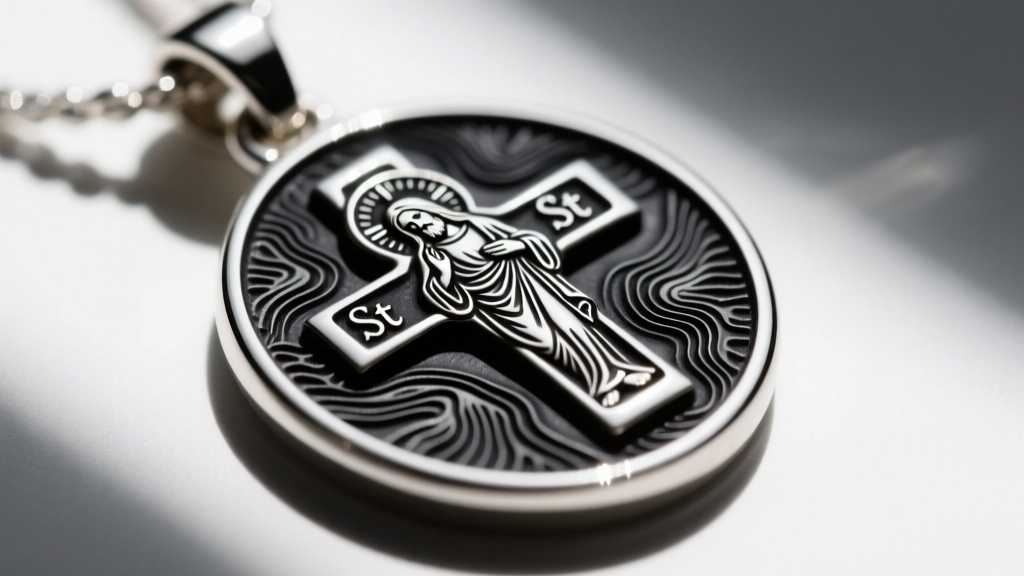
The meaning of St Christopher necklace jewelry is rooted in protection, yet the most common point of failure is not the medal itself, but the suspension system. A solid 15mm to 20mm die-struck bronze or gold medal can weigh between 4 and 8 grams. When subjected to the pendulum effect of walking or running, the dynamic load on the chain and bail can exceed 15 pounds of tensile stress.
- The Bail: Avoid hollow or folded sheet-metal bails. The friction from the jump ring will eventually saw through a thin bail hole. Opt for a solid cast bail or a heavy-duty soldered jump ring (minimum 18-gauge wire thickness).
- Cable Chains: While classic, standard cable chains have a single soldered seam per link. Under dynamic stress, the solder can fracture. They are not recommended for heavy medals.
- Rolo Chains: Featuring uniform, thick round or oval links with no soldered seams (if drawn from solid wire), rolo chains distribute stress evenly and are highly recommended for daily wear.
- Wheat (Spiga) Chains: Composed of four strands of interlocking oval links, wheat chains offer the highest tensile strength and flexibility, making them the premier choice for heavy, oversized St. Christopher medals.
For a standard 20mm medal, your chain should be a minimum of 1.5mm in width and feature a lobster clasp with a forged, rather than cast, internal spring mechanism to prevent accidental unclasping during travel.
Engraving & Iconography: Capturing the Saint
The visual representation of St. Christopher carrying the Christ child is achieved through distinct manufacturing techniques, each affecting the longevity of the image.
Die-Striking vs. Laser Engraving
Mass-produced medals are typically die-struck. This process involves placing a sheet of metal between two hardened steel dies and applying 50 to 100 tons of hydraulic pressure. This compresses the metal's grain structure, resulting in an incredibly dense, durable medal with crisp, high-relief edges that resist wear. However, the initial tooling cost is high, limiting design variations.
Conversely, modern boutique jewelers utilize Yb:YAG fiber lasers (operating at a 1064 nm wavelength) to engrave the iconography. Unlike CO2 lasers, fiber lasers can anneal or ablate precious metals with microscopic precision. Laser engraving allows for topographical shading and micro-text (such as the prayer "Pray For Us" along the rim) that is impossible with traditional die-striking. However, because laser engraving removes or alters only the top microns of the metal, the image may fade over decades of heavy friction compared to a deeply struck 3D relief.
Maintenance Framework for Heirloom Medals
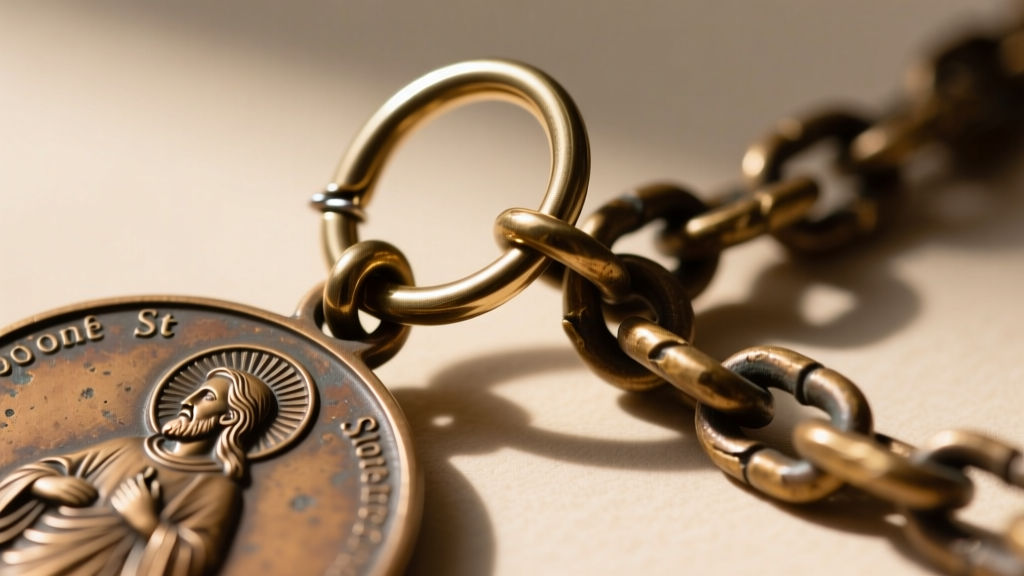
To preserve both the physical artifact and the spiritual meaning of your St. Christopher necklace, implement a strict maintenance protocol. The accumulation of sebum, dead skin cells, and environmental grit in the deep recesses of the medal acts as an abrasive paste, accelerating the wear of the saint's features.
Expert Cleaning Protocol: Submerge the pendant in a solution of warm distilled water and a few drops of pH-neutral dish soap. Use a 40 kHz ultrasonic jewelry cleaner for 3 to 5 minutes to dislodge microscopic debris from the engraving. Never use ultrasonic cleaners on medals with glued-in gemstones or epoxy-filled enamel (guilloché), as the high-frequency cavitation will shatter the glass or resin.
Furthermore, inspect the bail hole every six months using a 10x jeweler's loupe. Look for an elongated, oval-shaped wear pattern at the top of the hole. If the metal has thinned by more than 20%, take the piece to a bench jeweler to have the bail re-tipped or replaced before the medal is lost.
Final Thoughts on Selection
Understanding the true meaning of St Christopher necklace pendants requires looking past the surface. It is a demand for resilience. By prioritizing high-tensile chains, appropriate alloy hardness, and precision manufacturing techniques like die-striking or fiber laser engraving, you ensure that the physical vessel of your faith and protection is as enduring as the legend itself. Whether you choose the warm, age-defying luster of 14k gold or the rugged, evolving patina of jeweler's bronze, the right technical specifications will guarantee your talisman survives the journey.


