How to Measure Chain Length Necklace for Flawless Layering
Master how to measure chain length necklace pieces for perfect 2026 layering. Expert tips on gauge, drape, metallurgy, and neckline pairing.

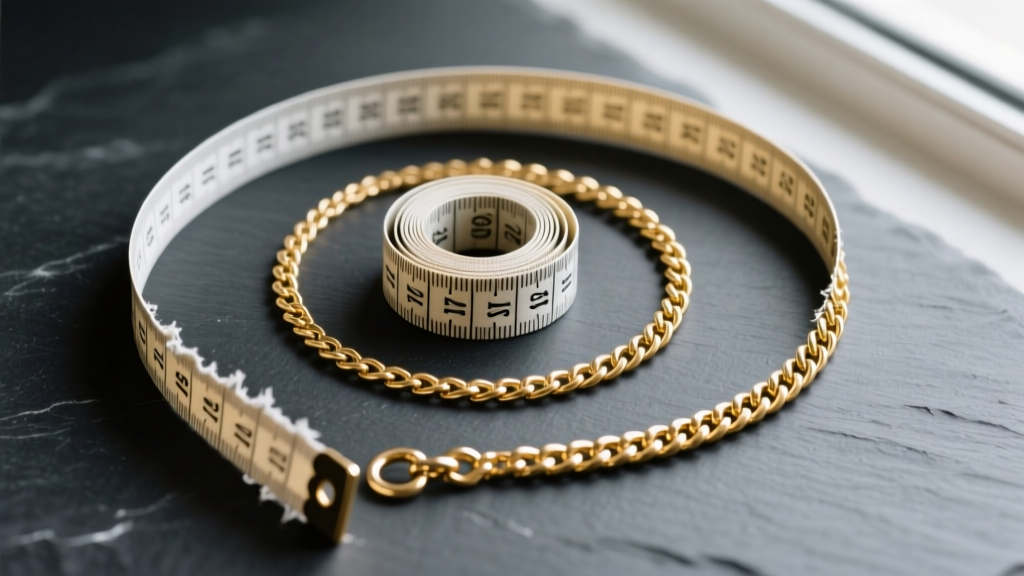
The Geometry of Drape: Why Precision Matters in 2026
In the evolving landscape of 2026 jewelry trends, the haphazard layering of the early 2020s has been replaced by calculated, architectural precision. Today’s stylists and collectors understand that a mere half-inch difference can completely alter the visual weight of a neckline. When learning how to measure chain length necklace pieces accurately, you are not just recording a number; you are mapping the geometry of drape. The interplay between chain gauge, link structure, and metallurgical stiffness dictates exactly where a piece will sit on the clavicle or sternum. According to the Blue Nile Necklace Education Guide, understanding these micro-measurements is the foundational step in curating a cohesive, high-end jewelry wardrobe that complements modern, asymmetrical, and deep-plunge necklines.
Step-by-Step: The Industry-Standard Measurement Protocol
Most consumers make the critical error of measuring a necklace while it is still clasped in a circle, or they use rigid carpenter's tape measures that fail to account for chain flexibility. To achieve the precision required for modern layering, follow this exact protocol:
- Unclasp and Lay Flat: Unfasten the clasp and lay the chain perfectly straight on a flat, non-abrasive surface. Gently pull it taut to remove any 'chain memory' kinks, but do not stretch it with force, which can distort softer links like the rope or cable.
- Include the Hardware: The jewelry industry standard dictates that you measure from the very end of the jump ring on one side to the very end of the clasp on the other. Excluding the clasp will result in a measurement that is 8mm to 15mm short, depending on whether you are using a spring ring or a heavy lobster clasp.
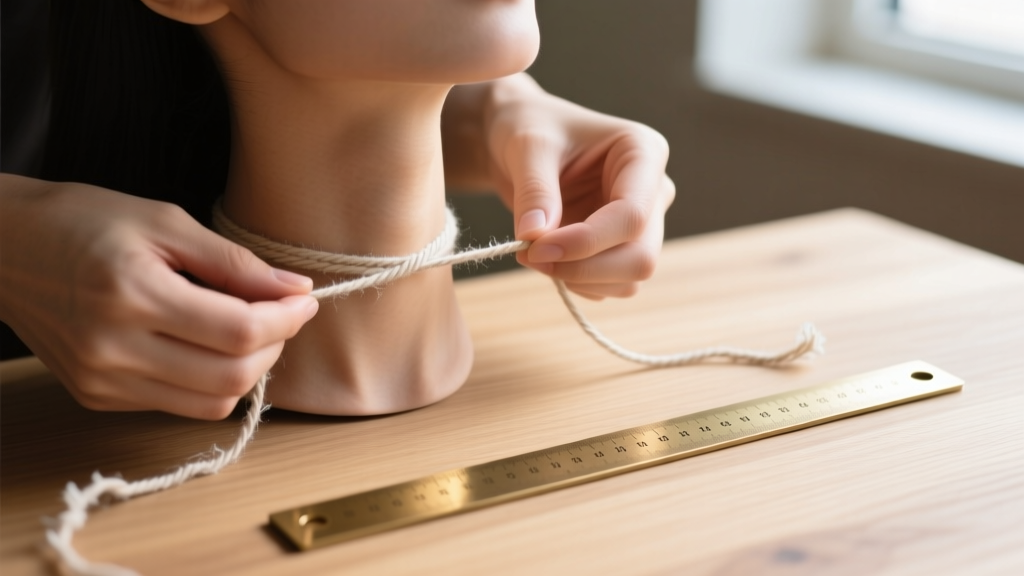
- The String Method for Worn Pieces: If you are trying to determine your ideal length before purchasing, use a soft cotton string. Wrap it around your neck, adjust it to the desired drop, mark the string, and then measure the string with a metal ruler. Rigid sewing tapes often stretch over time, introducing a 2-3% margin of error that ruins tight 14-inch choker layering.
The 2026 Length Matrix: Trends, Necklines, and Gauges
Length does not exist in a vacuum; it must be contextualized by gauge (thickness) and current styling trends. A 2mm chain sits entirely differently than an 8mm chain of the exact same measured length due to the radius of the links wrapping around the neck. Below is the definitive 2026 matrix for pairing length, gauge, and wardrobe.
| Measured Length | Standard Name | Ideal Gauge for 2026 | Best Neckline Pairing | Trend Context & Styling Notes |
|---|---|---|---|---|
| 14" - 15" | Collar / Choker | 3mm - 6mm | Off-shoulder, Boatneck | Thick Cuban or Figaro links; Y2K revival minimalism. |
| 16" - 17" | Princess | 1mm - 2mm | Crew neck, Sweetheart | Delicate cable chains with solitaire lab-grown drops. |
| 18" - 19" | Matinee (Short) | 2mm - 4mm | V-Neck, Scoop | The universal layering anchor; rope or box chains. |
| 20" - 22" | Matinee (Long) | 4mm - 8mm | Button-down, Turtleneck | Oversized streetwear aesthetics; heavy mariner links. |
| 24" - 30" | Opera / Rope | 1.5mm - 3mm | Deep Plunge, Backless | Lariat wraps and bohemian maximalism; layered doubling. |
The Hidden Variable: Metallurgy and Chain Stiffness
One of the most overlooked aspects of necklace measurement is how the metal alloy affects the visual drop. The Gemological Institute of America (GIA) frequently highlights how different karat weights and alloy mixes alter the physical properties of gold. An 18-inch chain in 14k white gold (alloyed with nickel or palladium and plated in rhodium) is significantly stiffer than an 18-inch chain in 18k yellow gold (which has a higher pure gold content and is inherently softer).
Because of this stiffness, a 14k white gold box chain will maintain a wider, more rigid arc around the neck, causing the center pendant to sit visually higher on the chest. Conversely, an 18k yellow gold rope chain of the exact same measured length will drape closer to the body, dropping nearly a half-inch lower on the sternum.
When planning a tight layering stack where a 16-inch chain must perfectly clear an 18-inch chain without tangling, you must account for this metallurgical drape. If both chains are stiff alloys, you need a full 2.5-inch gap. If the longer chain is a soft, high-karat drape, a 2-inch gap is sufficient.

Troubleshooting Common Measurement Fails
The Pendant Bail Illusion
When measuring a chain that will hold a pendant, the chain length is only half the equation. The bail (the loop connecting the pendant to the chain) acts as a hidden length extender. A standard 5mm soldered bail will drop your pendant exactly where you expect. However, the trending oversized hidden bails and European-style slide pendants of 2026 can add 15mm to 25mm of vertical drop. If you purchase a 16-inch chain for a pendant with a 20mm bail, the effective visual length of the necklace becomes closer to 17 inches, potentially ruining a planned layering stack.
Hollow vs. Solid Link Tension
Many mid-tier jewelry brands utilize hollow-core Cuban or rope chains to reduce material costs while maintaining a bold visual gauge. When you measure a hollow chain on a table, it may read exactly 20 inches. However, when worn, the lack of internal structural density causes the links to compress and overlap slightly under the tension of gravity and neck movement. A 20-inch hollow chain can visually shrink to 19.5 inches on the body. Always opt for solid or semi-solid links if your styling requires millimeter-perfect layering alignment.
Final Thoughts on Proportion and Scale
Mastering the nuances of necklace measurement elevates your styling from accidental to intentional. By combining the string-and-ruler measurement protocol with an understanding of alloy stiffness, link compression, and bail drops, you gain total control over your silhouette. Whether you are anchoring a heavy 22-inch mariner chain over a winter turtleneck or stacking three delicate 14-to-16-inch cable chains for a summer silk slip dress, precision is the ultimate luxury. Treat your measuring tape with the same reverence as your loupe, and your jewelry collection will always sit exactly where it belongs.


