How to Choose a Real Megalodon Necklace: Fossil Buying Guide
Discover how to authenticate, grade, and style a megalodon necklace. Learn fossil pricing, chain weight limits, and mounting techniques for real teeth.

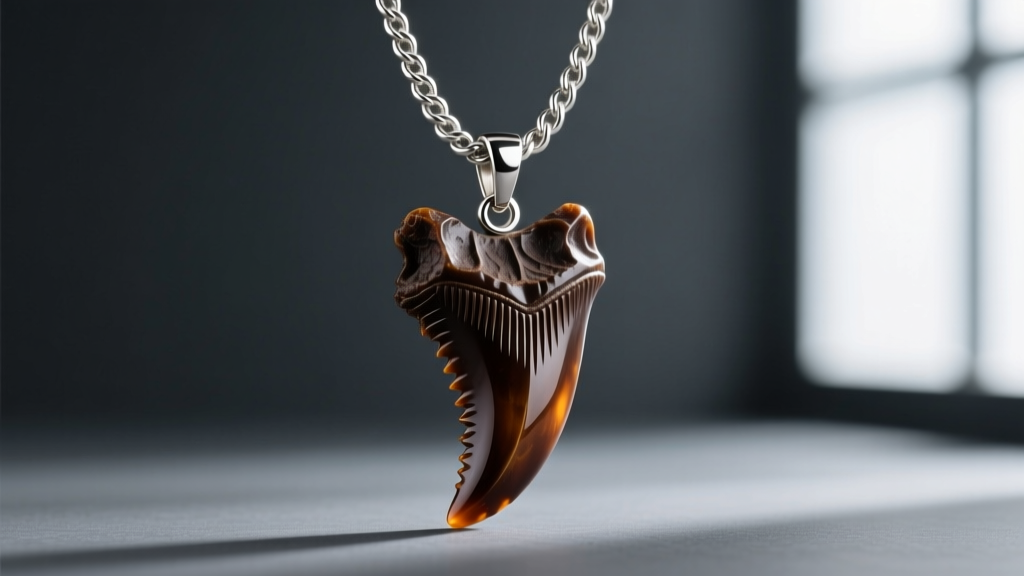
Introduction to Megalodon Tooth Jewelry
Wearing a piece of prehistoric history around your neck is a bold statement. The Otodus megalodon, an apex predator that ruled the oceans from 23 to 3.6 million years ago, left behind thousands of fossilized teeth. Today, a megalodon necklace bridges the gap between paleontology and high-impact fashion. However, the market is flooded with resin casts, heavily restored specimens, and improperly mounted pendants that fail under the fossil's immense weight. According to the Florida Museum of Natural History, shark teeth fossilize through a process called permineralization, where organic material is replaced by minerals like iron phosphate, giving them their distinct colors and heavy density. This buying guide will teach you how to authenticate, grade, and properly mount a real megalodon tooth for everyday wear.
Real Fossil vs. High-Quality Replica: What Are You Buying?
Before evaluating jewelry settings, you must verify the pendant's core material. High-end 3D-printed and resin-cast replicas have become incredibly accurate, but they lack the geological markers of a true fossil. A real megalodon tooth will feel significantly heavier than a resin cast of the same size due to its mineralized density. Furthermore, genuine teeth possess a distinct bourrelet—a raised, smooth band of enamel that separates the blade from the root. Replicas often blur this transition. Look closely at the root lobes; genuine specimens feature natural, asymmetrical chevron patterns and tiny vascular foramina (nutrient holes) that are rarely captured perfectly in mass-produced molds.
The UV Light Test for Restorations
Even if a tooth is real, it may be heavily restored. Fossil hunters often use cyanoacrylate (super glue) and epoxy to repair chips on the serrations or paint over discolored roots to increase a specimen's market value. To check for hidden restorations, shine a 365nm UV flashlight on the tooth in a dark room. Natural fossilized enamel and bone will remain dark or emit a very dull, earthy glow. Modern glues, epoxies, and synthetic paints will fluoresce bright white or vivid blue, instantly revealing repaired cracks or artificial color enhancements.
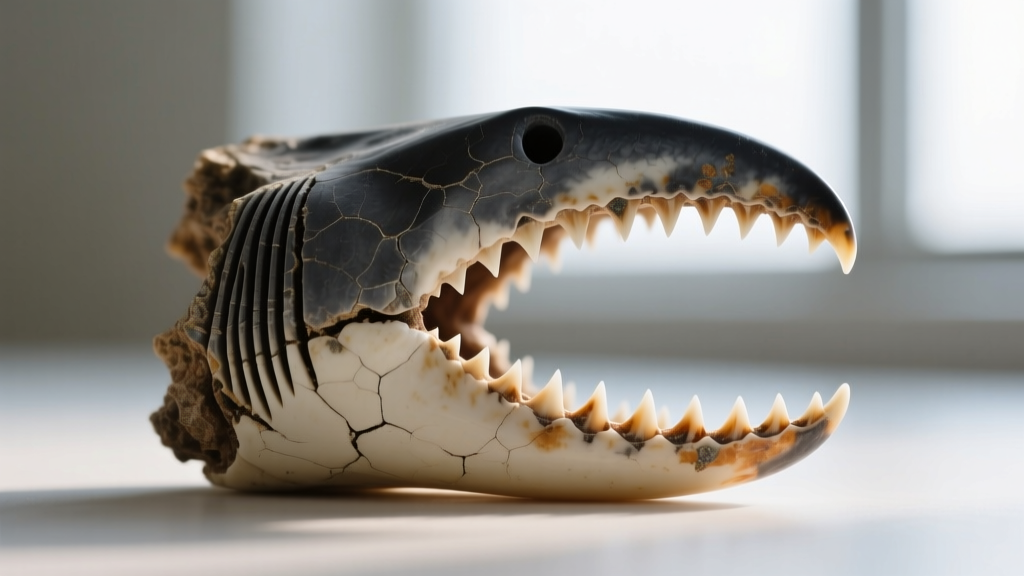
Grading the Tooth: Color, Condition, and Enamel
The value and aesthetic appeal of a megalodon necklace depend heavily on the fossil's grade. Color is dictated by the minerals present in the sediment where the tooth fossilized. For example, teeth from the Cooper River in South Carolina often exhibit deep blacks and rich browns due to iron oxide, while those from Florida's Peace River can show striking blues and greens from glauconite and phosphates. When selecting a pendant, use this grading framework to understand what you are paying for:
| Grade | Enamel Quality | Serrations & Tip | Restoration Level | Best For |
|---|---|---|---|---|
| Gem / Museum | Flawless, high gloss, vibrant natural color | 100% intact, razor-sharp tip | None (Zero UV fluorescence) | High-end collectors, investment pieces |
| A-Grade | Excellent, minor natural wear or dull spots | Tip may be slightly rounded, minor serration wear | Minimal (tiny edge chips stabilized) | Premium daily-wear necklaces |
| B-Grade | Good, some peeling or natural cracks | Tip broken or worn, serrations smoothed | Moderate (root repairs, tip reconstruction) | Budget-friendly statement pieces |
| C-Grade | Poor, heavy peeling, chalky texture | Heavily worn, no serrations visible | Heavy (painted roots, glued fractures) | Crafting, casual beachwear |
Jewelry Mechanics: Chains, Bails, and Weight Limits
The most common point of failure in fossil jewelry is the hardware. A 5-inch megalodon tooth can weigh between 120 and 180 grams. Standard jewelry components are simply not engineered for this load. If you buy a pre-made necklace, or are setting a loose fossil, you must upgrade the mechanics to prevent catastrophic failure.
Preventing Failure Modes
When designing or purchasing a megalodon necklace, avoid these critical structural mistakes:
- The Spring Ring Clasp: Never use a standard spring ring clasp on a heavy fossil. The internal spring will fatigue and snap under the pendulum motion of a heavy tooth. Always opt for a heavy-duty lobster clasp (15mm+) or a solid toggle clasp.
- Glue-On Bails: Adhesive bails will eventually detach from the porous fossil root due to body heat, sweat, and gravity. The tooth must be mechanically secured.
- Top-Heavy Flipping: Megalodon teeth have a high center of gravity. If the bail is placed too high on the root, the tooth will constantly flip upside down against your chest. A custom wire wrap or a wide, low-profile screw bail is required to keep the tooth facing forward.
- Thin Chains: A 1mm or 2mm sterling silver chain will stretch, kink, and eventually snap at the jump ring under the weight of a large fossil.
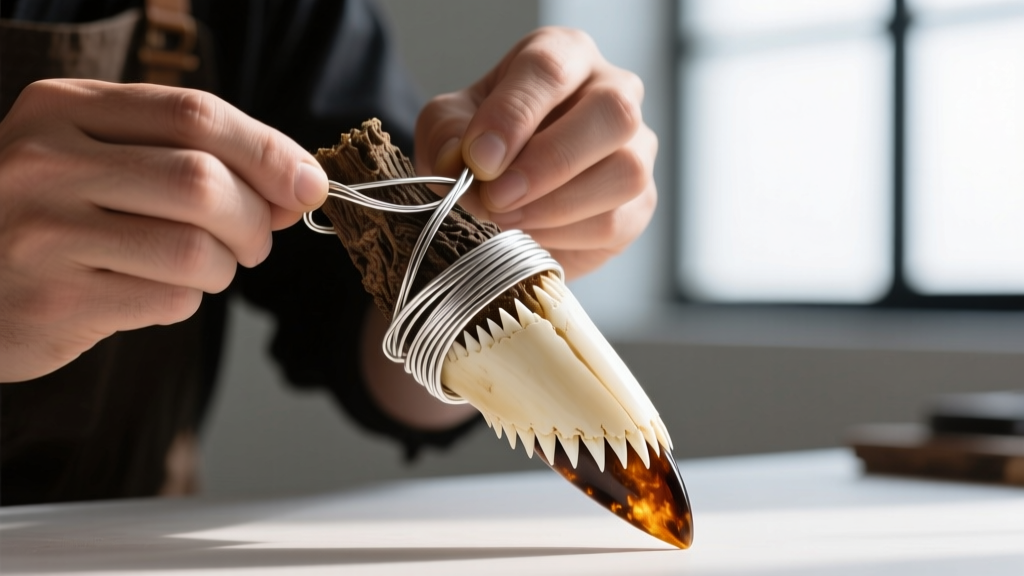
For optimal support, select a chain with a minimum thickness of 4mm to 6mm. A 316L stainless steel Cuban link or a solid 925 sterling silver rope chain provides the necessary tensile strength while complementing the rugged aesthetic of the fossil. For the mounting, professional fossil jewelers typically use 16-gauge or 18-gauge dead-soft sterling silver or copper wire to create a custom basket weave around the root lobes, ensuring the fossil is held by tension and physical wrapping rather than adhesive.
Ethical Sourcing and Legal Considerations
Because megalodons are extinct, their fossils are not subject to CITES (Convention on International Trade in Endangered Species) regulations. However, local extraction laws are strictly enforced. In states like South Carolina, diving for fossils in state waters requires a specific Hobby Dive License, and extracting fossils from protected archaeological zones is a felony. When purchasing a high-value megalodon necklace, reputable dealers like those indexed by Fossil Era will provide provenance documentation, confirming the tooth was legally recovered from private land or permitted commercial dredging operations.
Pro-Tip: Avoid purchasing 'river-found' fossils from unverified street vendors or tourist trap beach shops. These are frequently imported replicas or illegally poached specimens that lack proper stabilization, meaning they may degrade or crumble when exposed to the salts and oils in human skin.
Pricing Guide: What Should You Expect to Pay?
Pricing for a genuine megalodon necklace varies wildly based on the tooth's size (measured diagonally from the tip to the furthest root lobe), color rarity, and the quality of the jewelry hardware. Here is a realistic market breakdown for 2026:
- 2.5 to 3.5 inches (B-Grade, basic wire wrap): $60 – $150. Ideal for a subtle, everyday pendant.
- 4.0 to 5.0 inches (A-Grade, 4mm sterling chain): $350 – $900. The sweet spot for a bold, high-quality statement necklace with excellent enamel preservation.
- 5.5 to 6.5 inches (Gem-Grade, custom heavy hardware): $1,500 – $4,500+. Museum-quality specimens with rare colors (like deep blues or vivid reds) and flawless serrations.
- Premium Resin Replicas: $30 – $80. A great alternative if you want the look of a massive 7-inch tooth without the 300-gram weight or the $10,000 price tag.
Ultimately, investing in a real megalodon necklace requires a balance of paleontological knowledge and jewelry engineering. By prioritizing authentic permineralization markers, demanding UV-verified restoration reports, and insisting on heavy-duty chain mechanics, you can securely wear a 3-million-year-old apex predator around your neck with absolute confidence.


