Megladon Tooth Necklace Buying Guide: What to Look For
Discover how to authenticate, grade, and style a megladon tooth necklace. Expert tips on fossil quality, chain pairings, and avoiding resin fakes.

The Allure of Apex Predator Jewelry
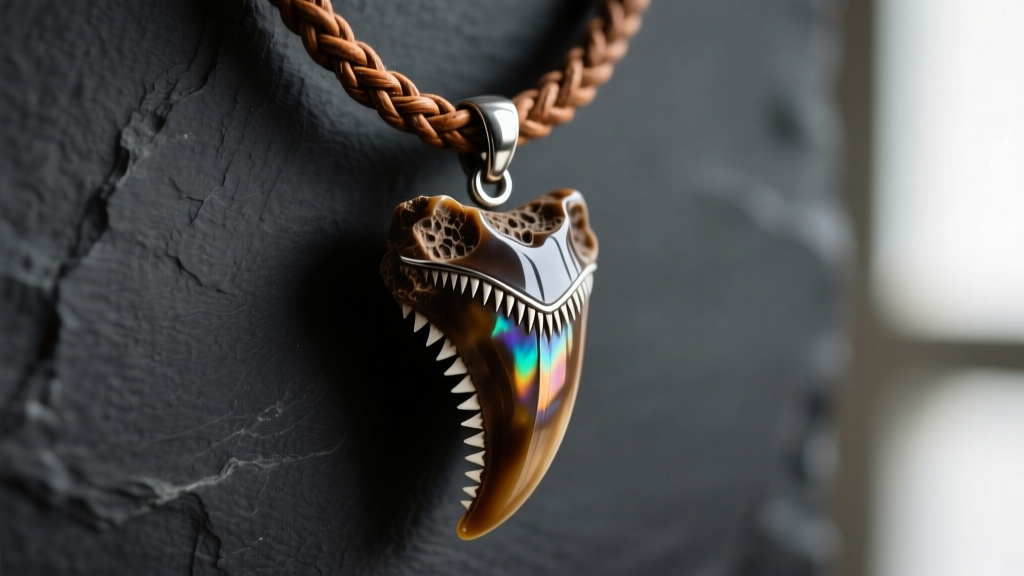
When searching for a megladon tooth necklace, buyers are often met with a chaotic mix of genuine paleontological specimens and mass-produced fakes. The fascination with the ocean's ultimate apex predator, scientifically known as Otodus megalodon, has made these fossils a staple in bold, nature-inspired fashion. Dating back 3.6 to 23 million years, these teeth are not just striking pendants; they are tangible pieces of Earth's prehistoric history. However, the surge in demand for paleo-jewelry has flooded the market with resin casts, bone carvings, and reconstructed composites. This comprehensive buying guide will equip you with the gemological and paleontological frameworks needed to authenticate, grade, and properly mount a genuine fossil tooth.
The Authenticity Framework: Spotting Resin and Bone Fakes
Authenticating a fossil requires understanding the geological process of permineralization. Over millions of years, groundwater rich in minerals like iron phosphate and calcium carbonate replaces the original organic dentin. According to the Florida Museum of Natural History, this process turns the tooth into a heavy, stone-like structure. Fakes, typically made of polyurethane resin or carved bovine bone, fail to replicate these physical properties.
Thermal and Tactile Feedback
Real fossilized teeth possess a high thermal mass. When you press a genuine megalodon tooth against your cheek or the back of your hand, it should feel distinctly cold and take several seconds to absorb your body heat. Resin fakes feel room-temperature or slightly warm to the touch immediately. Tactilely, real teeth have a dense, heavy weight. A genuine 4-inch tooth typically weighs between 40 and 60 grams, whereas a resin replica of the same size will feel suspiciously light, often weighing less than 20 grams.
The Bourlette and Serration Analysis
Examine the boundary where the blade meets the root. Genuine teeth feature a distinct, V-shaped chevron pattern known as the bourlette. In mass-produced molds, this transition is often blurred, overly symmetrical, or entirely missing. Furthermore, inspect the serrations along the blade using a 10x jeweler's loupe. Real serrations exhibit microscopic irregularities, chips, and natural wear patterns from the shark's lifetime. Molded fakes display uniform, perfectly repeating serrations with a slightly rounded, melted appearance under magnification.
UV Fluorescence Testing
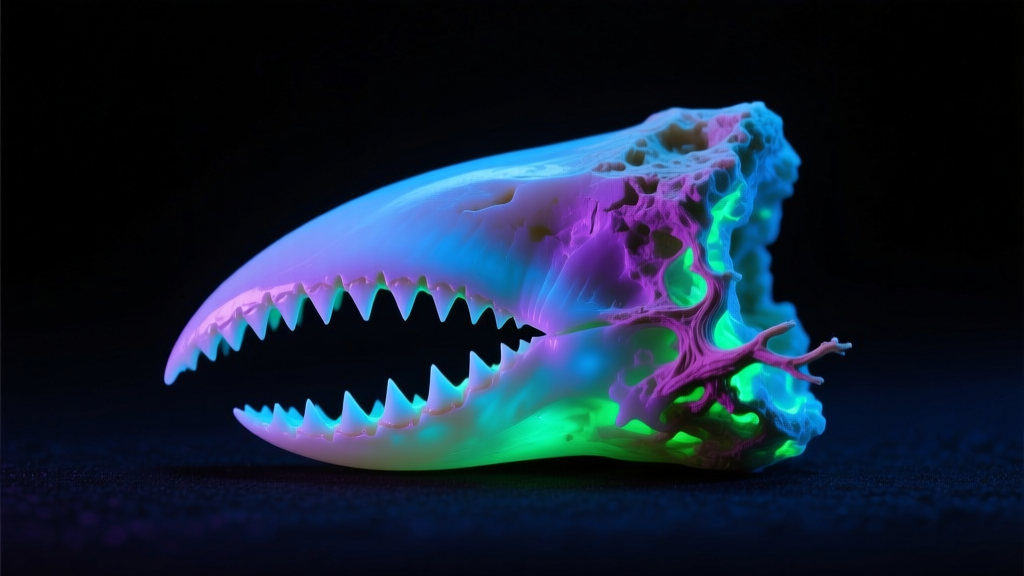
A 365nm UV flashlight is an invaluable tool for fossil hunters. Many commercial casting resins contain optical brighteners that fluoresce a milky blue or stark white under UV light. Conversely, heavily iron-phosphatized fossils from the renowned Bone Valley formation in Florida typically remain completely inert or show a very dull, mottled green glow due to trace uranium content. If the entire tooth glows a uniform, bright blue, you are likely holding a modern synthetic replica.
Fossil Grading and Market Pricing
Not all genuine fossils are created equal. The value of a megalodon tooth is dictated by its size, color, preservation state, and the geological formation it was recovered from. Teeth recovered from the Hawthorn Group formations in Florida are highly prized for their vibrant colors and excellent preservation. Below is a structured breakdown of what to expect in the current market.
| Grade | Size Range | Characteristics | Estimated Price Range |
|---|---|---|---|
| Commercial / C-Grade | 2.0" - 3.0" | Heavy enamel peeling, dull grey/black color, damaged root, visible cracks. | $20 - $60 |
| Museum / B-Grade | 3.5" - 4.5" | Intact serrations, minor root chips, uniform dark brown or slate grey enamel. | $120 - $350 |
| Gem / A-Grade | 4.5" - 6.0"+ | Flawless bourlette, razor-sharp serrations, rare colors (blue, red, multi-tone). | $800 - $3,500+ |
When evaluating color, remember that the hue is determined by the specific minerals present in the sediment where the tooth fossilized. Iron oxides yield rich reds and oranges, while copper and phosphates create deep blues and greens. Be wary of artificially dyed teeth, which often show unnatural color pooling in the microscopic cracks of the enamel.
Structural Engineering: Chains, Bails, and Weight Distribution
A common mistake buyers make is pairing a heavy, 50-gram fossil pendant with a delicate jewelry chain. The structural integrity of your necklace hardware is just as important as the fossil itself. As highlighted in various material science discussions on Smithsonian Magazine, preserving historical artifacts requires appropriate, non-reactive mounting techniques.
Chain Gauge and Material
For any megalodon tooth over 3 inches, abandon standard cable or curb chains. The concentrated weight and swinging momentum will quickly snap thin links or warp the jump rings. Instead, opt for high-tensile options:
- 3mm to 5mm Wheat Chains: The interlocking, braided structure of a wheat chain distributes weight evenly and resists kinking.
- 2mm Box Chains: Offer a modern, geometric look with excellent tensile strength, provided the links are solid rather than hollow.
- Braided Leather Cords (3mm - 5mm):strong> The traditional choice for paleo-jewelry. Ensure the leather is sealed and fitted with a heavy-duty stainless steel bayonet clasp.
The Bail Dilemma: Drilling vs. Wire Wrapping
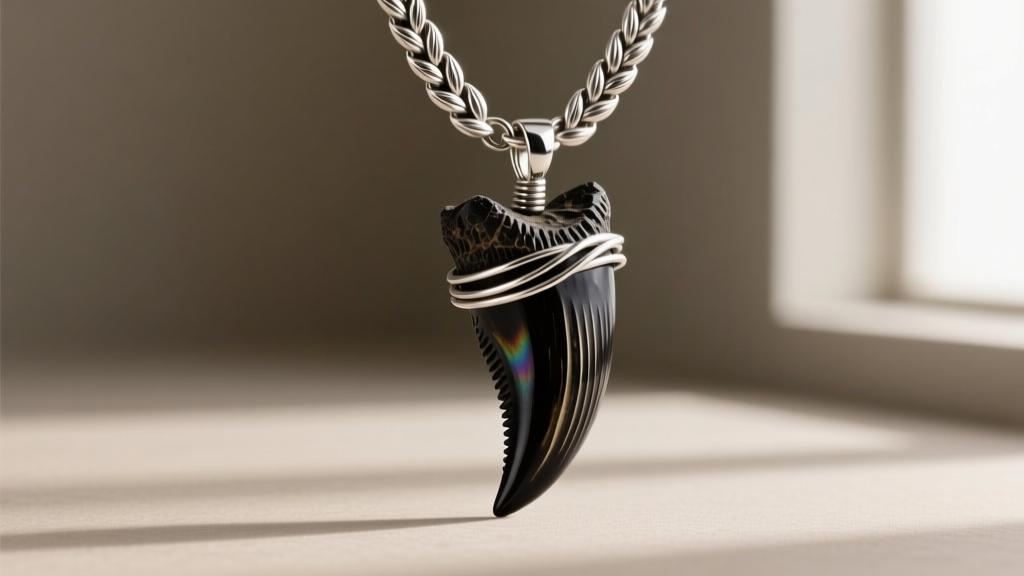
How the tooth is attached to the chain drastically affects its long-term value. Never buy a drilled fossil unless it is a low-grade commercial specimen. Drilling a hole through the root fractures the delicate bourlette and permanently devalues the paleontological specimen. The gold standard for mounting is a custom wire-wrapped bail. Look for artisans who use 18-gauge or 16-gauge non-tarnish silver, copper, or stainless steel wire to securely cage the root without piercing the fossil. For a cleaner look, cast sterling silver fossil caps that clamp onto the root using hidden tension screws are an excellent, non-destructive alternative.
Long-Term Fossil Care and Preservation
While fossilized teeth are essentially stone, they are still susceptible to environmental degradation. The mineral matrix can be porous, particularly in teeth recovered from marine sediments that contain residual salts. If these salts absorb moisture from the air, they can expand and cause the enamel to flake or crack—a phenomenon known as spalling.
To prevent this, high-grade specimens should be treated with a microcrystalline wax, such as Renaissance Wax. Apply a thin layer with a soft brush, let it cure for ten minutes, and buff it gently with a microfiber cloth. This seals the microscopic pores and provides a beautiful, natural luster without the artificial, plastic-like shine of polyurethane sprays. Avoid ultrasonic jewelry cleaners, harsh chemicals, and prolonged exposure to direct sunlight, which can fade certain mineral pigments over time.
Final Thoughts on Paleo-Jewelry
Investing in a genuine megalodon tooth necklace is a commitment to wearing a piece of deep time. By prioritizing permineralized authenticity, demanding non-destructive wire-wrapped bails, and selecting heavy-gauge chains, you ensure that your apex predator pendant remains a striking, durable heirloom for decades to come.


