Damascus Necklace Trends 2026: Forged Steel Pendant Styles
Discover the 2026 damascus necklace trend. Explore forged steel pendant styles, layer counts, pattern types, and how to style this avant-garde metal.

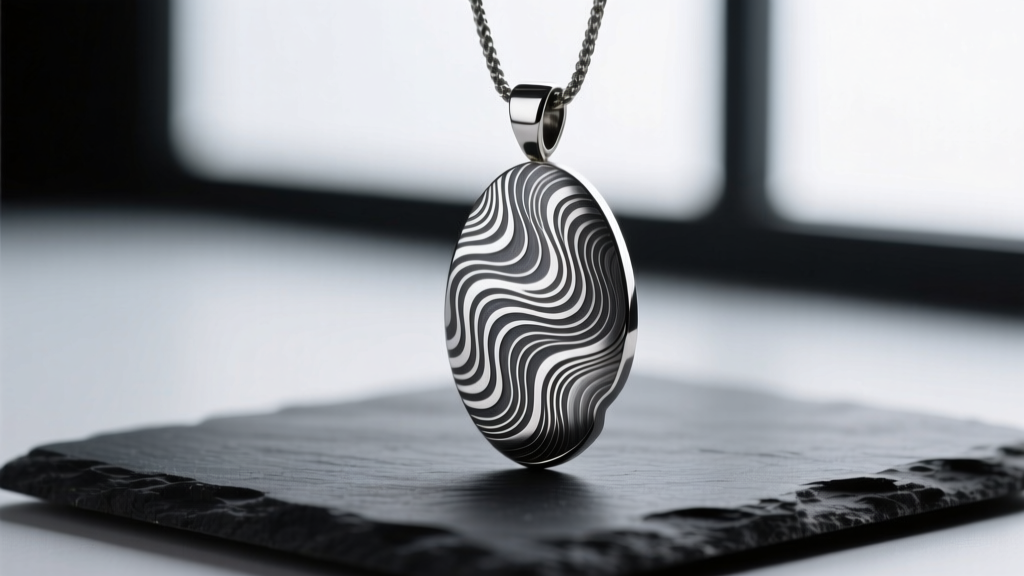
The jewelry landscape in 2026 has decisively pivoted toward industrial brutalism and avant-garde materiality, pushing traditional precious metals to share the spotlight with high-performance alloys. At the forefront of this shift is the damascus necklace. Once exclusively reserved for high-end knife-making and historical weaponry, Damascus steel has been masterfully adapted into luxury and streetwear jewelry. Characterized by its mesmerizing, watery patterns and dark, moody aesthetic, a forged steel pendant offers a level of bespoke artistry that cast gold or silver simply cannot replicate. This comprehensive style and trend analysis breaks down the metallurgy, pattern variations, and styling frameworks defining the Damascus steel jewelry movement this year.
The Rise of Forged Steel in Avant-Garde Jewelry
Historically, jewelry has relied on the malleability of gold, silver, and platinum. However, the 2026 trend cycle—heavily influenced by post-industrial fashion and utilitarian streetwear—demands materials that convey resilience and raw craftsmanship. Damascus steel, technically a pattern-welded alloy, provides a striking visual contrast that appeals to both menswear enthusiasts and women seeking bold, statement-making architectural pieces. According to forging standards outlined by the American Bladesmith Society, true pattern-welded steel requires the meticulous layering and forge-welding of distinct steel alloys, a process that transforms a simple pendant into a wearable piece of metallurgical art.
Anatomy of a Damascus Steel Pendant
To understand the value and aesthetic of a Damascus necklace, one must look at the microscopic and chemical realities of its creation. Unlike Mokume-gane (which uses precious metals like gold and silver), Damascus steel relies on high-carbon and nickel-rich steels.
Layer Counts and Alloy Compositions
Artisan jewelers typically forge Damascus pendants using a combination of 1084 high-carbon steel and 15N20 nickel steel. The 1084 provides the dark, matte grey background, while the 2% nickel content in the 15N20 resists acid etching, resulting in bright, shimmering silver lines. A standard high-quality pendant in 2026 features between 300 and 600 layers. While some mass-market brands claim "1000+ layers," experienced metallurgists note that excessive folding can actually blur the pattern contrast, making the 300-600 range the sweet spot for crisp, high-definition jewelry.
The Etching Process: Revealing the Pattern
The iconic look of a Damascus necklace is not achieved in the forge, but in the acid bath. Jewelers submerge the polished steel billet in a ferric chloride solution. The acid aggressively bites into the high-carbon 1084 steel, darkening it and creating a microscopic topographical map, while the nickel-rich 15N20 remains raised and bright. Suppliers like Rio Grande provide specialized jewelry-grade etchants that ensure safe, consistent contrast without compromising the structural integrity of the pendant.
Dominant Pattern Types in 2026 Collections
The manipulation of the steel billet before cutting dictates the final visual output. When shopping for a Damascus necklace, you will encounter several distinct pattern categories, each offering a different stylistic vibe:
- Twist Pattern: Created by twisting the heated, layered steel rod like a towel before flattening it. This yields a tight, DNA-like helix or wavy woodgrain effect. It remains the most popular choice for organic, fluid pendant designs.
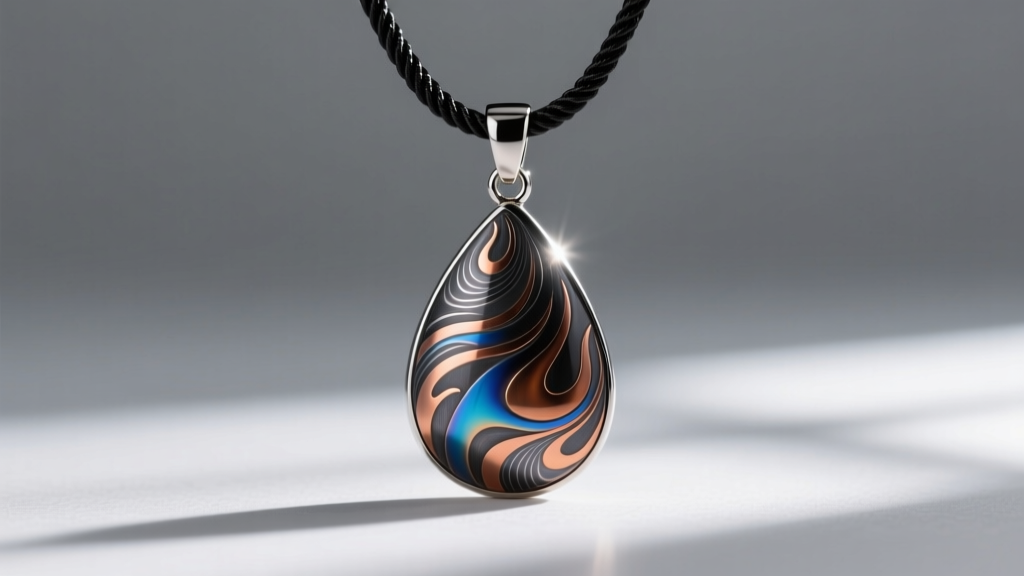
- Raindrop Pattern: Achieved by dimpling the steel billet with a rounded punch before grinding it flat. This reveals concentric, rippling circles that resemble water droplets or topographical maps. Highly sought after for teardrop and oval pendants.
- Ladder Pattern: Produced by cutting parallel grooves into the billet and forging it flat. The result is a striking, geometric series of horizontal lines, perfect for minimalist, brutalist rectangular pendants.
- Feather Pattern: An advanced, labor-intensive technique involving cutting and stacking the steel to mimic the barbs of a bird's feather. These are rare, highly expensive, and usually reserved for bespoke, luxury commission pieces.
Chain Pairings: What Metal Holds the Steel?
A common failure point in lower-quality Damascus necklaces is the chain. High-carbon steel is prone to galvanic corrosion and rust if paired with the wrong materials or exposed to sweat. Furthermore, because Damascus pendants are often hardened to around 45-50 HRC (Rockwell Hardness) to prevent shattering, drilling a hole through the top for a chain is difficult and can fracture the pattern. Therefore, most premium pendants feature a welded titanium or stainless steel bail (the loop that holds the chain).
Below is a structural comparison of the best chain materials to pair with a Damascus steel pendant in 2026:
| Chain Material | Durability & Rust Resistance | Weight & Drape | Aesthetic Synergy | Average Price Range |
|---|---|---|---|---|
| Grade 5 Titanium | Exceptional; immune to sweat and saltwater corrosion. | Ultra-lightweight; comfortable for heavy, oversized pendants. | Industrial, modern, matte grey finish complements steel. | $60 - $120 |
| Tungsten Carbide | High scratch resistance, but brittle under impact. | Very heavy; provides a substantial, luxury feel. | High-polish black or gunmetal creates a stealth, monochromatic look. | $40 - $80 |
| 316L Surgical Steel | Excellent rust resistance; standard for marine environments. | Medium weight; classic chain drape. | Traditional silver tone; can clash if the pendant has high contrast. | $25 - $50 |
| Waxed Leather Cord | Good, but degrades over time with heavy sweat exposure. | Lightweight; flexible and casual. | Earthy, heritage, and rugged; ideal for twist or raindrop patterns. | $15 - $30 |
Care, Maintenance, and Rust Prevention
The most critical aspect of owning a Damascus necklace is understanding that high-carbon steel is not stainless. The etching process exposes the raw carbon matrix, making it highly susceptible to oxidation (rust) from humidity, skin acidity, and environmental salts. To maintain the crisp contrast of the pattern, a strict maintenance regimen is required:
- Daily Wiping: After wearing, gently wipe the pendant with a dry, lint-free microfiber cloth to remove skin oils and microscopic sweat.
- Wax Coating: Once a month, apply a micro-thin layer of Renaissance Wax or food-grade mineral oil. Renaissance Wax is the museum standard for preserving historical steel artifacts and provides a hard, invisible barrier against moisture.
- Avoid Chlorine and Salt: Never wear a Damascus steel pendant in a swimming pool, hot tub, or the ocean. Chlorine will aggressively pit the high-carbon layers, permanently ruining the topographical etch.
- Re-etching: If the pendant becomes scratched or the contrast fades due to heavy polishing, it can be lightly sanded with 1000-grit paper and re-dipped in a ferric chloride bath to restore the original pattern.
Pricing Tiers: Mass Market vs. Artisan Forge
As the demand for Damascus necklaces has surged, the market has bifurcated into two distinct pricing tiers. Understanding the difference ensures you are paying for genuine metallurgical craftsmanship rather than laser-etched imitations.
The Mass-Market Tier ($40 - $90): These pieces are typically produced overseas using low-layer steel (often under 100 layers) or, worse, standard stainless steel that has been laser-engraved or chemically stamped to mimic the Damascus look. While visually passable from a distance, they lack the true topographical depth and edge-to-edge pattern continuity of forged steel. The bails are often glued or poorly soldered.
The Artisan & Custom Tier ($150 - $600+): Genuine, hand-forged Damascus pendants crafted by independent bladesmiths and avant-garde jewelers. These pieces boast 300+ layers of 1084/15N20 steel, feature precision-cut geometric shapes, and utilize TIG-welded titanium bails. Many artisans in this tier also offer "inlay" work, embedding crushed turquoise, meteorite, or 18k gold wire into the steel grooves, pushing the boundaries of mixed-media jewelry. For collectors and style purists, the artisan tier is the only way to truly participate in the 2026 forged steel movement.
Final Styling Verdict
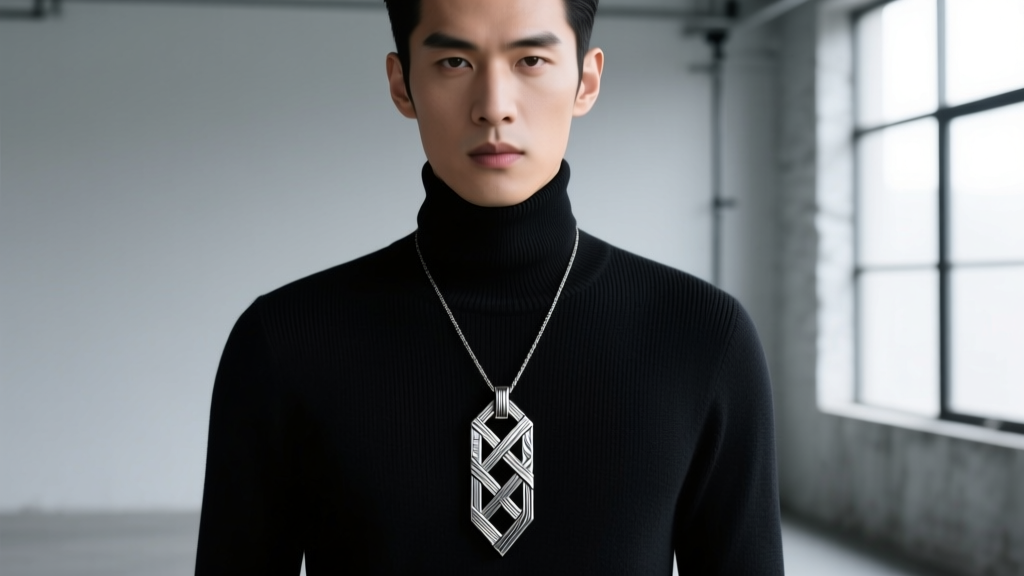
The Damascus necklace is not a subtle accessory; it is a conversation piece that bridges the gap between historical blacksmithing and futuristic streetwear. Whether you opt for a minimalist ladder-pattern bar on a titanium chain or an oversized, meteorite-inlaid raindrop pendant on leather, forged steel offers an undeniable edge. By prioritizing proper alloy compositions, selecting the right chain pairing, and committing to a simple wax-based maintenance routine, your Damascus pendant will remain a striking, rust-free centerpiece of your jewelry rotation for decades.


