Menat Necklace Buying Guide: Materials, Replicas, and Fit
Discover what to look for when buying a menat necklace. Our guide covers Egyptian faience, counterpoise weights, and modern Hathor-inspired replicas.

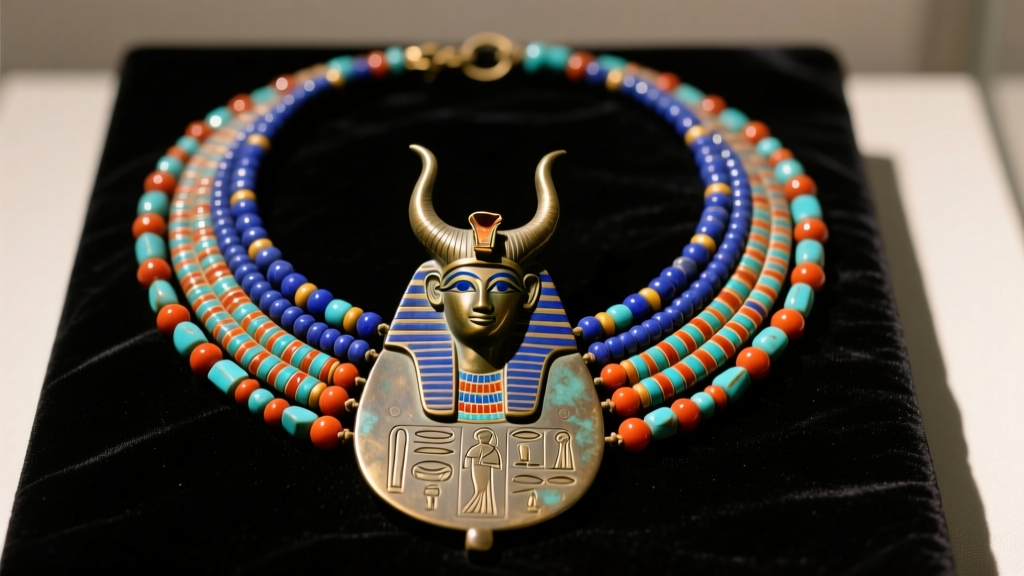
The menat necklace is far more than a simple decorative collar. In ancient Egypt, this iconic piece of jewelry served as a sacred instrument, a protective amulet, and a symbol of the goddess Hathor. Unlike standard broad collars (the usekh), a true menat is defined by its unique structural engineering: a heavy, multi-strand beaded collar balanced by a solid counterpoise (the aegis) that rests against the upper back. Today, collectors, historians, and enthusiasts of Egyptian revival jewelry seek out menat replicas for their striking aesthetic and deep historical resonance.
However, buying a functional, historically accurate menat necklace requires an understanding of ancient weight distribution, material science, and acoustic design. As of 2026, modern artisan casters are using 3D-printed wax molds to recreate intricate Hathor aegis designs with unprecedented accuracy, but the market is also flooded with poorly balanced costume pieces. This comprehensive buying guide will teach you exactly what to look for when investing in a menat necklace.
The Anatomy of a True Menat Necklace
To evaluate a menat, you must first understand its two primary components. If a seller is offering a 'menat' that lacks a counterpoise, you are simply looking at a standard beaded collar.
The Collar (Shebyu) and The Counterpoise (Aegis)
The front of the necklace consists of multiple strands of beads, traditionally made of faience, carnelian, lapis lazuli, and turquoise. These strands are held together by rigid struts or bound with linen thread. The back of the necklace features the aegis—a heavy, often teardrop-shaped or papyrus-umbel weight. According to University College London's Digital Egypt archive, the aegis was often cast in bronze or carved from solid stone, and it frequently bore the face of Hathor or the protective eye of Ra.
When shopping, inspect the connection points. Historically, the beads were looped through a rigid metal or faience bar that connected to the aegis via a thick linen cord. Modern high-end replicas should use concealed brass T-bars or heavy-duty jump rings that mimic this articulation, allowing the collar to drape naturally over the clavicle without kinking.
Material Grades: From Ancient Faience to Modern Resin
The materials used in a menat necklace dictate its historical accuracy, weight, and price. Ancient Egyptian faience is not a clay-based ceramic; it is a silica-based material (ground quartz) coated with a copper-oxide glaze that yields a brilliant blue-green finish. When evaluating modern replicas, you will encounter three primary material tiers.
| Material Type | Historical Accuracy | Durability & Weight | Estimated Price Range |
|---|---|---|---|
| Authentic Egyptian Faience | Excellent (Museum Grade) | Fragile; heavy; requires careful handling | $400 - $1,200+ |
| Semi-Precious Stones (Lapis, Carnelian) | High (Royal Court Grade) | Very durable; very heavy; excellent drape | $250 - $800 |
| Glazed Ceramic / Glass | Moderate (Artisan Grade) | Durable; moderate weight; good for daily wear | $120 - $350 |
| Resin / Painted Plastic | Low (Costume Grade) | Lightweight; poor drape; prone to chipping | $40 - $90 |
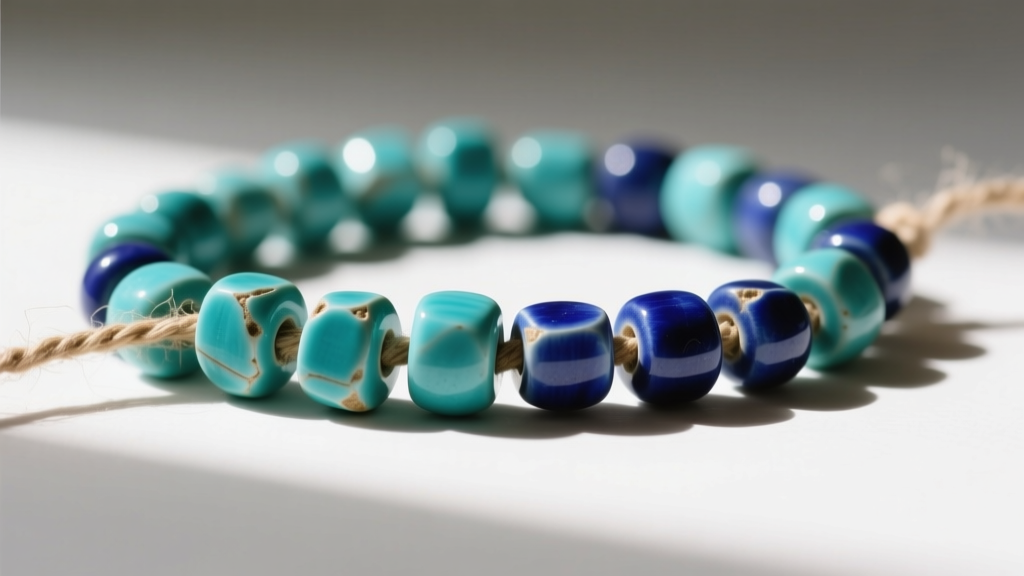
For serious collectors, seeking out artisans who utilize traditional efflorescence glazing techniques for their faience beads is paramount. You can verify authentic faience by examining the bead holes; true faience beads often show slight irregularities and a lighter, unglazed core where the silica was exposed during firing. For a deeper look at authentic material compositions, The Metropolitan Museum of Art's Egyptian collection provides excellent high-resolution references of original beaded struts and aegis fragments.
The Physics of Wearability: Weight Ratios
The most common failure point in modern menat replicas is poor weight distribution. A menat is essentially a fulcrum system. If the front collar is too heavy and the back aegis is too light, the necklace will slide forward, choking the wearer and failing to sit flat against the chest.
The Golden Ratio of the Menat: For a menat necklace to sit comfortably on the human neck without constant adjustment, the counterpoise (aegis) must weigh at least 35% to 45% of the total weight of the front beaded collar. If the front collar weighs 400 grams, the bronze or stone aegis must weigh a minimum of 140 to 180 grams.
Before purchasing, ask the artisan or seller for the exact gram weight of both the collar and the counterpoise. If the aegis is made of hollow-cast resin or thin sheet metal, it will fail to anchor the piece. Look for solid cast brass, bronze, or carved soapstone counterpoises. Additionally, the length of the connecting cords between the collar struts and the aegis must be precise; if they are too long, the aegis will drop below the shoulder blades, ruining the tension required to keep the collar elevated on the collarbone.
Acoustic Properties: The Sacred Rattle
The menat was originally used as a percussion instrument in temple rituals. Priestesses would grasp the aegis in one hand and shake the necklace, causing the faience beads to strike against each other and the metal struts, producing a rhythmic, swishing rattle believed to soothe the gods and promote fertility.
If you are buying a menat for historical reenactment or functional ritual use, the stringing technique is critical. The beads must not be tightly wire-wrapped or glued. They must be strung on thick linen cord or synthetic sinew with deliberate 'slack' between each bead. This micro-movement is what creates the authentic acoustic rustle. Rigidly strung beads will produce a dull thud rather than the bright, shimmering rattle characteristic of antiquity.
Testing the Sound
- The Shake Test: Hold the aegis and give the collar a gentle, rhythmic shake.
- The Tone: Glass and resin produce a high-pitched, sharp clinking.
- The Authentic Sound: Faience and natural stone produce a deeper, muffled, sandy rustling sound.
- The Strut Impact: Ensure the beads strike the wooden or metal spacer bars cleanly without catching on rough thread knots.
Sourcing: Where to Buy Authentic Replicas
Finding a high-quality menat necklace requires looking beyond standard commercial jewelry retailers. Here is where you should focus your search in 2026:
- Museum Reproduction Shops: Institutions like the British Museum and the Met occasionally license exact replicas of their menat fragments. These are usually cast in solid bronze with glass or faience bead substitutes.
- Specialized Historical Artisans: Platforms like Etsy host specialized metalworkers and lapidaries who focus exclusively on ancient Egyptian revival. Search for sellers who explicitly mention 'lost-wax casting' for their aegis pieces and 'hand-rolled faience' for their beads.
- Bespoke Commissioning: Because the menat requires precise neck measurements to balance the counterpoise correctly, many buyers opt to commission bespoke pieces. Provide the jeweler with your exact neck circumference and collarbone slope to ensure the struts are angled correctly for your anatomy.
Final Checklist Before You Buy
Use this rapid checklist to evaluate any menat necklace before finalizing your purchase:
- Counterpoise Presence: Does it have a solid, heavy aegis at the back?
- Weight Ratio: Is the back weight at least 35% of the front weight?
- Material Verification: Are the beads genuine faience/stone, or painted plastic?
- Acoustic Slack: Do the beads have enough room to move and rattle?
- Strut Integrity: Are the spacer bars rigid enough to prevent the strands from tangling?
Investing in a menat necklace is an investment in wearable history. By prioritizing structural balance, authentic materials, and acoustic functionality, you will secure a piece that not only honors the legacy of Hathor but sits beautifully and comfortably as a stunning statement piece in any modern jewelry collection.


