Mens Beaded Necklaces: The 2026 Budget & Value Guide
Discover the true value of mens beaded necklaces in 2026. Learn to assess stone grades, stringing wire gauges, and hardware to avoid overpriced jewelry.

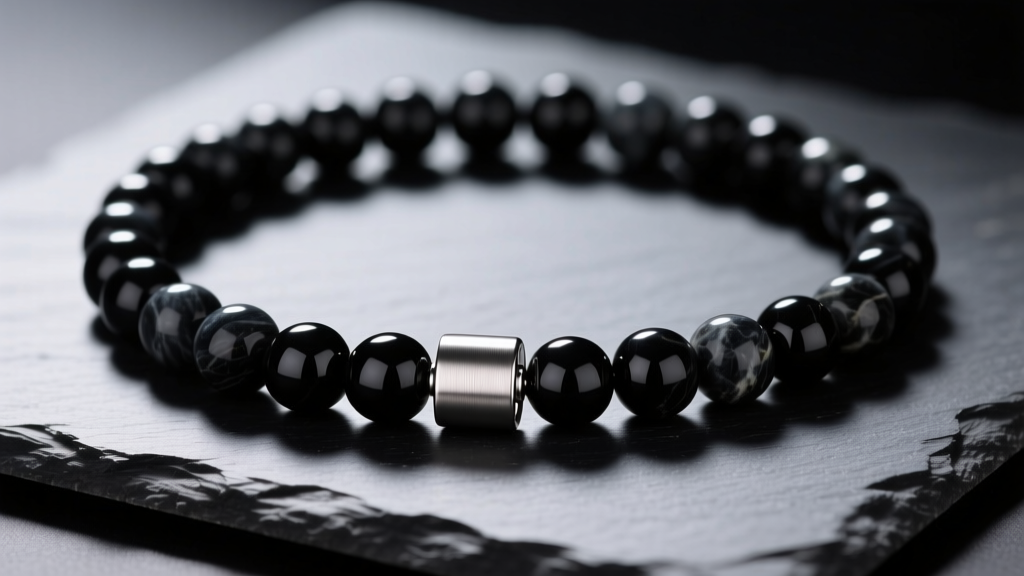
The market for mens beaded necklaces has evolved dramatically, transitioning from casual surf-shop souvenirs to high-end streetwear and luxury staples. However, this surge in popularity has flooded the market with opportunistic brands selling $150 necklaces constructed from $4 materials. As a smart buyer in 2026, assessing the true value of a beaded necklace requires looking past the brand logo and examining lapidary quality, stringing mechanics, and hardware metallurgy.
This guide deconstructs the actual cost of men's beaded jewelry, providing the exact specifications and material grades needed to separate genuine craftsmanship from overpriced fashion accessories.
Material Breakdown: Stone Grades and Pricing
The beads themselves are the most visible component of the necklace, but not all stones are created equal. Many commercial brands rely on heavy dye treatments and glass imitations to mimic premium semi-precious stones. Here is how to evaluate the core materials.
Entry-Level: Lava Rock, Wood, and Glass ($15 - $35)
Lava rock and sandalwood are porous, lightweight, and incredibly cheap to source. A high-quality lava rock bead necklace should never exceed $35. These materials are excellent for casual, everyday wear and can even hold essential oils, but they possess zero intrinsic gemological value. If a brand is charging over $50 for standard 8mm lava rock beads, you are paying strictly for marketing.
Mid-Tier: Onyx, Tiger's Eye, and Matte Agate ($40 - $90)
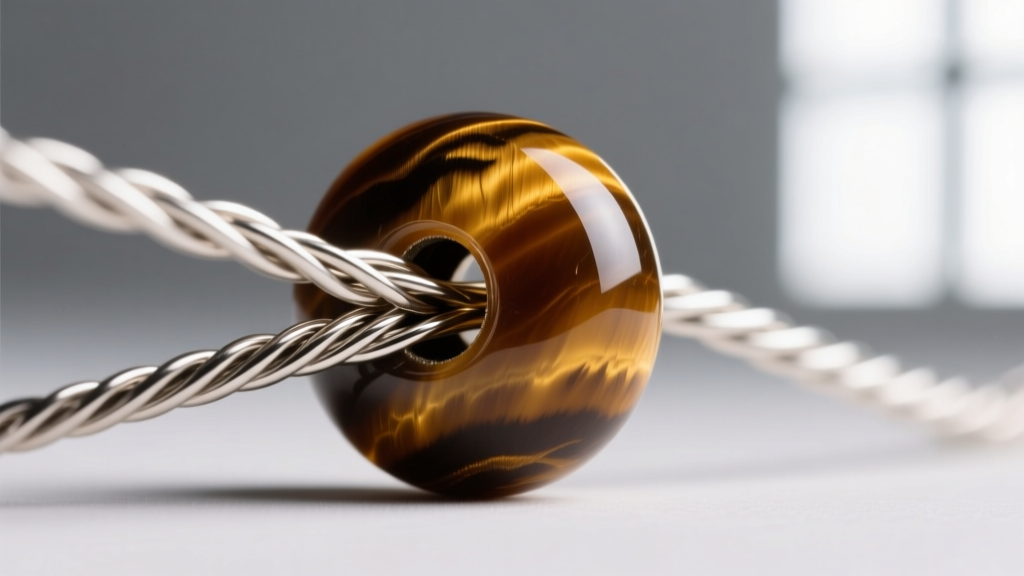
This is the sweet spot for most men's beaded necklaces. However, buyers must be aware of treatments. According to the Gemological Institute of America (GIA), many stones on the market are heavily treated. For instance, true black onyx is quite rare; most "black onyx" on the market is actually gray agate that has been treated with heat and carbon to achieve a uniform black color. This is an accepted industry practice, but it means the material cost is relatively low. Genuine, high-chatoyancy tiger's eye (where the "cat's eye" light band moves sharply across the bead) is a great value indicator in this price bracket.
Premium: Lapis Lazuli, Turquoise, and Black Spinel ($100 - $250+)
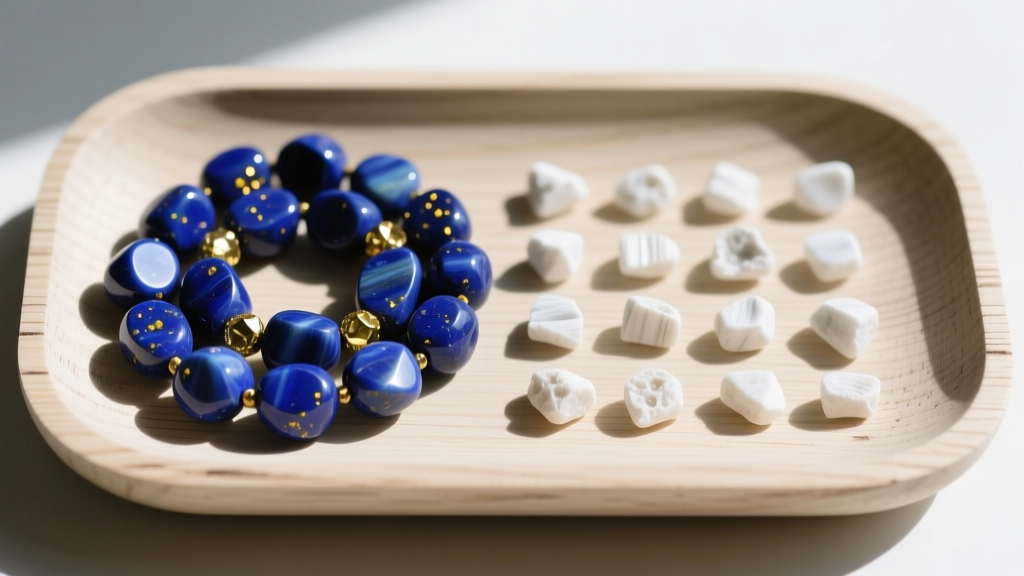
Premium mens beaded necklaces feature stones with high geological rarity and strict grading standards. Genuine lapis lazuli should feature golden pyrite flecks and occasional white calcite streaks. The most common scam in this tier is dyed howlite or jasper passed off as lapis or turquoise. A simple acetone wipe test can sometimes reveal surface dyes, but buying from reputable lapidaries who disclose stone origins is the safest route. Black spinel is another premium choice, offering a diamond-like luster that far outshines standard onyx, justifying a $150+ price tag.
The Hidden Value Killer: Stringing Materials and Hardware
The most critical point of failure in any beaded necklace is the stringing material. A necklace featuring $200 worth of premium turquoise is entirely worthless if it is strung on cheap elastic that snaps after three months of wear. Evaluating the structural integrity of the necklace is the ultimate test of a brand's commitment to quality.
Stringing Wire Gauges and Strand Counts
Cheap fashion brands use 7-strand wire or basic elastic cord. Elastic (like Stretch Magic) degrades rapidly when exposed to the natural oils, sweat, and UV light encountered in daily wear. Furthermore, 7-strand wire is highly susceptible to kinking; once kinked, the structural integrity is compromised, and it will eventually snap under the weight of heavy 8mm or 10mm stone beads.
High-value necklaces utilize 49-strand nylon-coated stainless steel wire. Industry standards from suppliers like Soft Flex Company dictate that 49-strand wire offers a supple, silk-like drape while maintaining the tensile strength of steel. For heavy stone beads (10mm+), a wire thickness (gauge) of 0.024 inches is required. For standard 6mm to 8mm beads, a 0.018-inch gauge is the optimal balance of strength and flexibility.
Hardware Metallurgy
Clasps and end-caps must withstand constant friction and moisture. Avoid anything labeled simply as "alloy" or "silver-plated," as these will oxidize and turn the skin green within weeks. Look for 316L surgical stainless steel for durable, tarnish-resistant hardware under $100. For premium pieces, 925 sterling silver or PVD-coated titanium are the benchmark materials.
| Material | Tensile Strength | Drape & Flexibility | Estimated Lifespan | Value Verdict |
|---|---|---|---|---|
| Elastic Cord | Low (Degrades with oils) | Highly flexible | 6 - 12 Months | Avoid for heavy stones |
| 7-Strand Wire | Medium (Kinks easily) | Stiff, prone to memory | 1 - 2 Years | Budget tier only |
| 49-Strand Wire (0.018") | High (Up to 20 lbs) | Silk-like, excellent | 5+ Years | Industry Standard |
| Kevlar / Micro-Cord | Extremely High | Soft, knot-friendly | 10+ Years | Premium / Artisan |
Budget vs. Value: What Should You Actually Pay?
To accurately assess if a piece is fairly priced, use this 2026 pricing framework based on material and construction realities.
- Under $30 (The Fast Fashion Tier): Expect porous stones (lava rock, wood), glass beads, elastic stringing, and base-metal magnetic clasps. Good for seasonal trends, poor for longevity.
- $40 - $90 (The Value Sweet Spot): You should receive genuine, commercially treated semi-precious stones (onyx, matte agate, tiger's eye), strung on 49-strand nylon-coated wire, finished with 316L stainless steel hardware. This is the target zone for everyday durability.
- $100 - $250 (The Premium Tier): Demands untreated or professionally stabilized high-grade stones (sleeping beauty turquoise, high-pyrite lapis lazuli), precise bead-drilling with minimal tolerance gaps, and solid sterling silver or PVD-coated clasps.
- $300+ (The Artisan / Luxury Tier): At this price, you are paying for custom lapidary work (hand-cut faceted beads), rare geological specimens, and solid 14k gold hardware. Brand prestige also heavily influences this bracket.
Red Flags: How to Spot Overpriced Fashion Jewelry
When shopping for mens beaded necklaces, keep your guard up for these immediate indicators of poor value:
- Uniformity in Natural Stones: If every single turquoise or lapis bead in a $40 necklace is exactly the same shade with identical matrix patterns, it is almost certainly dyed howlite or reconstituted stone dust. Natural stones feature slight variations in color and inclusions.
- Missing Wire Guardians: High-quality wire-strung necklaces use metal "wire guardians" (horseshoe-shaped findings) where the wire loops into the clasp to prevent the metal clasp from sawing through the nylon coating. If the wire loops directly through the clasp ring, it is a manufacturing shortcut that will lead to breakage.
- Vague Material Descriptions: Terms like "healing crystal beads," "natural stone alloy," or "silver-tone" are deliberate obfuscations. A reputable brand will explicitly state the stone name, the treatment level, and the exact metal grade (e.g., 316L Steel).
Final Assessment
The value of a beaded necklace is not dictated by the box it comes in, but by the engineering hidden between the beads. By demanding 49-strand stringing wire, 316L or precious metal hardware, and transparent stone grading, you can confidently navigate the 2026 market. Invest in structural integrity and genuine lapidary materials, and your necklace will outlast the fleeting trends of the season.


