Cool Cross Necklaces for Men: A Metal & Material Guide
Discover the best metals for cool cross necklaces for men. Compare titanium, tungsten, steel, and gold for durability, weight, and style.

When shopping for cool cross necklaces for men, the visual design is only half the equation. The metallurgical properties of the pendant and its chain dictate how the piece will age, react to your skin chemistry, and withstand the mechanical stress of daily wear. A heavy pendant on a structurally weak chain will inevitably result in failure, while a beautiful alloy might oxidize or cause contact dermatitis if not properly formulated. As of 2026, advancements in CNC milling and alloy blending have expanded the market, making it crucial to understand what you are actually wearing. In this comprehensive material guide, we break down the exact grades, hardness scales, and real-world failure modes of the most popular metals used in men's cross jewelry today.
The Anatomy of Pendant Stress and Bail Friction
Before diving into specific metals, it is vital to understand where necklaces fail. The bail—the loop connecting the cross pendant to the chain—is the primary friction point. Every time you move, the chain acts like a micro-saw against the bail. If the pendant is made of a soft metal like high-karat gold or pure silver, and the chain is a harder steel, the chain will eventually saw completely through the bail. Therefore, matching the hardness of the chain to the pendant, or utilizing a reinforced bail insert, is critical for longevity.
Tier 1: The Modern Heavyweights (Titanium & Tungsten)
For men who work with their hands or want a virtually indestructible piece of jewelry, titanium and tungsten carbide are the premier choices. However, their material properties are vastly different.
Grade 5 Titanium vs. Commercial Pure
Not all titanium is created equal. Commercially pure (Grade 2) titanium has a tensile strength of roughly 345 MPa, making it lightweight but prone to bending if the cross features thin, elongated arms. For structural integrity, you must look for Grade 5 Titanium (Ti-6Al-4V). Alloyed with aluminum and vanadium, Grade 5 boasts a tensile strength of approximately 900 MPa. It is the same material used in aerospace components and will never bend, warp, or tarnish. Furthermore, it is 100% hypoallergenic, making it ideal for sensitive skin.
Tungsten Carbide: Hardness vs. Brittleness
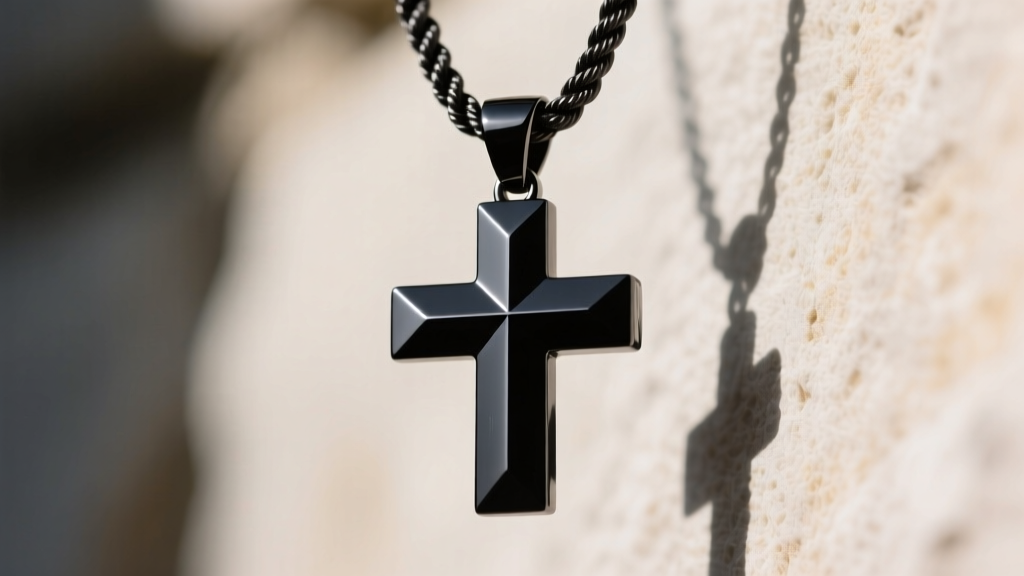
Tungsten carbide registers an 8.5 to 9 on the Mohs hardness scale, meaning it is virtually scratch-proof and will maintain its polished finish for decades. However, this extreme compressive strength comes with a severe trade-off: low tensile strength. Tungsten is brittle. If a heavy tungsten cross pendant is dropped onto a hard porcelain tile or concrete floor, it can shatter. Additionally, buyers must check the binder metal used in the carbide matrix. Cheaper tungsten jewelry uses cobalt or nickel binders, which can cause severe skin reactions and oxidation spots. Always seek out nickel-free tungsten formulations from reputable jewelers.
Tier 2: The Precious Classics (Gold & Sterling Silver)
Precious metals carry inherent prestige and value, but they require an understanding of alloy compositions to ensure durability.
The Karat Conundrum: 10k, 14k, and 18k Gold
Pure 24k gold is far too soft for daily-wear men's jewelry; it will dent and scratch within days. According to the Gemological Institute of America (GIA), gold must be alloyed with metals like copper, zinc, and silver to achieve structural rigidity. 14k gold (58.3% pure gold) is the sweet spot for men's cross necklaces. It offers a Vickers hardness of roughly 135 HV, providing excellent resistance to deformation while retaining a rich color. 18k gold (75% pure) is softer (~115 HV) and more prone to deep scratching, while 10k gold is highly durable but lacks the warm luster of higher karats.
Sterling Silver and the Tarnish Factor
Sterling silver (.925) consists of 92.5% silver and 7.5% copper. It is the copper that reacts with sulfur in the air and sweat to create black silver sulfide (tarnish). If you live in a humid climate or sweat heavily during workouts, a raw sterling silver cross will require weekly polishing. To combat this, many modern jewelers apply a microscopic layer of rhodium plating. While rhodium prevents tarnish and adds a bright white shine, it will eventually wear off at the high-friction bail area, requiring re-plating every few years.
| Metal / Alloy | Mohs Hardness | Vickers Hardness (HV) | Tensile Strength | Best Use Case |
|---|---|---|---|---|
| Grade 5 Titanium | 6.0 | 334 HV | 900 MPa | Intricate, lightweight, hypoallergenic crosses |
| Tungsten Carbide | 8.5 - 9.0 | 1300+ HV | 550 MPa (Brittle) | Chunky, scratch-proof, modern geometric crosses |
| 14k Yellow Gold | 3.5 | 135 HV | 400 MPa | Classic, high-value heirloom pieces |
| .925 Sterling Silver | 2.5 - 3.0 | 60 HV | 250 MPa | Budget-friendly, vintage-oxidized designs |
| 316L Stainless Steel | 5.5 | 150 HV | 485 MPa | Heavy, industrial, low-maintenance daily wear |
Tier 3: The Budget Workhorses (Stainless Steel)
Stainless steel remains the most popular entry-level metal for cool cross necklaces for men, offering a brilliant shine and high tensile strength at a fraction of the cost of precious metals. However, the specific grade of steel matters immensely.
316L vs. 304 Surgical Steel
Many mass-market necklaces use 304 stainless steel. While durable, 304 lacks molybdenum, making it susceptible to pitting and corrosion when exposed to chlorides (like ocean water or heavy, salty sweat). 316L marine-grade stainless steel contains 2-3% molybdenum, which drastically increases its resistance to localized corrosion. If you plan to wear your cross necklace in the shower, at the beach, or during intense gym sessions, 316L is a mandatory requirement to prevent rust spots and metallic skin staining.
Chain Pairing: Matching Metal Properties to Cross Pendants
A pendant is only as secure as the chain holding it. The structural integrity of the chain link must be matched to the weight and material of the cross.

- Cuban Link Chains: The interlocking, flat-surfaced links distribute lateral tension evenly. This is the strongest chain style for heavy tungsten or solid gold crosses. A 4mm to 6mm Cuban link in 316L steel can easily support a 50-gram pendant without stretching.
- Rope Chains: Beautiful and highly reflective, but the twisted links create internal friction. Over time, the constant grinding of metal-on-metal at the twist points can cause micro-abrasions, leading to sudden snapping if the chain is too thin for the pendant's weight.
- Box Chains: Composed of square links connected by small soldered rings. Box chains are notoriously weak at the solder points. Never hang a heavy, solid-metal cross on a thin box chain; the bail will easily pull the soldered rings apart.
Maintenance and Real-World Failure Modes
Understanding how your necklace will fail allows you to preemptively maintain it. The most common failure mode across all materials is bail wear-through. To prevent this, inspect the inside of the bail hole every six months. If you see a deep groove forming, take it to a jeweler to have a hardened steel or titanium jump-ring inserted into the bail to act as a sacrificial wear surface.
Another common issue is clasp spring failure. Lobster clasps rely on a tiny internal steel spring. If you wear a gold or silver necklace into a chlorinated pool or hot tub, the harsh chemicals will corrode the internal spring long before the precious metal chain shows any damage, resulting in the clasp failing to close. Always rinse your jewelry with fresh water after exposure to pools, and periodically apply a microscopic drop of synthetic watch oil to the clasp hinge to ensure smooth operation.
Final Verdict: Choosing Your Metal
The ideal metal for your cross necklace depends entirely on your lifestyle. If you demand zero maintenance and work in rugged environments, Grade 5 Titanium or 316L Stainless Steel are your best options. If you value tradition, heirloom potential, and intrinsic value, a 14k Gold piece on a sturdy Cuban chain is unmatched. By prioritizing metallurgical properties over fleeting trends, you ensure that your necklace remains a staple of your wardrobe for decades to come.


