Men's Shark Tooth Necklace Materials: Real vs. Metal Casts
Compare real, fossilized, and metal-cast men's shark tooth necklace materials. Learn about durability, ethical sourcing, and chain pairings.

The Evolution of the Shark Tooth Pendant
Once relegated to surf-shop souvenir racks and cheap tourist traps, the men's shark tooth necklace has undergone a massive rebranding in the luxury and artisanal jewelry sectors. Today, high-end jewelers and bespoke craftsmen are elevating this coastal staple into a sophisticated statement piece. However, navigating the market requires a deep understanding of material properties, ethical sourcing, and structural integrity. Whether you are looking at a 50-million-year-old fossil, a modern ethical byproduct, or a precision-cast metal replica, the material you choose dictates the necklace's longevity, maintenance needs, and overall aesthetic. This guide breaks down the exact metallurgical, mineral, and organic properties of the most popular shark tooth pendant materials available today.
Core Material Breakdown: Organic vs. Mineral vs. Metal
Modern Real Teeth: The Ethical and Structural Reality
Modern shark teeth are composed of a dentin core covered by a hard enameloid crown, primarily made of fluorapatite. While authentic, purchasing modern teeth carries significant ethical and legal weight. Many shark species are protected under CITES Appendix II, meaning international trade is strictly regulated to prevent over-exploitation. Furthermore, organizations like Oceana heavily advocate against the targeted hunting of sharks for jewelry. If you choose a modern tooth, ensure it is certified as a byproduct of regulated, sustainable fisheries or found naturally washed ashore. Structurally, modern teeth are surprisingly fragile. The organic dentin core can dehydrate, crack, or degrade when exposed to prolonged sunlight, saltwater, and skin oils. They require periodic sealing with museum-grade microcrystalline wax to prevent structural failure.
Fossilized Teeth: Permineralization and Durability
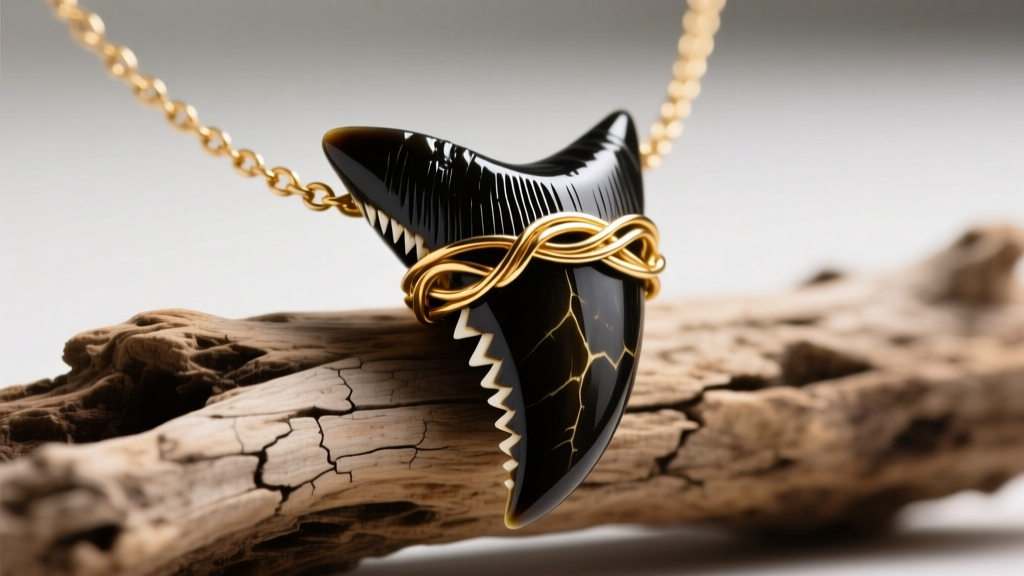
Fossilized teeth, particularly from the extinct Otodus megalodon or ancient mako species, are the gold standard for organic pendants. Buried in marine sediments for 10 to 50 million years, these teeth undergo permineralization. Groundwater rich in dissolved minerals replaces the original organic matter, converting the tooth into a dense, stone-like mineral matrix. This process results in a Mohs hardness rating of roughly 5.0—comparable to a knife blade or a piece of apatite. Fossilized teeth are impervious to water, sweat, and UV degradation, making them exceptionally durable for daily wear. Their color palette ranges from deep matte blacks and rich mahoganies to striking blues and greens, dictated by the specific sediment minerals (like glauconite or iron oxide) present during fossilization.
Metal Casts: Sterling Silver, Bronze, and Titanium
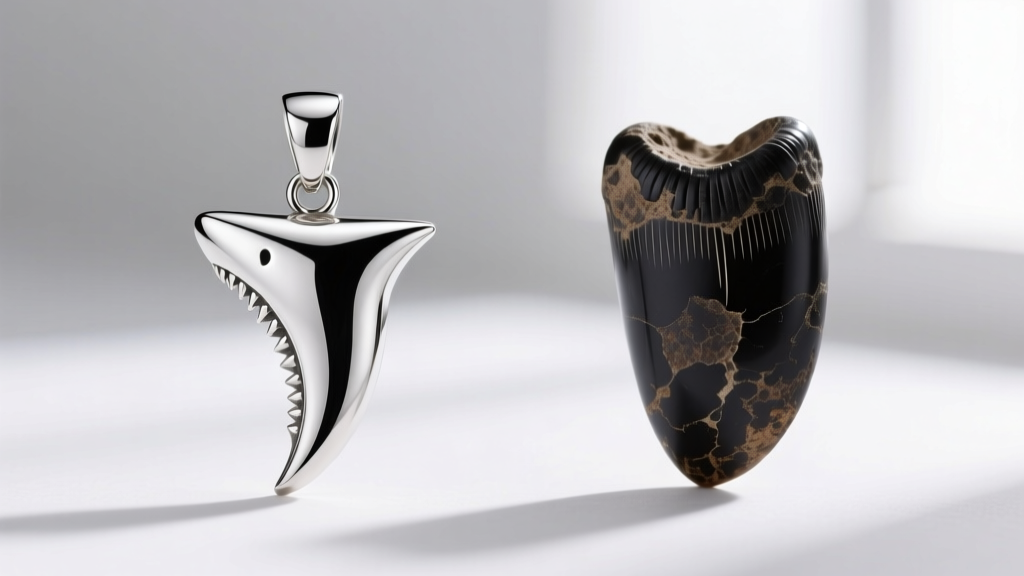
For those who want the aesthetic without the organic variability, metal casts offer superior structural predictability. 925 Sterling Silver remains the most popular choice. Composed of 92.5% silver and 7.5% copper, it captures intricate serration details beautifully. However, the copper content makes it highly susceptible to oxidation (tarnish) when exposed to the sulfur in human sweat and saltwater. Marine-grade bronze (an alloy of copper and tin) offers a rugged, antiqued look that develops a unique patina over time, though it can cause skin discoloration for those with high-acidity sweat. Grade 5 Titanium (Ti-6Al-4V) is the ultimate high-performance option. It is completely hypoallergenic, immune to saltwater corrosion, and incredibly lightweight, though its high melting point makes intricate casting difficult, often resulting in higher retail prices.
Material Comparison Matrix
| Material Type | Mohs Hardness | Water/Sweat Resistance | Avg. Price Range (USD) | Maintenance Level |
|---|---|---|---|---|
| Modern Real (Sealed) | 4.0 - 5.0 | Poor (Degrades) | $30 - $150 | High (Resealing required) |
| Fossilized (Megalodon) | 5.0 | Excellent | $150 - $2,500+ | Low (Occasional polish) |
| 925 Sterling Silver | 2.5 - 3.0 | Poor (Tarnishes) | $80 - $300 | Medium (Regular polishing) |
| 14k Solid Gold | 3.5 - 4.0 | Excellent | $400 - $1,500+ | Very Low |
| Grade 5 Titanium | 6.0 | Excellent | $120 - $400 | None |
Suspension Systems: Cords, Chains, and Bail Mechanics
The pendant is only half the equation; the suspension system determines the necklace's lifespan and comfort. A heavy fossilized megalodon tooth can easily weigh between 40 and 80 grams. Suspending this weight requires specific gauges and materials.
Cords vs. Chains
Waxed cotton cords (2mm to 3mm thickness) are the traditional choice, offering a rugged, surf-ready aesthetic. The wax coating provides temporary water resistance, but prolonged exposure to hot water or intense UV will melt the wax, leaving the cotton core vulnerable to rot. Type III 550 Paracord is a superior synthetic alternative, boasting a minimum breaking strength of 550 pounds and total immunity to water rot. For metal chains, avoid delicate cable or curb chains. A 3mm to 5mm solid Rope Chain or a thick Box Chain is mandatory for heavy pendants. Rope chains distribute weight evenly across their twisted links, reducing stress on individual solder points.
Bail Failure Modes and Solutions
The bail—the loop connecting the tooth to the chain—is the most common point of catastrophic failure. Mass-produced pendants often use epoxied bails. Standard jewelry epoxies (like E6000) begin to soften and fail at temperatures around 180°F (82°C), which can easily be reached inside a hot car or under direct summer sun. Always inspect the bail. For metal casts, demand a soldered bail. For organic or fossilized teeth, look for mechanical wire-wrapping using 20-gauge or 18-gauge dead-soft sterling silver or gold-filled wire. Wire-wrapping physically secures the tooth through tension and friction, completely eliminating the risk of thermal adhesive failure.
Matching Material to Your Lifestyle
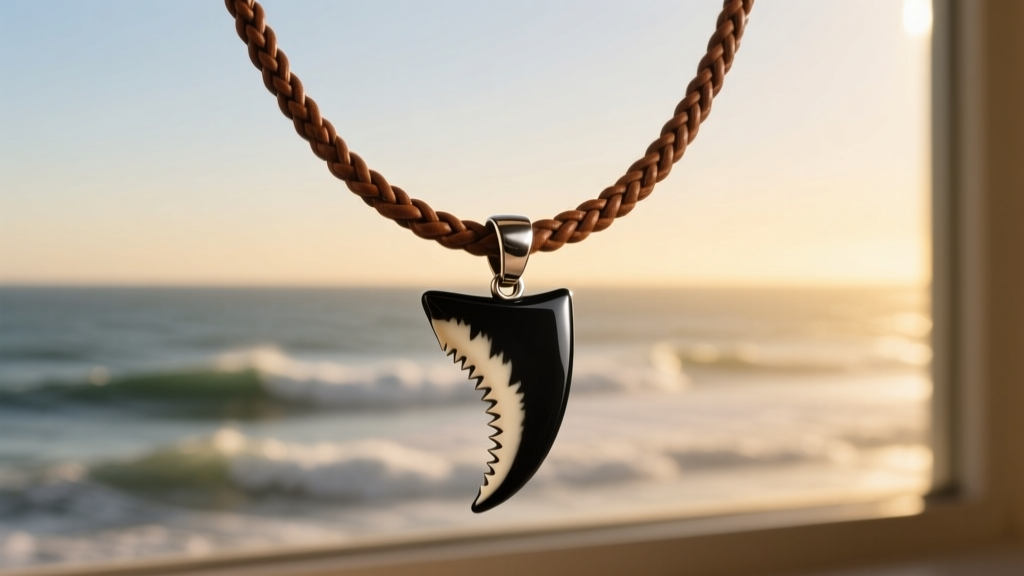
Choosing the right men's shark tooth necklace ultimately comes down to your daily environment. If you are an avid surfer, swimmer, or work in a marine environment, avoid 925 sterling silver and modern organic teeth. The saltwater will rapidly oxidize the silver and degrade the organic dentin. Instead, opt for a fossilized tooth wire-wrapped on a synthetic paracord, or a Grade 5 Titanium cast on a marine-grade stainless steel rope chain. For office environments and occasional evening wear, a 14k solid gold cast or a highly polished, sealed modern tooth on a premium leather cord offers a refined, sophisticated edge that bridges the gap between coastal heritage and modern menswear.


