Troubleshooting Your Metal Choker Necklace: Fit, Tarnish & Clasps
Is your metal choker necklace turning green, snagging hair, or fitting poorly? Expert troubleshooting for tarnish, clasps, and skin irritation.

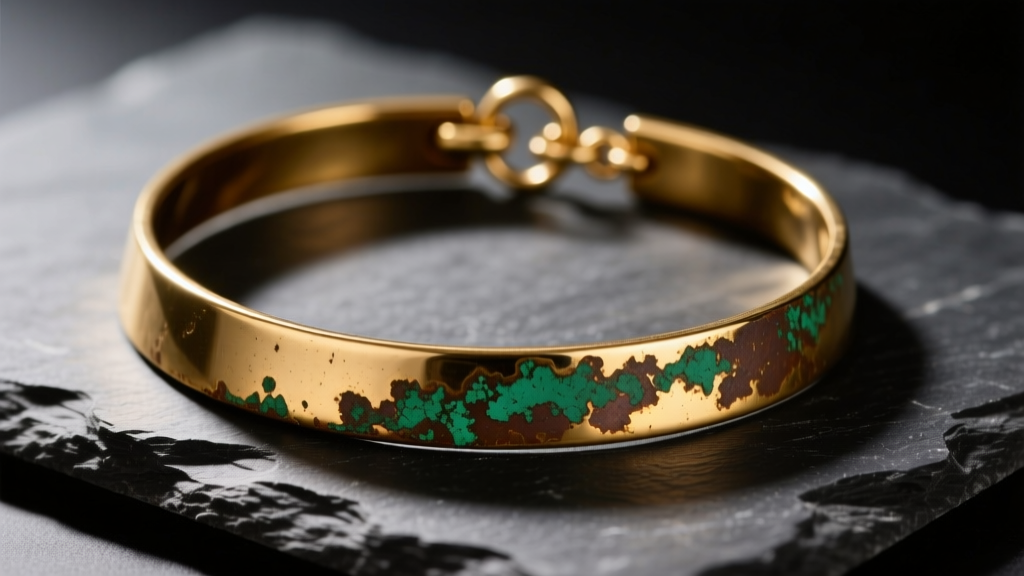
A metal choker necklace is a striking, minimalist staple in modern jewelry, but its close-fitting nature introduces unique biomechanical and chemical challenges. Unlike longer pendants that rest on the sternum, chokers sit directly against the highly sensitive, sweat-prone skin of the neck. This constant friction, combined with body heat and sebum, accelerates metal degradation and exposes design flaws in cheap manufacturing.
Whether you are dealing with severe contact dermatitis, a clasp that refuses to stay closed, or a chain that acts like a hair-catching net, this comprehensive troubleshooting guide will help you diagnose and permanently fix your metal choker necklace issues.
The "Green Neck" Phenomenon and Contact Dermatitis
The most frequent complaint regarding metal chokers is the dreaded green ring left on the neck, often accompanied by itching or a red rash. This is not an indicator of "toxic" jewelry, but rather a predictable chemical reaction.
Understanding Copper Chloride and Nickel Leaching
Most affordable metal choker necklaces are crafted from brass (an alloy of copper and zinc) and plated with a microscopically thin layer of gold or silver. When the plating wears off at the friction points—usually the back of the neck or near the clasp—the underlying copper reacts with the lactic acid, urea, and chloride found in human sweat. This creates copper chloride, a green salt that stains the skin.
More concerning is nickel allergy, which affects approximately 10% to 20% of the population, according to the Mayo Clinic. Even 316L surgical stainless steel contains nickel. While the nickel is generally trapped within the steel's crystal lattice, the constant moisture of a choker environment can cause enough leaching to trigger allergic contact dermatitis in highly sensitive individuals.
The Material Upgrade Protocol
To permanently solve skin irritation, you must audit your metal grades. Discard gold-plated brass for daily choker wear. Instead, look for these specific material grades:
- ASTM F136 Titanium (Ti-6Al-4V): The gold standard for biocompatibility. It contains zero nickel and will never react with sweat.
- 14k or 18k Solid Gold: Ensure it is solid, not vermeil. 14k is more durable for rigid chokers, while 18k offers a richer color but scratches easier.
- Niobium: A highly reactive metal that is anodized to create colors without using any plating or toxic dyes.
Biomechanical Fit: Solving the Choking Hazard
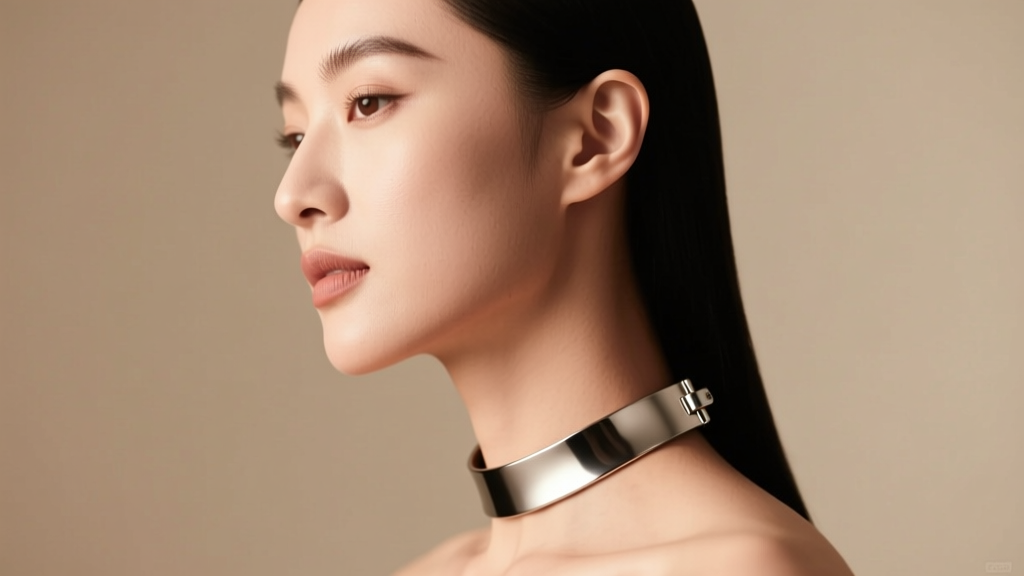
A metal choker necklace that feels perfect at 8:00 AM might feel like a tourniquet by 5:00 PM. This is due to venous engorgement and natural fluid retention; the human neck can expand up to 0.5 inches throughout the day, especially in hot climates or during physical exertion.
Sizing and Adjustability Matrix
Standard chokers range from 14 to 16 inches. If your rigid metal collar lacks an adjustable mechanism, it is a safety hazard. Below is a troubleshooting matrix to determine if your current sizing is viable or requires modification.
| Neck Measurement | Choker Size Needed | Required Hardware | Failure Risk |
|---|---|---|---|
| 12.5 - 13.5 inches | 14 inches | Fixed collar or 1-inch extender | Low (if resting on collarbone) |
| 13.5 - 14.5 inches | 15 inches | Mandatory 2-inch extender chain | Moderate (swelling in heat) |
| 14.5 - 15.5 inches | 16 inches | Lobster clasp with 3-inch chain | High (if rigid, no extender) |
Expert Fix: If you own a rigid, non-adjustable metal choker that is slightly too tight, take it to a professional jeweler to have a 2-inch, 16-gauge (1.2mm) cable extender chain soldered to the female end of the clasp. Do not attempt to bend rigid metal collars, as this will work-harden the alloy and cause it to snap.
Chain Architecture and Hair Snagging
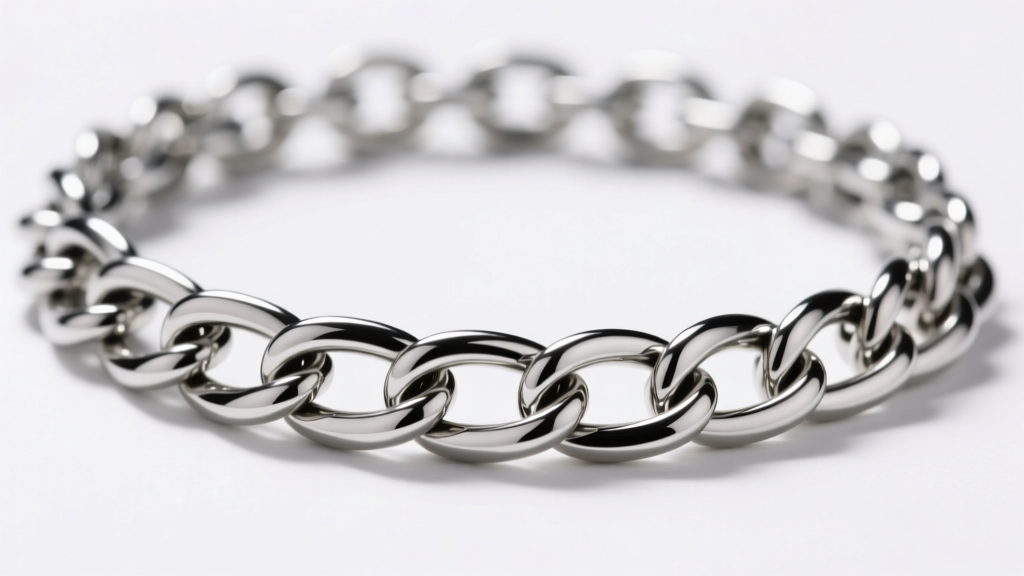
If your metal choker necklace acts as a magnet for loose hairs, the fault lies in the chain architecture. Certain link patterns create microscopic hooks that catch and pull hair, leading to breakage and scalp pain.
Chains to Avoid
- Herringbone: Beautiful and fluid, but the flat, overlapping links create sharp, V-shaped gaps that act like razors to fine hair.
- Rope Chain: The twisted, spiraling links create deep crevices that easily trap hair and are notoriously difficult to untangle without pliers.
Chains to Embrace
- Snake Chain: Composed of tightly joined, slightly wavy rings that form a smooth, tubular surface. Hair literally slides off a 14G or 16G snake chain.
- Box Chain: Square links folded flat against each other. As long as the gauge is 18G or thicker, the links are too large and flat to catch individual hair strands.
- Wheat Chain: Braided loops that lay flat. While textured, the uniform direction of the weave prevents hair from getting pulled into the core.
Clasp Failures and Upgrades
The clasp is the single most common point of mechanical failure on a metal choker necklace. Because chokers are under constant, low-grade tension from the neck's movement, weak clasps will eventually fatigue and pop open.
Diagnosing Your Clasp
The Spring Ring: This small, circular clasp relies on a tiny internal spring. It is the default on cheap jewelry and fails frequently because the spring mechanism weakens, or the user fails to push the lever back far enough to clear the jump ring. Verdict: Replace immediately.
The Lobster Claw: Shaped like a lobster's claw, this clasp offers a wider opening and a heavier internal spring. It is vastly superior to the spring ring but can still catch on sweaters. Verdict: Keep, but upgrade to a swivel lobster to prevent chain twisting.
The Magnetic Clasp: Excellent for accessibility and preventing tension-based unhooking. However, if the neodymium magnets are not properly shielded, they can interfere with medical devices. Furthermore, a sudden sharp tug (like a child pulling the necklace) will cause a magnetic clasp to separate, dropping the choker. Verdict: Use only for lightweight chains under 15 grams.
The Electrochemical Tarnish Reversal Protocol
If your sterling silver or silver-plated metal choker necklace has turned black, it has formed silver sulfide (Ag2S) due to exposure to sulfur compounds in the air and on your skin. Do not use abrasive polishing pastes, which will strip away microscopic layers of silver and ruin the finish.
Step-by-Step Ionic Bath Cleaning
Instead of polishing, reverse the chemical reaction using an electrolytic bath. This method converts the silver sulfide back into pure silver without removing any metal.
- Line a glass baking dish with aluminum foil, shiny side up.
- Place the tarnished silver choker directly onto the foil. (The silver and aluminum must physically touch).
- Boil a pot of water and dissolve two tablespoons of baking soda (sodium bicarbonate) per cup of water.
- Pour the hot solution over the necklace. You will immediately see bubbling and smell a faint sulfur (rotten egg) odor as the sulfur transfers from the silver to the aluminum.
- After 3 to 5 minutes, remove the choker with wooden tongs, rinse thoroughly in distilled water, and pat dry with a microfiber cloth.
Pro Tip: Never use the ionic bath method on oxidized silver (deliberately blackened crevices) or on chokers featuring glued-in gemstones like turquoise or opals, as the hot water and chemical shift will dissolve the jeweler's epoxy.
By understanding the metallurgy, biomechanics, and chemistry behind your jewelry, you can transform a problematic, uncomfortable metal choker necklace into a permanent, flawless fixture in your daily wardrobe. Always prioritize ASTM-certified metals and proper chain architecture to ensure your pieces last a lifetime.


