Choosing The Best Metal For An Angel Wings With Heart Necklace
Discover the best metals for an angel wings with heart necklace. Compare sterling silver, gold, and platinum for durability, pricing, and skin safety.

The Sentimental Weight of Intricate Pendants
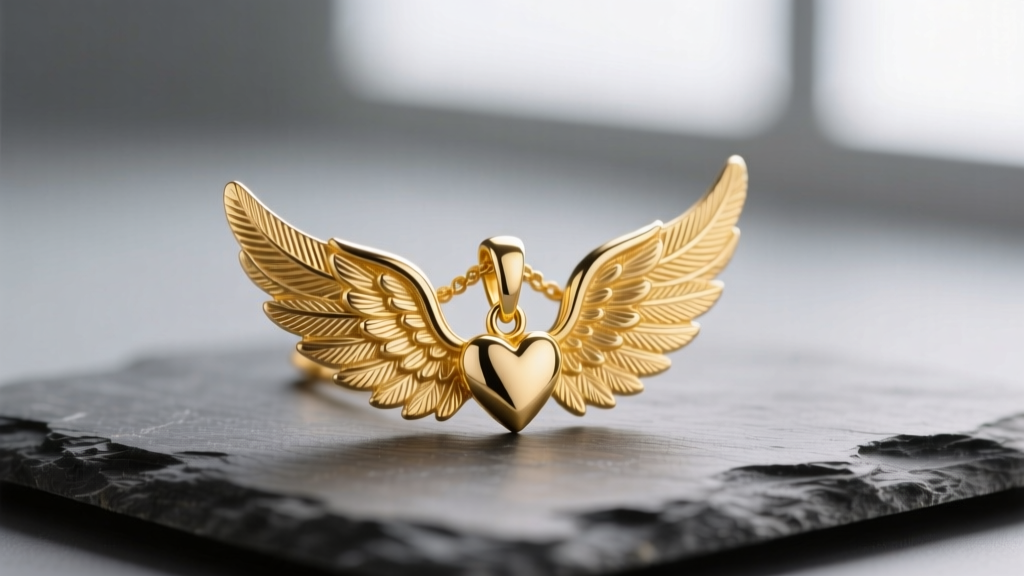
An angel wings with heart necklace is more than just a piece of jewelry; it is a deeply sentimental emblem of protection, love, and remembrance. Because these pendants feature highly intricate designs—characterized by delicate feather textures, sweeping wing spans, and central heart motifs—the choice of metal is not merely an aesthetic decision. It is a structural necessity. Thin wing tips and deep crevices demand a material that can hold sharp detail during casting while resisting bending, snapping, and tarnish accumulation during daily wear.
As we navigate the jewelry market in 2026, consumers are increasingly prioritizing longevity and skin safety over mere upfront cost. According to the Gemological Institute of America (GIA), understanding the metallurgical properties of precious and alternative metals is crucial for preserving intricate jewelry. This comprehensive guide breaks down the exact material properties, failure modes, and maintenance requirements for the most common metals used in angel wing and heart pendants.
Material Breakdown: How Metals Handle Intricate Wing Details
Sterling Silver (925): The Classic Choice & Tarnish Reality
Sterling silver is the most common entry point for sentimental pendants. Composed of 92.5% pure silver and 7.5% copper, it offers a brilliant white luster and excellent malleability, allowing jewelers to cast highly detailed feather patterns. However, that 7.5% copper is also its Achilles' heel. Copper reacts with sulfur and moisture in the air, leading to oxidation (tarnish).
The Crevices Problem: In an angel wings with heart necklace, the deep grooves between individual feathers trap dead skin cells, lotions, and environmental sulfur. This accelerates localized tarnishing that is notoriously difficult to polish out without specialized equipment. Pro Tip: If you choose sterling silver, insist on a piece that has been flash-plated with rhodium. This platinum-group metal creates an inert, tarnish-resistant barrier that keeps the intricate wing details bright white and significantly reduces maintenance.
Stainless Steel (316L): The Budget-Friendly Workhorse
Surgical-grade 316L stainless steel has surged in popularity for affordable, everyday jewelry. The 'L' stands for low carbon, and the alloy includes molybdenum, which drastically increases corrosion resistance. With a Vickers hardness rating of roughly 150-200 HV, it is significantly harder than sterling silver. This means the sharp edges of the angel wings will not bend or warp if the pendant is accidentally crushed or snagged.
The Repair Limitation: The major drawback of 316L steel is its repairability. If a delicate wing tip snaps off, standard jewelers cannot easily solder it back together due to the metal's high melting point and oxidation behavior during heating. Furthermore, steel is heavy; a solid steel wing pendant will require a robust chain to prevent bail wear.
Solid Gold (10K, 14K, 18K): Balancing Purity and Prong Strength
Gold remains the premier choice for heirloom-quality sentimental jewelry. However, pure 24K gold is far too soft (Vickers ~25 HV) for an intricate pendant; the wing tips would bend out of shape within weeks. Therefore, alloying is essential. The World Gold Council outlines how specific alloy mixtures dictate both color and structural integrity.
- 10K Gold (41.7% pure): The hardest and most durable gold alloy, highly resistant to scratching and bending. However, it has a paler yellow hue and a higher copper/zinc content, which can cause contact dermatitis in those with severe metal allergies.
- 14K Gold (58.5% pure): The undisputed sweet spot for an angel wings with heart necklace. It offers a rich, warm color, excellent hypoallergenic properties, and a Vickers hardness of ~120-140 HV. It is rigid enough to protect delicate wing spans but malleable enough for a jeweler to repair if damaged.
- 18K Gold (75% pure): Luxurious and deeply colored, but softer (~110 HV). If the pendant features micro-pavé diamonds set into the wings, 18K gold prongs may wear down or bend over a decade of daily wear, risking stone loss.
Platinum (950Pt): The Ultimate Heirloom Standard
Platinum is a dense, naturally white metal that is typically alloyed with 5% ruthenium or iridium for jewelry. Unlike white gold, which requires periodic rhodium re-plating, platinum's color is inherent. When platinum scratches, the metal is merely displaced, not lost, developing a soft 'patina' over time. For a deeply sentimental piece meant to be passed down through generations, platinum's structural permanence is unmatched. Its high density, however, means the pendant will be heavy, necessitating a carefully matched chain.
Comparative Data: Durability, Pricing, and Detail Retention
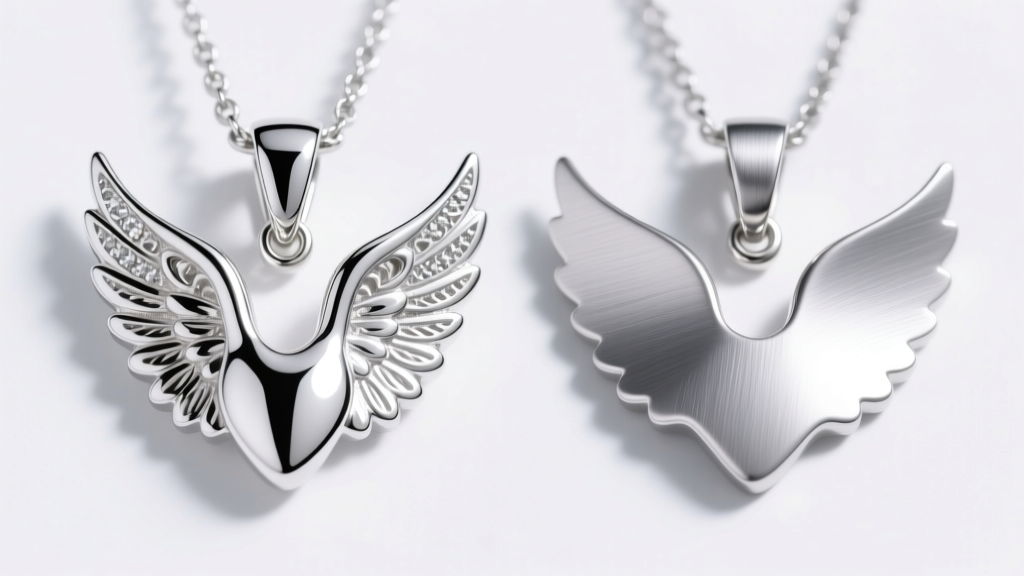
When evaluating an angel wings with heart necklace, buyers must weigh the upfront cost against the long-term maintenance and structural resilience of the metal. The table below synthesizes 2026 market data and metallurgical benchmarks to help you make an informed decision.
| Metal / Alloy | Vickers Hardness (HV) | Tarnish Resistance | Detail Retention | Avg. Price Range (Pendant Only) |
|---|---|---|---|---|
| 316L Stainless Steel | 150 - 200 | Excellent | High (Sharp edges) | $25 - $65 |
| Sterling Silver (925) | 60 - 70 | Poor (Unless Rhodium Plated) | Medium (Prone to bending) | $45 - $130 |
| 10K Solid Gold | 130 - 150 | Excellent | High | $180 - $300 |
| 14K Solid Gold | 120 - 140 | Excellent | High | $280 - $550 |
| 18K Solid Gold | 110 - 125 | Excellent | Medium-High | $450 - $850 |
| Platinum (950Pt) | 110 - 130 | Excellent (Patina forms) | Excellent (Heirloom grade) | $800 - $1,600+ |
Chain Pairings: Matching the Pendant's Metal and Weight
A common failure point in sentimental jewelry is the chain snapping under the weight of a solid metal pendant. An intricate angel wings with heart necklace cast in solid 14K gold or platinum carries significant mass. The bail (the loop connecting the pendant to the chain) acts as a fulcrum, creating friction and stress on the chain links.
Recommended Chains for Heavy Pendants:
- Wheat Chains (1.5mm - 2.5mm): Composed of woven, interlocking oval links, wheat chains offer exceptional tensile strength and flexibility. They distribute the weight of a heavy platinum or gold wing pendant evenly, preventing localized stress fractures.
- Box Chains (1.2mm - 2.0mm): Made of square links connected at 90-degree angles, box chains are incredibly strong and lie flat against the collarbone. However, ensure the links are soldered; unsoldered box chains can stretch and permanently deform under heavy loads.
- Rope Chains (2.0mm+): While visually striking and strong, rope chains can trap dirt in their twisted grooves, much like the crevices in the angel wings themselves. If you choose a rope chain, factor in regular ultrasonic cleaning.
Chains to Avoid: Delicate snake chains and thin herringbone chains (under 1.5mm) are highly susceptible to kinking and snapping when paired with dense, solid-metal wing pendants. Furthermore, always match the chain metal to the pendant metal to prevent galvanic corrosion and uneven wear at the bail friction point.
Maintenance Protocols for Creviced Wing Designs
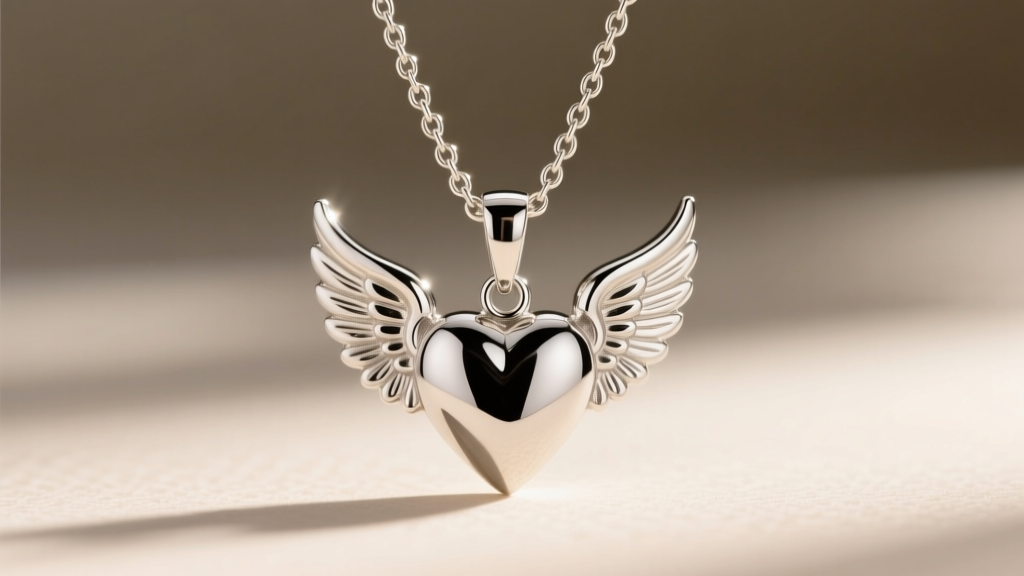
The intricate feather detailing that makes an angel wings with heart necklace so visually captivating also creates microscopic traps for sebum, cosmetics, and environmental dust. Over time, this buildup can dull the metal's reflectivity and, in the case of silver, accelerate localized corrosion.
The Ultrasonic Warning: While ultrasonic cleaners are excellent for plain metal jewelry, use extreme caution if your pendant features gemstones. If the heart motif includes a micro-pavé diamond halo or a central birthstone (like porous turquoise or fracture-filled emeralds), the high-frequency vibrations of an ultrasonic cleaner can shatter the stone or rattle the delicate prongs loose.
The Safe Cleaning Protocol:
- Soak: Submerge the pendant in a bowl of warm water mixed with a few drops of mild, phosphate-free dish soap for 10-15 minutes to soften debris.
- Agitate: Use an extra-soft baby toothbrush to gently sweep along the grooves of the wings and the outline of the heart. Never use stiff-bristled brushes, as they will leave micro-scratches on high-polish gold and silver.
- Rinse & Dry: Rinse thoroughly under lukewarm running water. Pat dry with a lint-free microfiber cloth. Avoid air-drying, as hard water spots can become baked into the crevices.
Final Verdict: Which Metal Should You Choose?
Selecting the right metal for your angel wings with heart necklace ultimately depends on your budget, lifestyle, and how you define heirloom value. For daily wearers on a budget who prioritize sharp detail and zero maintenance, 316L stainless steel is a pragmatic, modern choice. For those seeking a traditional, romantic aesthetic with manageable upkeep, a rhodium-plated sterling silver pendant offers brilliant shine at an accessible price point.
However, if this necklace is intended as a permanent tribute, a memorial piece, or a generational heirloom, 14K solid gold remains the gold standard. It perfectly balances the structural rigidity required to protect delicate wing tips with the intrinsic value and skin-safe properties expected of fine jewelry. For the ultimate expression of permanence, where budget is secondary to legacy, 950 Platinum provides an unmatched, dense, and enduring canvas for this deeply meaningful design.


