Meteorite Necklace Value Guide 2026: Are They Worth It?
Discover the true value of a meteorite necklace in 2026. We break down pricing tiers, origin rarity, rust risks, and how to spot expensive fakes.

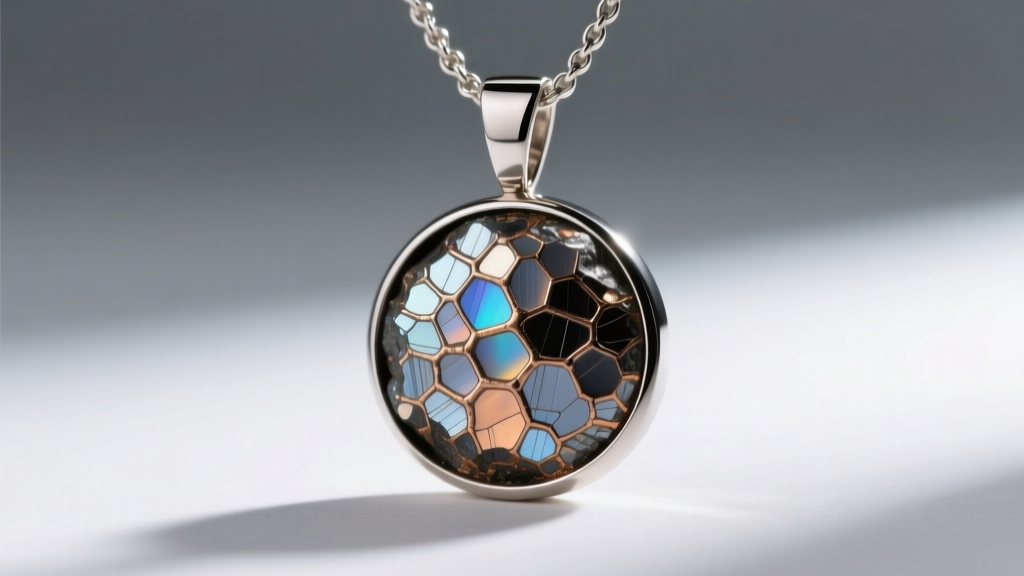
The True Cost of Wearing Space: Understanding Meteorite Valuation
Owning a piece of the cosmos is a profound concept, but the commercial jewelry market is currently saturated with overpriced novelties and poorly crafted space rocks. When evaluating a meteorite necklace, you are not just paying for a rare extraterrestrial material; you are paying for the lapidary skill required to cut, polish, and stabilize a highly reactive iron-nickel alloy. In 2026, as space-themed jewelry continues to surge in popularity, understanding the intersection of meteoritics and fine jewelry is critical for protecting your budget.
According to The Meteoritical Society, the classification and origin of a meteorite dictate its baseline scientific and collector value. However, in jewelry, the value is heavily modified by the aesthetic quality of the Widmanstätten pattern—the unique, interwoven crystalline structure of kamacite and taenite bands that only forms over millions of years of slow cooling in the vacuum of space. If a jeweler cannot properly etch and seal this pattern, the necklace is essentially worthless.
Meteorite Origins & Pricing Tiers: Where Does Your Money Go?
Not all meteorites are created equal. The market is dominated by a few specific 'falls' (documented meteorite impacts). Here is a realistic budget assessment for genuine meteorite pendants based on current 2026 market rates for a standard 15mm to 20mm slice.
| Meteorite Origin | Type | Price Range (Pendant Only) | Pattern Quality | Rust Risk |
|---|---|---|---|---|
| Campo del Cielo (Argentina) | Iron (IAB) | $40 - $90 | Low / Patchy | Extreme |
| Muonionalusta (Sweden) | Iron (IVA) | $120 - $250 | High / Striking | Very High |
| Gibeon (Namibia) | Iron (IVA) | $300 - $700 | Exceptional / Fine | Moderate |
| Seymchan (Russia) | Pallasite | $800 - $2,500+ | N/A (Olivine Crystals) | High (Matrix) |
Note: Pricing assumes a genuine, properly sealed slice set in a base or mid-tier metal. Precious metal settings will add significantly to the final cost.
Inlay vs. Solid Slice: The Manufacturing Budget Trap
When shopping for a meteorite necklace, you will encounter two primary construction methods. Understanding the difference is vital for assessing long-term value.
Solid Slices
A solid slice is exactly what it sounds like: a continuous cross-section of the meteorite. Cutting these is notoriously difficult. Meteoritic iron is tough but brittle; improper saw blade tension or cooling can shatter a $500 piece of Gibeon in seconds. Furthermore, solid slices require a bezel or prong setting that leaves the edges exposed, which increases the risk of oxidation. You are paying a premium for the lapidary risk and the unbroken 3D depth of the Widmanstätten pattern.
Crushed Inlays and Veneers
Many budget-friendly 'meteorite rings' and pendants under $100 use crushed meteorite dust mixed with epoxy, or paper-thin veneers glued over a tungsten or steel core. While this prevents rust and lowers the price, it completely destroys the crystalline structure. From a collector's standpoint, crushed inlay holds virtually zero resale or intrinsic value. If you want the authentic space experience, always demand a solid, continuous slice.
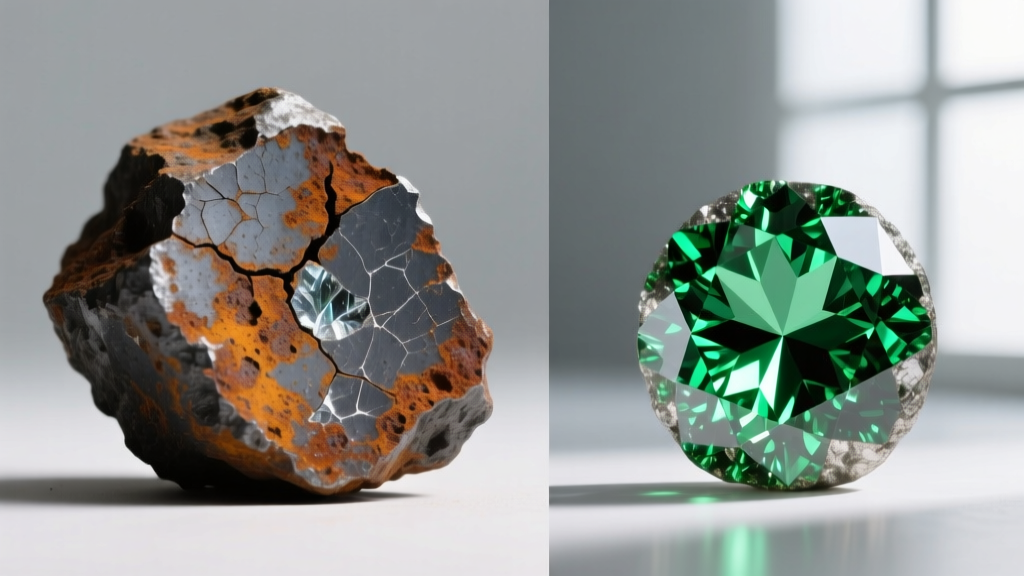
Spotting Fakes: The 'Etched Steel' Deception
Because genuine meteorite is expensive, the market is flooded with fakes. Unscrupulous sellers take standard carbon steel, apply an acid wash, and etch a fake geometric pattern onto the surface. According to gemological research highlighted by the Gemological Institute of America (GIA), distinguishing true space material from terrestrial mimics requires looking beyond the basic magnet test.
- The Magnet Test is Insufficient: Hematite, magnetite, and standard steel are all magnetic. A magnet will not confirm a meteorite.
- Nickel Content: True iron meteorites contain between 5% and 25% nickel. Terrestrial smelted iron rarely contains this much nickel. Professional jewelers can perform a non-destructive XRF (X-ray Fluorescence) scan to verify nickel content.
- Pattern Continuity: Fake etched steel often shows a repetitive, stamped, or overly uniform pattern. Genuine Widmanstätten patterns are chaotic, intersecting at specific crystallographic angles (usually around 60 degrees) and varying in band thickness.
Hardware and Chain Pairings: Hidden Structural Costs
A common failure mode in budget meteorite jewelry is the hardware. Meteorite is incredibly dense. A solid 20mm Gibeon pendant can easily weigh between 15 and 25 grams. If you pair this with a delicate 1.5mm wheat chain or a standard spring-ring clasp, the chain will snap under the dynamic load of daily wear.
The Expert Framework for Hardware:
- Chain Thickness: Minimum 2.5mm to 3.5mm. Opt for structural chains like Curb, Rolo, or Figaro.
- Clasp Type: Avoid spring-rings. Use a heavy-duty lobster clasp or a custom tension-fit barrel clasp.
- The Bail: The loop connecting the pendant to the chain must have an inner diameter of at least 4mm and be soldered securely. Cast bails with thin walls will eventually shear.
- Setting Metals: Because meteorite rusts, the setting should ideally be Grade 5 Titanium or 316L Surgical Steel, which will not induce galvanic corrosion. Avoid cheap brass or copper alloys, which can accelerate oxidation through moisture trapping.
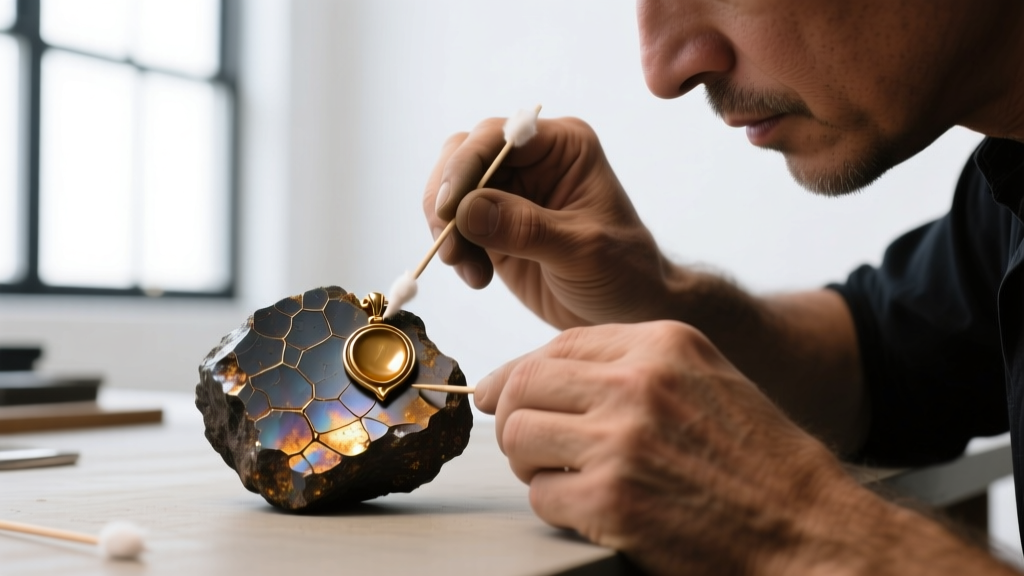
Long-Term Value: Rust, Sealing, and Maintenance ROI
The single biggest threat to the value of your meteorite necklace is terrestrial oxygen and moisture. Iron-nickel alloys are highly susceptible to oxidation. If a Muonionalusta pendant is worn against sweaty skin without proper sealing, it will develop 'meteorite disease'—a rapid, flaking rust that destroys the Widmanstätten pattern and stains your clothing orange within weeks.
How Jewelers Seal Meteorite (And What to Ask For)
Before purchasing, ask the jeweler exactly how the piece was stabilized. The industry standard methods include:
- Electroplating: A thin layer of rhodium or gold is plated over the iron. This looks beautiful but will eventually wear off at the high-contact points, leading to localized rust.
- Cyanoacrylate Vacuum Sealing: The pendant is placed in a vacuum chamber, and thin superglue is drawn deep into the micro-pores of the metal. This is the gold standard for permanent stabilization.
- Clear Nano-Coatings: Modern ceramic-based nano-coatings provide a hard, invisible shell that resists sweat and water.
Expert Maintenance Tip: Even with professional sealing, you should remove your meteorite necklace before swimming, showering, or exercising. Once a month, wipe the pendant down with a microfiber cloth lightly dampened with mineral oil or apply a micro-thin layer of Renaissance Wax to maintain the seal and enhance the contrast of the crystalline pattern.
Final Verdict: Is a Meteorite Necklace Worth the Investment?
From a strict financial ROI perspective, a meteorite necklace is not a traditional investment asset like a gold chain or a diamond pendant; you will rarely sell it for more than you paid. However, from a value perspective, it is unmatched. You are wearing a 4.5-billion-year-old artifact that predates the Earth itself.
To ensure your budget is well-spent, avoid crushed inlays and unverified origins. Invest in a properly sealed, solid slice of Gibeon or Muonionalusta, paired with heavy-duty titanium or steel hardware. By prioritizing structural integrity and professional stabilization over flashy but fragile precious metal settings, you secure a piece of the cosmos that will survive the gravity and moisture of Earth for a lifetime.


