The Michael Jackson Necklace: Materials, Replicas & Authentication
Explore the technical details, metallurgy, and diamond grading of the iconic Michael Jackson necklace, plus 2026 authentication tips for collectors.

The Anatomy of the Iconic Michael Jackson Necklace
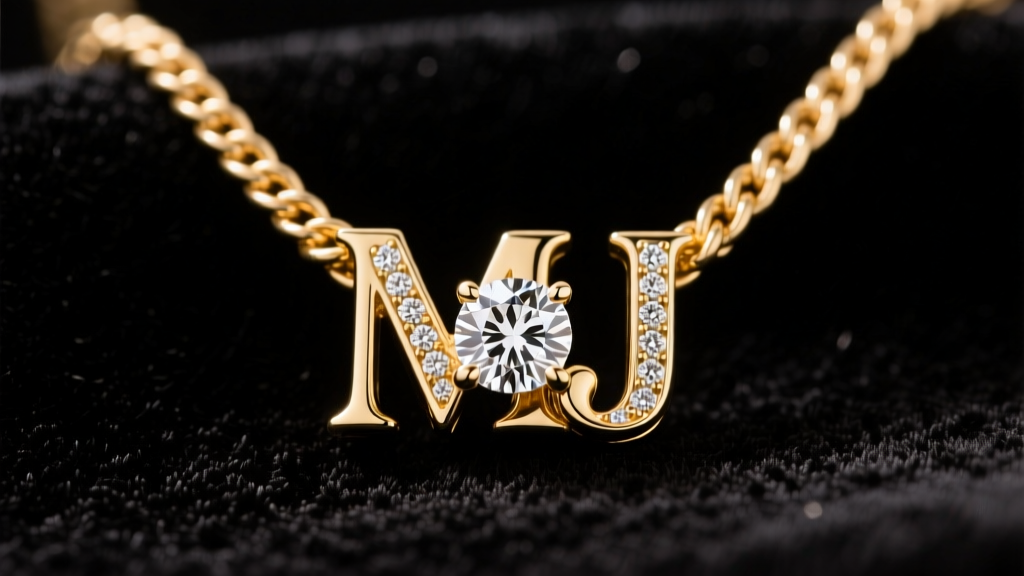
When collectors and jewelry enthusiasts search for the definitive Michael Jackson necklace, they are usually referencing one of three iconic pieces: the custom diamond-encrusted "MJ" crest, the heavy Egyptian Ankh, or his signature silver and diamond crosses. Unlike mass-produced celebrity merchandise, Jackson’s personal jewelry was custom-engineered by master jewelers in Los Angeles and New York, utilizing specific metallurgical profiles and stone-setting techniques designed to withstand the rigors of global touring while maintaining maximum light return under stage lighting.
In 2026, the market for both authentic memorabilia and high-end custom replicas has matured significantly. Understanding the exact gauge sizes, diamond melee grades, and structural architectures of these pieces is essential for serious collectors, authentication experts, and bespoke jewelers tasked with creating tribute pieces.
Metallurgy and Base Alloys
Jackson’s primary custom pieces from the Bad and Dangerous eras were predominantly cast in 18-karat white gold or 950 Platinum. The choice of 18k white gold (75% pure gold alloyed with palladium, nickel, or silver) was deliberate. While 14k gold offers higher tensile strength, 18k gold provides superior malleability for the intricate bead-set and pave settings required for his diamond-crested pendants. The prongs and beads holding the melee diamonds could be manipulated under a microscope without the metal becoming brittle or snapping, a common failure mode in lower-karat white gold alloys.
For heavier structural pieces, such as the large-scale Ankh pendants, jewelers opted for 950 Platinum (95% platinum, 5% ruthenium or iridium). Platinum’s natural white color does not require rhodium plating, ensuring that the metal's hue remains consistent even after decades of friction against clothing and skin. When 18k white gold was used, it was heavily flash-plated with rhodium (typically 0.75 to 1.0 microns thick) to achieve the stark, mirror-like finish that Jackson preferred on camera.
Chain Architecture: Rope vs. Cuban Link
The pendant is only half the equation. The chains supporting Jackson's custom pendants were engineered for both drape and tensile strength. The two most prominent styles associated with his collection are the Rope Chain and the Cuban Link.
- The Rope Chain (5.0mm - 8.0mm Gauge): Constructed from interlocking, twisted oval links, the rope chain offers a fluid, fabric-like drape that lays flat against the sternum. For a pendant weighing upwards of 40 grams, a minimum gauge of 5.5mm is required to prevent the chain from kinking. High-end replicas utilize laser-welded links rather than traditional torch soldering, ensuring that every microscopic joint can withstand up to 45 lbs of tensile force.
- The Cuban Link (6.0mm - 10.0mm Gauge): Characterized by flat, interlocking oval links that sit flush against one another. Jackson’s Cuban chains were often custom-filed to ensure a seamless, continuous surface. The weight distribution of a 8mm solid 18k Cuban chain is substantial, often exceeding 120 grams for a 22-inch length, requiring a reinforced clasp mechanism.
Diamond Grading and Pave Setting Techniques
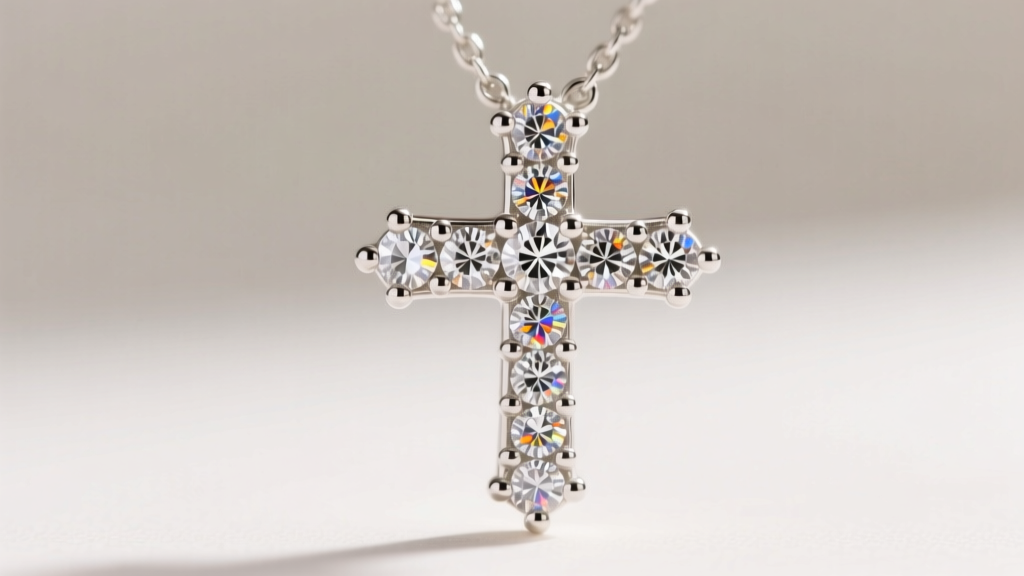
The brilliance of the Michael Jackson necklace under stage spotlights was not an accident; it was the result of precise diamond selection and setting techniques. The pendants relied heavily on melee diamonds (stones ranging from 0.01 to 0.18 carats).
During the 1980s and 1990s, custom celebrity jewelry often utilized SI1 to SI2 clarity melee with G to H color grades. The sheer volume of stones created a "wall of light" effect that masked minor inclusions. However, modern high-end replicas commissioned in 2026 demand stricter tolerances, typically requiring VS2 clarity and E to F color grades to satisfy contemporary luxury standards.
The setting technique was predominantly bright-cut pave. Unlike modern micro-pave, which uses tiny, nearly invisible prongs, bright-cut pave involves carving into the metal to create highly polished, reflective walls (the "bright cut") that surround the diamond. This technique reflects ambient light back through the pavilion of the stone, artificially boosting the perceived brilliance of the melee diamonds—a crucial optical trick for pre-LED stage lighting environments.
Authentication and the 2026 Memorabilia Market
As the value of pop-culture memorabilia continues to appreciate, the secondary market has seen an influx of sophisticated counterfeits. Authenticating a genuine Michael Jackson necklace requires looking past the overall aesthetic and examining the microscopic hallmarks of period-correct manufacturing.
According to provenance data from Julien's Auctions, authentic pieces will often feature custom maker's marks from Los Angeles-based jewelers like Jason of Beverly Hills or Gregg Fienberg, alongside specific hallmark stamps that align with the era of production. Furthermore, the Gemological Institute of America (GIA) notes that vintage melee diamonds often exhibit distinct fluorescence patterns under UV light that differ from modern lab-grown or synthetic simulants frequently used in fraudulent replicas.
| Category | Base Metal | Diamond Quality | Clasp Type | 2026 Market Value |
|---|---|---|---|---|
| Authentic Memorabilia | 18k Gold / 950 Pt | SI1-SI2, G-H (Historic) | Custom Box w/ Figure-8 Safety | $50,000 - $250,000+ |
| High-End Custom Replica | 18k White Gold | VS1-VS2, E-F (Modern) | Lobster / Box Clasp | $8,000 - $18,000 |
| Commercial Tribute | 925 Sterling Silver | CZ / Moissanite | Spring Ring | $150 - $800 |
Commissioning a High-End Tribute Piece
For collectors who cannot access authentic auction pieces, commissioning a bespoke replica is the most viable alternative. This process requires a deep understanding of CAD (Computer-Aided Design) jewelry modeling and lost-wax casting.
Clasp Mechanisms and Safety Catches
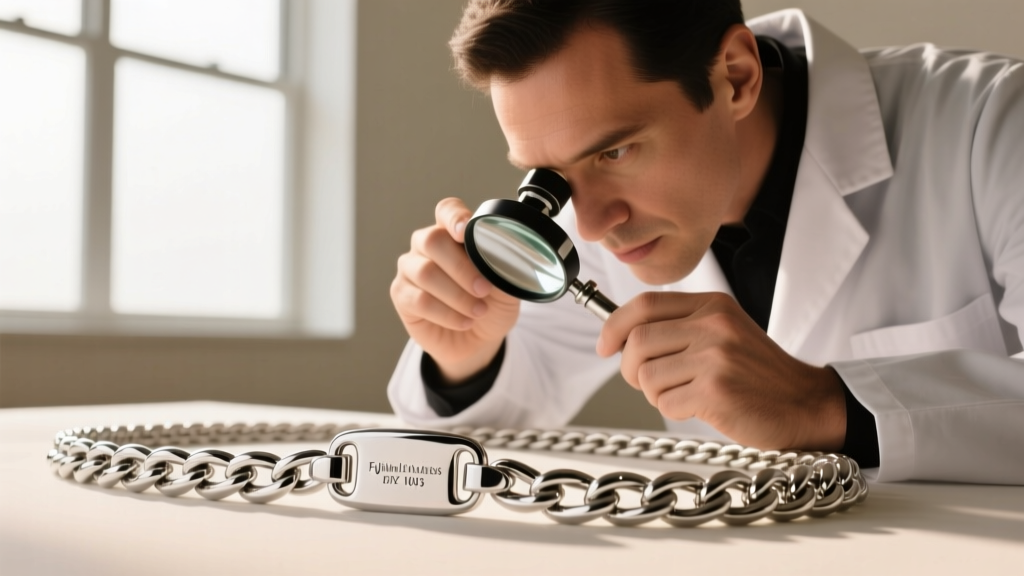
A critical, often overlooked detail in replicating the Michael Jackson necklace is the clasp. Authentic heavy chains never relied on standard lobster clasps, which present a single point of failure. Instead, they utilized custom-machined box clasps with figure-8 safety catches. The box clasp features a V-shaped spring lever that clicks securely into a reinforced square housing. The figure-8 safety, bent from 18-gauge or 20-gauge wire, acts as a secondary fail-safe, ensuring that if the primary lever is depressed accidentally during a performance or daily wear, the chain remains secured around the neck.
The Casting and Finishing Process
To achieve the exact weight and drape of the original pieces, jewelers must calculate the specific gravity of the chosen alloy during the CAD phase. A pendant modeled in silver will weigh roughly 40% less than the same volume cast in 18k gold. To replicate the exact feel and kinetic movement of Jackson's original pendants, the CAD designer must adjust the internal honeycomb structures (often used to reduce weight and cost) to match the precise gram weight of the historical artifact.
Once cast, the piece undergoes meticulous pre-polishing before any stones are set. The bright-cut walls must be polished using a micro-motor and horsehair brush to ensure maximum reflectivity. Only then does the master setter begin the painstaking process of setting hundreds of individual melee diamonds, securing each with perfectly rounded beads pushed over the girdle of the stone.
"True homage in jewelry design is not just about copying a silhouette; it is about replicating the engineering, the weight distribution, and the optical physics that made the original piece iconic." — Master Jeweler & Memorabilia Conservator
Whether you are evaluating a potential auction acquisition or commissioning a master-crafted tribute, understanding the technical depths of the Michael Jackson necklace transforms it from a mere pop-culture artifact into a masterclass of late-20th-century bespoke jewelry engineering.


