Is a Vintage Chunky Silver Necklace Worth the Investment?
Learn how to evaluate a vintage chunky silver necklace. Discover pricing tiers, hallmark guides, and melt value math to ensure you pay a fair price.

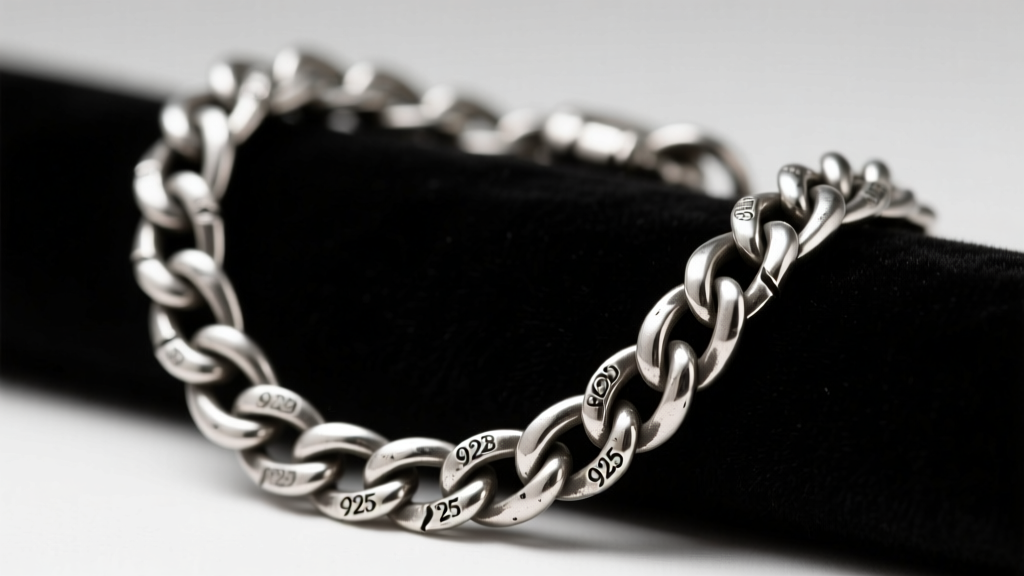
The Economics of Heavy Silver: Weight vs. Craft
The resurgence of maximalist jewelry has pushed the market for a vintage chunky silver necklace to all-time highs. Whether you are hunting for a 1980s Italian curb chain, a 1950s Mexican Taxco statement collar, or a heavy Native American squash blossom, the appeal is undeniable. However, from a budget and value assessment perspective, buying heavy vintage silver requires a shift in mindset. You are not just buying a design; you are buying a significant quantity of precious metal. In 2026, with silver spot prices fluctuating between $28 and $34 per troy ounce, the raw material value of a heavy piece forms a strict baseline for your budget assessment.
To accurately assess value, you must understand the difference between a troy ounce (31.103 grams) and a standard avoirdupois ounce (28.349 grams). A genuinely chunky vintage necklace typically weighs between 120 grams and 300 grams. If a piece weighs 200 grams, it contains roughly 6.43 troy ounces of silver. If it is stamped 925 (sterling), the pure silver content is 5.95 troy ounces. At a spot price of $30/oz, the intrinsic melt value of the metal alone is approximately $178. This melt value is your absolute floor. Any price above this baseline is a premium paid for craftsmanship, historical provenance, brand recognition, or retail markup.
Decoding Silver Hallmarks and Purity Grades
Before calculating value, you must verify the metal's purity. According to the Federal Trade Commission Jewelry Guides, silver must meet specific purity thresholds to be legally stamped and sold as sterling or coin silver in the United States. In the vintage market, international hallmarks tell a deeper story about the piece's origin and potential value multiplier.
The London Assay Office hallmarking standards and international equivalents provide a roadmap for authentication. Here is a breakdown of the purity grades you will encounter when sourcing vintage chunky pieces:
| Purity Mark | Silver Content | Common Vintage Origin | Value Assessment |
|---|---|---|---|
| 950 | 95.0% | Mexican Taxco (Pre-1970s), Peru | High (Softer metal, usually indicates hand-forged artisan work) |
| 925 | 92.5% | USA, UK, Italy, Global Standard | Medium (Standard baseline for vintage and modern sterling) |
| 800 | 80.0% | Continental Europe, Egypt, Russia | Low-Medium (Higher copper content, more durable, lower melt value) |
| 900 / Coin | 90.0% | USA (Coin Silver), Latin America | Medium (Historical significance, often predates 1870s) |
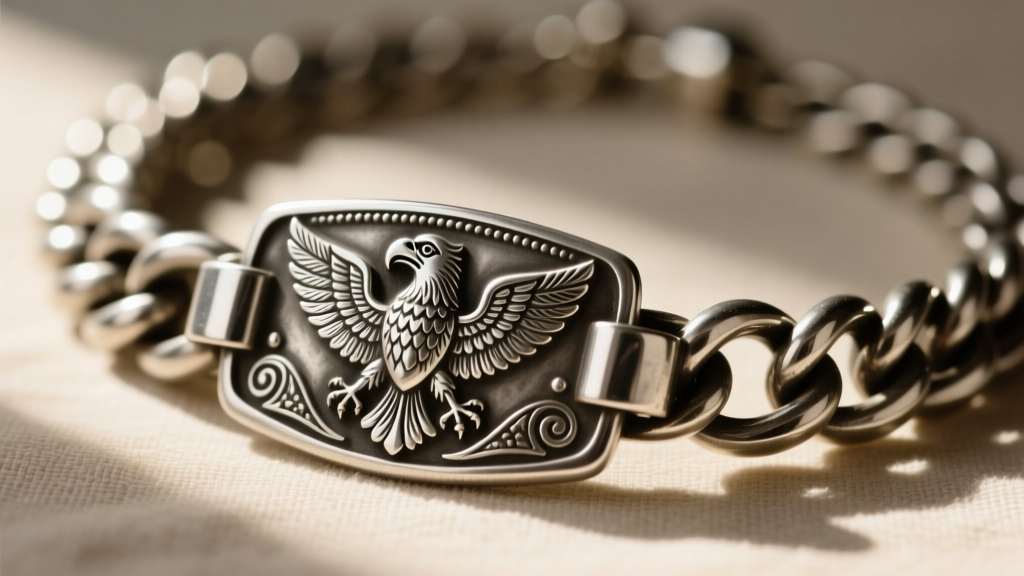
When examining Italian vintage chains, look for the maker's mark consisting of a star, a number, and a two-letter province code (e.g., * 123 AR for Arezzo). These specific provincial codes can help date the piece to the 1960s or 70s, adding a 15% to 20% premium over generic unmarked 925 chains due to the renowned quality of mid-century Italian goldsmiths and silversmiths.
The 3-Tier Pricing Framework for Chunky Vintage Silver
To determine if a vintage chunky silver necklace is priced fairly, categorize it into one of three distinct market tiers. This framework prevents you from overpaying for unsigned pieces or undervaluing rare designer artifacts.
Tier 1: The Melt-Value Plus Tier ($150 – $350)
This tier includes unsigned, mass-produced vintage chains from the 1980s and 90s (e.g., heavy Figaro, Cuban, or Curb links). The value here is almost entirely tied to the weight of the silver. You should expect to pay the exact melt value plus a 20% to 40% retail premium for the seller's sourcing effort and the clasp's structural integrity. If a 150-gram 925 chain has a melt value of $133, a fair retail price is between $160 and $190. Anything over $300 in this tier is an unjustified markup based on current fashion trends.
Tier 2: The Artisan and Regional Tier ($400 – $1,200)
Pieces in this tier feature distinct regional craftsmanship, such as mid-century Mexican Taxco collars, Native American Navajo or Zuni squash blossom necklaces, or heavy Scandinavian modernist silver. The value is derived from the labor-intensive techniques used—such as hand-stamping, repoussé, or intricate stone inlay. A 950 Taxco necklace weighing 250 grams might have a melt value of $225, but its artisan value pushes it into the $600 to $900 range. Look for specific maker marks (like Margot de Taxco or Hector Aguilar) which can instantly push a piece into Tier 3.
Tier 3: The Provenance and Designer Tier ($1,500 – $5,000+)
This tier is reserved for documented pieces by iconic houses or legendary silversmiths. Think vintage David Webb, Georg Jensen, Elsa Peretti for Tiffany & Co., or early Vivienne Westwood orb chains. At this level, the weight of the silver becomes irrelevant; you are paying for the brand archive, the design patent, and the historical provenance. Budget assessment here relies on auction house comparables rather than metal weight.
Red Flags: Spotting Fakes and Structural Failures
The high demand for chunky vintage silver has flooded the market with modern reproductions artificially aged with liver of sulfur to mimic decades of patina. Furthermore, heavy vintage pieces suffer from specific structural failure modes that can destroy their value.
- The Clasp Stress Test: A chunky silver necklace puts immense kinetic stress on the clasp. Inspect the jump ring connecting the clasp to the chain. If it is not seamlessly soldered shut, the weight of the chain will eventually pull it apart. Avoid vintage pieces with unsoldered or stretched jump rings unless you factor a $40 jeweler repair bill into your offer.
- The Brass Bleed: Many 'vintage' chunky chains from the 1980s were actually brass or copper with heavy silver electroplating. Check the high-friction areas—the inside of the links and the edges of the clasp. If you see a yellowish or reddish hue bleeding through the dark patina, it is plated. A magnet test will also instantly reveal ferrous base metals.
- The Ice Cube Test: Silver has the highest thermal conductivity of any common metal. Place an ice cube directly on the thickest link of the necklace. Genuine solid silver will transfer the heat from the room and melt the ice cube noticeably faster than stainless steel, brass, or silver-plated alloys.
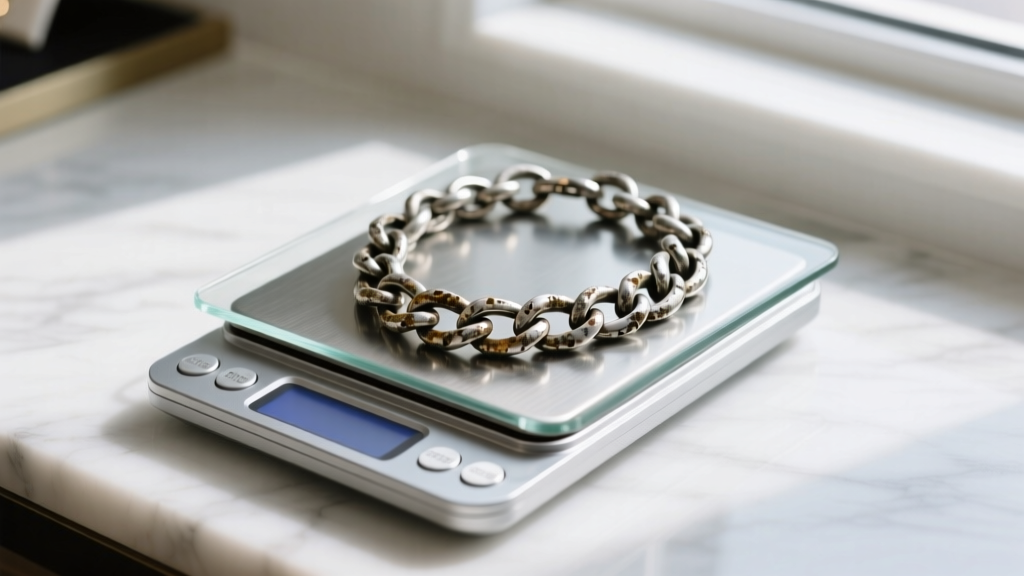
Pro Tip: Always carry a digital pocket scale when sourcing at estate sales or flea markets. If a seller prices an unsigned 200-gram 800 silver chain at $900, they are charging a 300% premium over melt value based purely on aesthetics. Weighing the piece gives you the empirical data needed to negotiate the price down to a rational market rate.
Where to Source Authentic Pieces Safely
When building a collection or sourcing for resale, the platform you choose dictates the baseline risk. Estate auctions and local coin dealers often sell heavy silver chains strictly by weight, offering the best budget value for Tier 1 pieces. Conversely, curated vintage platforms like 1stDibs or specialized Instagram dealers will heavily mark up Tier 2 and Tier 3 pieces for their aesthetic presentation. For the best value assessment, seek out local silversmith guilds or regional antique shows where sellers possess deep metallurgical knowledge and price their inventory based on accurate historical attribution rather than fleeting social media trends.
Final Verdict: Investment or Just a Trend?
Is a vintage chunky silver necklace worth the investment? From a purely financial standpoint, solid silver retains intrinsic value that plated or gold-filled alternatives simply cannot match. While the fashion cycle of maximalist jewelry may ebb and flow, the heavy metal content ensures your piece will never drop below its melt value baseline. By applying strict weight-to-price math, verifying international hallmarks, and rigorously testing for structural integrity, you can confidently acquire vintage statement pieces that serve as both striking sartorial anchors and resilient stores of tangible wealth.


