The Necklace PDF by Guy de Maupassant: Spotting Fake Diamonds
Read the necklace pdf by Guy de Maupassant through a gemologist's lens. Learn to identify antique paste, modern simulants, and real diamonds.

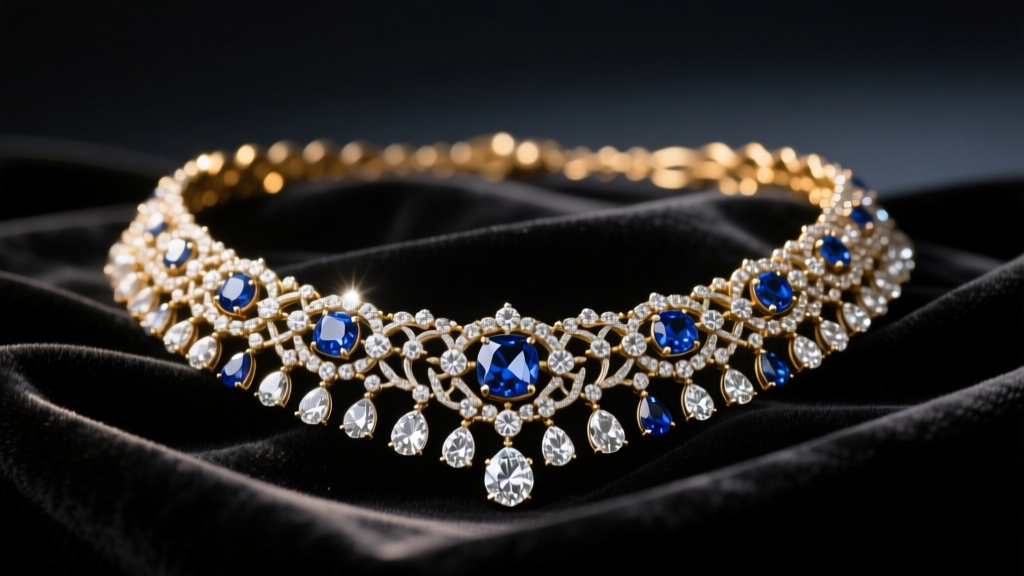
Every year, thousands of students and educators search for the necklace pdf by guy de maupassant to study its timeless themes of vanity, class disparity, and deceit. But for gemologists, appraisers, and vintage jewelry collectors, Guy de Maupassant’s 1884 masterpiece La Parure (The Necklace) is much more than a literary classic. It is the ultimate cautionary case study in jewelry valuation, diamond simulants, and the catastrophic financial cost of misidentification.
In the story, Mathilde Loisel borrows what she believes to be a magnificent diamond necklace from her wealthy friend, Jeanne Forestier. After losing it, Mathilde and her husband plunge themselves into a decade of crushing poverty to replace it with a real diamond necklace costing 36,000 francs. The tragic twist? The original was merely "paste" (costume jewelry) worth at most 500 francs.
Whether you are analyzing the text for a literature seminar or you are a modern collector trying to avoid Mathilde's fate, understanding the physical and optical properties of diamond simulants is essential. Here is a gemologist’s beginner-friendly guide to the science of fake diamonds, from 19th-century glass paste to modern lab-created simulants.
The Science of 19th-Century "Paste" Jewelry
To understand Mathilde’s fatal error, we must look at the jewelry manufacturing techniques of the 1880s. The term "paste" in antique jewelry does not refer to a cheap adhesive or plastic. According to Lang Antiques' historical archives, paste is a specific type of high-lead glass invented by Georges Frédéric Strass in the 18th century.
By adding up to 40% lead oxide to glass, jewelers created a material with a remarkably high refractive index (RI) and dispersion. When cut and polished, this lead glass mimicked the fiery sparkle of a diamond. Furthermore, 19th-century paste stones were often backed with metallic foil or set in closed-back silver collet settings to enhance their brilliance and mask the lack of light return.
The Mohs Scale and the Flaw of Glass
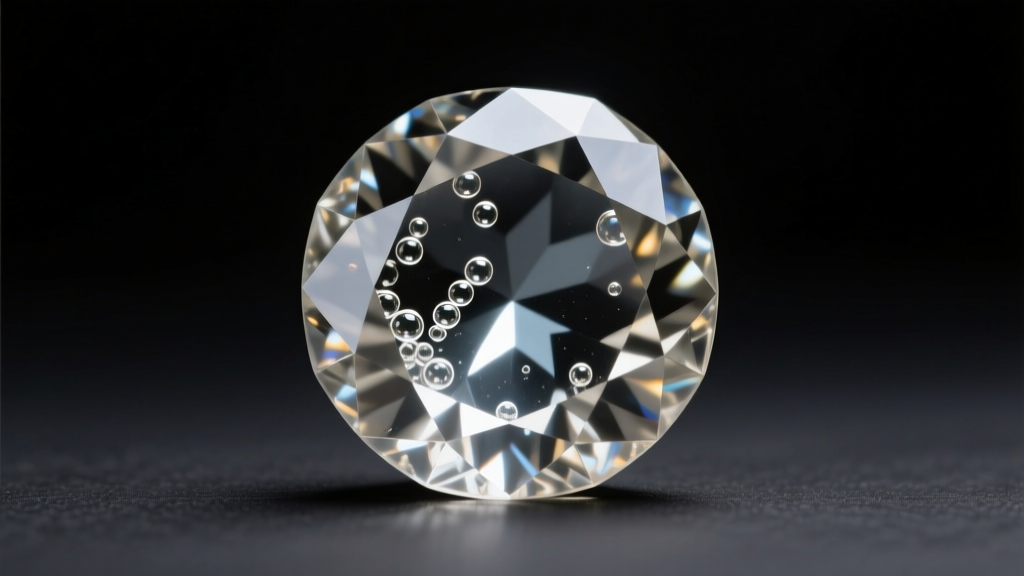
The primary way a modern gemologist distinguishes antique paste from a diamond is through hardness and facet wear. Diamonds sit at a 10 on the Mohs scale of mineral hardness. Lead glass, however, sits at a mere 5.5 to 6. Over decades of wear, paste stones develop "frosted" girdles, rounded facet junctions, and surface scratches. In the dim, flickering gaslight and candlelight of 1880s Parisian ballrooms, these surface abrasions were virtually invisible to the untrained eye, allowing a well-crafted glass replica to easily pass for the real thing.
Modern Simulants: A Gemological Breakdown
If Mathilde Loisel were to borrow a necklace today, she would face a much more complex landscape of diamond simulants. The Gemological Institute of America (GIA) categorizes simulants as materials that visually mimic a diamond but possess entirely different chemical and physical properties. Below is a comparative breakdown of the most common diamond alternatives on the modern market.
| Material | Mohs Hardness | Refractive Index (RI) | Thermal Conductivity | Average Price (1 Carat) |
|---|---|---|---|---|
| Natural Diamond | 10 | 2.42 | Extremely High | $3,000 - $8,000+ |
| Lab-Grown Diamond | 10 | 2.42 | Extremely High | $600 - $1,500 |
| Moissanite (SiC) | 9.25 | 2.65 - 2.69 | High (Passes some testers) | $300 - $600 |
| Cubic Zirconia (CZ) | 8.0 - 8.5 | 2.15 - 2.18 | Low | $20 - $50 |
| Antique Lead Paste | 5.5 - 6.0 | 1.70 - 1.90 | Very Low | $100 - $500 (Antique value) |
Notice that Moissanite actually possesses a higher refractive index than a natural diamond, giving it an intense "disco-ball" fire that can easily trick the naked eye. Cubic Zirconia, while heavier and slightly more dispersive, remains the most common modern equivalent to the "paste" of Mathilde's era.
3 Gemologist Tests You Can Do at Home
You do not need to spend ten years in poverty to discover your necklace is fake. While a certified appraisal is always the gold standard, there are three non-destructive tests you can perform at home to separate diamonds from common simulants like CZ and glass.
1. The Read-Through Effect (Optical Test)
Because of a diamond's precise cut and high refractive index, light bends so sharply inside the stone that it cannot easily pass straight through. If you place a loose, round-brilliant stone face-down on a piece of newspaper or a book with printed text, you should not be able to read the letters through the pavilion. If the text is clearly visible or readable, the stone is likely glass, CZ, or a poorly cut simulant.
2. The Fog Test (Thermal Test)
Diamonds are exceptional heat conductors. If you hold a stone close to your mouth and breathe on it as if fogging up a mirror, the condensation on a real diamond will evaporate almost instantly (within 1 to 2 seconds). On Cubic Zirconia or glass, the fog will linger for several seconds because these materials retain heat differently.
3. The UV Fluorescence Test
Approximately 25% to 35% of natural diamonds exhibit some degree of fluorescence under long-wave ultraviolet (UV) light, most commonly glowing a medium to strong blue. While this is not a definitive test (as many real diamonds do not fluoresce, and some lab simulants are doped to mimic it), a strong blue reaction under a standard UV blacklight is a strong indicator of a natural origin. Conversely, many CZ stones will emit a yellowish or beige glow under shortwave UV.
The Appraisal Protocol: Avoiding Financial Ruin
The core tragedy of The Necklace is not just that Mathilde lost a piece of jewelry, but that she replaced it without ever consulting a professional appraiser or asking her friend for the original receipt. In the modern jewelry market, avoiding catastrophic valuation errors requires a strict protocol.
"Never replace a lost or stolen piece of fine jewelry based solely on visual memory or retail replacement estimates. Always rely on documented specifications, laser inscriptions, and independent gemological laboratory reports."
- Demand a GIA or AGS Report: For any diamond over 0.50 carats, insist on a grading report from the Gemological Institute of America or the American Gem Society. These reports include a unique laser inscription on the stone's girdle, linking the physical diamond to the paperwork.
- Understand the 4 Cs in Context: A 1-carat diamond with an I3 clarity grade and a Poor cut may be worth less than a high-quality 1-carat moissanite. Visual size does not equate to financial value.
- Verify Hallmarks and Maker's Marks: Antique pieces (like Jeanne's necklace) often bear French eagle or boar head hallmarks indicating gold purity. However, the absence of a hallmark on the setting does not automatically mean the center stone is fake, just as a platinum setting does not guarantee a diamond center.
- Use Electronic Testers Cautiously: Standard thermal diamond testers will accurately separate diamond from CZ and glass. However, they will often register Moissanite as a diamond due to its similar thermal properties. To differentiate diamond from Moissanite, you must use a combined thermal and electrical conductivity tester (such as the Presidium Multi-Tester III).
The True Cost of Replacement: Then vs. Now
To fully grasp the weight of Mathilde's mistake, we must contextualize the 36,000 francs she spent in 1884. Under the Latin Monetary Union standard of the era, 36,000 francs equated to roughly 10,440 grams of pure gold. Adjusted for modern gold prices and inflation, that purchasing power would exceed $750,000 today. Mathilde essentially spent a lifetime paying off the equivalent of a luxury estate to replace a piece of costume jewelry that could be bought at a Parisian market stall for the modern equivalent of $10,000.
The next time you download the necklace pdf by guy de maupassant for a class assignment, look past the social commentary and view it as a foundational text in consumer protection. It reminds us that in the world of fine jewelry, beauty is subjective, but chemical composition and market value are absolute facts. Always verify, always appraise, and never let vanity override gemology.


