How to Fix a Twisted Necklace Chain: Untangle and Prevent Kinks
Learn how to safely untangle a twisted necklace chain, fix permanent kinks in delicate metals, and use expert storage methods to prevent future tangling.

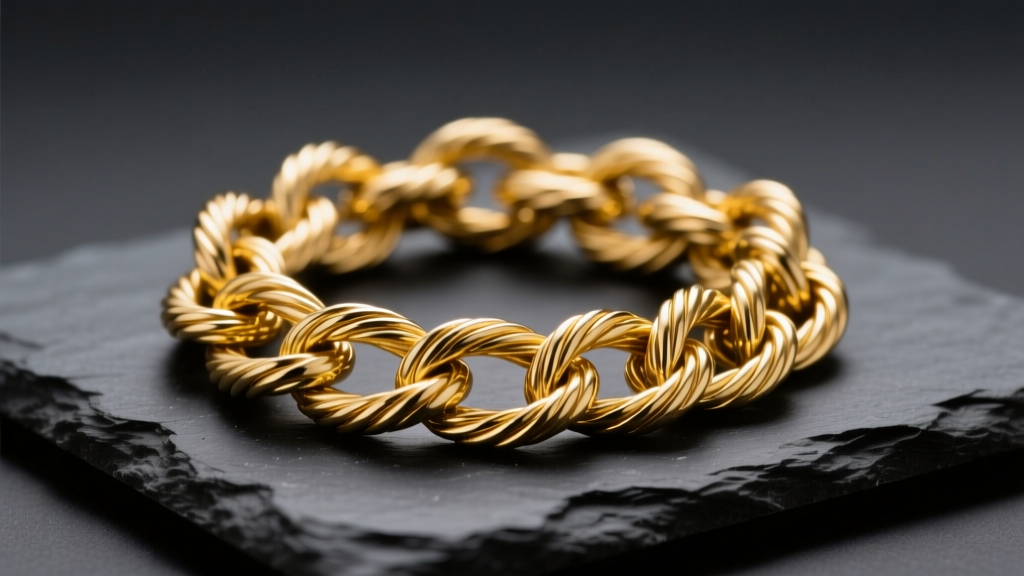
The Physics of Tangling: Why Your Chains Twist
There is nothing more frustrating than reaching into your jewelry box and pulling out a twisted necklace chain. Whether it is a delicate 0.8mm cable chain or a statement 3mm Cuban link, torsional stress and improper storage can turn a beautiful piece into a frustrating puzzle. While a twisted necklace chain is a common issue, the methods you use to resolve it can mean the difference between a perfectly restored piece and permanent structural damage. In this comprehensive troubleshooting guide, we will explore the metallurgical reasons behind chain tangling, provide a jeweler-approved untangling protocol, and detail how to repair and prevent permanent kinks.
To solve the problem, we must first understand the physics of why chains twist. Tangling is rarely random; it is driven by friction, static electricity, and center-of-gravity imbalances. When a necklace is stored loosely, the kinetic energy from moving drawers or travel bags causes the links to rotate. If the chain features a heavy pendant on a lightweight wire (e.g., a 5-gram gemstone on a 0.6mm chain), the pendant acts as a pendulum, forcing the links to torque and wrap around one another. Furthermore, synthetic fabrics and velvet jewelry rolls generate static charges that attract fine chains together, creating dense, multi-layered knots.
The Jeweler’s Method for Untangling Stubborn Knots
When faced with a severely twisted necklace chain, avoid the instinct to pull the ends taut. Tension reduces the diameter of the knot, tightening the links and increasing the risk of metal fatigue and snapping. Instead, professional jewelers rely on friction reduction and mechanical isolation.
Step 1: Lubricate the Knot
For chains over 1.0mm in thickness, a generous dusting of talcum powder or cornstarch will reduce inter-link friction. However, for ultra-fine chains (under 0.8mm), powder can become trapped in the crevices of box or rope chains, causing long-term abrasive wear. For these delicate pieces, use a single drop of mineral oil or a specialized jewelry lubricant applied with a fine needle.
Step 2: Isolate with T-Pins
Place the knotted section flat on a corkboard or a high-density foam pad. Using two steel T-pins or fine-tipped tweezers, gently work the center of the knot outward. According to master fabrication guides from Rio Grande, working from the center outward prevents the outer loops from cinching tighter as you manipulate the core links.
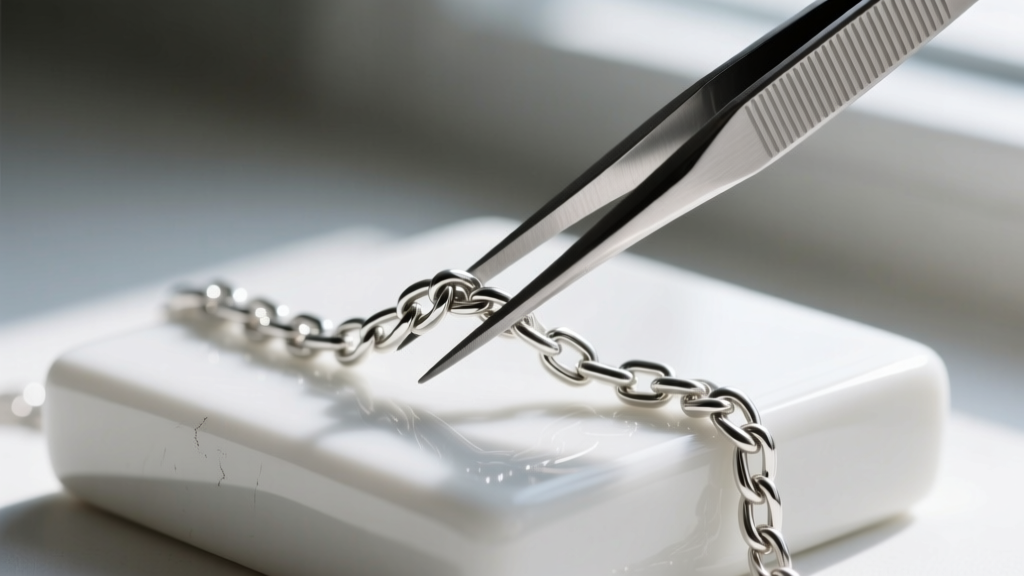
Step 3: The Push-Through Technique
Instead of pulling links apart, use the tip of your tweezers to push the trailing end of the chain back through the loop it just created. This reverses the torsional path that caused the knot, allowing the chain to unspool naturally without stressing the solder joints.
Troubleshooting Permanent Kinks by Chain Style
If your twisted necklace chain has been bent sharply, it may have developed a permanent kink. The structural integrity of the chain dictates how it responds to stress and how it must be repaired. Below is a diagnostic matrix for common chain styles and their kink vulnerabilities.
| Chain Style | Common Wire Gauge | Kink Vulnerability | Repair Strategy |
|---|---|---|---|
| Herringbone | 1.5mm - 3.0mm | Extreme | Professional annealing and nylon-jaw rolling |
| Snake | 1.0mm - 2.5mm | High | Gentle heat application and mandrel stretching |
| Box | 0.8mm - 1.5mm | Moderate | Tweezers manipulation; avoid heat on hollow links |
| Cable | 0.5mm - 2.0mm | Low | Reverse-bending over a soft cloth edge |
| Rope | 1.2mm - 4.0mm | Low | Self-correcting via torsional manipulation |
Herringbone and snake chains are notoriously fragile because their links lie flat against one another without interlocking loops. Once the metal is bent past its yield point, the structural memory is lost, requiring immediate intervention to prevent a full snap.
Fixing Work-Hardened Kinks in Precious Metals
When a 14k gold or 925 sterling silver chain kinks, the metal at the exact point of the fold undergoes a process called work hardening (or strain hardening). The crystalline lattice of the metal becomes deformed, making that specific millimeter of the chain incredibly brittle. If you simply bend it back into place with your fingers, you are likely to cause a micro-fracture that will eventually snap under the weight of a pendant.
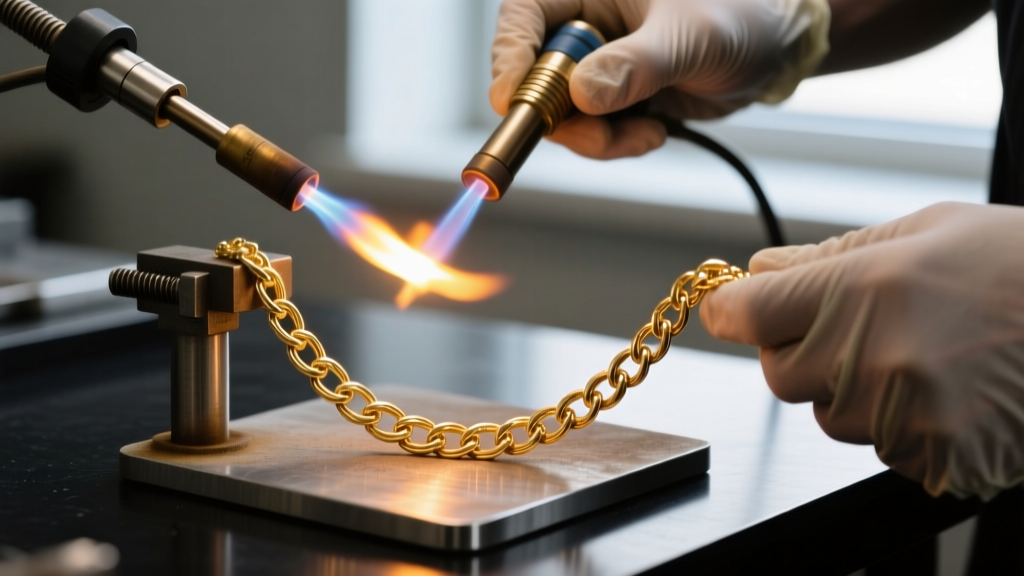
To properly fix a work-hardened kink, jewelers use a technique called annealing. By applying controlled heat with a micro-torch, the metal's crystalline structure is rearranged, restoring its malleability. The Gemological Institute of America (GIA) notes that precise temperature control is vital during this process, as overheating can melt the solder points that hold the individual links together. Once annealed, the jeweler will lay the chain on a steel bench block and gently roll a nylon-jawed plier over the kinked section to flatten it without marring the precious metal finish. For hollow-box chains, heat cannot be used safely, as the thin outer walls will collapse; these must be carefully manipulated using specialized micro-tweezers under a 10x jeweler's loupe.
The Prevention Framework: Storage and Wear
Preventing a twisted necklace chain is vastly superior to repairing one. Implementing a structured storage and wear framework will eliminate 90% of tangling issues.
The Travel Hack: Clasp Through the End Link
When packing for travel, never leave a chain unfastened. However, simply clasping the necklace in a circle does not prevent the chain from twisting upon itself. The most effective method is to thread the clasp through the final end link (the small jump ring) before securing it. This creates a fixed, closed loop that physically prevents the chain from coiling into a knot, regardless of how much the luggage is jostled.
Anti-Static Polyethylene Storage
Ditch the velvet-lined jewelry boxes for daily storage. Velvet generates static electricity and the plush fibers can catch on the micro-solder joints of delicate chains. Instead, store individual necklaces in small, 2-mil thick polyethylene ziplock bags. Squeeze the air out before sealing to restrict movement. For an extra layer of protection against tarnish and static, drop a small anti-tarnish silica strip into the bag. The Spruce Crafts consistently recommends individual poly-bagging as the gold standard for preserving delicate jewelry finishes and preventing mechanical entanglement.
Proper Sizing and Layering
Finally, ensure your chain length is appropriate for your neckline. A 16-inch choker is less prone to twisting than a 24-inch opera-length chain, which swings freely and catches on clothing. If you are layering multiple necklaces, vary the lengths by at least two inches and mix the chain textures (e.g., pair a smooth snake chain with a textured rope chain) to reduce the surface friction that causes them to braid together during wear.


