Material Analysis: Kendrick a Necklace Innovator in Hip-Hop Jewelry
Explore the metallurgy, VVS diamond grading, and structural alloys behind Kendrick Lamar's iconic custom jewelry and avant-garde hip-hop chains.

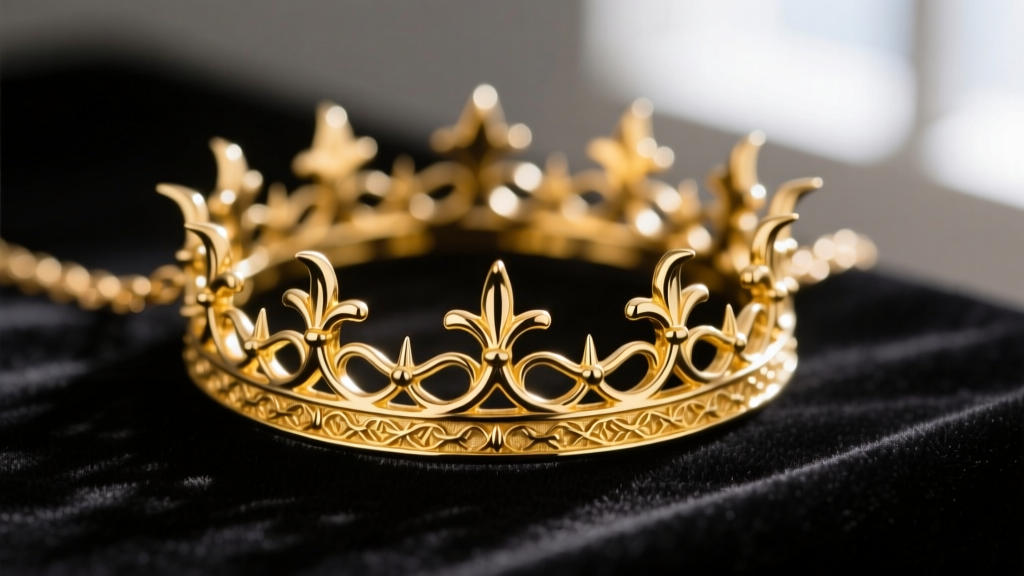
When discussing the intersection of cultural impact and haute couture metallurgy, few figures command attention like Kendrick Lamar. From the iconic Tiffany & Co. Crown of Thorns to his heavy, custom-commissioned diamond chains, his jewelry choices are not merely accessories; they are structural marvels. But what happens beneath the surface of these iconic pieces? To truly understand the craftsmanship, we must look past the carat weight and examine the metallurgical properties, alloy compositions, and structural engineering that make these pieces endure.
When analyzing the structural integrity of a piece, one might ask: is Kendrick a necklace collector who prioritizes sheer visual impact over material durability? The answer lies in the advanced metallurgy utilized by high-end hip-hop jewelers in 2026. This material analysis breaks down the exact properties, alloy grades, and gemological standards that define avant-garde, heavy-weight chains and pendants.
The Foundation: 18K Yellow Gold vs. Platinum 950 in Avant-Garde Casting
The base metal of any high-end chain dictates its tensile strength, fluidity during casting, and long-term wearability. For complex, sculptural pieces like the Crown of Thorns, jewelers overwhelmingly favor 18K Yellow Gold for the primary structure. Standard 18K gold is an alloy comprising 75% pure gold, typically mixed with 12.5% silver and 12.5% copper. This specific ratio yields a Vickers hardness (HV) of approximately 125 HV in its annealed state, which can be work-hardened to over 220 HV during the forging process.
The copper content provides the rich, warm hue synonymous with classic hip-hop jewelry, but it also introduces a susceptibility to oxidation. To counteract this, master casters use advanced fluxes during the lost-wax investment casting process to prevent porosity and surface pitting. According to the GIA Gem Encyclopedia, the addition of trace amounts of zinc or indium in modern 18K alloys can significantly improve the metal's fluidity, allowing it to capture the microscopic details of thorny, organic textures without requiring excessive post-casting polishing.
Conversely, Platinum 950 (95% platinum, 5% ruthenium or cobalt) is reserved for the structural prongs and micro-settings within these pieces. Platinum 950 boasts a higher density (21.45 g/cm³ compared to gold's 19.32 g/cm³) and a unique malleability. Unlike gold, which can become brittle when work-hardened, platinum displaces rather than chips when subjected to stress. This makes it the undisputed champion for securing high-value diamonds in rigid, unconventional settings where the metal must be pushed tightly against the stone's girdle without snapping.
Structural Integrity: Cobalt-Chrome & Titanium in Heavy Pendants
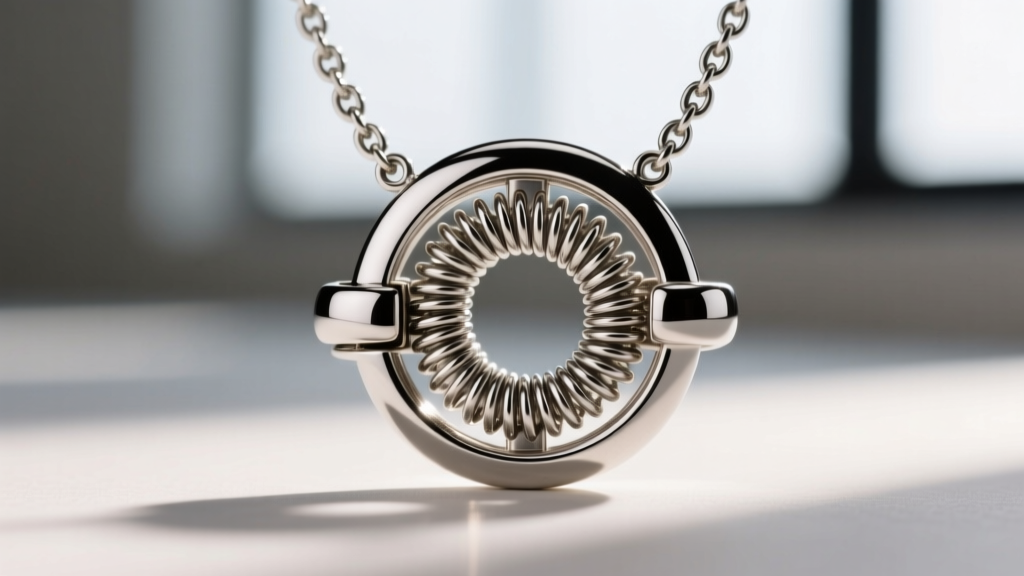
When a custom pendant exceeds 150 grams, traditional precious metals begin to fail under their own weight. The constant kinetic stress of a live stage performance can cause 18K gold bail loops to stretch, warp, or eventually snap. To solve this, elite jewelry fabricators have integrated aerospace and medical-grade alloys into the internal armatures and heavy-duty clasps of hip-hop chains.
ASTM F75 Cobalt-Chrome (Co-Cr) and Grade 5 Titanium (Ti-6Al-4V) are now standard in the internal cores of massive pendants. Cobalt-Chrome offers an exceptional yield strength of roughly 450 MPa and a Vickers hardness exceeding 350 HV, making it virtually impervious to the bending forces that would permanently deform solid gold.
Material Comparison: Precious vs. Structural Alloys
| Material Grade | Density (g/cm³) | Vickers Hardness (HV) | Yield Strength (MPa) | Primary Jewelry Application |
|---|---|---|---|---|
| 18K Yellow Gold (Au750) | 15.50 | 125 - 230 | ~200 | Main chain links, sculptural bodies |
| Platinum 950 (Pt/Ru) | 21.45 | 135 | ~280 | Prongs, micro-pavé settings, bezels |
| Cobalt-Chrome (ASTM F75) | 8.30 | 350+ | ~450 | Internal cores, heavy-duty clasps |
| Grade 5 Titanium (Ti-6Al-4V) | 4.43 | 334 | ~880 | Lightweight structural armatures |
By utilizing a titanium core encased in a thick layer of 18K gold (a process known as heavy electroforming or mechanical cladding), fabricators can reduce the overall weight of a massive pendant by up to 40% while tripling its tensile strength. This ensures the necklace sits comfortably on the cervical spine without risking structural failure.
The Stones: VVS1 Clarity and Micro-Pavé Tensile Stress
The diamonds adorning these pieces are not chosen merely for their size, but for their optical performance under harsh stage lighting. The industry standard for top-tier hip-hop jewelry is the VVS1 (Very Very Slightly Included) clarity grade. While Internally Flawless (IF) diamonds exist, VVS1 offers the optimal balance of cost-efficiency and visual perfection. Inclusions in VVS1 stones are so minute that they are exceptionally difficult for a skilled grader to see under 10x magnification, let alone the naked eye.
According to the GIA Diamond Clarity Scale, the placement of these inclusions is critical. In micro-pavé settings, where hundreds of 1.0mm to 1.5mm melee diamonds are set closely together, the structural integrity of each individual stone is paramount. Diamonds possess a Mohs hardness of 10, making them resistant to scratching, but they have distinct cleavage planes. If a graver slips during the setting process and strikes a diamond along its cleavage plane, the stone can fracture.
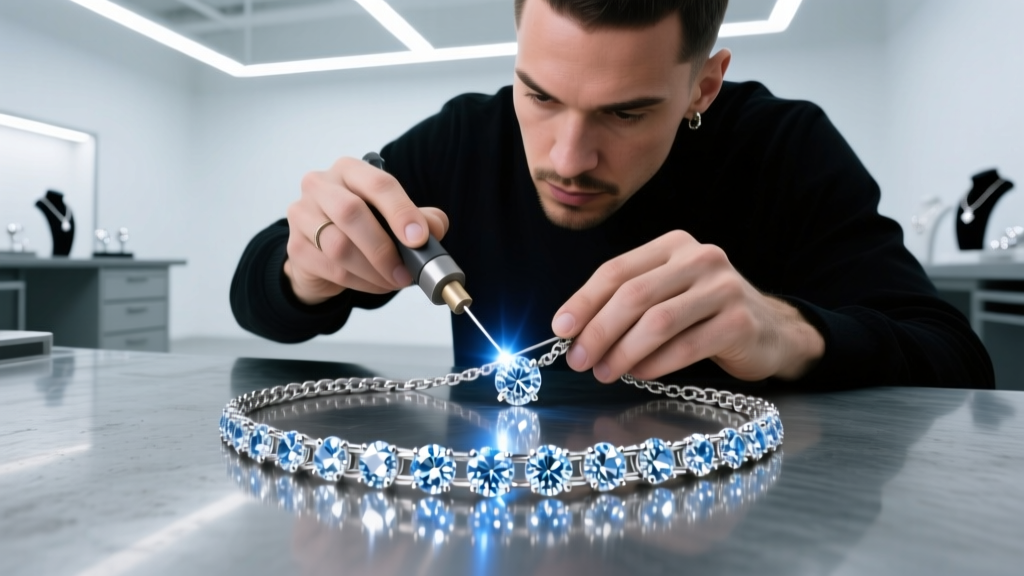
To mitigate this risk, modern jewelers utilize laser welding rather than traditional torch soldering when working near stone clusters. Laser welders operate with a localized heat-affected zone (HAZ) of less than a millimeter, preventing the thermal shock that can cause diamonds to fracture or the surrounding gold to melt and lose its temper. Furthermore, the girdle thickness of the melee diamonds must be carefully calibrated; a girdle that is too thin ('knife-edge') will chip under the pressure of the platinum prongs, while a girdle that is too thick will prevent the stones from sitting flush in the micro-pavé honeycomb.
Patina, Tarnish, and Long-Term Material Degradation
Even the most meticulously crafted necklaces are subject to environmental degradation. The human body produces varying levels of sebum, sweat, and lactic acid, which can accelerate the tarnishing of the copper alloys present in 18K gold. While pure gold does not tarnish, the 25% alloy mix is vulnerable to sulfur compounds in the air and certain cosmetics.
To combat this, high-end chains are often treated with a nano-ceramic clear coat or subjected to an electropolishing process that removes the microscopic surface layer of copper, leaving a slightly richer gold surface that is more resistant to initial oxidation. For white gold elements, the traditional rhodium flash plating (typically 0.75 to 1.0 microns thick) will eventually wear away on high-friction areas like the clasp and bail. In 2026, many collectors are opting for rhodium-free white gold alloys that utilize higher palladium content (e.g., 18K White Gold with 15% Palladium) to achieve a naturally bright white color that requires zero replating over the garment's lifespan.
Ethical Sourcing and Traceability in Modern Metallurgy
Beyond the physical properties, the provenance of the materials is a defining characteristic of modern luxury. The diamonds used in these massive chains are increasingly tracked via blockchain technology from the mine to the master caster. This ensures compliance with the Kimberley Process and guarantees that the stones are conflict-free. Similarly, the gold used is often sourced from certified artisanal mines or refined from 100% recycled electronic waste, which possesses the exact same metallurgical properties as newly mined gold but carries a fraction of the carbon footprint.
Conclusion: The Science Behind the Spectacle
The next time you see a culturally significant, heavy-weight chain on the red carpet or the stage, recognize that you are looking at a triumph of material science. The seamless integration of 18K gold's casting fluidity, platinum's work-hardening prongs, cobalt-chrome's internal tensile strength, and VVS1 optical perfection is what elevates a piece from a mere accessory to a museum-grade artifact. Understanding these metallurgical properties allows collectors, jewelers, and fans to appreciate the true engineering marvels that define the pinnacle of hip-hop haute couture.


