Little Girls Cross Necklace: Care and Cleaning Guide
Learn how to safely clean, store, and maintain a little girls cross necklace. Expert tips for sterling silver, gold, and enamel keepsakes.

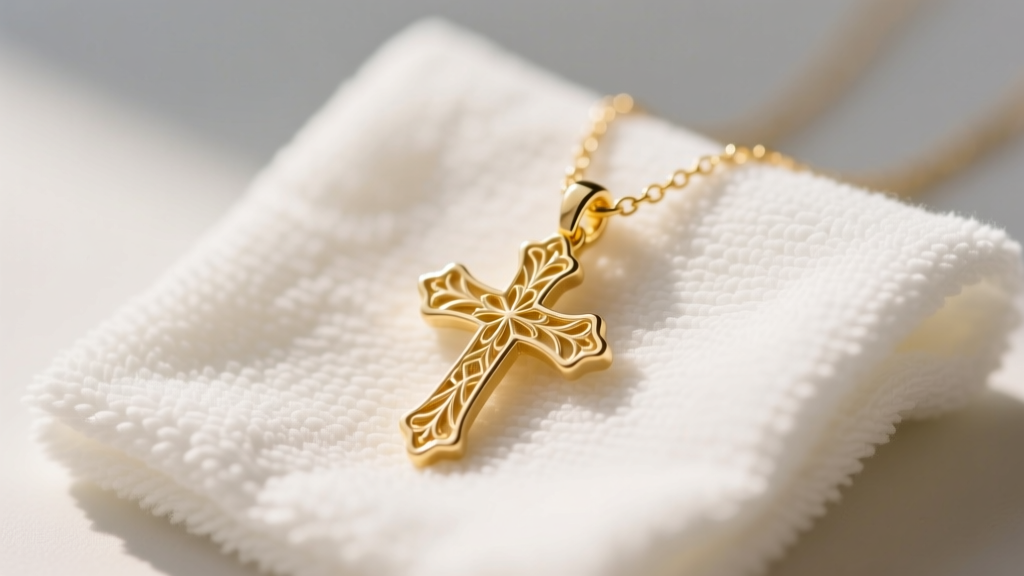
Why Children's Keepsake Jewelry Requires Specialized Care
A little girls cross necklace is often one of the most cherished pieces of jewelry a child will own. Whether gifted for a baptism, first communion, or a milestone birthday, these pendants carry immense sentimental and spiritual value. However, children are naturally active, and their jewelry is subjected to a unique array of environmental stressors. From chlorinated swimming pools and abrasive playground sand to everyday sweat, lotions, and dirt, a child's cross necklace faces constant exposure to elements that degrade metals and dull finishes.
Unlike adult jewelry, which is often removed before sleeping or showering, children frequently wear their keepsakes 24/7. This continuous wear accelerates the buildup of sebum (skin oils) and dead skin cells in the intricate crevices of the cross pendant and the links of the chain. Proper maintenance is not just about preserving the aesthetic shine; it is also a matter of safety and longevity. A well-maintained clasp prevents loss, while smooth, polished edges prevent skin irritation. In this comprehensive guide, we break down the exact protocols for cleaning, inspecting, and storing your child's precious cross necklace.
The Chemistry of Tarnish and Grime on Kids' Jewelry
To effectively clean a cross necklace, you must first understand what is making it dirty. Tarnish on sterling silver is not dirt; it is a chemical reaction. Sterling silver is an alloy composed of 92.5% pure silver and 7.5% copper. While pure silver does not tarnish, the copper reacts with sulfur compounds in the air and moisture to form silver sulfide (Ag2S), which appears as a yellowish, brown, or black film. Children's sweat, which contains trace amounts of sulfur and salts, acts as a catalyst, drastically speeding up this oxidation process.
For gold pieces, the primary issue is not tarnish but 'grime buildup.' Lotions, sunscreen, and natural skin oils create a sticky film that traps microscopic dirt particles against the metal, dulling the reflective surface of the cross. Understanding these chemical realities ensures you reach for the right cleaning agents rather than abrasive shortcuts that can permanently damage the piece.
Material-Specific Cleaning Protocols
Different metals and finishes require vastly different care approaches. According to the Gemological Institute of America (GIA), using the wrong chemical solvent can strip protective platings or pit softer alloys. Here is how to handle the most common materials used in children's religious jewelry.
925 Sterling Silver Crosses
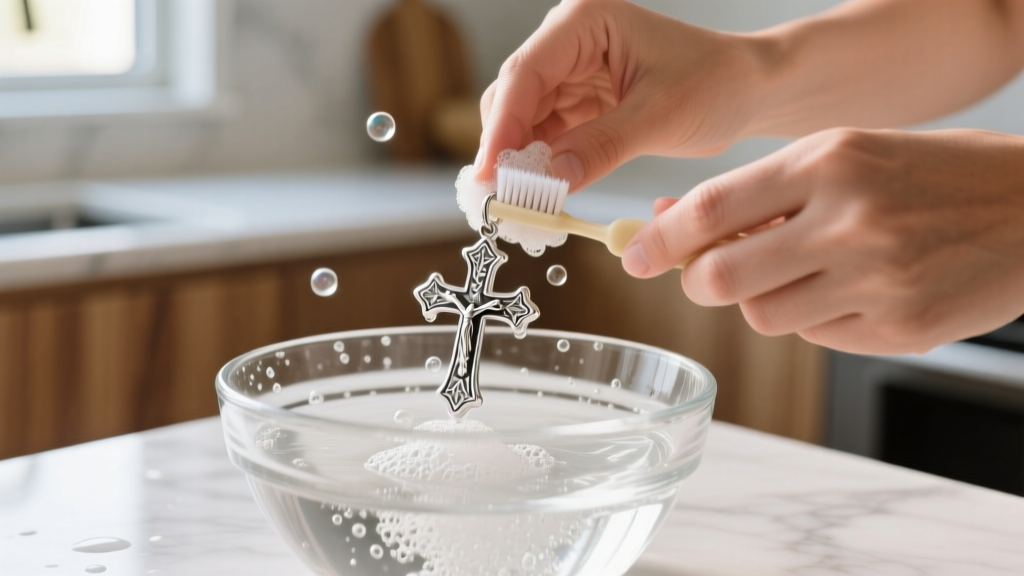
For light to moderate tarnish and everyday grime, avoid commercial silver dips, which contain harsh thiourea compounds that can leave a porous, matte finish if not rinsed perfectly. Instead, use a pH-neutral dish soap (like original Dawn) mixed with lukewarm distilled water (around 85°F). Soak the necklace for exactly 5 to 7 minutes. Use an extra-soft infant toothbrush (with 0.12mm bristles) to gently agitate the crevices where the arms of the cross meet. Rinse thoroughly under distilled water and pat dry with a lint-free microfiber cloth. Never use paper towels, as the wood fibers will leave micro-scratches on the high-polish silver.
10K and 14K Solid Gold (Yellow, White, and Rose)
Gold is highly resistant to corrosion, but 10K and 14K gold contain alloy metals like copper, zinc, and nickel that can oxidize or show water spots. White gold crosses are typically plated with rhodium to achieve a bright, silvery-white appearance. Ammonia-based cleaners (including many household glass cleaners and some commercial jewelry foams) will strip this rhodium plating, causing the cross to look dull and yellowish. Stick to a mild baby shampoo and warm water solution. Baby shampoo is formulated to be tear-free and pH-balanced, making it exceptionally gentle on both the gold alloy and any delicate gemstone accents.
Enamel and Gemstone-Accented Crosses
Many little girls cross necklaces feature colorful enamel details or small birthstones. Vitreous enamel is essentially fired glass, while 'cold enamel' is an epoxy resin. Both are highly susceptible to thermal shock. Never use hot water on an enameled cross, as the rapid expansion can cause the enamel to crack or pop off the metal backing. Furthermore, if the cross features porous stones like pearls, opals, or turquoise, avoid soaking the piece entirely. Instead, dampen a cotton swab with your soapy solution and carefully clean around the stone settings.
The Hidden Dangers of Commercial Jewelry Cleaners
Parents often make the mistake of using ultrasonic jewelry cleaners for their children's keepsakes. While ultrasonic waves are excellent for shaking dirt out of diamond engagement rings, they are disastrous for most children's jewelry. The high-frequency vibrations can shatter vitreous enamel, fracture hollow-cast gold crosses, and loosen the adhesive used in rhinestone-accented pieces. Furthermore, the 'silver cleaning cloths' sold in supermarkets are often impregnated with mild abrasives like silica. While they remove tarnish quickly, they also strip away a microscopic layer of silver each time, eventually wearing down the crisp edges and engraved details of the cross pendant.
Chain Maintenance, Clasp Safety, and Repair Realities
The chain and clasp are the most critical structural components of a little girls cross necklace. Box chains are incredibly popular for their sturdy appearance, but their square, interlocking links act like tiny traps for sebum and dead skin cells, requiring more frequent brushing. Cable chains, with their simple oval links, are generally easier to keep clean and are less likely to pull on fine hair.
Safety is paramount. Many budget-friendly necklaces use spring-ring clasps, which rely on a microscopic internal spring that frequently fails or gets stuck in the open position. Upgrading the clasp to a lobster claw clasp provides a much more secure closure, reducing the risk of the child losing the necklace during play. According to safety guidelines highlighted by the American Academy of Pediatrics (AAP), any jewelry worn by young children should be regularly inspected for sharp edges, broken links, or choking hazards.
If the chain does snap, avoid cheap 'torch soldering' repairs, which leave a visible, brittle blob of solder that can irritate a child's neck. Instead, seek out a jeweler who offers laser welding. Laser welding uses a concentrated beam of light to fuse the exact same metal back together without heating the surrounding links, resulting in a seamless, flexible, and invisible repair (typically costing between $20 and $45).
Routine Maintenance Schedule
To keep the necklace in pristine condition without over-cleaning it, follow this structured maintenance schedule:
| Frequency | Action Required | Tools Needed |
|---|---|---|
| Daily | Wipe down after heavy sweating or swimming. | Dry microfiber cloth. |
| Weekly | Inspect the clasp spring and jump ring for gaps. | Magnifying glass or smartphone macro lens. |
| Monthly | Deep clean to remove lotion and sebum buildup. | Baby shampoo, distilled water, infant toothbrush. |
| Annually | Professional inspection and rhodium replating (if white gold). | Local bench jeweler. |
Proper Storage to Prevent Tangles and Oxidation
How you store the necklace when it is not being worn is just as important as how you clean it. Tossing a delicate chain into a standard jewelry box guarantees a frustrating tangle, which often leads to parents pulling too hard and snapping the links. Furthermore, storing silver in a humid bathroom or a standard cardboard box exposes it to sulfur and moisture, guaranteeing heavy tarnish.
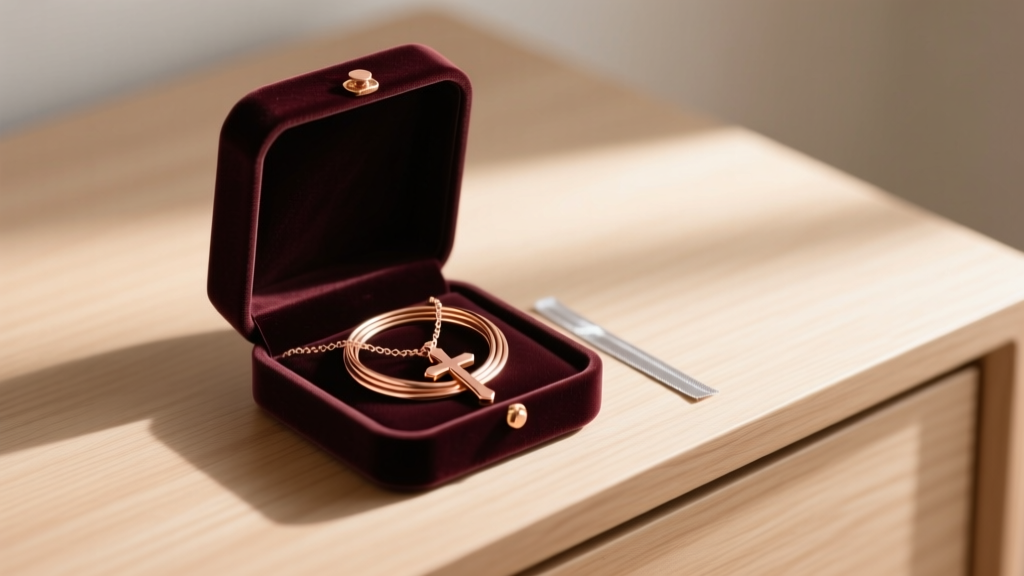
The gold standard for storage is a Pacific Silvercloth pouch or a zip-top polyethylene bag with an anti-tarnish strip (such as 3M Anti-Tarnish tabs). These strips contain activated carbon and zinc carbonate, which actively absorb sulfur gases from the trapped air before they can react with the silver. Always lay the chain flat and fasten the clasp to prevent the links from weaving through one another. For long-term storage of baptismal keepsakes, wrap the cross pendant in acid-free tissue paper before placing it in the anti-tarnish bag to prevent any residual oils from etching into the metal over time.
Frequently Asked Questions
Can I use toothpaste to clean my daughter's silver cross?
No. Toothpaste contains hydrated silica and calcium carbonate, which are abrasive particles designed to scrub plaque off hard tooth enamel. On soft sterling silver (which ranks only 2.5 to 3 on the Mohs hardness scale), toothpaste will leave hundreds of micro-scratches, permanently dulling the mirror finish of the cross.
What should I do if the cross turns my child's skin green?
A green or black mark on the skin is not a sign of 'fake' jewelry, but rather a chemical reaction between the copper alloys in the metal and the child's sweat or acidic skin pH. It is harmless and washes off with soap and water. To prevent it, ensure the necklace is thoroughly dried after bathing, and occasionally wipe the back of the pendant with a tiny amount of mineral oil to create a moisture barrier.
Is it safe to let my little girl sleep in her cross necklace?
While many children find comfort in wearing their religious jewelry to bed, it is generally recommended to remove it during sleep to prevent the chain from catching on bedding or fingers, which could lead to breakage or, in rare cases, a strangulation hazard. If she refuses to take it off, ensure the chain is long enough to sit comfortably below the collarbone and features a breakaway safety clasp.
By treating your little girls cross necklace with the specialized care it deserves, you ensure that this beautiful symbol of faith and love remains a pristine heirloom, ready to be passed down to the next generation.


