A Beginner's Guide to Buying a Vintage Chain Necklace
Learn how to authenticate, date, and style a vintage chain necklace. Discover era-specific clasps, metal hallmarks, and 2026 pricing guides.

Defining 'Vintage' in the Jewelry World
When stepping into the secondary jewelry market, terminology is your first line of defense. A true vintage chain necklace is generally defined as a piece that is at least 20 to 100 years old. Once a piece crosses the 100-year threshold, it graduates to 'antique.' For a beginner, the vintage market (spanning roughly the 1920s through the early 2000s) offers a sweet spot of historical charm, accessible pricing, and wearable durability. However, the term 'vintage' is frequently misused by fast-fashion brands to describe newly manufactured, artificially oxidized chains. According to the Lang Antique Jewelry University, authenticating a piece requires looking past the patina and examining the structural anatomy of the chain, including its clasps, solder marks, and metallurgical hallmarks.
Decoding Eras: Which Vintage Chain Necklace Fits Your Style?
The aesthetic of a chain necklace is deeply tied to the socio-economic climate of its era. Understanding these periods will help you identify authentic pieces and match them to your personal style.
Victorian & Edwardian (1837–1910)
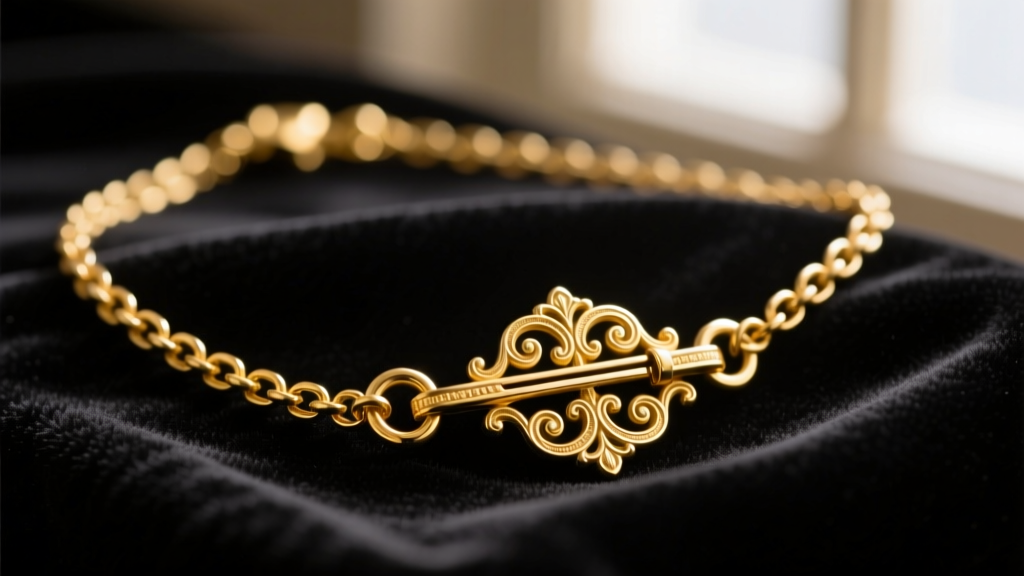
Chains from this era were often designed to hold pocket watches, lockets, or watch fobs. The most iconic is the Albert Chain, characterized by its heavy, uniform links and a T-bar on one end (originally used to secure the chain to a vest buttonhole). British pieces from this era frequently feature 15k gold (62.5% purity), a standard that was discontinued in 1932. If you spot a 15k hallmark on a chain, you are likely holding a genuine Victorian or Edwardian artifact. These chains exude a heavy, romantic, and deeply historical aesthetic, perfect for layering over modern tailored blazers.
Art Deco (1920s–1930s)
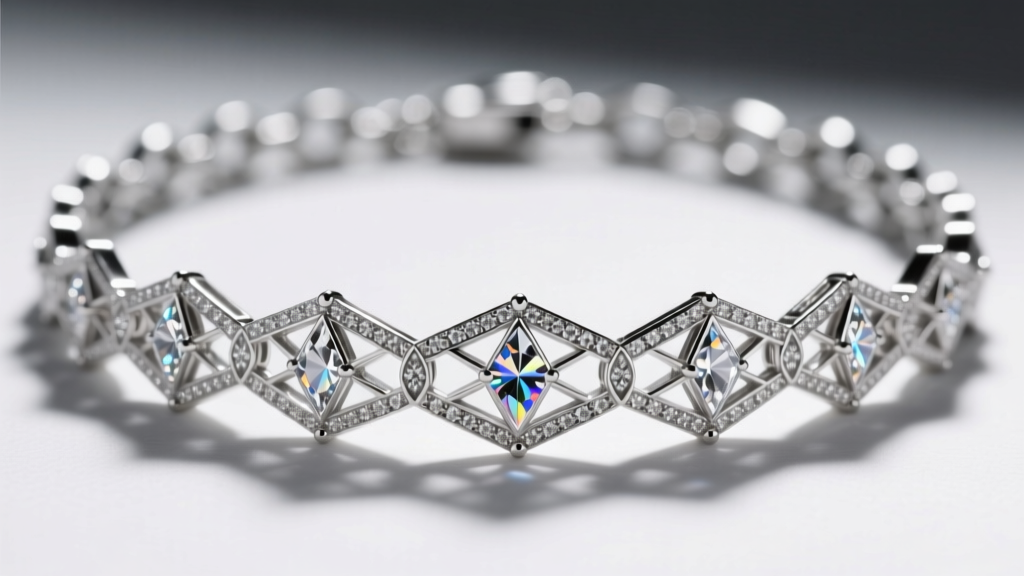
The Art Deco movement favored geometry, symmetry, and new metallurgical advancements. Platinum and white gold became the metals of choice, reflecting the era's fascination with machinery and modernism. Deco chains often feature intricate filigree links, diamond-cut bevels that catch the light, and elongated rectangular or hexagonal links. They are incredibly elegant, lightweight, and ideal for draping over silk evening wear or V-neck blouses.
Retro & Mid-Century (1940s–1960s)
World War II drastically impacted jewelry manufacturing. With platinum and yellow gold rationed for military use, jewelers turned to rose gold and gold-plated base metals (often marked as 'rolled gold' or 'gold filled'). Retro chains are bold, chunky, and three-dimensional. The 'Gaspipe' chain—a thick, hollow, tubular link design—was born in this era to create a massive visual impact while conserving precious metal weight. These chains are statement pieces that pair beautifully with minimalist, contemporary streetwear or simple turtlenecks.
The Anatomy of Authenticity: Clasps, Solder, and Hallmarks
The most common mistake beginners make is evaluating only the links while ignoring the findings. The clasp and the jump rings are the ultimate lie detectors for a vintage chain necklace.
- The C-Clasp: A simple, open 'C' shaped hook without a safety latch. Commonly found on Victorian and early Edwardian pieces. If a chain claims to be from the 1970s but has a C-clasp, be highly suspicious.
- The Dog-Clip: A spring-loaded clasp resembling a miniature dog leash clip. Highly prevalent in the late 19th and early 20th centuries, prized today for its security and antique charm.
- The Barrel Clasp: A threaded, screw-together cylindrical clasp. A staple of the Art Deco and Retro eras, designed to disappear seamlessly into the chain's silhouette.
- The Lobster Clasp: Invented in the 1970s and popularized in the 1990s. If a chain features a modern, stamped lobster clasp, it is either a modern reproduction or an antique chain that has been retrofitted for modern convenience (which significantly lowers its collector value).
Furthermore, inspect the jump rings (the tiny circular rings connecting the links). Authentic vintage chains feature hand-soldered jump rings, meaning there is a visible, tiny bead of solder where the ring closes. Modern mass-produced chains often use laser welding or unsoldered split rings.
| Era | Typical Metals | Common Clasps | Est. 2026 Collector Premium |
|---|---|---|---|
| Victorian (1837-1901) | 15k/18k Gold, Silver | T-Bar, Dog-Clip, C-Clasp | +30% to 60% over melt |
| Art Deco (1920-1939) | Platinum, 14k White Gold | Barrel, Filigree Box | +40% to 80% over melt |
| Retro (1940-1959) | 14k Rose Gold, Rolled Gold | Push-in Box, Barrel | +10% to 30% over melt |
| Mid-Century (1960-1980) | 14k/18k Yellow Gold | Early Spring Ring, Hook | Melt value to +15% |
Chain Link Profiles: A Beginner’s Identification Chart
Knowing the terminology of link profiles will help you communicate effectively with dealers and search online marketplaces with precision.
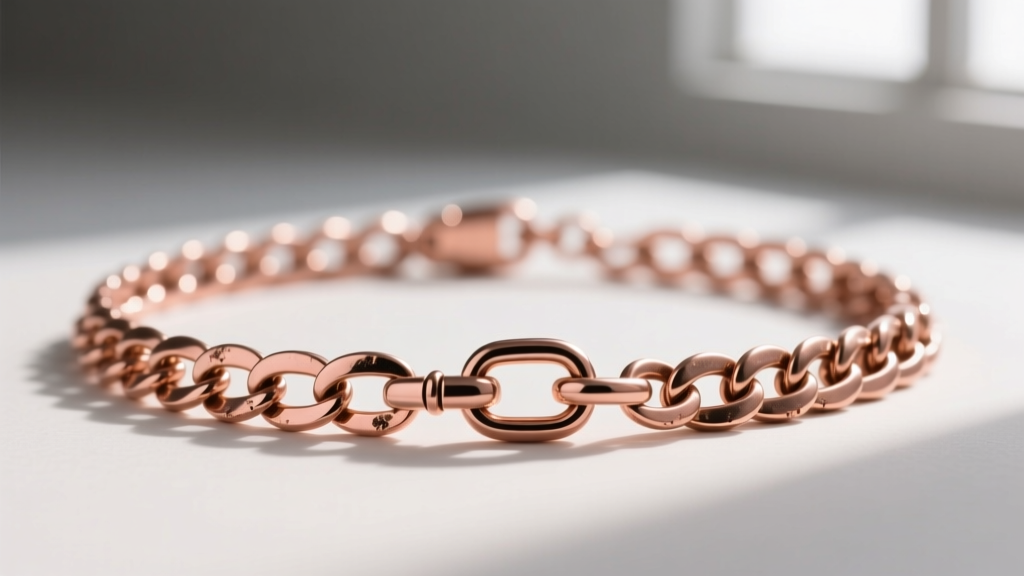
- Curb Chain: Links are twisted so they lie completely flat against the skin. A staple of the Retro era, offering high durability and a bold, masculine-leaning profile.
- Snake Chain: Tightly joined wavy rings that form a flexible, tubular, and smooth surface resembling snake skin. Highly popular in the 1980s and 90s, though prone to kinking if bent sharply.
- Fancy Link: A catch-all term for chains featuring stamped, textured, or mixed-metal links (e.g., alternating heart and circle links). These were incredibly popular in the 1940s and 1950s as standalone statement pieces worn without pendants.
- Belcher/Rolo Chain: Composed of uniform, round or oval links. Highly versatile and the most common choice for suspending heavy vintage lockets or crucifixes.
A Practical Buying Framework for 2026
Pricing a vintage chain necklace requires a dual-layered approach: calculating the intrinsic melt value and assessing the historical collector premium. In 2026, with precious metal markets experiencing sustained volatility, understanding the math is non-negotiable.
Step 1: Calculate the Melt Value. Weigh the chain in grams. Divide by 31.1 to get the troy ounces. Multiply by the current spot price of the metal, then multiply by the purity (e.g., 0.585 for 14k gold). This is your absolute baseline. Never pay below this number for a solid gold chain.
Step 2: Assess the Premium. A standard mid-century 14k gold chain might sell for exactly its melt value, or a 10% markup for retail overhead. However, a verified Victorian 15k gold Albert chain with its original T-bar and dog-clip will command a 40% to 60% collector premium due to its rarity and historical significance. According to historical archives at the Victoria and Albert Museum, pieces that retain their original, unaltered findings are increasingly scarce, making untouched examples highly liquid assets in the secondary market.
Care and Maintenance for Older Alloys
Vintage metals react differently to modern chemicals. The copper and silver alloys used in older 14k and 15k gold make them more susceptible to oxidation and tarnish than modern, higher-nickel white gold alloys.
Never use ultrasonic cleaners on vintage chains featuring diamond-cut links or hollow Retro 'gaspipe' links. The high-frequency vibrations can fracture aged solder joints or trap moisture inside hollow links, leading to internal corrosion that is impossible to reverse.
Instead, rely on a gentle bath of warm distilled water and a few drops of phosphate-free dish soap. Use a baby-soft toothbrush to gently agitate the dirt from the crevices of the links. Dry immediately with a microfiber cloth. For storage, keep your vintage chain necklace in an anti-tarnish flannel pouch, separate from modern jewelry, to prevent the harder modern alloys from scratching the softer, historically significant patina of your vintage piece.


