The Vintage Florenza Necklace: 2026 Trend & Style Guide
Discover the 2026 resurgence of the vintage Florenza necklace. Learn to authenticate, price, and style these Renaissance-revival statement pieces.

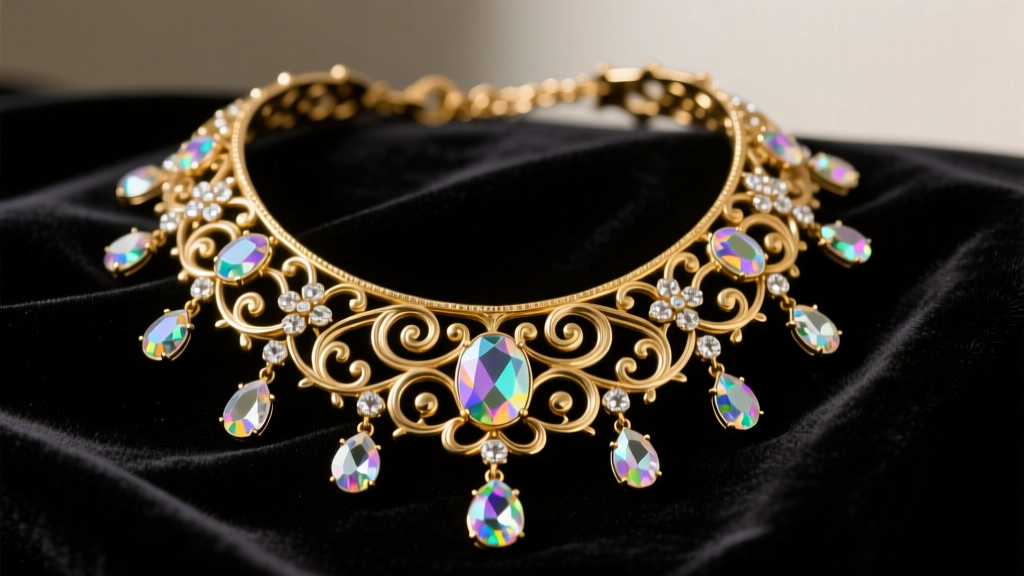
The secondary jewelry market is experiencing a massive shift in 2026. As minimalism gives way to curated maximalism and 'royalcore' aesthetics, collectors and stylists are aggressively hunting for mid-century statement pieces. At the absolute center of this trend is the vintage Florenza necklace. Founded in 1937 by Dan and Florence Kaslo, the Florenza brand became synonymous with Renaissance Revival, Victorian, and baroque-inspired costume jewelry. Today, these intricate, heavy-metal collars and ornate pendants are not just collectibles; they are the anchor pieces for modern editorial styling. This comprehensive guide breaks down the anatomy, authentication, market valuation, and modern styling frameworks for vintage Florenza necklaces.
The Renaissance of Florenza: Why 2026 is the Year of Maximalist Vintage
In 2026, fashion has fully embraced the 'heirloom illusion'—the desire to wear pieces that look as though they were pulled from a European royal vault, even if they are crafted from costume materials. Florenza necklaces, characterized by their heavy gold-washed filigree, cabochon glass stones, and aurora borealis (AB) rhinestones, perfectly satisfy this craving. Unlike the delicate, barely-there chains that dominated the 2010s, a vintage Florenza necklace commands attention. According to market data analyzed by Antique Trader, search volume for 'Renaissance Revival costume jewelry' has spiked by 42% over the last eighteen months, driven largely by high-fashion runways adopting dark academia and gothic-romantic motifs.
Anatomy of a Florenza Necklace: Materials and Construction
To truly appreciate and evaluate a vintage Florenza necklace, one must understand the specific manufacturing techniques Dan Kaslo employed from the 1950s through the brand's closure in 1981.
Base Metals and Plating
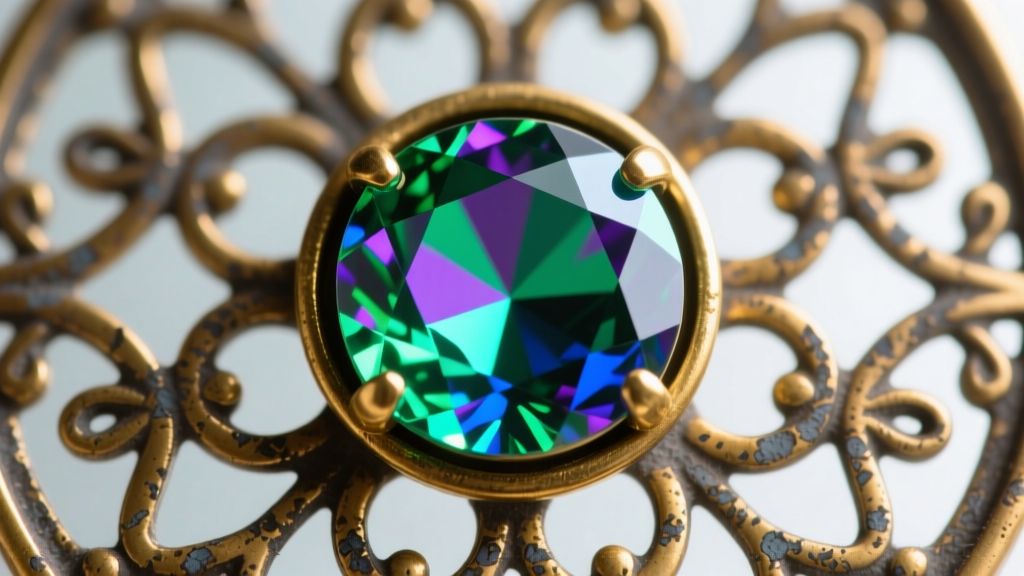
Florenza primarily utilized a high-quality pot metal (a white metal alloy of zinc, lead, and tin) for their castings. This allowed for the deep, three-dimensional floral and scrollwork motifs that define the brand. The base was then heavily electroplated with a gold wash or, less commonly, a silver-tone rhodium finish. The gold plating on authentic 1960s Florenza pieces is notably thicker than contemporary costume jewelry, often developing a rich, warm patina rather than flaking away entirely, provided it has not been subjected to harsh chemical polishes.
Rhinestones and Faux Pearls
The brand's signature sparkle came from high-grade glass rhinestones, frequently treated with the Aurora Borealis (AB) coating introduced in the mid-1950s. Florenza also heavily featured faux pearls with thick, lustrous nacre coatings, as well as poured glass cabochons in deep jewel tones like ruby, sapphire, and emerald. The stones were typically prong-set or glued into closed-back settings to protect the foil backing from moisture.
Authentication Guide: Spotting Real Florenza
Because Florenza pieces command premium prices, the market is flooded with unbranded Renaissance-style replicas. Authenticating a vintage Florenza necklace requires examining the hallmarks, hardware, and structural weight.
- The Hangtag: The most common identifier for later Florenza pieces (1960s-1970s) is a metal hangtag attached to the extension chain, stamped with 'FLORENZA' in a distinct serif font.
- Paper Tags: Earlier 1950s pieces may lack a metal stamp but originally featured a paper hangtag. Finding a piece with an intact, legible original paper tag increases its value exponentially.
- Clasp Hardware: Florenza frequently used sturdy barrel clasps or heavy-duty spring rings. The extension chains often feature slightly oversized, textured oval links.
- Weight and Casting: Authentic Florenza castings are remarkably heavy. The metal should feel solid, and the reverse side of the filigree should show clean, detailed molding, not hollow or sloppy seams.
Market Valuation: What to Pay in the Secondary Market
Pricing for a vintage Florenza necklace in 2026 varies wildly based on rarity, condition, and the presence of original tags. Data aggregated from premium vintage platforms like Ruby Lane reveals three distinct pricing tiers.
| Condition & Rarity Tier | Description | 2026 Price Range (USD) |
|---|---|---|
| Tier 1: Standard | Simple pendants, single-strand faux pearl necklaces, or pieces with noticeable gold wash wear and missing small rhinestones. | $45 – $95 |
| Tier 2: Highly Desirable | Ornate chokers, multi-strand Renaissance collars, and bib necklaces in excellent condition with intact AB stones and bright gold plating. | $150 – $350 |
| Tier 3: Collector Grade | Massive parure sets (necklace, brooch, earrings), rare colorways (e.g., black diamond or pink topaz), or pieces with original intact paper hangtags. | $400 – $850+ |
Restoration and Care: Preserving the Aurora Borealis Finish
The most common failure mode for vintage Florenza necklaces is the degradation of the foil-backed rhinestones and the AB coating. If moisture breaches the closed-back setting, the foil will oxidize, turning the stone black or 'dead.' Furthermore, the AB coating is incredibly fragile.
Never use ultrasonic cleaners or liquid jewelry dips on a Florenza necklace. The high-frequency vibrations will shatter the glass stones or loosen the glue, while the chemicals will instantly strip the aurora borealis coating, leaving behind dull, gray glass. According to conservation guidelines outlined by The Spruce Crafts, the only safe method for cleaning these pieces is to use a soft, dry microfiber cloth. For stubborn grime in the filigree, use a dry, soft-bristled makeup brush to gently sweep out dust. If a stone has fallen out, it must be replaced with a period-correct glass stone and secured with a minimal amount of jewelers' epoxy, avoiding superglue which can fog the glass.

2026 Styling Framework: Integrating Florenza into Modern Wardrobes
Styling a vintage Florenza necklace in 2026 is about contrast. The goal is to prevent the piece from looking like a literal costume by juxtaposing its ornate, historical design with modern, structured tailoring.
The 'Royalcore' Office Look
Pair a heavy, gold-washed Florenza collar necklace with a sharply tailored, deep jewel-toned blazer (think emerald or oxblood) and a simple silk camisole. The rigid structure of the modern blazer provides a clean canvas that allows the intricate filigree of the necklace to pop without overwhelming the silhouette.
Dark Academia Layering
For a more eclectic approach, layer a medium-length Florenza pendant necklace over a fine-gauge, dark turtleneck. Mix the vintage piece with a delicate, modern 14k gold chain of a slightly shorter length. This 'high-low' mixing of fine metals and vintage costume jewelry is a hallmark of advanced 2026 styling, signaling a curated, knowledgeable approach to accessorizing.
Conclusion
The vintage Florenza necklace is far more than a relic of mid-century costume jewelry; it is a masterclass in metal casting, stone setting, and romantic design. As the 2026 fashion landscape continues to reward boldness, historical references, and sustainable vintage shopping, investing in a well-preserved Florenza piece offers both immense stylistic capital and strong secondary market retention. By understanding how to authenticate, care for, and style these magnificent collars and pendants, you secure a wearable piece of art history that will continue to turn heads for decades to come.


