Medicine Wheel Necklace Trends 2026: Style & Cultural Roots
Explore 2026 medicine wheel necklace trends, authentic Indigenous hallmarks, turquoise grades, and respectful styling techniques for this sacred symbol.

The 2026 Shift: From Trend to Cultural Appreciation
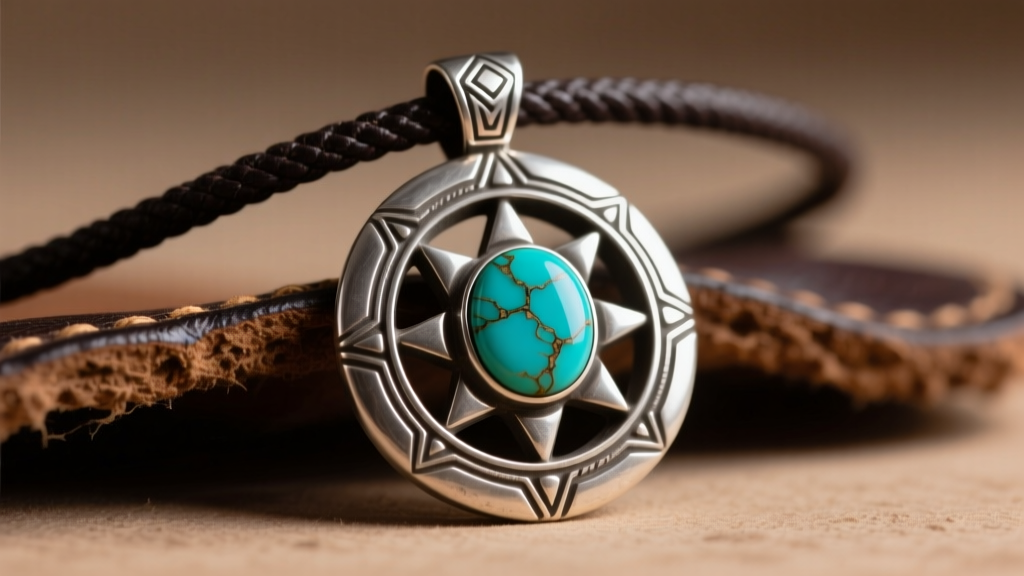
The medicine wheel necklace has long been a staple in Southwestern and bohemian jewelry aesthetics, but as we navigate the style landscape of 2026, the market is undergoing a profound and necessary correction. Today’s discerning collectors and style enthusiasts are moving away from fast-fashion approximations and leaning heavily into heritage transparency. The medicine wheel—a sacred symbol representing the four directions, the elements, and the cyclical nature of life for many Indigenous peoples of North America—demands a styling approach rooted in respect, education, and authentic craftsmanship.
In recent years, the jewelry industry has seen a massive push toward ethical sourcing and cultural appreciation over appropriation. According to the Indian Arts and Crafts Board, it is illegal under the Indian Arts and Crafts Act of 1990 to market art as "Native American" if it is not made by a member of a state or federally recognized tribe. In 2026, the most prominent trend is not a specific metal or stone, but provenance. Buyers are actively seeking out direct-to-artisan cooperatives, verifying hallmarks, and investing in pieces that financially support Navajo, Zuni, and Hopi communities. Wearing a medicine wheel pendant today is a statement of mindful consumption and deep respect for Indigenous artistry.
Anatomy of an Authentic Medicine Wheel Pendant
To truly appreciate the styling potential of a medicine wheel necklace, one must first understand the metallurgy and lapidary skills required to craft an authentic piece. Mass-produced imitations are typically stamped from thin sheets of alpaca or nickel silver and feature dyed howlite or plastic resin masquerading as turquoise. Authentic Indigenous pieces, however, are masterclasses in traditional silversmithing.
The Tufa Casting Process
Many high-end Navajo medicine wheel pendants are created using tufa casting. An artisan carves the intricate wheel design into a block of porous volcanic ash (tufa stone). Molten .925 sterling silver is then poured into the mold. This process yields a pendant with a distinct, slightly granular texture and a substantial weight—typically ranging from 15 to 35 grams. The oxidation applied to the recessed areas of the casting highlights the geometric precision of the wheel’s spokes and outer rim, creating a high-contrast, antique finish that pairs beautifully with modern minimalist wardrobes.
Stone Selection and Metaphysical Grading
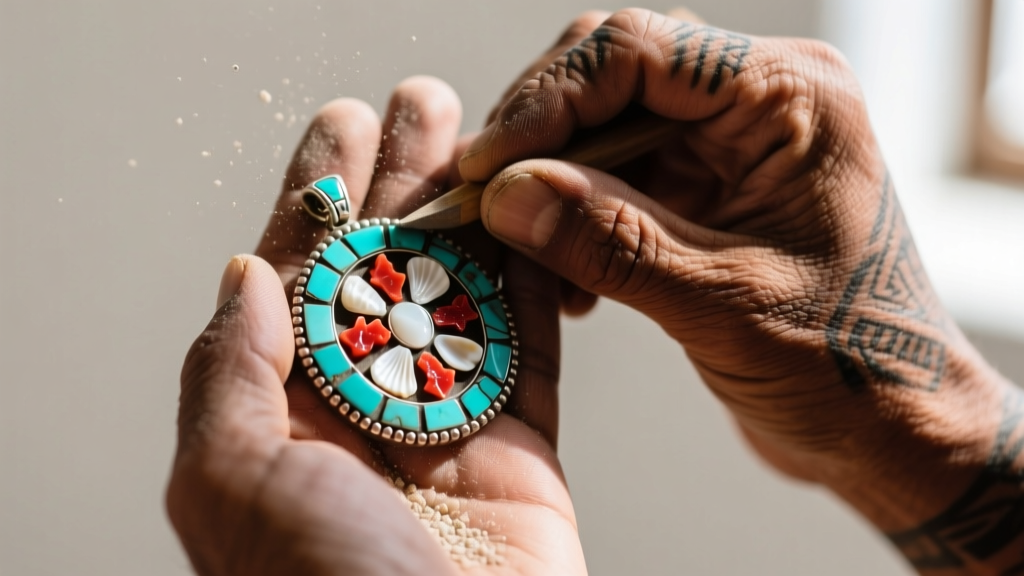
The center of the medicine wheel often features a prominent cabochon, while the four quadrants may be accented with smaller stones representing the four directions. The Smithsonian National Museum of the American Indian notes the historical significance of turquoise in Indigenous trade and spirituality. In 2026, collectors are prioritizing stones with distinct matrices (the host rock webbing).
- Royston Turquoise: Prized for its deep, rich greens and heavy brown matrix. It offers a striking, earthy contrast against bright sterling silver.
- Sleeping Beauty: Known for its pure, robin’s-egg blue color with little to no matrix. This stone provides a clean, vibrant pop of color ideal for summer styling.
- Kingman: Features a brilliant blue background with a distinctive black or golden-brown spiderweb matrix, highly sought after by serious collectors.
Buyer’s Matrix: Spotting Authentic Indigenous Craftsmanship
When investing in a medicine wheel necklace, distinguishing between a culturally significant artifact and a mass-market trinket is vital. Use the following comparison chart to evaluate potential purchases.
| Feature | Authentic Indigenous Artisan | Mass-Market Imitation |
|---|---|---|
| Metal Stamp | .925 or Sterling; often accompanied by an artist's unique hallmark or initial stamp on the reverse. | Unstamped, or stamped "Tibetan Silver", "Alpaca", or "Nickel Free" (often base metals plated in silver). |
| Stone Quality | Natural, stabilized, or untreated turquoise with unique matrix patterns; bezel settings are hand-soldered and smooth. | Dyed howlite, magnesite, or glass; stones are often glued into machine-stamped settings with visible epoxy. |
| Bail Construction | Flimsy, machine-cast loop; prone to snapping under the weight of the pendant. | |
| Pricing (2026) | $250 to $850+ for the pendant alone, reflecting silver weight, stone rarity, and labor. | $15 to $45 for a complete necklace set, indicative of overseas factory production. |
Sizing, Chains, and Layering Techniques
The way you string and layer a medicine wheel pendant drastically alters its stylistic impact. Because authentic tufa-cast or heavy-gauge silver pendants carry significant physical weight (often exceeding 20 grams), pairing them with the correct chain or cord is a matter of both aesthetics and structural integrity.
Selecting the Right Suspension
Authentic pendants typically feature a bail opening ranging from 4mm to 8mm. This accommodates traditional braided leather cords, which remain a timeless choice for a rugged, heritage-inspired look. If you prefer metal chains, opt for a 2.5mm to 4mm sterling silver box chain or a 14-gauge rope chain. Avoid delicate 18-gauge cable chains, as the friction and weight of a heavy silver pendant will cause the links to stretch and eventually snap.
The 2026 Layering Framework
Layering a medicine wheel necklace requires balancing its bold, geometric focal point with complementary, low-profile strands. This year’s trend favors asymmetric, textured layering over uniform metal chains.
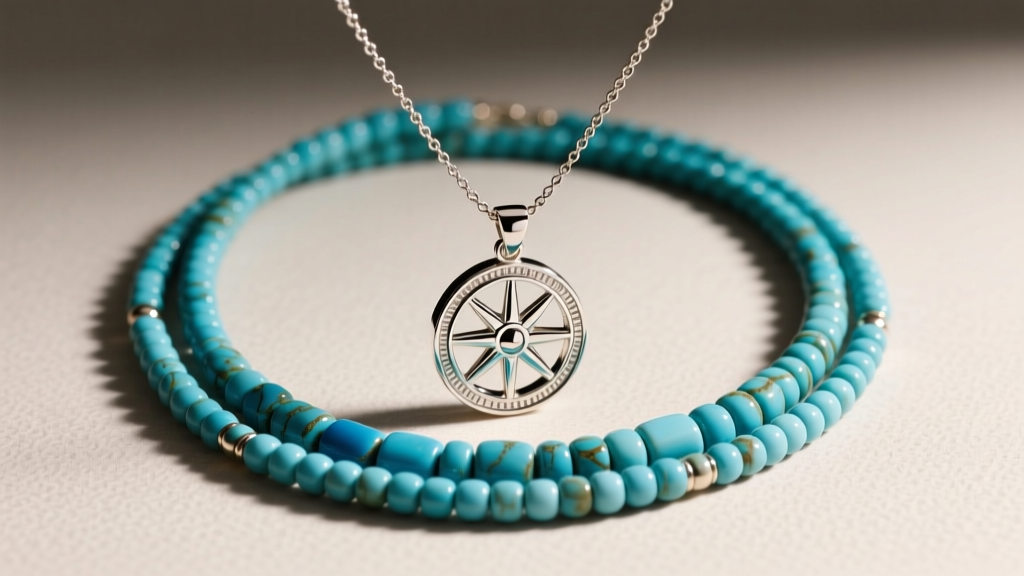
- The Base Layer: Start with a 16-inch strand of 3mm to 4mm Santo Domingo heishi beads (hand-rolled turquoise or shell). This provides a colorful, textured backdrop that rests near the collarbone.
- The Focal Layer: String your medicine wheel pendant on a 22-inch or 24-inch leather cord or dark oxidized silver chain. This allows the pendant to rest at the sternum, drawing the eye downward and elongating the neckline.
- The Accent Layer: Add a delicate 28-inch silver bead necklace or a single-strand lapis lazuli lariat to frame the outer edges of the ensemble.
Care and Preservation of Sacred Silver and Stone
Proper maintenance of a medicine wheel necklace ensures that both the silver and the turquoise endure for generations. Turquoise is a relatively soft, porous gemstone, rating between 5 and 6 on the Mohs hardness scale. Its porosity means it can easily absorb oils, lotions, and household chemicals, which can alter its color over time or degrade the structural integrity of the stone.
Never use ultrasonic cleaners or commercial silver dips on a medicine wheel pendant. The harsh chemicals in silver dips can strip the natural oils from the turquoise and cause the matrix to fracture. Instead, clean the silver using a dry, treated polishing cloth (such as a Sunshine cloth), carefully working around the stone bezels. If the turquoise becomes dull, gently wipe it with a soft, slightly damp microfiber cloth and let it air dry completely before storing.
Store your necklace in a cool, dry place inside an anti-tarnish flannel bag. Including a small silica gel packet in the storage bag will absorb ambient moisture, preventing the sterling silver from oxidizing prematurely and keeping the turquoise free from humidity damage.
"A true medicine wheel pendant is not merely an accessory; it is a wearable archive of Indigenous history, geology, and artistry. When we choose to invest in authentic pieces, we are actively participating in the preservation of these vital cultural traditions." — 2026 Heritage Jewelry Coalition Report


