How to Style a Fish Skeleton Necklace: Step-by-Step Guide
Master the art of wearing a fish skeleton necklace. Follow our step-by-step styling, chain pairing, and silver care guide for this edgy coastal staple.

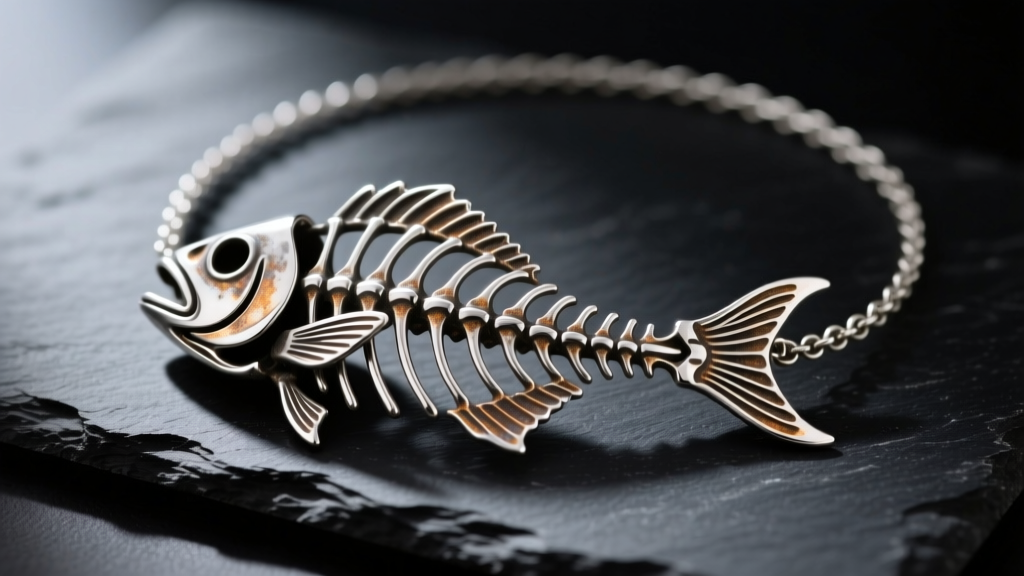
The Anatomy of an Edgy Coastal Staple
The fish skeleton necklace occupies a unique space in modern jewelry design, bridging the gap between coastal nostalgia and anatomical, memento mori edge. Whether you are drawn to the maritime symbolism or the intricate, macabre beauty of the vertebrae and ribs, styling this specific pendant requires an understanding of weight, drape, and metal finish. Unlike a simple geometric charm, a fish bone pendant has an elongated, horizontal or vertical profile that interacts differently with various necklines.
In this comprehensive guide, we will break down exactly how to select, pair, and maintain your fish skeleton necklace to ensure it remains a standout piece in your collection for years to come.
Step 1: Selecting the Right Metal and Finish
The visual impact of a fish skeleton pendant relies heavily on its finish. Because the design features dozens of tiny crevices between the ribs and vertebrae, the metal treatment will dictate the pendant's overall contrast.
Oxidized Sterling Silver (925)
The most popular and visually striking choice is oxidized sterling silver. Jewelers use a chemical process (often involving liver of sulfur) to intentionally darken the silver. When polished, the high points (the bones) shine brightly, while the recessed areas remain dark. This high-contrast finish highlights the anatomical details that would otherwise be lost in a high-polish piece. According to the Gemological Institute of America (GIA), sterling silver is an alloy containing 92.5% pure silver and 7.5% copper, which provides the necessary durability for intricate casting.
Enamel and Mixed Media
For a more vibrant, contemporary look, some artisans incorporate vitreous enamel or cold enamel into the skeletal structure. If you choose an enameled fish skeleton necklace, be aware that the enamel is essentially glass fused to metal. It is highly resistant to tarnish but can chip if dropped on a hard surface.
Brass and Bronze Alternatives
Budget-friendly options often use brass or bronze. While these metals offer a beautiful, warm, antique patina, they are prone to verdigris (green oxidation) when exposed to skin acidity and moisture. If you opt for brass, ensure the pendant has a clear protective lacquer coating, or be prepared to polish it frequently.
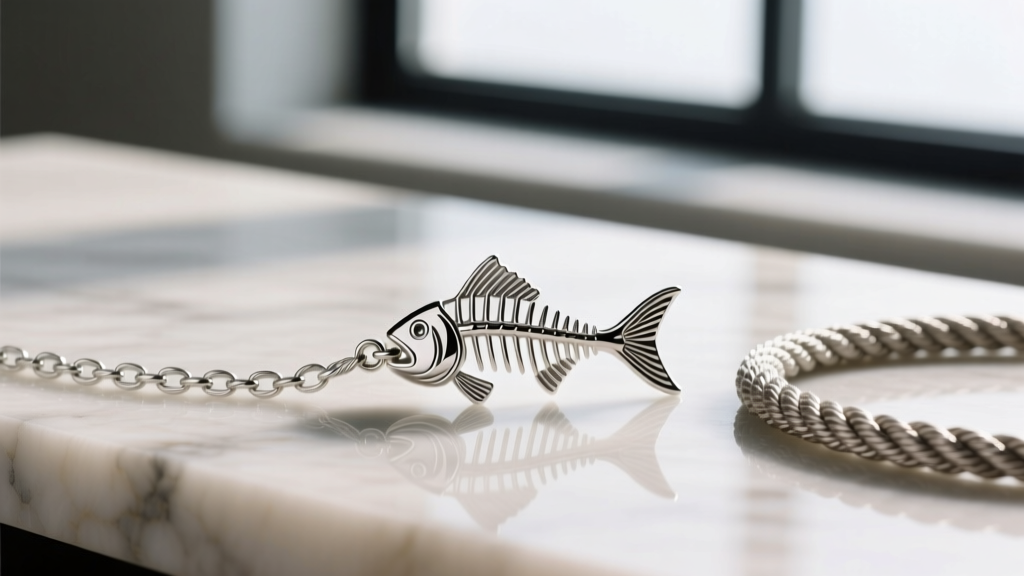
Step 2: Matching Chain Types to the Pendant
A common mistake when styling elongated or articulated pendants is pairing them with the wrong chain. The bail (the loop at the top of the pendant) dictates the maximum chain thickness, but the pendant's weight and flexibility dictate the ideal chain style.
Articulated vs. Solid Cast Pendants
If your fish skeleton necklace is articulated (meaning the bones move via tiny jump rings or hinges), you must use a highly flexible chain. Rigid chains like herringbone, omega, or snake chains will not drape naturally and can force the delicate hinges of the pendant to bend or snap. Conversely, a solid cast pendant is rigid and heavy, requiring a sturdier chain to support its weight without stretching.
| Pendant Type | Ideal Chain Style | Recommended Gauge (Thickness) | Why It Works |
|---|---|---|---|
| Articulated (Moving Bones) | Cable or Rolo Chain | 1.2mm - 1.8mm | Maximum flexibility; prevents stress on pendant hinges. |
| Solid Cast (Heavy) | Box or Wheat Chain | 2.0mm - 3.0mm | High tensile strength; supports heavy silver without stretching. |
| Delicate / Miniature | Fine Curb or Thread Chain | 0.8mm - 1.0mm | Keeps the focus on the pendant; avoids visual clutter. |
Step 3: Length and Neckline Pairing
The horizontal or vertical orientation of your fish skeleton necklace will determine how it interacts with your clothing. Here is a step-by-step framework for matching lengths to necklines.
- The 16-Inch Choker (Horizontal Orientation): If the fish skeleton sits horizontally across the collarbone, a 16-inch chain is ideal. This pairs perfectly with boatneck tops, off-the-shoulder sweaters, and deep scoop necks. The horizontal bone structure mimics and accentuates the line of the collarbone.
- The 18-Inch Princess (Vertical Orientation): For pendants where the fish hangs vertically (head up or tail down), an 18-inch chain allows the skeleton to rest just below the clavicle. This is the ultimate pairing for V-neck shirts and wrap dresses, as the vertical spine of the fish draws the eye downward, elongating the neck.
- The 22-Inch Matinee (Layering Base): A longer, 22-inch chain allows the pendant to rest on the sternum. This length is perfect for wearing over button-down shirts, lightweight turtlenecks, or as the anchor piece in a layered stack.

Step 4: Layering Techniques for 2026
Layering remains a dominant trend in 2026, but the key to a successful stack is varying the texture, weight, and visual density of each piece. Because a fish skeleton necklace is highly detailed and visually "busy," it should act as the focal point of your stack.
"When layering anatomical or highly textured jewelry, balance is everything. Pair the intricate bones with smooth, minimalist chains to let the pendant breathe."
The 3-Piece Coastal Stack Formula
- Layer 1 (14-15 inches): A simple, smooth 1.5mm silver herringbone or snake chain. This provides a reflective base near the collarbone without competing for attention.
- Layer 2 (18 inches): Your fish skeleton necklace on a textured 1.8mm rolo chain. This is your statement piece.
- Layer 3 (22 inches): A smooth, bezel-set gemstone pendant (like a flat turquoise or lapis lazuli cabochon) on a fine cable chain. The solid block of color grounds the intricate silver bones above it.
Step 5: Cleaning and Maintaining the "Bones"
The intricate crevices of a fish skeleton necklace trap skin oils, lotions, and environmental dust. Improper cleaning can ruin the intentional oxidation that gives the piece its depth.
What to Avoid
Never use liquid silver dips or ultrasonic cleaners on an oxidized fish skeleton necklace. Liquid dips contain thiourea, a chemical that strips all oxidation—both the accidental tarnish and the intentional darkening in the crevices. This will leave your pendant looking flat, overly bright, and unnatural. For more on safe cleaning practices, refer to Vogue's comprehensive jewelry care guide.
The Step-by-Step Cleaning Method
- Prepare a Mild Bath: Mix a few drops of phosphate-free dish soap into a bowl of lukewarm water.
- Agitate Gently: Submerge the necklace for 3 to 5 minutes to loosen oils trapped between the ribs.
- Brush the Crevices: Using a brand-new, extra-soft baby toothbrush, gently sweep along the spine and between the ribs. Brush in the direction of the bones to avoid catching and bending any delicate silver spikes.
- Rinse and Dry: Rinse thoroughly under lukewarm running water. Pat dry with a lint-free microfiber cloth. Ensure no moisture remains in the hinges if the piece is articulated.
- Polish the High Points: Use a dry silver polishing cloth to gently buff only the raised, high-polish areas of the bones, leaving the dark oxidation in the recesses completely untouched.
Final Thoughts
A fish skeleton necklace is more than just a piece of jewelry; it is a conversation starter that blends natural history with wearable art. By carefully selecting the right chain gauge to support the pendant's weight, matching the length to your wardrobe's necklines, and committing to a gentle, non-abrasive cleaning routine, you ensure that this striking piece remains a staple in your collection. Whether worn alone as a subtle nod to the ocean or layered in a curated stack, the anatomical elegance of the fish skeleton is a testament to the enduring appeal of nature-inspired design.


