The Ultimate Tiny Gold Necklace Buying Guide: What to Look For
Discover what to look for in a tiny gold necklace. Our expert buying guide covers karats, chain styles, clasps, and pricing for delicate everyday wear.

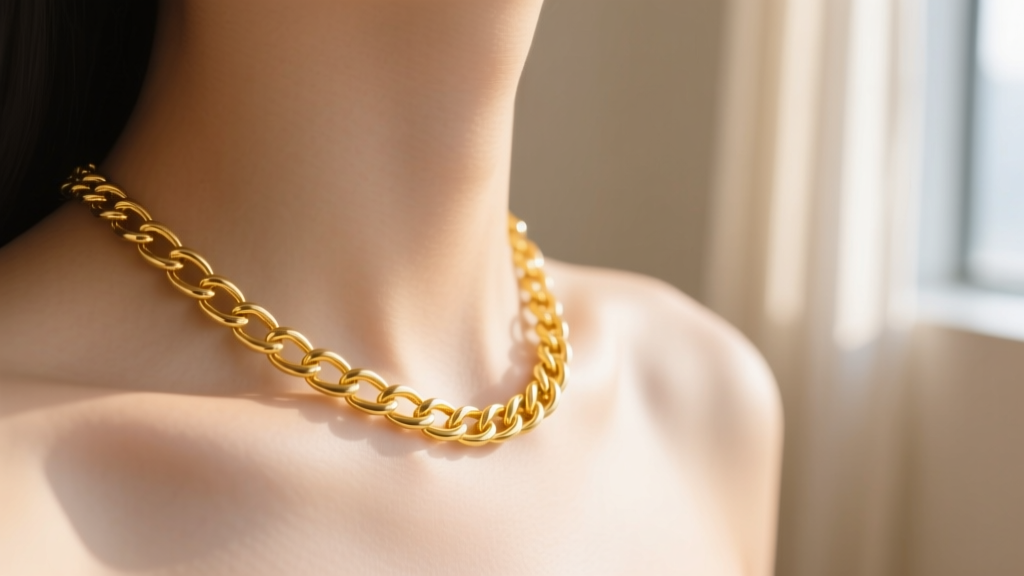
The minimalist jewelry movement has cemented the tiny gold necklace as a modern wardrobe staple. Whether worn solo as a subtle glint against the collarbone or layered in a curated stack of varying lengths, these ultra-delicate pieces offer an understated elegance that heavier chains simply cannot match. However, the very nature of a 'tiny' necklace—often measuring between 0.4mm and 1.2mm in thickness—introduces unique structural vulnerabilities. Buying a delicate chain is not just about aesthetics; it is an exercise in applied metallurgy and mechanical awareness.
In this comprehensive buying guide, we break down exactly what to look for when investing in a tiny gold necklace. From understanding the tensile strength of different gold alloys to identifying which chain links are prone to catastrophic failure, this guide will ensure your delicate jewelry survives the rigors of daily wear.
Decoding Gold Purity: 14K vs. 18K for Delicate Chains
When shopping for fine jewelry, consumers are often taught that higher karat gold is inherently better. While 24K gold represents pure, unalloyed luxury, it is a disastrous choice for a tiny gold necklace. Pure gold is highly malleable; a 0.6mm 24K chain will stretch, warp, and snap under the minimal tension of a lightweight pendant or a snag on a sweater.
To create durable jewelry, gold must be alloyed with metals like copper, silver, and zinc. According to the Gemological Institute of America (GIA), these alloy metals not only dictate the color of the gold but fundamentally alter its tensile strength and hardness. Here is how the most common karats perform in ultra-thick chains:
- 10K Gold (41.7% pure): The most durable option due to its high alloy content. It resists stretching and scratching beautifully but has a paler, slightly less rich yellow hue. Ideal for chains under 0.5mm that will bear a heavy pendant.
- 14K Gold (58.3% pure): The undisputed sweet spot for tiny gold necklaces. It offers an excellent balance of rich color and structural integrity. The copper and silver alloys provide enough rigidity to prevent micro-stretching while maintaining a luxurious finish.
- 18K Gold (75.0% pure): Prized for its deep, buttery yellow color and hypoallergenic properties. However, 18K gold is significantly softer. In chains thinner than 0.8mm, 18K gold is prone to gradual elongation over time, especially if worn in bed or subjected to frequent pulling.
Chain Link Anatomy: Which Tiny Styles Survive Daily Wear?
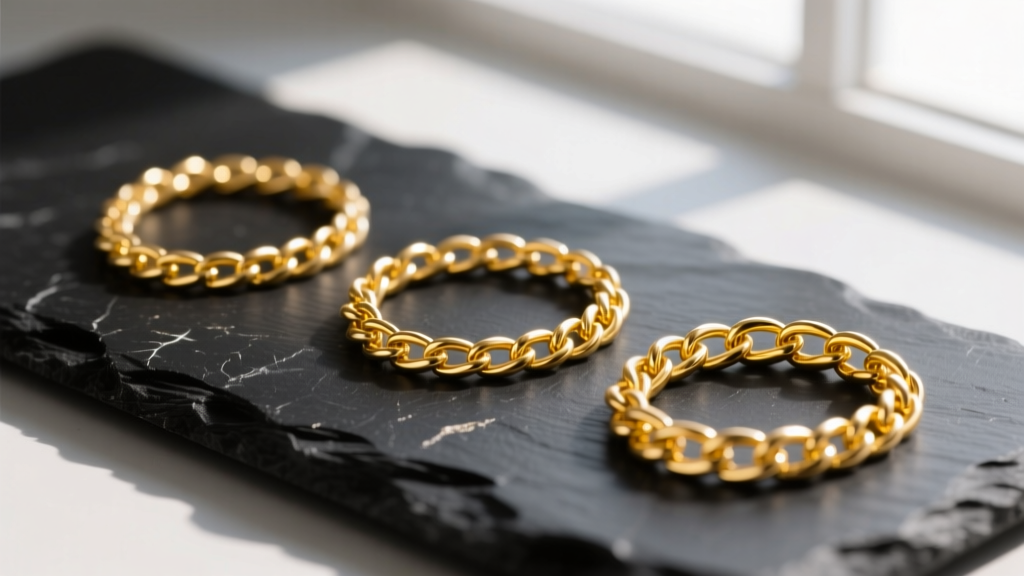
The structural geometry of the chain link dictates its lifespan just as much as the metal purity. A tiny gold necklace is only as strong as its weakest soldered joint. When browsing boutique or direct-to-consumer brands, you will typically encounter four primary chain styles in the sub-1mm category.
Cable Chains
The cable chain consists of uniform oval or round links connected to one another. It is the most traditional and, crucially, the most repairable. If a 0.6mm cable chain snaps, a bench jeweler can easily laser-weld the broken link back together without leaving a visible scar.
Box Chains
Box chains feature square, interlocking links that create a smooth, geometric, and highly reflective surface. While stunning, they possess a fatal flaw: kinking. If a tiny box chain is folded sharply or slept in, the square links can crush inward. Once a box chain kinks, the structural integrity is compromised, and it is nearly impossible to repair without replacing the entire section.
Snake Chains
Snake chains are made of tightly joined wavy rings that form a flexible, tubular surface. They drape like liquid metal and are incredibly sleek. Unfortunately, the tight tolerances mean they easily catch on body hair and fine fabrics. Once the internal structure is pulled apart, the chain will permanently fracture.
Rope Chains
Twisted to mimic a literal rope, these chains reflect light from multiple angles, making them appear much thicker than their actual millimeter weight. They are highly durable and resist tangling, but if they do break, the twisted soldering points make repairs highly visible.
| Chain Style | Common Thickness | Tangle Resistance | Repairability | Best For |
|---|---|---|---|---|
| Cable | 0.4mm - 1.0mm | Moderate | Excellent | Everyday wear, holding small pendants |
| Box | 0.6mm - 1.2mm | High | Poor (Kinks) | Standalone minimalist wear |
| Snake | 0.8mm - 1.5mm | Low (Catches hair) | Very Poor | Occasional wear, sleek aesthetics |
| Rope | 0.9mm - 1.5mm | High | Moderate | Durability, light reflection |
The Weakest Link: Clasp Mechanics and Failure Modes
When evaluating a tiny gold necklace, buyers obsess over the chain but ignore the clasp. The clasp assembly is the most common point of failure. For delicate chains, jewelers typically use one of two mechanisms:
Spring Ring Clasps
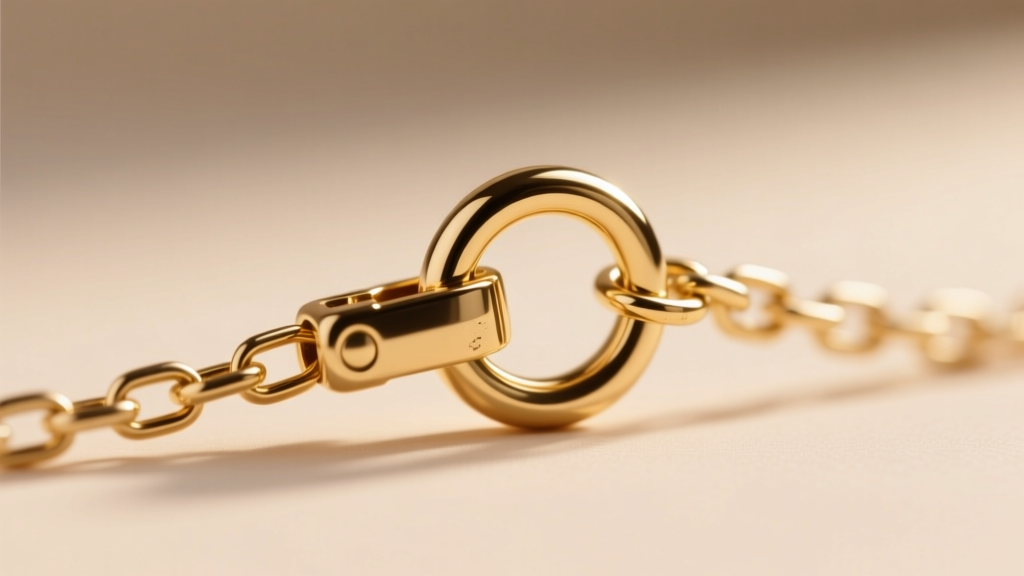
The spring ring is the standard for chains under 1.0mm. It contains a tiny internal spring that pulls the lever back. What to look for: Ensure the spring ring is at least 4mm to 5mm in diameter. Anything smaller becomes incredibly frustrating to operate with one hand and is prone to internal spring fatigue. Furthermore, inspect the 'jump ring' on the opposite end of the chain. If the jump ring has a visible slit (meaning it is unsoldered), the thin chain will eventually slip through the gap when pulled.
Lobster Claw Clasps
Lobster clasps are heavier, more secure, and easier to grip. However, putting a heavy 10mm lobster clasp on a 0.5mm chain creates a severe weight imbalance. The clasp will constantly migrate to the front of the neck, ruining the drape of the necklace. If you prefer a lobster clasp for security, ensure the jeweler has used a counter-weighted tag or a smaller, lightweight micro-lobster design.
Expert Pro-Tip: Always check for a soldered jump ring. An unsoldered jump ring on a tiny gold necklace is a ticking time bomb. The tension of daily movement will slowly pry the gap open, leading to a lost chain and pendant.
Pricing Expectations and Brand Tiers in 2026
Understanding what you should pay for a tiny gold necklace prevents you from overpaying for plated metals or underestimating the cost of true fine jewelry. Pricing is largely dictated by the gold weight (measured in grams), the complexity of the chain link, and the brand markup.
- Tier 1: Gold Vermeil & Plated ($40 - $90)
Often marketed as 'demi-fine', these pieces feature a brass or sterling silver core plated with a thin layer of gold. While affordable, the plating will eventually wear off on high-friction areas like the clasp and the nape of the neck. They are not recommended for 'never-take-off' wear. - Tier 2: Direct-to-Consumer Solid 14K ($120 - $280)
Brands that bypass traditional retail markups offer solid 14K gold chains in the 0.5mm to 0.8mm range. At this price point, you are paying for the raw gold value plus basic machine-made craftsmanship. These are excellent workhorse pieces for everyday layering. - Tier 3: Fine Jewelry Artisans ($350 - $800+)
At this tier, you are paying for hand-finished details. Artisans may use hand-soldered links, custom-length sizing, and premium 18K gold. The clasps are often custom-machined to perfectly match the microscopic scale of the chain, providing both security and aesthetic harmony.
Care, Tangling, and Troubleshooting
The most common complaint regarding tiny gold necklaces is tangling. A 0.5mm cable chain can easily knot upon itself when stored loosely in a jewelry box. When a micro-knot forms, the natural instinct is to pull it apart with your fingernails, which introduces stress fractures into the delicate links.
According to maintenance guidelines from Jewelers of America, proper handling of fine chains is critical to their longevity. If your tiny necklace becomes tangled, do not pull. Instead, lay the chain flat on a hard, non-porous surface like a glass table or a ceramic plate. Apply a small amount of talcum powder or baby powder directly to the knot to eliminate friction. Using two fine sewing needles, gently work the center of the knot loose from the outside in. The powder allows the microscopic gold links to slide past one another without catching or stretching.
For daily maintenance, remove your tiny gold necklace before swimming in chlorinated pools. Chlorine reacts violently with the copper and silver alloys in 14K and 18K gold, causing a phenomenon known as 'stress corrosion cracking,' which can cause a delicate chain to literally disintegrate at the solder points.
Final Verdict: Building Your Collection
A tiny gold necklace is an investment in subtle, everyday luxury. By prioritizing 14K gold for its optimal tensile strength, selecting a cable or rope chain for their superior repairability, and meticulously checking the clasp mechanics, you can curate a collection of delicate chains that will withstand the test of time. Remember that true luxury lies not just in the karat weight, but in the structural engineering of the piece itself.


