Troubleshooting a Ruby Diamond Cross Necklace: Care & Repair
Learn how to troubleshoot, clean, and repair your ruby diamond cross necklace. Expert advice on prong retipping, bail wear, and safe cleaning methods.

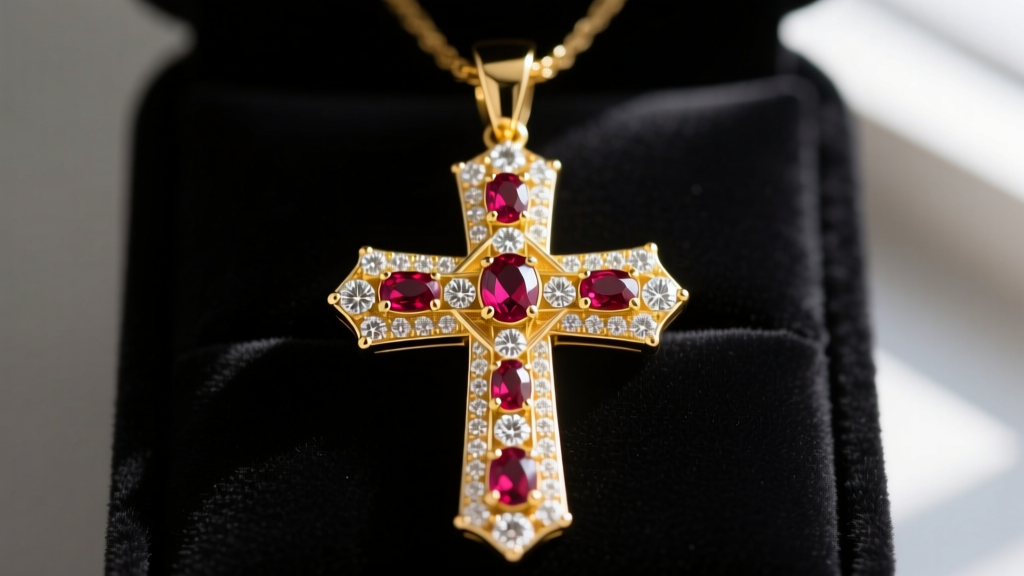
The Unique Vulnerabilities of Ruby and Diamond Cross Pendants
A ruby diamond cross necklace is a profound statement of faith and luxury, but combining these two specific gemstones in a single pendant introduces unique structural and gemological challenges. While diamonds and rubies are the two hardest gemstones used in fine jewelry—ranking 10 and 9 on the Mohs scale, respectively—their proximity in a cross setting requires meticulous engineering. When troubleshooting damage to these pieces, the most common culprits are not external impacts, but rather internal friction, improper cleaning protocols, and localized metal fatigue.
In this comprehensive troubleshooting guide, we will dissect the specific failure modes of ruby and diamond cross pendants. Whether you are dealing with a loose ruby, a fractured bail, or a clouded gemstone, understanding the metallurgical and gemological science behind your necklace is the first step toward a permanent repair.
Troubleshooting Stone Loss: Prong Wear and Setting Failures
The most frequent emergency a jeweler sees with cross pendants is a missing stone. Cross necklaces are subject to constant pendulum-like motion against the chest, which accelerates prong wear. Furthermore, if your cross features shared prongs (where one metal tip holds both a diamond and a ruby), you are dealing with a severe hardness conflict.
The Mohs Scale Conflict in Shared Settings
Because diamond is a 10 on the Mohs scale and ruby is a 9, a diamond is exponentially harder than a ruby. If the stones are set too closely and the metal prongs wear thin, the diamond can actually act as a lapidary wheel, grinding away the girdle of the adjacent ruby. When inspecting your necklace, look for 'chatter marks' or microscopic abrasions on the ruby's edge nearest to the diamond.
- Standard Prong Retipping: For 14k or 18k gold crosses, expect to retip prongs every 5 to 7 years. Cost: $45 to $85 per prong.
- Rebuilding Shared Prongs: Requires laser welding to avoid thermal shock to the ruby. Cost: $120 to $180 per junction.
- Bezel Conversion: If your rubies continually loosen, consider having a jeweler convert the ruby settings from prong to partial bezel, which offers 300% more security against lateral impacts.

The Cleaning Conundrum: Avoiding Thermal Shock and Chemical Damage
Perhaps the most catastrophic mistake owners make is treating a ruby diamond cross necklace exactly like an all-diamond piece. While diamonds can withstand ultrasonic cleaners and harsh chemical degreasers, the vast majority of commercial rubies cannot. According to the Gemological Institute of America (GIA), over 90% of rubies on the market are heat-treated, and a significant portion of lower-to-medium commercial grade rubies are fracture-filled with lead glass to improve clarity.
If your ruby is fracture-filled, placing it in an ultrasonic cleaner or exposing it to harsh acids (like pickle solution used in jewelry soldering) will dissolve the glass filler, leaving you with a cloudy, heavily fractured, and structurally compromised stone.
Safe vs. Unsafe Cleaning Matrix
| Cleaning Method | Untreated / Heat-Only Ruby | Fracture-Filled (Lead Glass) Ruby | Diamond Accent Safety |
|---|---|---|---|
| Ultrasonic Cleaner | Generally Safe | STRICTLY PROHIBITED | Safe (unless fracture-filled) |
| Steam Cleaner | Safe | High Risk of Thermal Shock | Safe |
| Mild Dish Soap & Warm Water | Safe | Safe | Safe |
| Ammonia-Based Cleaners | Safe | Degrades Filler Over Time | Safe |
Actionable Fix: Always clean your ruby diamond cross necklace using a soft baby toothbrush, lukewarm water, and a few drops of ammonia-free dish soap. Dry immediately with a microfiber cloth to prevent water spots on the gold setting.
Bail and Chain Friction: Fixing the Weakest Link
The bail—the loop that connects the cross pendant to the chain—is a massive point of failure. The constant back-and-forth sawing motion of the chain against the bail creates a friction groove. If you pair a heavy solid-gold cross pendant with a thin, abrasive chain like a 0.9mm rope chain, the chain will eventually saw completely through a standard 14k gold bail.
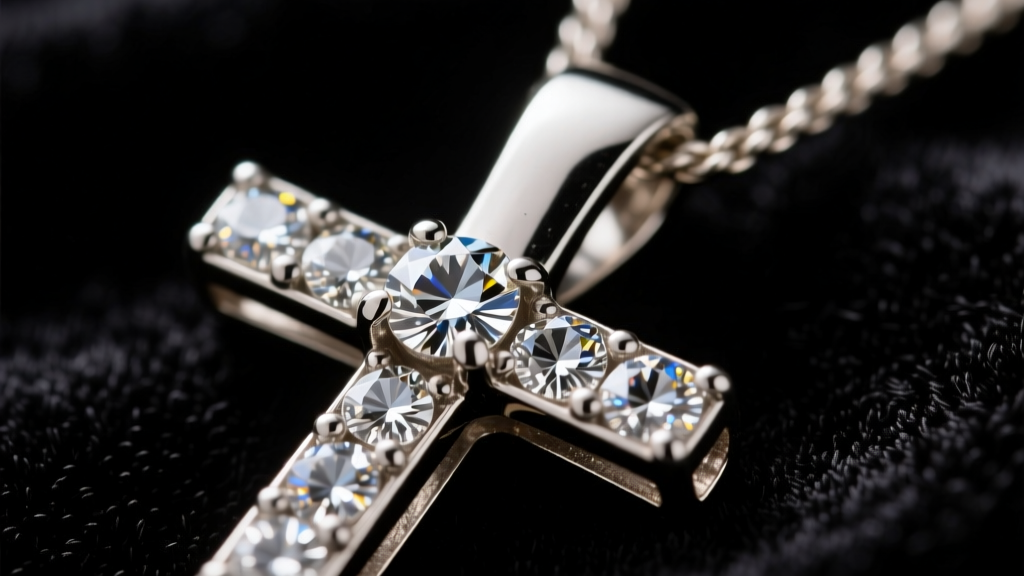
Troubleshooting Bail Wear
If you notice a deep groove forming on the inside of your bail, do not wait for it to snap. A dropped cross on a hard tile floor can shatter the diamonds or rubies upon impact.
- The Platinum Sleeve Fix: A master jeweler can laser-weld a hardened platinum or rhodium sleeve inside the gold bail. Platinum is highly resistant to friction wear and will essentially make the bail indestructible against gold chains.
- Chain Upgrades: Switch from high-friction rope chains to smooth, low-friction chains like a 1.2mm box chain or a 1.5mm wheat chain. These designs distribute the weight of the pendant more evenly and lack the abrasive 'teeth' of a rope chain.
Authentication Troubleshooting: Spotting Synthetics and Simulants
When acquiring or inheriting a ruby diamond cross necklace, verifying the authenticity of the materials is a crucial troubleshooting step. Synthetic rubies (created via the Verneuil flame fusion process) are chemically identical to natural rubies but possess curved striae (growth lines) rather than the angular growth lines and rutile silk found in natural stones.
Furthermore, many vintage crosses from the mid-20th century utilize synthetic rubies paired with single-cut melee diamonds. While still valuable as vintage jewelry, the appraisal value is vastly different. To troubleshoot authentication at home, use a 10x triplet loupe. If you see perfectly spherical gas bubbles inside the ruby, it is almost certainly a flame-fusion synthetic. For definitive proof, seek a Jewelers of America certified appraiser who can perform a refractive index (RI) test and check for lead-glass filling indicators under darkfield illumination.
Preventative Maintenance Checklist
'A ruby diamond cross necklace is not a passive accessory; it is a mechanical system subject to friction, tension, and environmental degradation. Proactive maintenance is always cheaper than reactive gemstone replacement.'
To ensure your pendant remains an heirloom-quality piece, adhere to this strict maintenance schedule:
- Every 6 Months: Perform the 'tap test.' Gently tap the rubies and diamonds with a wooden toothpick. If you hear a faint clicking sound, a prong has lifted, and the stone requires immediate professional tightening.
- Annually: Have a jeweler inspect the bail thickness using digital calipers. If the metal has worn down by more than 30% of its original gauge, schedule a bail replacement or reinforcement.
- Bi-Annually: Professionally polish the gold setting. Note that polishing removes a microscopic layer of gold; therefore, it should only be done when necessary to remove deep scratches, not for routine cleaning.
By understanding the specific gemological and metallurgical vulnerabilities of your jewelry, you can troubleshoot issues before they result in irreversible damage, ensuring your ruby diamond cross necklace remains pristine for generations.


