Blueberry Necklace Guide: Quartz Beads & Stringing Tech
Explore the gemology of blueberry necklaces, comparing natural dumortierite quartz to dyed beads, with expert stringing and clasp engineering specs.

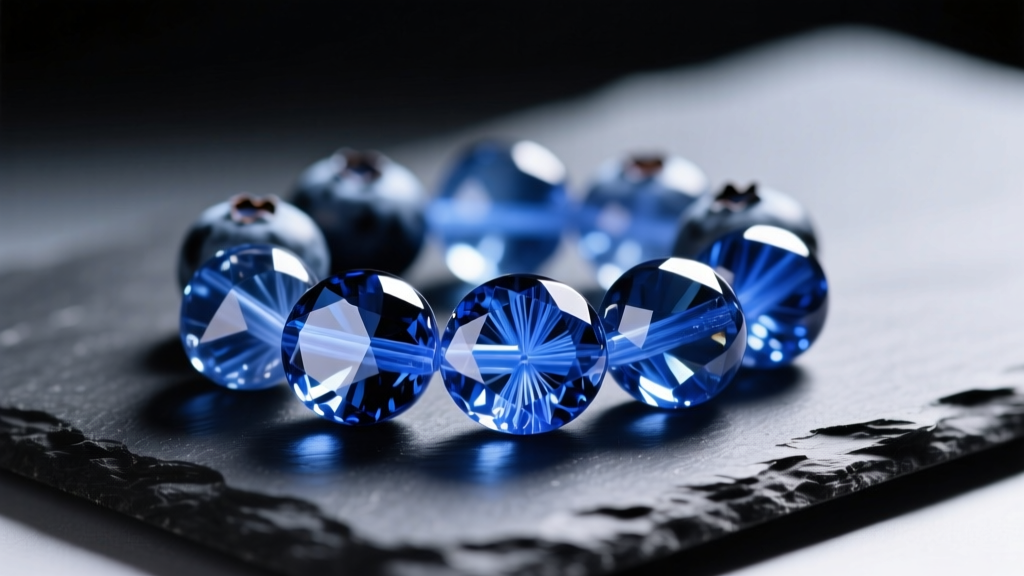
The term blueberry necklace has become a highly sought-after keyword in the artisan jewelry market, but it represents a fascinating intersection of gemological trade names, material science, and structural engineering. Unlike standardized precious gems, "blueberry quartz" is not a formal mineralogical classification. Instead, it refers to a specific visual profile: translucent to opaque quartz beads featuring deep blue, berry-like inclusions or color zoning. For jewelry designers and serious collectors, understanding the technical divergence between natural dumortierite-included quartz and fracture-dyed alternatives is critical. Furthermore, because these beads are typically cut in large 10mm to 14mm rounds, a finished blueberry necklace carries significant weight, demanding rigorous stringing protocols to prevent catastrophic failure.
The Gemological Reality of "Blueberry Quartz"
When sourcing beads for a high-end blueberry necklace, you will encounter two primary materials in the supply chain: natural dumortierite-included quartz and fracture-dyed crackled quartz. According to the Gemological Institute of America (GIA), quartz is a ubiquitous silicate mineral, but its visual manifestations vary wildly based on trace inclusions and post-mining treatments.
Natural Dumortierite vs. Fracture-Dyed Quartz
Natural blueberry quartz gets its color from fibrous inclusions of dumortierite, a borosilicate mineral that crystallizes within the quartz matrix. This creates a natural, speckled blue effect that resembles the skin of a blueberry. Conversely, the mass market is flooded with "crackled quartz"—clear or milky quartz that has been thermally shocked (heated and rapidly quenched in cold water) to create internal fractures, which are then submerged in blue aniline dyes.
| Gemological Property | Natural Dumortierite Quartz | Fracture-Dyed Crackled Quartz |
|---|---|---|
| Refractive Index (RI) | 1.544 - 1.553 (Spot) | 1.544 - 1.553 (Spot) |
| Specific Gravity (SG) | 2.65 - 2.68 | 2.64 - 2.66 |
| Inclusion Type | Fibrous, directional needles | Planar fractures, dye pooling |
| UV Fluorescence | Inert to weak | Often chalky blue/green (dye) |
| Acetone Test | No color transfer | Color transfer on cotton swab |
To authenticate your beads, perform a localized acetone test on a single bead near the drill hole. If the bead is dyed, the solvent will lift the aniline dye from the surface-reaching fractures. Additionally, under 10x magnification, natural dumortierite inclusions will appear as distinct, directional fibrous needles, whereas dyed quartz will show flat, reflective fracture planes with concentrated dye pooling at the edges.
Structural Engineering: Stringing Heavy Beaded Necklaces
A standard 18-inch princess-length necklace made of 12mm quartz beads weighs approximately 85 to 95 grams. This is nearly triple the weight of a standard 6mm gemstone strand. The centripetal force exerted on the stringing material and the clasp assembly during normal movement requires industrial-grade beading wire. According to Fire Mountain Gems' stringing encyclopedias, matching the wire gauge to the bead's hole size and weight is the most common point of failure in artisan jewelry.
Wire Gauge and Strand Count
For a heavy blueberry necklace, never use nylon thread, silk, or elastic cord. These materials will stretch, degrade, and eventually snap under the 90-gram dynamic load. You must use multi-strand stainless steel micro-wire coated in nylon.
- 49-Strand Wire (0.024 inch / 0.61mm): This is the mandatory standard for 12mm+ quartz beads. The 49-strand core provides maximum flexibility, preventing the wire from kinking and suffering metal fatigue at the crimp points.
- 19-Strand Wire (0.018 inch / 0.46mm): Acceptable only if the beads are 8mm or smaller, and the total necklace weight remains under 50 grams.
- Hole Drilling Tolerances: Large quartz beads are typically drilled with 0.8mm to 1.0mm diamond core bits. Ensure your 0.024-inch wire passes through the bead with a slight tolerance; if the hole is too tight, the sharp silica edges of the quartz will slowly shear the nylon coating off the wire over time.
The Mechanics of the Crimp Connection
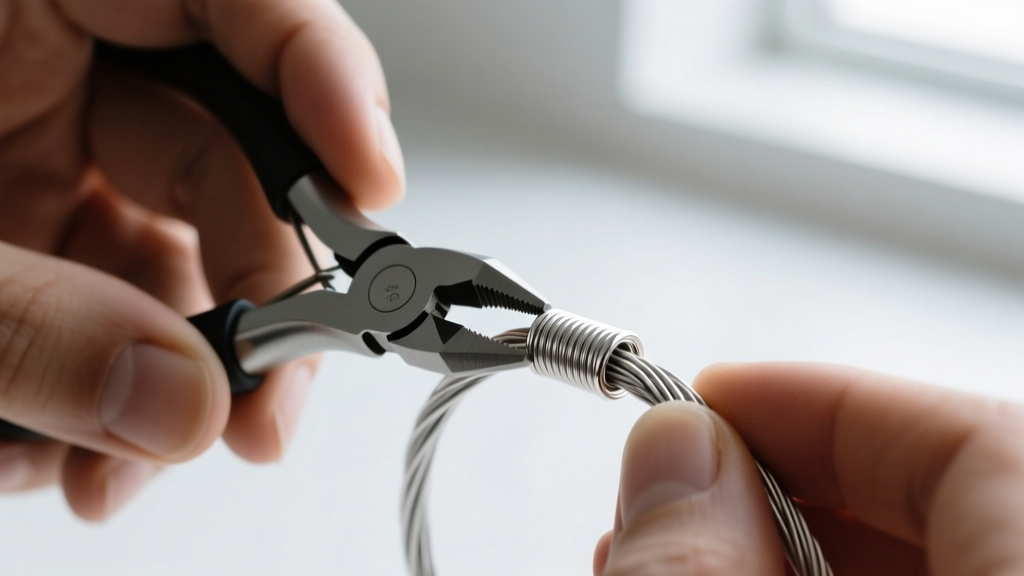
The weakest point of any beaded necklace is the crimp connection. For heavy quartz, use 2mm x 2mm sterling silver or gold-filled tube crimps, not round crimp beads. Tube crimps provide a larger surface area for friction. Use a micro-crimper tool to fold the tube into a rounded, C-shaped profile, and then compress it into a faux-bead shape. This folded geometry encapsulates the wire, preventing the sharp edges of a flattened crimp from acting like a guillotine on the steel strands.
Clasp Mechanics and Load Distribution
The clasp on a blueberry necklace must withstand both static tension (the weight of the necklace pulling downward) and dynamic shear forces (when the wearer snags the beads on clothing). Standard lobster claws and spring rings are entirely unsuitable for 90-gram necklaces; the internal steel springs fatigue, and the lever mechanisms bend under lateral stress.
The Toggle Clasp Advantage
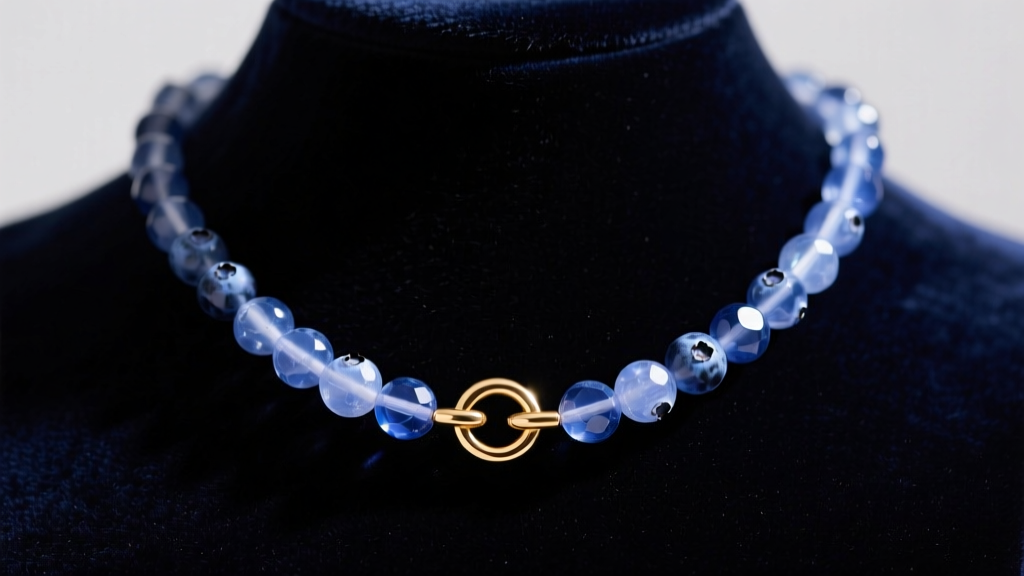
A heavy-duty toggle clasp is the premier choice for large-bead quartz necklaces. The physics of a toggle rely on gravity and geometry rather than a mechanical spring. To ensure it does not slip through the ring during wear, the T-bar must be at least 1.5 times the inner diameter of the receiving ring. For a 12mm bead necklace, use a toggle with a ring inner diameter of no less than 18mm and a T-bar length of 28mm.
Neodymium Magnetic Alternatives
For clients requiring accessibility (e.g., those with arthritis), neodymium magnetic clasps are a viable alternative. However, you must source clasps rated for a minimum of 15 lbs of pull-force, featuring an internal steel housing that screws directly onto the nylon-coated wire, bypassing the need for crimp tubes altogether.
Long-Term Maintenance and UV Stability
Caring for a blueberry necklace depends entirely on whether the beads are natural or treated. Natural dumortierite-included quartz is highly stable. It ranks at a 7 on the Mohs hardness scale and is impervious to household chemicals, ultrasonic cleaners, and steam.
The UV Degradation Risk
If the necklace is made of fracture-dyed quartz, prolonged exposure to ultraviolet light (direct sunlight) will cause the aniline dyes to break down, shifting the vibrant blueberry hue to a dull, washed-out grey. Furthermore, dyed quartz should never be placed in an ultrasonic cleaner. The high-frequency cavitation bubbles will forcefully extract the dye from the internal fractures, ruining the bead's color profile in minutes. Clean dyed blueberry necklaces only with a damp, lint-free microfiber cloth and mild, pH-neutral soap.
Expert Tip: When restringing a vintage or older blueberry necklace, always inspect the interior of the drill holes with a loupe. If you see a powdery blue residue inside the hole, the beads are heavily dyed and require gentle, dry-only maintenance protocols moving forward.
By mastering the gemological identification and structural engineering required for these heavy, striking beads, jewelers can create a blueberry necklace that is not only visually captivating but structurally sound enough to be worn as a daily heirloom piece.


