Troubleshooting a Yellow Jade Bead Necklace: Fixes & Care
Discover how to troubleshoot a yellow jade bead necklace. Learn to spot dyed fakes, fix fraying string, prevent bead chipping, and restore luster.

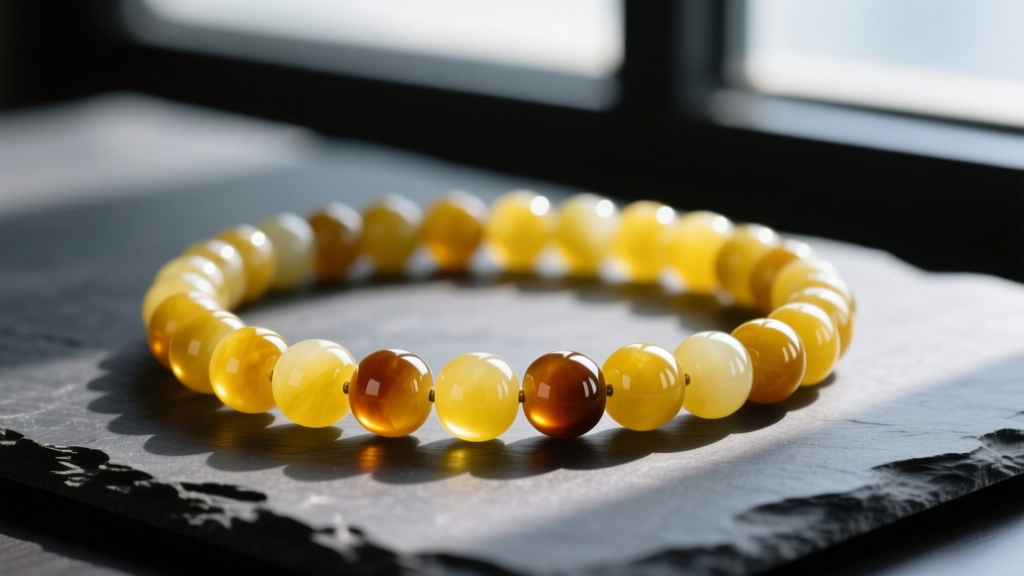
The Unique Vulnerabilities of Yellow Jade
A genuine yellow jade bead necklace is a remarkable piece of gemological history. Whether it is crafted from Huangkou nephrite (a prized iron-rich nephrite from Xinjiang) or rare yellow jadeite, these pieces command high prices and deep respect. However, owning and maintaining these necklaces presents specific structural and gemological challenges. From verifying authenticity in a market saturated with dyed imitations to preventing catastrophic string failures, troubleshooting a yellow jade bead necklace requires an expert understanding of mineralogy and jewelry mechanics.
This guide provides actionable, deep-level solutions to the four most common problems plaguing yellow jade bead necklaces: suspected dye treatments, string degradation, bead-on-bead chipping, and surface cloudiness.
Problem 1: Suspected Dye or Imitation Stones
The most frequent issue buyers face is discovering their 'yellow jade' is actually dyed serpentine (Bowenite), dyed quartzite, or color-treated glass. True yellow nephrite derives its hue from iron (Fe) substitutions within the tremolite-actinolite mineral series, while yellow jadeite owes its color to secondary iron staining near the surface of the rough boulder.
Troubleshooting Authenticity with Magnification and Light
To verify your stones, you must look past the surface color. Grab a 10x triplet loupe and examine the beads under strong, directional LED light. If you see 'spiderweb' concentrations of color pooling in the microscopic fractures and grain boundaries, the stone has likely been acid-bleached and dye-impregnated (Type C jade). According to the Gemological Institute of America (GIA), natural yellow jade will show dispersed, microscopic iron inclusions rather than web-like crack staining.
Next, use a longwave (365nm) UV flashlight. Natural, untreated nephrite and jadeite are generally inert or show very weak fluorescence. If your beads glow with a chalky blue or greenish-white hue, it indicates the presence of polymer resins used to stabilize acid-etched stones (Type B jade) or organic dyes.
Specific Gravity Verification
If you can safely remove a single bead from a damaged strand, perform a hydrostatic weighing test. As noted by the Mindat.org mineral database, natural nephrite has a specific gravity (SG) of 2.90 to 3.02, while jadeite sits at 3.30 to 3.38. Dyed quartzite will measure around 2.65, and glass will typically fall below 2.50. This definitive data point will immediately confirm or deny the stone's identity.
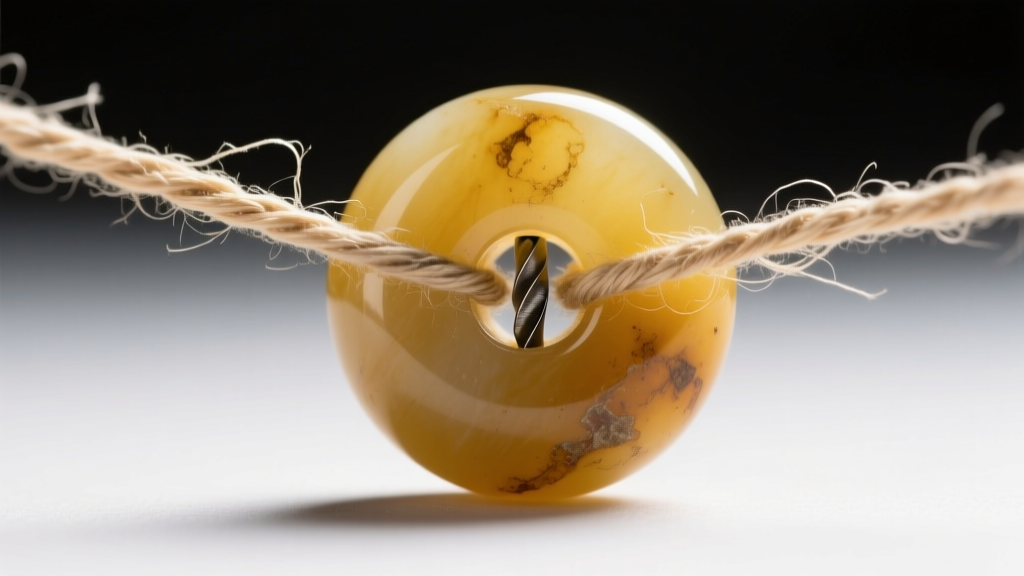
Problem 2: Fraying, Stretching, or Snapping String
Jade is a dense, heavy mineral. A necklace featuring 8mm to 12mm yellow jade beads can easily weigh over 80 grams. This constant gravitational pull, combined with the friction of the bead holes, causes inferior stringing materials to stretch, fray, and eventually snap, risking the loss of valuable stones.
Material Comparison for Jade Restringing
Never use standard cotton or cheap silk for heavy jade beads. Use the following framework to select the correct stringing material based on your bead hole diameter (typically 0.8mm to 1.2mm for commercial jade) and knotting requirements.
| Material | Diameter | Tensile Strength | Stretch Factor | Best Use Case |
|---|---|---|---|---|
| Griffin 100% Silk (Size F) | 0.35mm | Low | High | Lightweight, antique, or low-value beads under 6mm |
| Bonded Nylon (#6 or #8) | 0.40mm - 0.50mm | High | Minimal | High-value, heavy nephrite/jadeite beads requiring traditional knots |
| 49-Strand Beading Wire | 0.018' (0.46mm) | Very High | Zero | Heavy, large-diameter beads strung without knots (uses crimps) |
Fixing Frayed Holes with French Wire
If the string is snapping specifically at the clasp, the issue is metal-on-thread friction. You must troubleshoot this by installing French wire (also known as bullion or gimp). This microscopic coiled wire acts as a protective sleeve over the thread where it loops through the metal clasp ring, increasing the lifespan of the stringing job by up to 400%.
Problem 3: Bead-on-Bead Chipping and Clacking
While nephrite is famously tough—owing to its interlocking, felted amphibole fibers that make it harder to break than steel—it is not immune to chipping. Jadeite, which has a granular, interlocking crystal structure, is even more brittle. When beads are strung tightly without spacing, the constant 'clacking' motion during wear causes the edges of the drill holes to chip and grind into each other, creating permanent white stress marks.
The French Knot and Spacer Solution
To troubleshoot this mechanical wear, you must introduce physical barriers between the beads. The traditional and most secure method is the hand-tied French knot (or overhand knot) using bonded nylon thread. This knot should sit flush against the bead hole, absorbing the kinetic impact of the beads striking together.
If the bead holes are too large or irregularly drilled to support a standard knot, insert 1mm TPU (thermoplastic polyurethane) bead bumpers or tiny sterling silver spacer beads. TPU is preferred over hard plastic or metal spacers because its Shore A hardness rating provides enough cushioning to absorb shock without scratching the high-polish surface of the yellow jade.
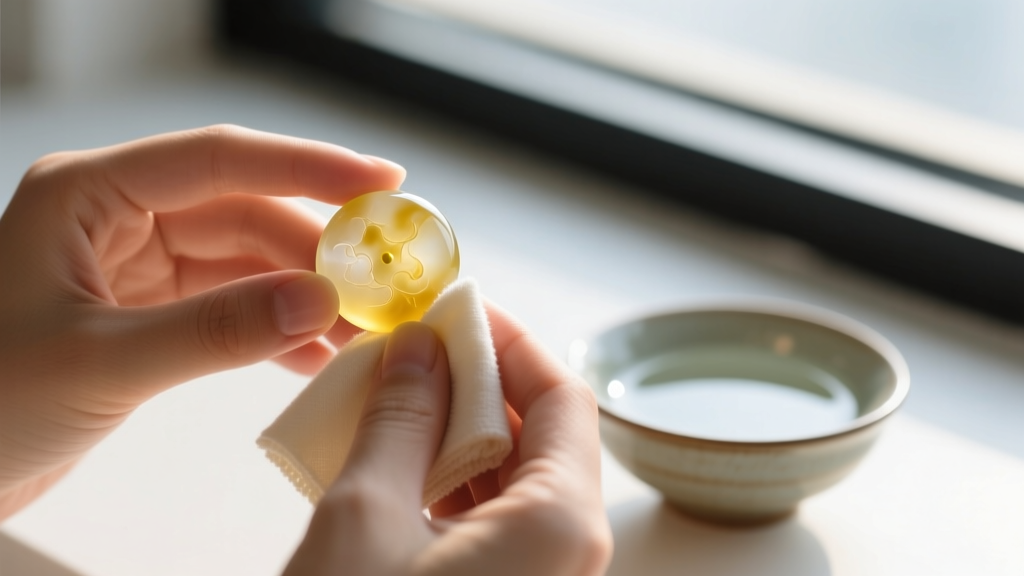
Problem 4: Cloudiness and Loss of Luster
A high-quality yellow jade bead necklace should exhibit a rich, greasy luster (in nephrite) or a glassy, vitreous shine (in jadeite). If your beads are turning cloudy, dull, or chalky, they are suffering from environmental or chemical degradation.
Identifying the Cause of Cloudiness
First, determine if the jade has been wax-treated. Most commercial Type A jadeite is dipped in a mild, natural beeswax or paraffin bath after polishing to fill microscopic surface pores and enhance the shine. If you wear the necklace in hot showers, saunas, or while swimming in chlorinated pools, the heat and chemicals will strip this protective wax layer, leaving the beads looking dull and dry.
Second, consider sebum and acidic sweat buildup. Human sweat has a pH ranging from 4.5 to 7.0. Over months of continuous wear, this mild acid reacts with the calcium and magnesium in the nephrite structure, creating a microscopic, cloudy patina on the surface.
Safe Polishing and Restoration Protocols
Never use ultrasonic cleaners. The high-frequency cavitation bubbles can easily penetrate the natural internal fractures (feathers) of the jade, causing the beads to shatter from the inside out. Avoid ammonia, bleach, and commercial jewelry dips entirely.
To restore the luster safely:
- Wash the necklace in lukewarm distilled water with a single drop of pH-neutral, fragrance-free castile soap.
- Gently agitate with a baby-soft toothbrush, focusing on the areas immediately surrounding the drill holes where dead skin and sebum accumulate.
- Rinse thoroughly with distilled water (tap water contains chlorine and hard minerals that can leave spots).
- Pat dry with a lint-free microfiber cloth and allow it to air dry completely before storing.
- If the wax layer on jadeite has been stripped, a professional lapidary can safely re-wax the beads using a specialized gemological wax bath.
Summary Checklist for Long-Term Care
Troubleshooting a yellow jade bead necklace is an ongoing process of observation and maintenance. By routinely checking the tension of your stringing material, verifying the integrity of your knots, and keeping the stones away from harsh thermal and chemical environments, you ensure the necklace remains structurally sound and visually brilliant for generations. Always document your necklace's specific gravity and fluorescence profile when you first acquire it, creating a permanent baseline for future authenticity verification.


