How to Clean, Polish, and Maintain Your Steel Necklace
Learn how to properly clean, polish, and maintain your steel necklace. Expert step-by-step guide for 316L and PVD-coated stainless steel.

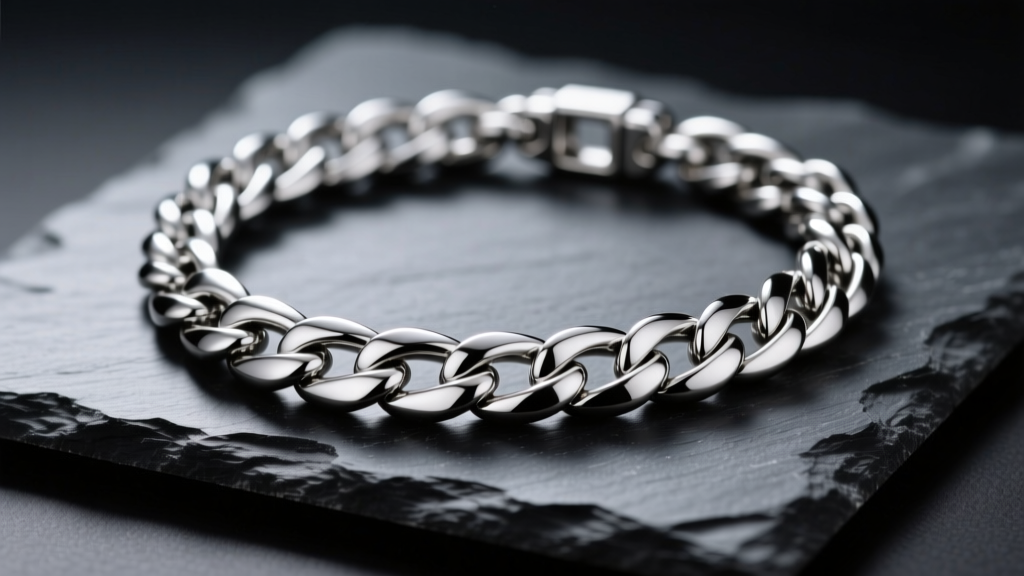
Stainless steel necklaces are celebrated for their durability, hypoallergenic properties, and modern aesthetic. However, "stainless" does not mean "indestructible." While stainless steel remains a dominant force in 2026 jewelry trends, the rise of complex PVD (Physical Vapor Deposition) colorways and intricate chain weaves means maintenance requires more nuance than simply wiping it down with a cloth. Improper cleaning can lead to micro-scratches, degraded coatings, or even localized pitting corrosion.
This comprehensive guide provides metallurgical insights and actionable, step-by-step instructions to keep your steel necklace in pristine condition, whether it is a bare mirror-finish chain or a delicate PVD-coated pendant.
Know Your Steel: 304 vs. 316L Surgical Grade
Before applying any cleaning solution, you must identify the grade of your steel necklace. The jewelry industry primarily uses two grades of austenitic stainless steel:
- 304 Stainless Steel: Contains 18% chromium and 8% nickel. It is highly resistant to standard oxidation but vulnerable to chlorides (found in sweat, saltwater, and pool chlorine).
- 316L Surgical Steel: Contains 16-18% chromium, 10-14% nickel, and crucially, 2-3% molybdenum. The addition of molybdenum drastically increases resistance to chloride pitting, making it the superior choice for body jewelry and daily-wear necklaces.
Metallurgist's Note: Stainless steel owes its rust-resistant property to a microscopic, invisible passive layer of chromium oxide on its surface. When this layer is scratched by harsh abrasives or chemically attacked by chlorides, the underlying iron can oxidize. Proper cleaning preserves this passive layer. For more on jewelry metallurgy, refer to the Gemological Institute of America (GIA).
The PVD Factor: Cleaning Colored Steel Necklaces
If your steel necklace is black, rose gold, or yellow gold, it is not a solid metal alloy. It is a 316L stainless steel base coated via Physical Vapor Deposition (PVD). In a vacuum chamber, titanium nitride or zirconium nitride is vaporized and bonded to the steel at a molecular level. While 2026 PVD technology is vastly superior to traditional electroplating, it is still a microscopically thin nanolayer.
Crucial Rules for PVD-Coated Steel
- Never use ultrasonic cleaners: The high-frequency cavitation bubbles will literally blast the PVD coating off the steel substrate.
- Avoid polishing compounds: Jewelers rouge or silver polishing cloths contain mild abrasives that will wear through the colored layer, exposing the silver-toned steel beneath.
- Stick to pH-neutral cleaners: Highly acidic or alkaline solutions can cause the PVD layer to cloud or peel over time.
The 5-Step Routine Cleaning Method
For standard maintenance of both bare 316L steel and PVD-coated necklaces, this gentle, non-abrasive method is the gold standard recommended by jewelers.
Step 1: Prepare a Gentle Bath
Fill a glass or ceramic bowl with warm (not hot) distilled water. Avoid tap water if your municipality has hard water, as the dissolved calcium and magnesium will leave stubborn mineral spots on the steel. Add three drops of a mild, phosphate-free dish soap (such as Dawn or a dedicated jewelry wash).
Step 2: The 5-Minute Soak
Submerge your steel necklace completely. Let it soak for exactly 5 to 7 minutes. This allows the surfactants in the soap to break down the sebum (body oils), dead skin cells, and lotions trapped within the chain links and pendant bails.
Step 3: Agitate with a Soft Brush
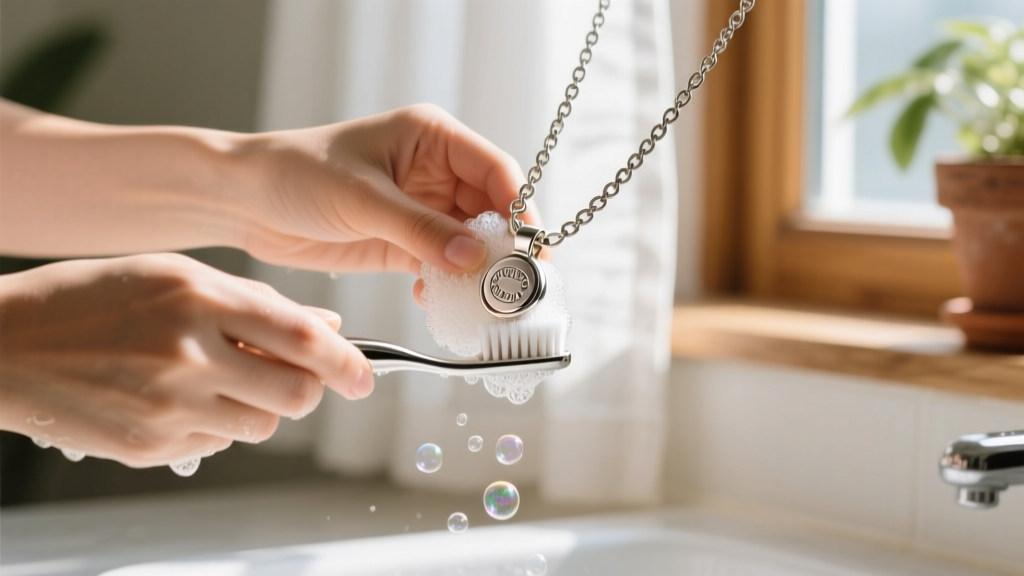
Using a baby toothbrush (which features ultra-soft bristles that will not scratch the chromium oxide layer or PVD coating), gently brush the chain. Pay special attention to the clasp mechanism and the jump rings, as these areas accumulate the most debris. Use a back-and-forth motion along the grain of the chain links.
Step 4: The Distilled Rinse
Rinse the necklace thoroughly under a gentle stream of distilled water. Ensuring all soap residue is removed prevents a dull, filmy buildup that mimics tarnish.
Step 5: Microfiber Drying
Pat the necklace dry with a clean, lint-free microfiber cloth. Do not use paper towels or tissue paper; they are made of wood pulp and will leave microscopic cellulose scratches on high-polish steel finishes.
Heavy-Duty Grime Removal and Water Spot Treatment
If your necklace has been exposed to hard water, heavy sweat, or environmental pollutants, routine soap may not suffice. Below is a decision matrix for tackling specific types of buildup on uncoated, bare 316L steel only.
| Contaminant | Recommended Treatment | Application Method | Risk to PVD Coatings |
|---|---|---|---|
| Calcium/Hard Water Spots | White Vinegar (5% Acetic Acid) | Soak for 3-5 minutes, then rinse | High: Can cause clouding |
| Heavy Sebum/Resin | Isopropyl Alcohol (70%) | Wipe with a soaked cotton pad | Low: Safe for brief contact |
| Stubborn Tarnish/Oxidation | Baking Soda Paste | Apply, rub gently, rinse immediately | High: Abrasive, will scratch |
| Chlorine/Salt Residue | Distilled Water + Mild Soap | Extended soak (15 mins) | Low: Safest method |
For authoritative guidelines on chemical interactions with jewelry metals, the British Stainless Steel Association (BSSA) provides excellent metallurgical safety charts detailing how various acids interact with austenitic steel grades.
Polishing Out Micro-Scratches on Bare Steel
Over time, bare stainless steel necklaces will accumulate micro-scratches from contact with zippers, keys, and other jewelry. Unlike gold or silver, steel is exceptionally hard (ranking around 5.5 to 6.3 on the Mohs scale depending on the exact alloy and heat treatment), meaning it requires aggressive compounds to polish.
- For Light Scratches: Use a specialized stainless steel polishing cloth impregnated with fine jeweler's rouge (iron oxide). Rub in small, circular motions until the scratch fades, then wash the necklace with soap and water to remove the rouge residue.
- For Deep Scratches: You will need a Dremel rotary tool with a felt polishing wheel and a coarse cutting compound (like aluminum oxide), followed by a fine finishing compound. Note: This should only be attempted on thick, solid steel pendants or heavy Cuban links, not delicate chains or PVD-coated pieces.
Environmental Hazards: What Destroys Steel
To minimize the need for deep cleaning, avoid exposing your steel necklace to the following environmental hazards:
1. Chlorine and Bleach
Chlorine is the natural enemy of stainless steel. It attacks the protective chromium oxide layer, leading to localized pitting corrosion—tiny, irreversible black craters on the metal's surface. Always remove your steel necklace before swimming in chlorinated pools or using household bleach.
2. Sulfur-Rich Environments
While sulfur primarily tarnishes silver, prolonged exposure to high-sulfur environments (like hot springs or certain industrial areas) can cause a dull, yellowish film to form on lower-grade 304 stainless steel.
3. Friction and Galvanic Corrosion
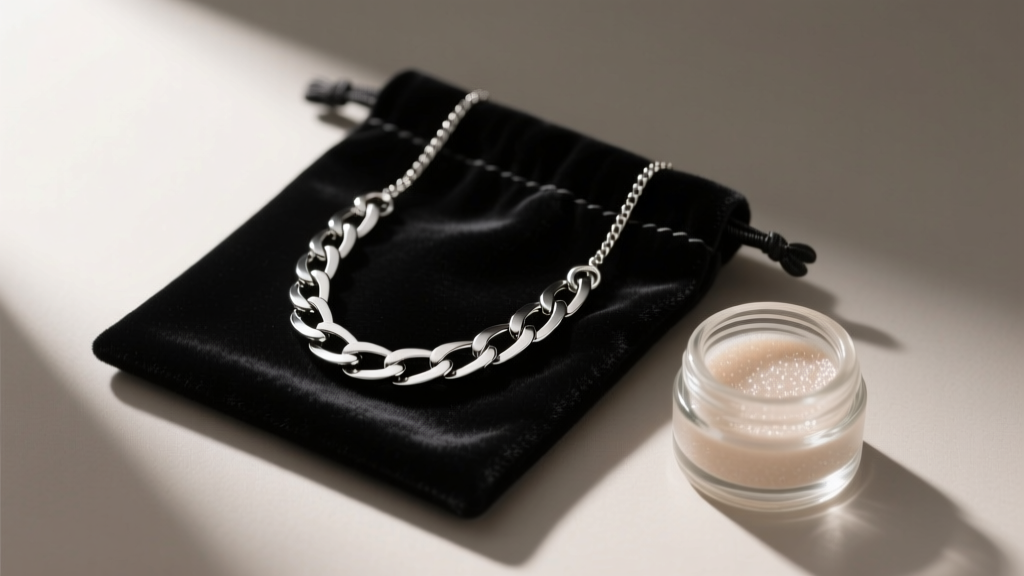
Storing your steel necklace tangled with harder gemstones (like diamonds or sapphires) will result in permanent scratching. Conversely, storing it in direct, prolonged contact with reactive metals like raw copper or untreated brass in a humid environment can trigger galvanic corrosion. Always store your steel necklaces individually in soft microfiber pouches or anti-tarnish ziplock bags.
Conclusion
Maintaining a steel necklace requires a balance of gentle routine care and an understanding of its specific metallurgical composition. By identifying whether your piece is bare 316L surgical steel or features a delicate PVD coating, you can select the correct cleaning agents and avoid catastrophic damage. Stick to distilled water, pH-neutral soaps, and microfiber cloths, and your steel jewelry will retain its structural integrity and brilliant luster for decades.


