Rhinestone Bow Necklace Guide: Grading, Settings & Chain Pairings
Discover the technical details behind a premium rhinestone bow necklace. Learn about crystal grading, prong vs. glue settings, and chain pairings.

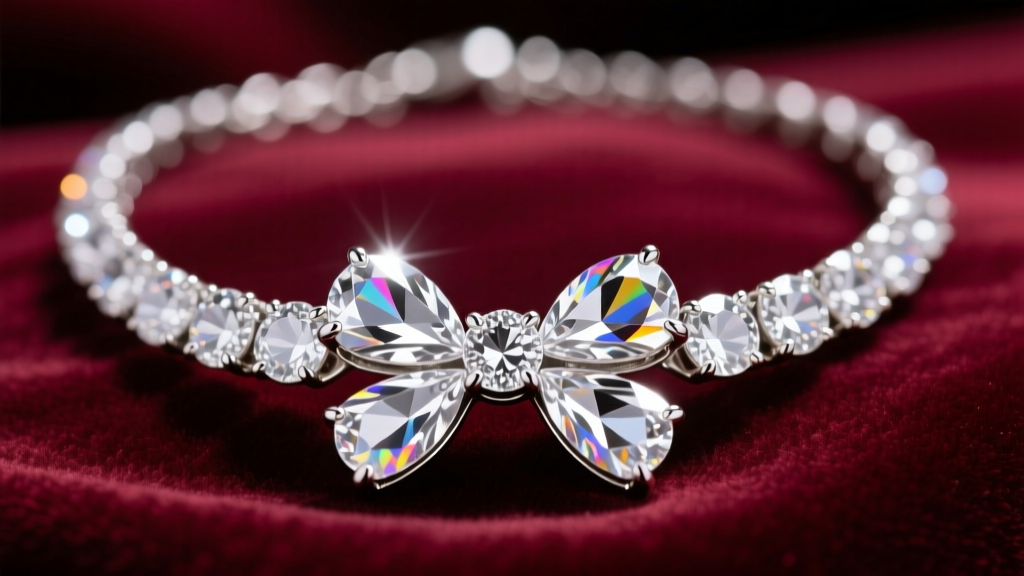
The Anatomy of a Premium Rhinestone Bow Necklace
The resurgence of balletcore and coquette aesthetics has made the bow motif a staple in contemporary jewelry. However, the market is saturated with poorly engineered pieces that tarnish, lose stones, and break within weeks. As a domain expert evaluating jewelry construction, I look past the superficial sparkle to examine the metallurgy, lapidary precision, and mechanical integrity of each piece. This guide provides a technical deep dive into what separates a disposable fashion accessory from a durable, high-quality rhinestone bow necklace.
The Crystal Core: Grading Rhinestones in Bow Motifs
The term 'rhinestone' is historically broad, originally referring to quartz pebbles from the Rhine River. Today, it encompasses a spectrum of simulants ranging from injection-molded acrylic to precision-cut lead-free crystal. The visual impact of a rhinestone bow necklace relies entirely on the material's refractive index (RI) and the precision of its pavilion facets.
Refractive Index and Cut Precision
According to the Gemological Institute of America (GIA), the brilliance of a gemstone simulant is dictated by its RI and cut proportions. Acrylic rhinestones possess an RI of approximately 1.49, resulting in a dull, glassy appearance with minimal light return. High-end glass crystals, such as those produced by Preciosa or Swarovski's advanced lead-free lines, boast an RI between 1.54 and 1.70. When cut with a 14-facet pavilion, these crystals achieve total internal reflection, mimicking the fire of a brilliant-cut diamond.
In 2026, stringent environmental mandates have largely phased out lead oxide in crystal glass manufacturing. Modern 'Advanced Crystal' formulations use barium and zinc oxides to maintain a high RI and specific gravity without the toxicity of traditional leaded crystal. When sourcing a premium bow pendant, always verify that the manufacturer specifies 'lead-free precision-cut crystal' rather than generic 'glass rhinestones.'
Setting Engineering: Prong vs. Adhesive Failures
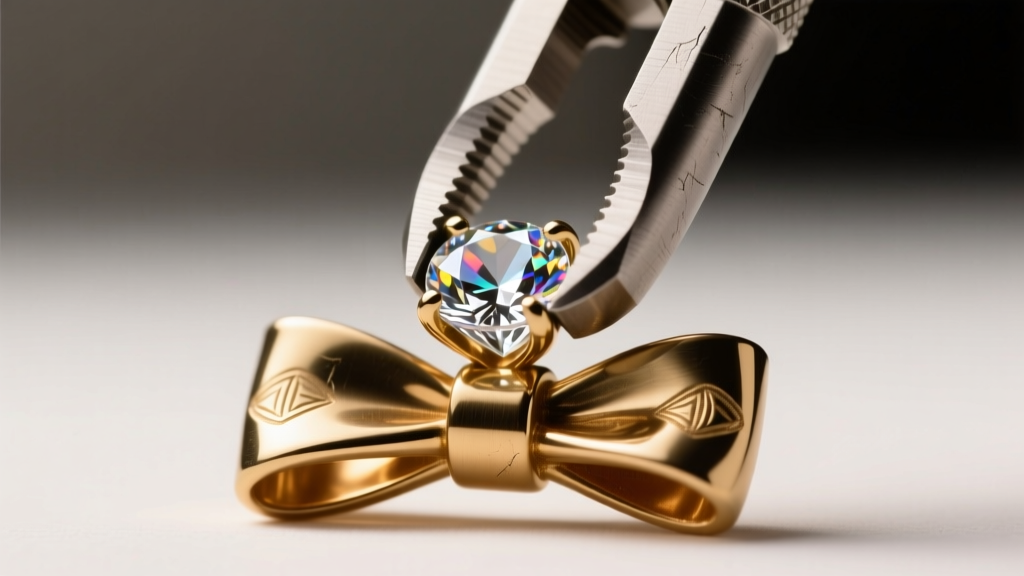
The most common failure mode in rhinestone jewelry is stone loss. The structural integrity of the bow's curves dictates how the stones are secured. There are two primary setting methods used in bow motifs, each with distinct mechanical properties and failure thresholds.
- Cast Prong Settings: The metal base and prongs are cast as a single unit via lost-wax casting. The stones are dropped in, and the prongs are mechanically pushed over the girdle. While secure, cast prongs are often thick, obstructing light entry into the crown of the rhinestone.
- Pave and Bead Settings: Used for smaller accent stones on the bow's 'tails'. Tiny beads of metal are raised from the base metal to secure the stones. This requires a thicker base metal to prevent structural weakening.
- Adhesive (Glue) Settings: Common in low-tier manufacturing. Stones are seated into a flat-backed bezel using chemical adhesives.
Expert Troubleshooting Tip: If a rhinestone falls out of a glued setting, never use cyanoacrylate (Super Glue) for repairs. Cyanoacrylate degrades rapidly when exposed to the pH of human skin oils and ambient moisture, turning brittle and white. Instead, use a two-part clear epoxy resin or a specialized UV-curing jewelry adhesive for a flexible, moisture-resistant bond.
Metallurgy and Plating Thickness Standards
The base metal and subsequent plating of a rhinestone bow necklace determine its longevity against tarnish and corrosion. The Federal Trade Commission (FTC) maintains strict guidelines for jewelry metal markings and plating, yet many fast-fashion brands exploit loopholes by using ambiguous terms like 'gold-toned.'
Base Metal Selection
High-volume manufacturers frequently use Zamak (a zinc-aluminum-magnesium-copper alloy) due to its low melting point and cheap casting costs. However, Zamak is highly porous. As the metal oxidizes, it pits and expands, causing the outer plating to flake off. Premium bow necklaces utilize solid brass or sterling silver (925) as a base, providing a dense, non-porous foundation for electroplating.
Plating Grades and E-Coating
The thickness of the precious metal plating is measured in microns (µm). Understanding these metrics is crucial for evaluating price-to-value ratios.
| Plating Grade | Thickness | Base Metal | Estimated Lifespan (Daily Wear) |
|---|---|---|---|
| Flash Plated | 0.1 - 0.3 µm | Brass / Zamak | 1 - 3 Months |
| Gold Plated (Standard) | 0.5 - 1.0 µm | Brass | 6 - 12 Months |
| Gold Vermeil | 2.5+ µm | Sterling Silver | 2 - 5 Years |
| Rhodium E-Coated | 2.0 µm metal + 3.0 µm lacquer | Brass / Silver | 3+ Years (Tarnish Resistant) |
For silver-toned rhinestone bow necklaces, rhodium plating is the industry standard. Rhodium is a platinum-group metal that provides a hard, highly reflective, and tarnish-resistant surface. To further extend the lifespan, premium manufacturers apply an electrophoretic lacquer (e-coating) over the rhodium, creating an invisible, flexible barrier against sulfur and skin acids.
Chain Mechanics and Clasp Durability
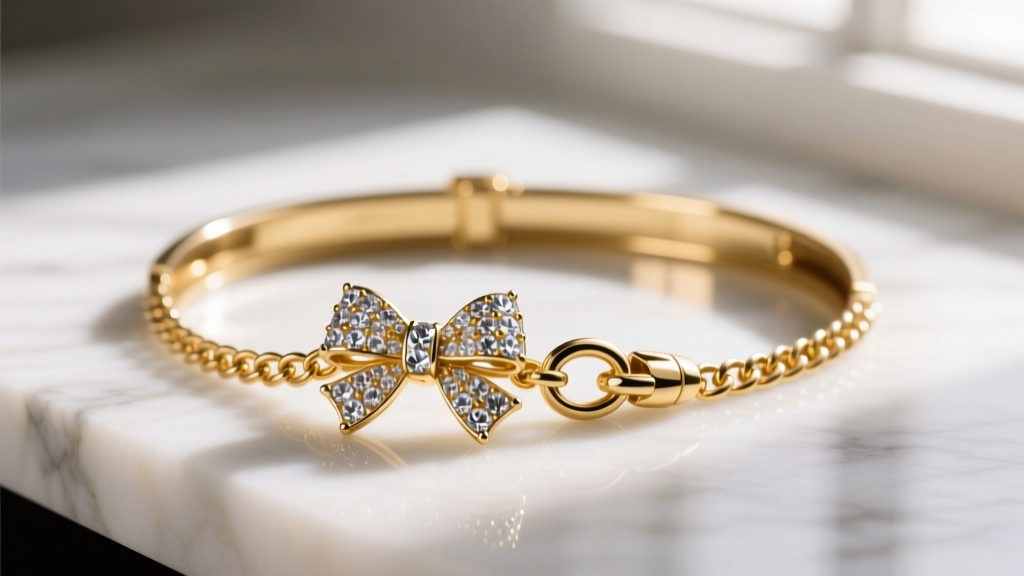
A heavy, multi-stone bow pendant can easily weigh between 12 and 25 grams. Pairing this with an inadequate chain is a mechanical failure waiting to happen. The tensile strength of the chain and the internal spring mechanics of the clasp must be matched to the pendant's dynamic load.
Chain Profiles and Gauge
For a bow pendant weighing over 15 grams, avoid delicate 0.8mm cable chains. Instead, opt for a 1.2mm to 1.5mm box chain or a 1.5mm curb chain. Box chains feature interlocking square links that distribute weight evenly and resist kinking, while curb chains lay flat and offer high tensile strength (often exceeding 20 lbs of pull-force before link deformation).
Clasp Engineering
The standard spring-ring clasp is insufficient for heavy pendants; the internal base-metal spring frequently fatigues, and the soldered joint on the ring is a primary break point. A premium rhinestone bow necklace should feature a 12mm or 14mm lobster clasp. Lobster clasps utilize a sturdier internal stainless steel spring and a solid cast body, providing a secure lock that can withstand the kinetic movement of the wearer without accidental deployment.
Preventative Maintenance and Chemical Exposure
Proper maintenance of a rhinestone bow necklace requires understanding the chemical vulnerabilities of both the crystal coatings and the metal plating. Many consumers inadvertently destroy their jewelry through improper cleaning methods.
- Avoid Ultrasonic Cleaners: Never place a rhinestone necklace in an ultrasonic cleaner. The high-frequency cavitation bubbles create microscopic shockwaves that will shatter glass crystals, strip delicate foil backings, and instantly dissolve adhesive bonds in glue-set stones.
- Chemical Avoidance: Rhodium and gold platings are vulnerable to chlorine and sulfur. Remove the necklace before swimming in chlorinated pools or using household bleach, which can cause irreversible pitting in the base metal.
- Proper Cleaning Protocol: To remove sebum and cosmetic buildup from the rhinestone facets, use a few drops of mild, phosphate-free dish soap in lukewarm water. Gently agitate with a soft-bristled baby toothbrush, paying special attention to the pavilion (back) of the stones where dirt accumulates. Rinse with distilled water to prevent hard water spots, and dry immediately with a microfiber cloth.
- Storage Mechanics: Store the necklace flat or hung vertically. Tossing it into a jewelry box allows the hard glass rhinestones to scratch the metal plating of adjacent pieces, as glass has a Mohs hardness of 5.5 to 6, which easily scratches gold (2.5) and silver (2.5).
By scrutinizing the refractive index of the crystals, the mechanical security of the prongs, the micron-thickness of the plating, and the tensile strength of the chain, you can confidently select a rhinestone bow necklace that offers enduring brilliance and structural resilience.


