Fixing Common Issues With a Chunky Heart Necklace Gold Design
Troubleshoot broken chains, tarnishing, and flipping pendants on your chunky heart necklace gold piece with expert repair and material guides.

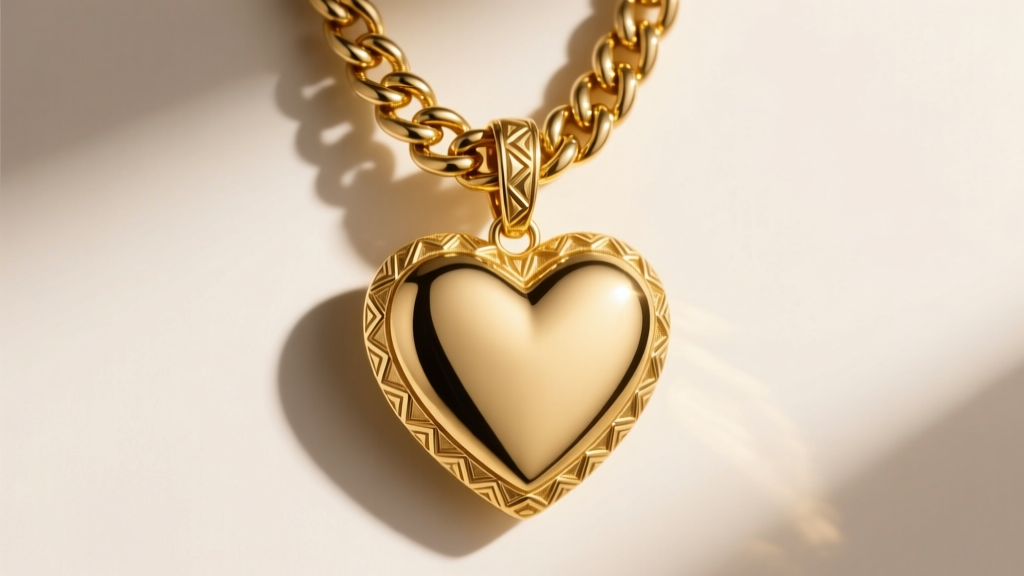
The chunky heart necklace gold trend has cemented itself as a modern heirloom staple in 2026, bridging Y2K nostalgia with contemporary luxury. However, the sheer volume and weight of these statement pieces introduce unique structural vulnerabilities. Unlike delicate solitaire pendants, a solid gold heart weighing over 15 grams places immense tensile stress on chains, clasps, and bails. Whether you are dealing with a snapped cable chain, a pendant that constantly flips backward, or unexpected skin discoloration, maintaining a chunky heart necklace gold piece requires specialized hardware knowledge and proactive care. This comprehensive troubleshooting guide addresses the most common mechanical and chemical failures associated with heavy gold pendants and provides actionable, expert-level solutions to restore and protect your investment.
Diagnosing Chain Breakage and Clasp Failure
The most frequent point of failure for any heavy pendant is the connection between the chain and the clasp, or the structural integrity of the chain links themselves. A solid 14k gold chunky heart pendant typically weighs between 12 and 28 grams. Standard 1mm cable chains and 8mm spring-ring clasps are engineered for pendants under 5 grams. When subjected to the pendulum-like motion of a heavy heart pendant, the soldered seams on thin links undergo work-hardening and eventually snap.
Upgrading the Chain Architecture
To support a chunky gold heart, you must select a chain with a high tensile strength and interlocking link structure. According to Jewelers of America repair standards, chains with soldered links are mandatory for heavy pendants, but the link shape dictates durability.
- Rope Chains (Minimum 3mm): The twisted, multi-link structure of a rope chain distributes weight laterally, preventing single-point stress fractures. A 3mm to 4mm solid rope chain is the gold standard for heavy hearts.
- Cuban Link Chains (Minimum 4mm): The flat, interlocking oval links lay flush against the skin and offer exceptional shear strength. Ensure the links are solid, not hollow-cast, as hollow Cubans will crush under the dynamic weight of a chunky pendant.
- Figaro Chains (Minimum 3.5mm): The alternating pattern of long and short links provides flexibility, but the long links are vulnerable to bending if caught on clothing. Opt for thicker gauges if choosing Figaro.
Clasp Mechanics and Upgrades
Never use a spring-ring clasp for a heavy pendant; the internal tension spring will inevitably fail. Instead, upgrade to a 12mm or 14mm lobster clasp. For pendants exceeding 25 grams, a box clasp with a double figure-eight safety catch is required to prevent accidental unhooking during wear.
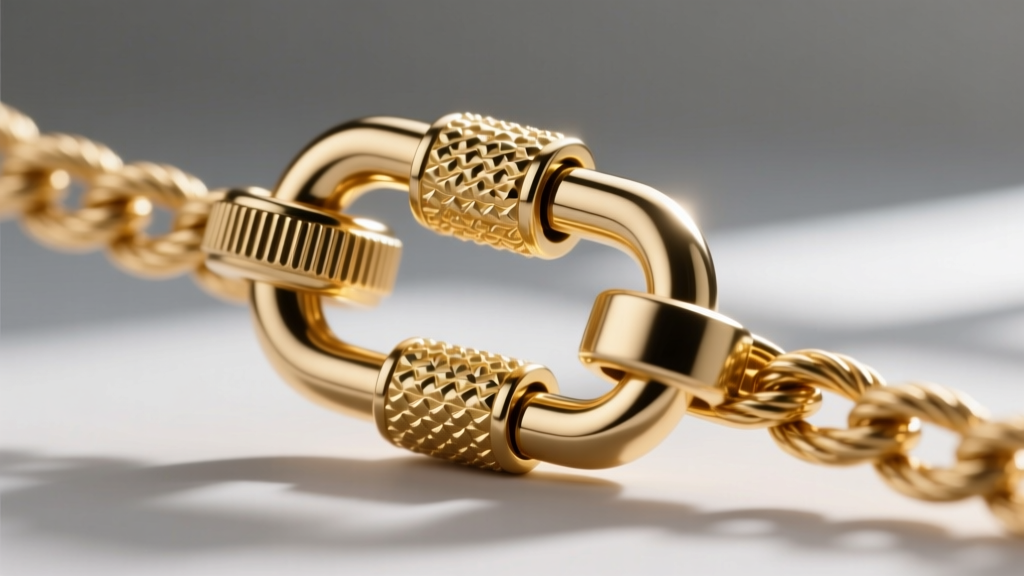
Solving the 'Flipping Pendant' Phenomenon
A frustrating issue unique to wide, asymmetrical, or heavy pendants like a chunky heart is the tendency to flip backward, hiding the design against the wearer's chest. This is rarely a defect in the gold itself, but rather a miscalculation in the center of gravity and bail-to-chain ratio.
The Bail-to-Chain Discrepancy
The bail is the loop that connects the pendant to the chain. If the bail is too wide, the chain slides freely, allowing the heavy bottom of the heart to pull the pendant upside down. Conversely, if the chain is too thick and stiff (such as a 5mm Cuban), it cannot articulate smoothly through a standard tube bail, forcing the pendant to rest at an awkward angle.
Troubleshooting the Flip
- Install a V-Bail or Tapered Bail: A jeweler can remove the standard tube bail and laser-weld a V-shaped bail onto the top of the heart. This forces the chain to sit in a fixed central notch, stabilizing the pendant's center of gravity.
- Use a Pendant Stay: For a non-destructive fix, thread a clear silicone pendant stay (a small, flexible disc with a slit) onto the chain on either side of the bail. This creates friction, preventing the chain from sliding and locking the heart in place.
- Adjust the Chain Drape: Chunky hearts sit best at a 16-inch or 18-inch length. At 20 inches or longer, the chain forms a wider parabola, increasing the lateral space the pendant has to rotate and flip.
Tarnish, Discoloration, and Skin Reactions
While pure gold is entirely inert, jewelry is crafted from gold alloys to ensure durability. When wearers experience green skin or a dull, brassy appearance on their chunky heart necklace gold jewelry, it is almost always a symptom of alloy exposure or plating degradation.
Understanding Gold Alloys and Karatage
According to the Gemological Institute of America (GIA), 24k gold is 99.9% pure but far too soft for a chunky pendant, which would dent and warp under its own weight. Therefore, jewelers use 14k (58.3% gold) or 18k (75% gold). The remaining percentages consist of copper, silver, zinc, and sometimes nickel. Copper provides the warm, rose-gold hue but is highly reactive to sweat, lotions, and acidic skin pH, leading to surface tarnish or green oxidation on the skin.
The Vermeil and Plating Trap
Many affordable 'chunky gold' necklaces are actually gold-plated brass or gold vermeil (gold plated over sterling silver). The Federal Trade Commission (FTC) mandates that gold vermeil must have a minimum thickness of 2.5 microns of gold over sterling silver. If your pendant is plated with less than 1 micron, the friction from clothing and the oils from your skin will wear through the gold layer in a matter of months, exposing the base metal. Once the copper or brass core is exposed, it will oxidize rapidly, causing a metallic smell and skin discoloration. If your pendant has turned brassy, it cannot be polished back to gold; it must be professionally re-plated via electroplating.
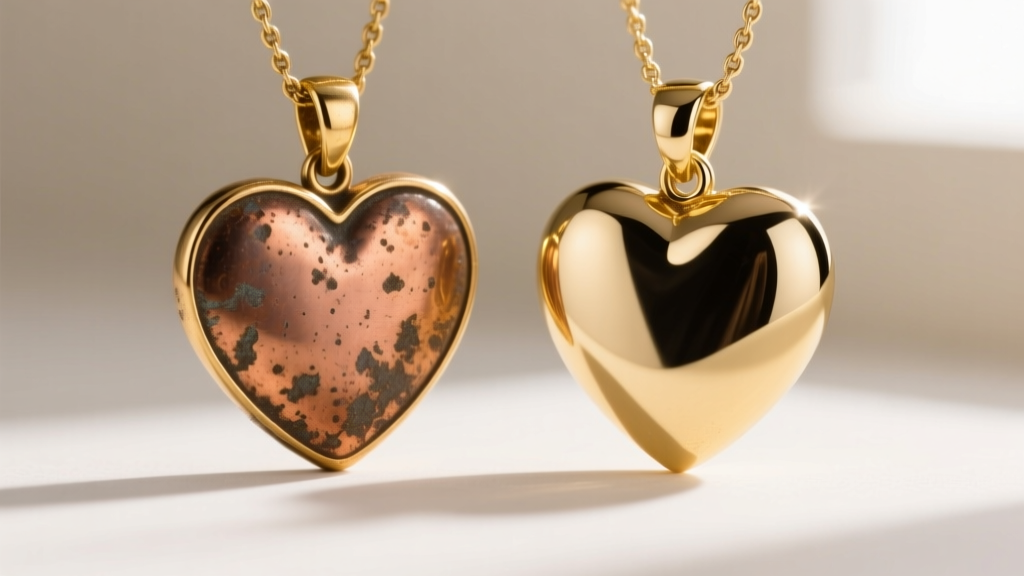
Material and Hardware Troubleshooting Matrix
Use the following diagnostic chart to identify your necklace's composition and apply the correct maintenance protocol based on its specific failure mode.
| Material Type | Common Failure Mode | Diagnostic Sign | Expert Solution |
|---|---|---|---|
| Solid 14k Gold | Surface Scratches & Dulling | Loss of high-polish luster; visible micro-scratches under light. | Professional buffing with red jeweler's rouge; avoid harsh DIY abrasives. |
| Solid 18k Gold | Prong/Bail Bending | Pendant sits crooked; bail loop appears oval instead of round. | Jeweler will anneal the metal, reshape the bail, and laser-weld for strength. |
| Gold Vermeil (2.5+ microns) | Spot Tarnishing | Dark, dull patches appearing in the crevices of the heart design. | Clean gently with a mild dish soap solution; do not use ultrasonic cleaners. |
| Gold Plated Brass | Base Metal Exposure | Yellowish-green skin staining; metallic odor; brassy color showing through. | Requires complete chemical stripping and professional electroplating. |
| Hollow-Cast Gold | Denting & Crushing | Visible depressions on the surface; pendant feels suspiciously light. | Irreparable. Must be replaced with a solid-cast or die-struck alternative. |
Professional Repair vs. DIY Maintenance
When a chain snaps near the clasp of a heavy pendant, the instinct is often to attempt a DIY fix or take it to a standard mall kiosk. However, repairing chains meant for heavy loads requires specialized equipment. Traditional torch soldering uses a broad flame that can melt the intricate details of a chunky heart if the bail is attached directly to a link. Instead, seek out a jeweler who utilizes laser welding technology. Laser welders use a highly focused beam of light to fuse metal at a microscopic level without transferring heat to the surrounding gold, preserving the pendant's crisp edges and high-polish finish.
Safe Cleaning Protocols for Chunky Hearts
The deep crevices and dramatic curves of a chunky heart design trap dead skin cells, perfume residue, and environmental dust. While ultrasonic cleaners are excellent for solid diamond jewelry, they are highly dangerous for certain gold necklaces. If your chunky heart features any glued-in gemstones (like mother-of-pearl or onyx inlays), the high-frequency vibrations of an ultrasonic bath will shatter the stone or dissolve the adhesive. Furthermore, if your heart is hollow-cast to save on gold weight, the pressure changes in an ultrasonic cleaner can cause the thin gold shell to implode.
For safe, routine maintenance of a solid gold chunky heart, use a thermal cleaning method: soak the necklace in a bowl of water heated to exactly 120°F (49°C) mixed with three drops of ammonia-free dish detergent for ten minutes. Gently agitate the water, then use a brand-new, ultra-soft baby toothbrush to sweep the crevices. Rinse with distilled water to prevent hard water mineral spots, and dry immediately with a microfiber cloth. By understanding the structural demands and chemical realities of heavy gold jewelry, you can ensure your statement piece remains a flawless, enduring staple in your collection for decades to come.


