Choosing a Gold Seahorse Necklace: 14k vs 18k vs Vermeil
Discover how to choose the perfect gold seahorse necklace. We compare 14k, 18k, vermeil, and gold-filled materials for durability and detail.

The Allure and Challenge of the Seahorse Motif
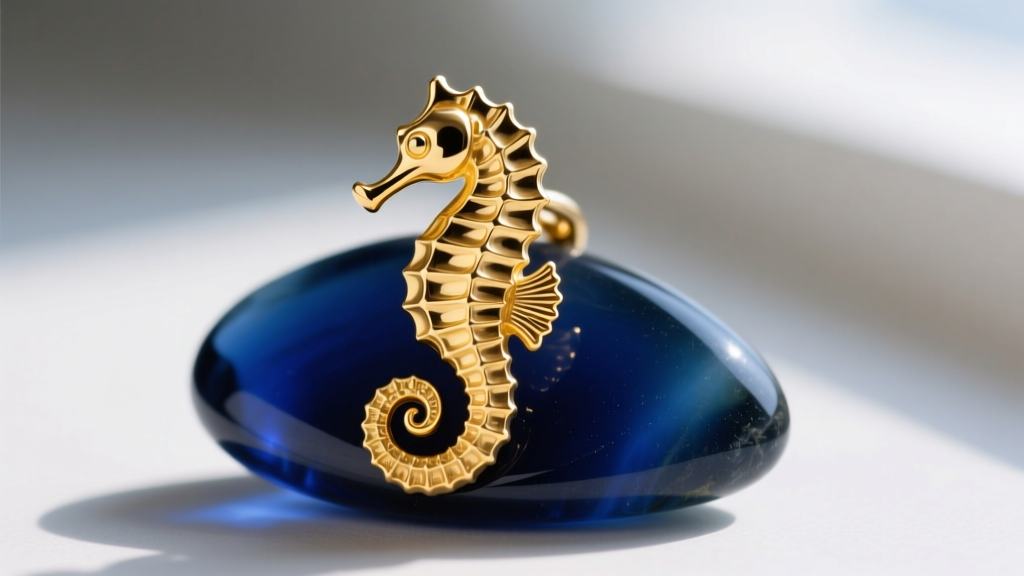
The seahorse is one of the most captivating subjects in marine-inspired jewelry, symbolizing patience, protection, and grace. However, from a metallurgical and manufacturing standpoint, a gold seahorse necklace presents unique challenges for jewelers. Unlike simple geometric pendants, a seahorse features complex, fragile anatomy: the delicate dorsal fin, the textured belly ridges, the crown-like coronet on its head, and the tightly curled prehensile tail. When shopping for this specific motif, the material you choose dictates not only the color and price but the structural survival of the pendant itself.
As of 2026, advancements in 3D-printed casting resins have allowed jewelers to capture microscopic details of marine life with unprecedented accuracy. Yet, the final metal alloy poured into the mold determines whether those fine details will endure decades of daily wear or succumb to bending, snapping, and tarnishing. In this comprehensive material guide, we break down the exact properties of solid gold, vermeil, and gold-filled alternatives to help you make an informed investment.
Solid Gold: 14k vs. 18k for Intricate Pendants
When investing in a solid gold seahorse necklace, you are generally choosing between 14-karat and 18-karat gold. Pure 24k gold is far too soft for jewelry, so it is alloyed with metals like copper, silver, and zinc to increase its durability. The ratio of these alloys drastically changes how the metal behaves during the lost-wax casting process and how it wears on your body.
18k Gold: The Fidelity and Color Standard
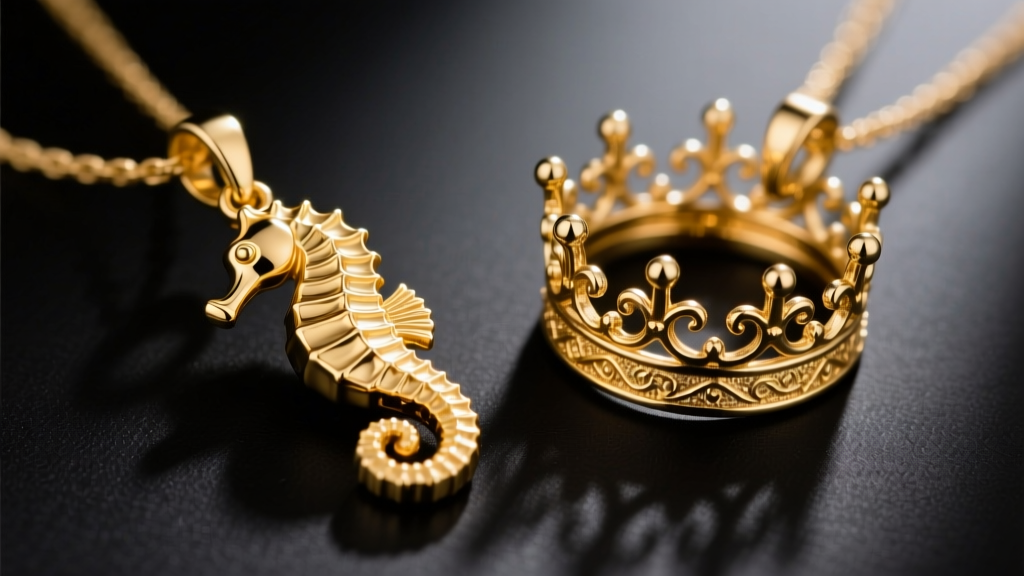
Comprising 75% pure gold, 18k gold offers a rich, buttery yellow hue that is highly prized in fine jewelry. Because it has a slightly lower melting point and superior fluidity in the casting flask, 18k gold excels at capturing the micro-textures of a seahorse's skin and the sharp edges of its coronet. However, this comes at a cost to structural rigidity. According to data from the Gemological Institute of America (GIA), 18k yellow gold has a Vickers hardness (HV) of approximately 125 to 135. This relative softness means that the delicate, protruding snout or the thin loop of the curled tail can easily bend if the pendant is snagged on heavy clothing or knocked against a hard surface.
14k Gold: The Durability Champion
Containing 58.3% pure gold, 14k gold is the industry standard for durable, everyday fine jewelry. Its Vickers hardness ranges from 140 to 150 HV, making it significantly more resistant to scratching and deformation. For a gold seahorse necklace, 14k is often the superior choice. The increased tensile strength ensures that the prehensile tail—which often acts as a structural weak point in 3D marine designs—will not snap under minor stress. While the yellow color is slightly less saturated than 18k, the trade-off for long-term structural integrity is well worth it, especially for larger, heavier pendants.
The Vermeil and Gold-Filled Alternatives
If solid gold is outside your budget, the market offers vermeil and gold-filled alternatives. However, it is vital to understand the strict legal definitions of these terms to avoid being misled by cheap imitations.
Gold Vermeil: The Best Budget Alternative
The Federal Trade Commission (FTC) mandates that for a piece to be legally sold as 'vermeil' in the United States, it must have a sterling silver base and be plated with a minimum of 2.5 microns of gold (usually 14k or 18k). A gold vermeil seahorse necklace provides the exact same casting fidelity and weight as solid silver, offering a premium feel. The primary failure mode for vermeil is friction. Because a pendant rests flat against the sternum, the gold layer on the back of the seahorse will eventually wear away to reveal the silver beneath after 2 to 4 years of continuous daily wear. Fortunately, vermeil can be easily re-plated by a local jeweler.
The Gold-Filled Myth in 3D Jewelry
Consumers often search for 'gold-filled seahorse necklaces,' assuming it is a thicker, more durable version of vermeil. Gold-filled material consists of a brass core with a thick outer layer of gold (comprising at least 5% of the total weight) bonded via heat and pressure. Here is the critical E-E-A-T insight: gold-filled metal is manufactured in sheets, wires, and tubes. It cannot be melted down and poured into a 3D silicone mold. Therefore, a true 3D sculptural gold-filled seahorse pendant does not exist. Any 'gold-filled' seahorse you find will be a flat, laser-cut silhouette or a stamped 2D blank, entirely lacking the volumetric beauty of a cast marine motif.
Material Comparison Chart: Pricing & Properties
To help you weigh your options, we have compiled a data table comparing the material properties and estimated market pricing for a standard 1-inch (approx. 12-gram) seahorse pendant in 2026.
| Material | Gold Purity | Hardness (HV) | Casting Fidelity | Est. Price Range | Best Use Case |
|---|---|---|---|---|---|
| Solid 18k Gold | 75% | ~130 | Exceptional | $650 - $1,100 | Heirloom pieces, occasional wear |
| Solid 14k Gold | 58.3% | ~145 | Very High | $300 - $550 | Daily wear, active lifestyles |
| Gold Vermeil | Silver base + 2.5μm Gold | ~105 (Silver) | Very High | $80 - $160 | Budget-conscious fine jewelry lovers |
| Gold Plated | Brass base + <0.5μm Gold | N/A | Poor (Molded) | $25 - $50 | Fast fashion, temporary trends |
Chain Pairing: Supporting the Weight of the Ocean
A common mistake buyers make is pairing a heavy, solid gold seahorse pendant with a flimsy chain. A well-crafted 14k solid gold seahorse pendant of average size will weigh between 8 and 15 grams. To support this weight safely, the chain must have a minimum breaking strength of at least 30 to 45 pounds.
Avoid hollow rope chains or extremely thin cable chains (under 1.0mm), as the concentrated weight of the pendant's bail will slowly warp and snap the links. Instead, opt for a 1.5mm to 2.0mm solid cable chain, a wheat chain, or a box chain. These weaves distribute the tension evenly and provide a visually balanced backdrop that does not compete with the intricate details of the seahorse's dorsal fin and belly ridges.
Caring for Delicate Marine Motifs
The very crevices that give a seahorse necklace its charm—such as the gills, the textured brood pouch, and the tight spiral of the tail—are also traps for skin oils, lotions, and environmental dust. Over time, this buildup can dull the gold and, in the case of vermeil, accelerate tarnishing of the underlying silver.
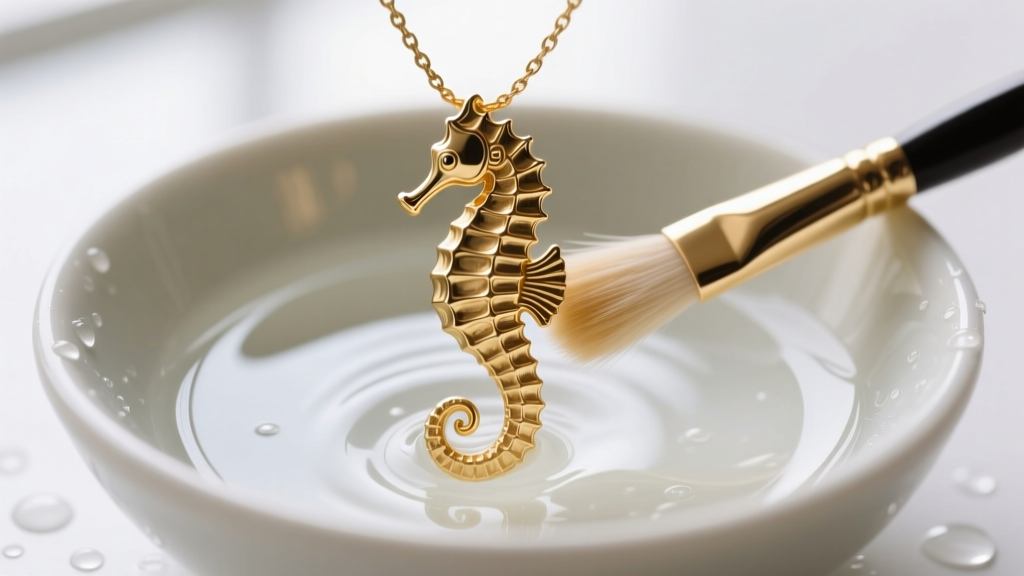
To maintain the brilliance of your pendant, clean it bi-weekly using a solution of warm water and a few drops of phosphate-free dish soap. Use a baby toothbrush with ultra-soft bristles to gently agitate the soapy water into the seahorse's coronet and tail spiral. Never use ultrasonic cleaners on gold-plated or vermeil pieces, as the high-frequency vibrations can cause the thin gold layers to flake or peel. For solid 14k or 18k gold, an ultrasonic cleaner is generally safe, but if your seahorse features any micro-pave gemstone accents (like tiny sapphire eyes), stick to manual brushing to prevent loosening the prongs.
Final Verdict: Which Gold Should You Choose?
If you are seeking a generational heirloom piece that captures every microscopic scale of the seahorse with a rich, warm luster, and you plan to wear it primarily on special occasions, an 18k solid gold seahorse necklace is the ultimate luxury. However, for a piece you intend to wear daily in the ocean, at the gym, or layered under heavy winter sweaters, 14k solid gold provides the necessary Vickers hardness to protect the fragile tail and fins from deformation. For those who want the 3D sculptural weight and detail of fine jewelry without the four-figure price tag, gold vermeil remains the most respectable and visually identical alternative, provided you are willing to maintain it with occasional re-plating over the decades.


