How Do You Know If Your Necklace Is Real Gold? Expert Testing Guide
Learn how do you know if your necklace is real gold with expert testing methods. Discover hallmark decoding, acid tests, and XRF analysis.

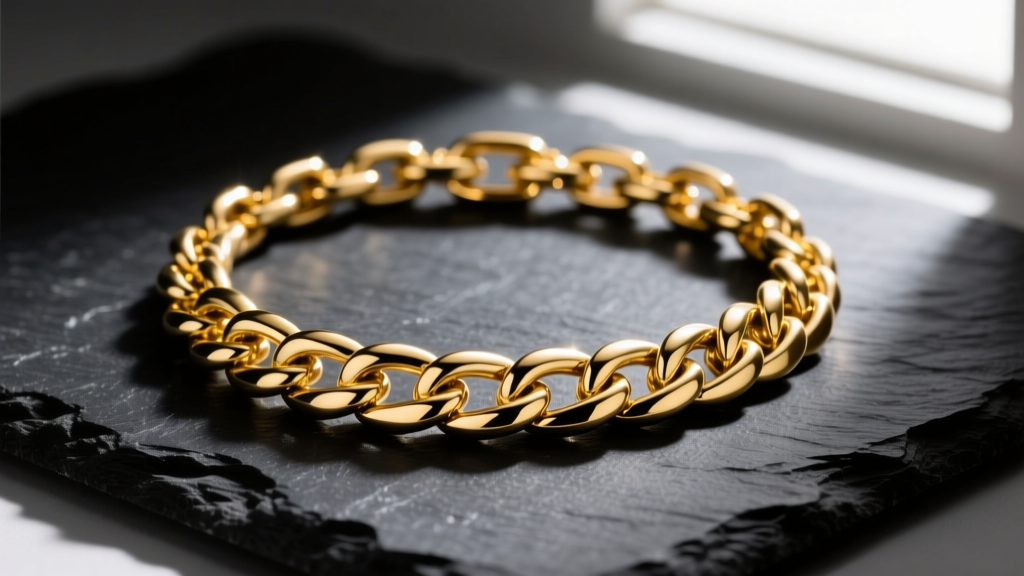
When investing in fine jewelry, verifying the authenticity of your precious metals is paramount. The secondary market, estate sales, and even some unverified online retailers are flooded with sophisticated counterfeits, gold-plated brass, and tungsten-core imitations. If you have ever asked yourself, 'how do you know if your necklace is real gold,' you are not alone. Distinguishing between solid gold, gold-filled, and gold-plated pieces requires more than a simple visual inspection; it demands an understanding of metallurgy, hallmarking systems, and diagnostic testing protocols.
In this comprehensive technical guide, we will bypass the unreliable internet myths and dive deep into the scientific and professional methods used by gemologists and precious metal assayers to authenticate gold necklaces. From decoding millesimal fineness stamps to utilizing X-ray fluorescence (XRF) spectrometry, here is everything you need to know to verify your gold jewelry with absolute certainty.
The Metallurgy of Gold: Karats, Alloys, and Density
Pure gold (24 karat) is inherently too soft for daily wear in a necklace chain. A 24k gold cable chain would stretch, warp, and eventually snap under the weight of a pendant or the tension of daily movement. Therefore, gold used in jewelry is almost always an alloy—a mixture of pure gold and base metals like copper, silver, zinc, and nickel to enhance tensile strength and alter the color.
- 24k Gold (99.9% pure): Rich yellow, extremely soft, rarely used for chains. Specific gravity: 19.32 g/cm³.
- 22k Gold (91.6% pure): Stamped 916. Common in Middle Eastern and Indian jewelry. Still quite soft but holds intricate granulation work.
- 18k Gold (75.0% pure): Stamped 750. The global standard for high-end luxury necklaces. Offers an excellent balance of rich color and durability.
- 14k Gold (58.3% pure): Stamped 585. The most common standard in the United States. Highly durable, resistant to scratching, and slightly paler than 18k.
- 10k Gold (41.7% pure): Stamped 417. The minimum karatage that can legally be sold as 'solid gold' in the US. Highly durable but prone to tarnishing due to the high copper/zinc content.
Understanding these alloy ratios is critical because counterfeiters often match the color of 14k gold using brass (copper and zinc) or bronze, making visual identification impossible for the untrained eye.
Decoding Hallmarks and Maker's Marks
The first step in authentication is locating and analyzing the hallmark. In a necklace, this is typically stamped on a small metal tag near the clasp, or directly onto the flat surface of the lobster clasp itself.
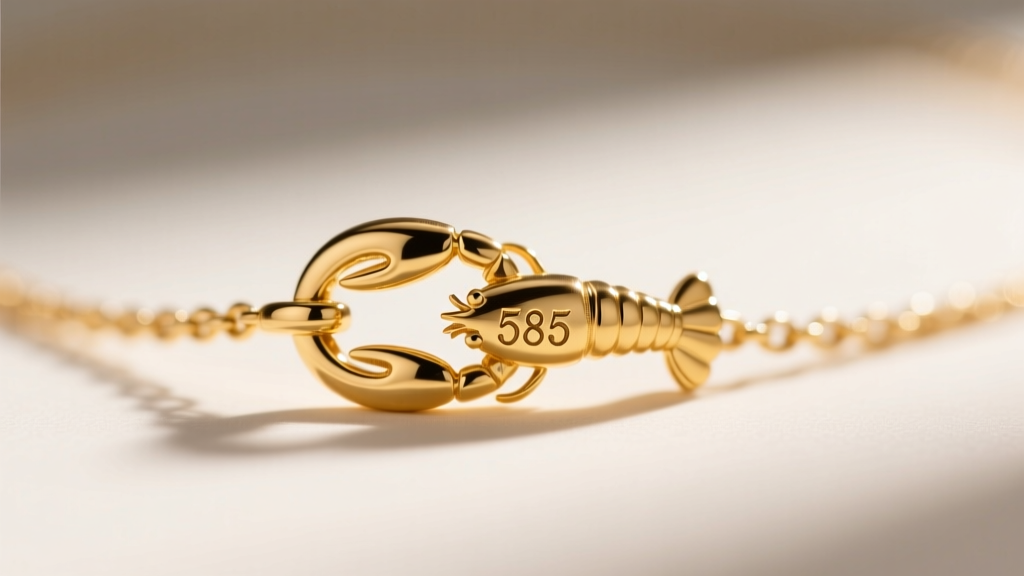
While a stamp indicating '14K' or '750' is a good initial sign, it is not definitive proof. Counterfeiters routinely stamp base-metal chains with fake karat marks. According to the Federal Trade Commission (FTC) Jewelry Guides, it is illegal to sell mislabeled precious metals in the United States, but this law does not protect you from unregulated overseas e-commerce platforms or private estate sales.
What to Look For in a Genuine Hallmark
A genuine hallmark is usually stamped with a clean, sharp, and deeply engraved font. If the stamp looks blurred, shallow, or stamped over a plated surface where the underlying metal is peeking through, the necklace is likely gold-plated. Additionally, look for a maker's mark (a registered trademark or initials) alongside the purity stamp. Reputable manufacturers stand behind their metallurgical claims and register their marks with the appropriate assay offices.
At-Home Diagnostic Tests: What Works and What Damages
The internet is saturated with DIY gold testing hacks. As a domain expert, I must caution you that many of these tests are either scientifically flawed or highly destructive to your jewelry. Let us evaluate the most common at-home methods.
The Magnet Test (High Utility, Specific Limitations)
Gold is a diamagnetic metal, meaning it is not attracted to magnets. If your necklace chain leaps toward a strong neodymium magnet, it contains ferromagnetic metals like iron, cobalt, or nickel, indicating it is fake or heavily gold-plated steel.
The Caveat: The internal spring mechanism inside a lobster clasp or spring-ring clasp is almost always made of martensitic stainless steel to ensure it retains its tension. Therefore, a slight magnetic pull at the clasp is normal. The magnet test should only be performed on the links of the chain itself. Furthermore, brass and copper are also non-magnetic, so a chain that fails to react to a magnet is not guaranteed to be gold.
The Ceramic Scratch Test (High Risk, Not Recommended)
This involves dragging the gold necklace across an unglazed ceramic tile. Real gold leaves a golden-yellow streak, while pyrite (fool's gold) or brass leaves a black or greenish streak. Expert Verdict: Do not do this. This is a destructive test that will permanently scratch and mar the surface of your necklace, severely diminishing its resale value and aesthetic appeal.
The Skin Discoloration Test (Anecdotal, Unreliable)
If a necklace leaves a green or black ring around your neck, it is reacting to the acids and salts in your sweat. This usually indicates a high copper content (common in brass or low-karat alloys). However, some people's body chemistry can cause genuine 10k or even 14k gold to oxidize slightly, and cosmetics or lotions on the skin can cause genuine gold to leave a dark smudge. This test is highly subjective and should never be used as a primary authentication method.
Professional Verification: Acid Testing and XRF Spectrometry
To definitively answer how do you know if your necklace is real gold, you must rely on chemical or elemental analysis. If you are purchasing a high-value piece, always insist on professional verification.
The Touchstone and Nitric Acid Test
Used by pawnbrokers and jewelers for centuries, the acid test involves rubbing the necklace against a black siliceous touchstone to leave a microscopic streak of metal. The assayer then applies a drop of nitric acid (or a mixture of nitric and hydrochloric acid known as aqua regia for higher karats) to the streak.
- No Reaction (Clear): The metal is genuine gold of the corresponding karat.
- Milky/White Reaction: The metal is gold-plated silver or sterling silver.
- Green Reaction: The metal is a base alloy like brass or copper.
- Slow Dissolve (Brownish): The metal is gold, but of a lower karat than the acid used (e.g., testing 10k gold with 14k acid).
While highly accurate, this is a micro-destructive test. The jeweler will usually perform this in an inconspicuous area, but it does involve applying corrosive chemicals to the piece.
X-Ray Fluorescence (XRF) Spectrometry
The gold standard for non-destructive testing in the modern precious metals industry is XRF analysis. An XRF gun fires X-rays into the metal, exciting the atoms and causing them to emit secondary fluorescent X-rays. The machine reads the energy signatures to determine the exact elemental composition down to the parts-per-million (PPM).
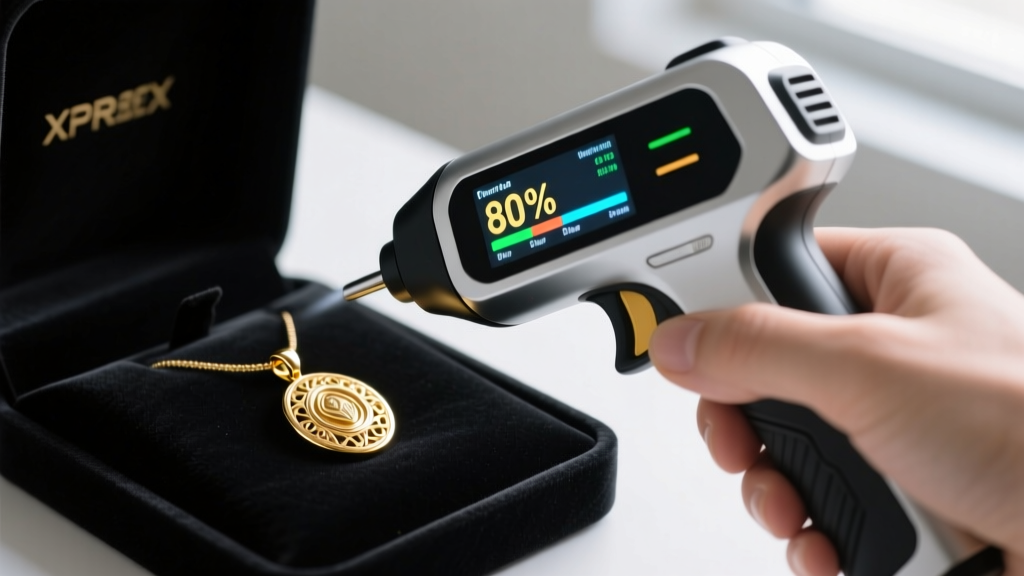
According to the Gemological Institute of America (GIA), XRF technology is critical for identifying sophisticated fakes that feature a thick outer layer of real gold over a base-metal core. An XRF machine can penetrate the surface plating (depending on the thickness and the machine's calibration) to reveal the underlying substrate, providing a complete elemental breakdown without scratching or damaging the necklace.
Comparison of Gold Testing Methodologies
| Testing Method | Destructive? | Accuracy Level | Best Use Case |
|---|---|---|---|
| Neodymium Magnet | No | Low (Eliminates steel/iron only) | Initial quick screening of chain links |
| Visual / Hallmark Inspection | No | Moderate (Fakes exist) | First step in any appraisal |
| Touchstone & Nitric Acid | Micro-destructive | High (Verifies surface karat) | Pawn shops, quick jeweler verification |
| Water Displacement (Density) | No | Moderate (Fails on tungsten) | Heavy solid pendants, not thin chains |
| XRF Spectrometry | No | Extremely High (Elemental PPM) | High-value appraisals, bullion, estate verification |
Common Counterfeit Alloys and Plating Traps in the Market
As manufacturing techniques have advanced, so have the methods used to deceive buyers. Here are the most common traps to watch out for when evaluating a gold necklace:
Tungsten-Core Counterfeits
Tungsten has a specific gravity of 19.25 g/cm³, which is nearly identical to pure gold's 19.32 g/cm³. Counterfeiters will create a solid tungsten core and electroplate it with a thick layer of 18k or 24k gold. This imitation will pass the water displacement density test and even the acid test (if the acid doesn't penetrate the thick plating). Only an XRF scan, an ultrasonic thickness gauge, or a specific gravity test combined with a scratch test can reliably expose a tungsten fake.
Gold-Filled vs. Gold-Plated vs. Vermeil
Understanding the terminology is vital. 'Gold-plated' means a microscopic layer of gold (often less than 0.5 microns) is flashed over brass. It will wear off in months. 'Gold-filled' jewelry, regulated by the FTC, must contain a solid gold layer that constitutes at least 1/20th (5%) of the total weight of the item, mechanically bonded to a brass core. While gold-filled necklaces are durable and valuable, they are not solid gold and should not be priced or appraised as such. 'Vermeil' refers specifically to sterling silver that has been plated with at least 2.5 microns of gold.
Conclusion: Trust the Science, Not the Shine
So, how do you know if your necklace is real gold? You cannot rely on color, weight, or a simple magnet. True authentication requires a systematic approach: start with a thorough visual inspection of the hallmarks, proceed with a non-destructive magnet test on the chain links, and ultimately seek professional verification through acid testing or XRF spectrometry for high-value pieces. By understanding the metallurgical realities of gold alloys and the limitations of DIY tests, you can protect your investments and build a fine jewelry collection with absolute confidence.


