Petite Cable Linked Necklace: Material Comparison Guide
Compare metals for your petite cable linked necklace. We analyze tensile strength, wire gauge, tarnish rates, and pricing to find the most durable chain.

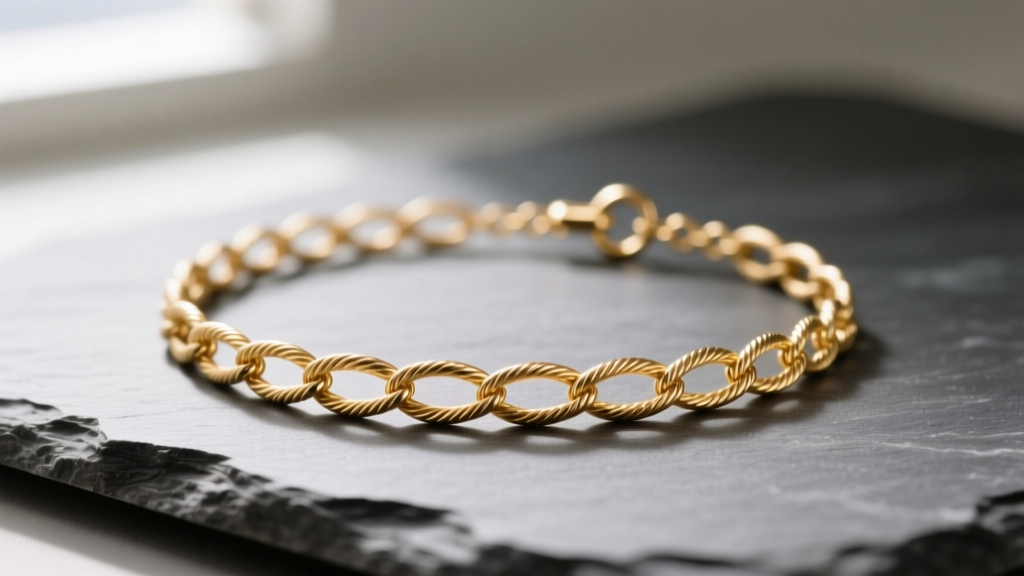
When selecting a delicate chain for everyday wear, the structural integrity of the metal is just as important as its aesthetic appeal. A petite cable linked necklace—typically characterized by its uniform, interlocking oval or round links measuring between 1.0mm and 1.5mm in width—relies entirely on the tensile strength and work-hardening properties of its base material. Because these chains utilize exceptionally thin wire (often 22 to 24 gauge), choosing the wrong alloy can result in rapid stretching, link deformation, or catastrophic snapping.
In this comprehensive 2026 material guide, we dissect the metallurgical properties of the most common alloys used in petite cable chains. We will evaluate Vickers hardness, yield strength, oxidation rates, and real-world failure modes to help you make an informed, data-driven purchase.
The Anatomy and Wire Gauge of Petite Cable Chains
The classic cable chain is the foundation of jewelry design, consisting of identical links connected in a simple linear sequence. In a 'petite' variation, the outer diameter of each link is usually 1.2mm to 1.5mm, while the wire itself is drawn down to 24-gauge (0.51mm) or 22-gauge (0.64mm). At this microscopic scale, the physical properties of the metal are amplified. A metal that is moderately soft in a 5mm Cuban link chain becomes a severe liability in a 1.2mm cable chain.
According to metallurgical standards outlined by the Gemological Institute of America (GIA), the alloy composition directly dictates the chain's resistance to 'ovalization'—the process where round links stretch into ovals under the weight of a pendant or the tension of daily wear.
Material Tensile Strength & Durability Matrix
To understand how different metals perform at a 1.2mm thickness, we must look at their Vickers Hardness (HV) and Yield Strength (MPa). The table below compares the standard alloys used in fine jewelry cable chains.
| Material | Alloy Composition | Vickers Hardness (HV) | Yield Strength (MPa) | Tarnish Resistance |
|---|---|---|---|---|
| 14k Yellow Gold | 58.5% Au, Ag/Cu/Zn | 135 - 150 | 350 - 450 | High |
| 18k Yellow Gold | 75% Au, Ag/Cu | 115 - 130 | 250 - 320 | Very High |
| Sterling Silver | 92.5% Ag, 7.5% Cu | 65 - 75 (Annealed) | 150 - 200 | Low |
| Platinum 950 | 95% Pt, 5% Ru | 110 - 130 | 300 - 400 | Excellent |
| Grade 5 Titanium | Ti-6Al-4V | 330 - 360 | 880 - 950 | Excellent |
Deep Dive: Precious Metals vs. Alternative Alloys
Each material brings a unique set of advantages and structural compromises to a petite cable linked necklace. Let us break down the metallurgical realities of the top contenders.
14k vs. 18k Gold: The Hardness Trade-off
While 18k gold is prized for its rich color and hypoallergenic properties, it is inherently softer due to its higher pure gold content. For a 1.2mm cable chain, 14k gold is structurally superior. The additional copper, silver, and zinc alloys in 14k gold increase its Vickers hardness by roughly 20%. This added rigidity prevents the delicate 22-gauge links from stretching when supporting a 3-gram pendant. However, 14k white gold requires rhodium plating, which will wear away at the friction points between the interlocking links, requiring periodic re-plating.
Sterling Silver (925) and the Oxidization Reality
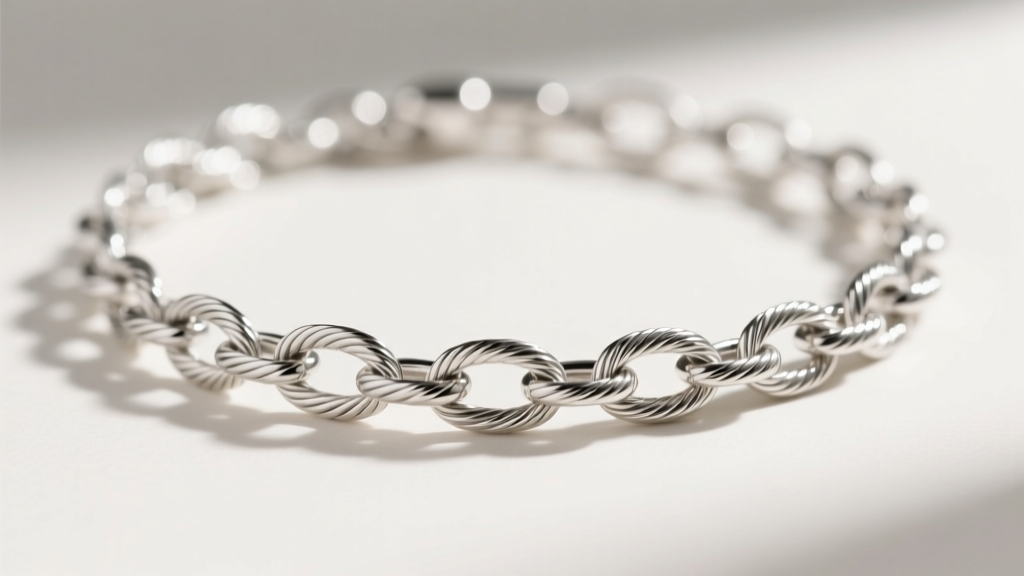
Sterling silver is the most accessible entry point for petite cable chains, but it demands the most maintenance. The 7.5% copper content necessary to harden pure silver makes it highly susceptible to sulfur-induced tarnishing. Furthermore, sterling silver has a low yield strength. If you plan to wear a silver 1.2mm cable chain daily, it must be worn without a heavy pendant. Over time, the friction between links will cause 'metal loss' (abrasion), thinning the wire from 0.51mm down to a fragile 0.40mm, leading to inevitable breakage.
Platinum 950: The Heavyweight Contender
Platinum is the ultimate choice for longevity, but it comes with a density penalty. A 1.5mm platinum cable chain will feel noticeably heavier on the neck than its gold counterpart. Platinum's unique property is its malleability over brittleness; when a platinum link is scratched or stressed, the metal is displaced rather than lost. Modern 2026 casting techniques utilize 95% Platinum and 5% Ruthenium (950 Pt/Ru), which offers superior hardness compared to older Cobalt or Iridium mixes. According to the World Gold Council and precious metal markets, platinum's current pricing makes it a premium investment, but a platinum cable chain will easily outlast its owner without requiring link replacement.
Titanium and Stainless Steel: The Unforgiving Alternatives
Grade 5 Titanium (Ti-6Al-4V) offers aerospace-level tensile strength, meaning a 1.0mm titanium cable chain is virtually unbreakable under normal human force. However, titanium cannot be traditionally soldered with a jeweler's torch. If a link bends or the clasp jump-ring fails, laser welding is the only repair option, and many local jewelers lack the equipment to service it. 316L Stainless Steel offers similar durability at a fraction of the cost but suffers from the same repair limitations and a much heavier, less refined drape.
Real-World Failure Modes for Delicate Chains
Understanding how a petite cable linked necklace breaks is crucial for preventative care. Based on bench-jeweler repair data, here are the three most common failure modes:
- Clasp Jump-Ring Shearing: The tiny 'C' shaped jump ring connecting the chain to the spring-ring or lobster clasp is the weakest structural point. Repeated pulling can cause the un-soldered gap in the jump ring to peel open.
- Snagging and Torsion Stress: Cable chains feature slight gaps between links. When caught on knitwear or hair, the chain experiences torsion (twisting) rather than linear tension. Twisting a 24-gauge wire link will snap it instantly, regardless of the metal's tensile strength.
- Pendant Bail Friction: If a pendant is strung directly onto the cable chain rather than hanging from a bail, the constant sliding will act like sandpaper on the center links, reducing the wire gauge thickness by up to 30% over a few years.
Pricing Tiers and Value Retention in 2026
The cost of a standard 16-inch, 1.2mm petite cable chain fluctuates with global spot prices, but baseline retail tiers remain relatively consistent based on material and labor costs:
- Sterling Silver (925): $35 – $65. (High value for fashion, low longevity).
- 10k / 14k Gold: $120 – $280. (The sweet spot for everyday durability and precious metal value).
- 18k Gold: $300 – $550. (Premium color, but requires careful wear).
- Platinum 950: $600 – $950+. (High labor costs for drawing and soldering platinum wire drive the price up significantly).
Final Verdict: Which Material Wins?
If your priority is everyday structural integrity and pendant support, a 14k gold petite cable linked necklace is the undisputed champion. It offers the perfect balance of Vickers hardness to resist link stretching, while remaining easily repairable by any professional jeweler. For those with metal allergies or a desire for a generational heirloom piece, 950 Platinum is the superior, albeit heavier and more expensive, alternative. Avoid sterling silver for chains thinner than 1.5mm if you intend to wear them daily with a pendant, as the inevitable metal loss will compromise the chain's integrity.


