How to Clean and Maintain a Delicate Flower Chain Necklace
Learn expert cleaning and maintenance tips for your flower chain necklace. Protect delicate links, enamel petals, and gemstones from tarnish and damage.

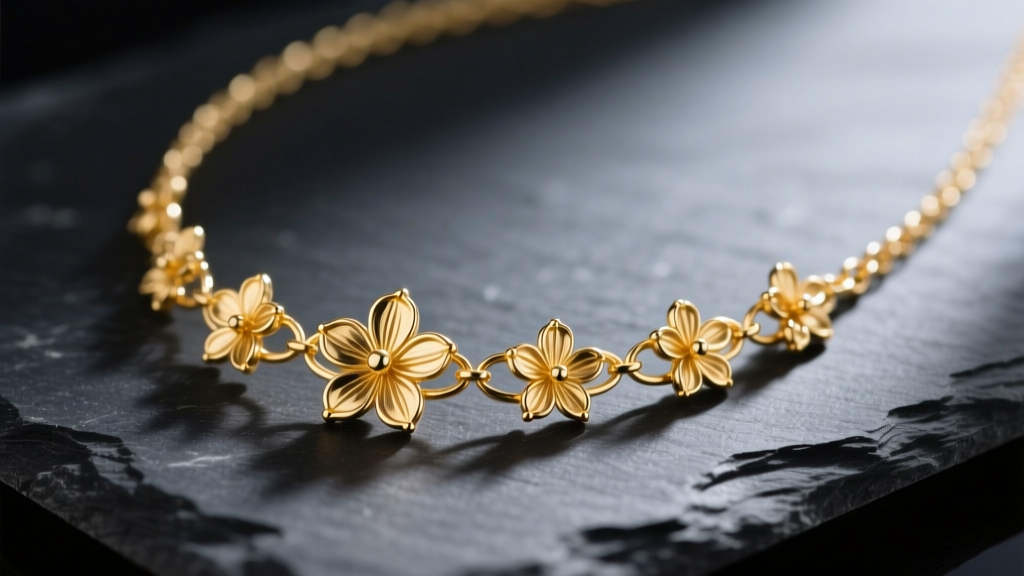
The Unique Anatomy of a Flower Chain Necklace
Botanical jewelry has experienced a massive resurgence, and the flower chain necklace is at the forefront of this trend. Unlike standard cable, curb, or box chains that feature smooth, easily wiped links, floral chains are marvels of miniature metallurgy. Each link is typically stamped or cast with intricate petal motifs, stamen detailing, and sometimes even integrated gemstone or enamel accents.
While stunning, this high surface-area-to-volume ratio creates a unique maintenance challenge. A standard 1.2mm cable chain has flat surfaces that resist debris buildup. In contrast, a 1.5mm flower chain link features deep recesses where the stamped petal meets the center stamen. These microscopic crevices are prime real estate for trapping sebum, dead skin cells, cosmetics, and environmental pollutants. Over time, this buildup forms a dull, grayish film that obscures the metal's luster and accelerates localized tarnishing, particularly in sterling silver or gold vermeil pieces.
Daily Wear and Tear: Identifying the Enemy
To properly care for your floral jewelry, you must first understand what degrades it. The enemies of a flower chain necklace are largely chemical and particulate:
- Sebum and Sweat: The natural pH of human sweat (ranging from 4.5 to 7.0) contains salts and lactic acid that can slowly degrade gold vermeil layers and oxidize sterling silver bases, turning the floral crevices black.
- Cosmetics and Sunscreen: Titanium dioxide and zinc oxide, common in sunscreens and foundations, act as mild abrasives. They leave a white, chalky residue deep inside the petal detailing that is notoriously difficult to wipe away.
- Alcohols and Fragrances: Perfumes sprayed directly on the chest often contain high concentrations of alcohol, which can dissolve the epoxy resins used in cold enamel floral accents and degrade the porous surface of pearls or opals.
Step-by-Step Cleaning Protocol for Floral Links
Because of the delicate nature of the links and any potential accent stones, you must avoid aggressive scrubbing. Here is the master jeweler-approved method for safely restoring your necklace.
What You Will Need
- Distilled water (tap water contains chlorine and calcium that leave hard water spots)
- pH-neutral liquid dish soap (such as Dawn Ultra, which is excellent for degreasing without harsh chemicals)
- An ultra-soft baby toothbrush (bristle diameter under 0.1mm to reach crevices without scratching high-polish gold)
- A lint-free microfiber cloth
- A hair dryer with a 'cool' setting
The Soak and Swish Method
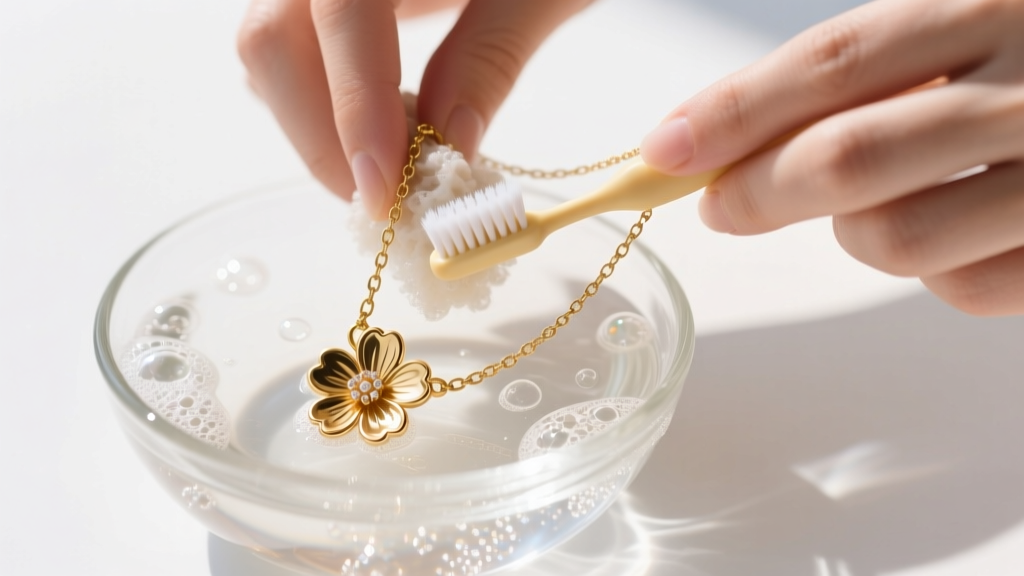
Begin by filling a small glass bowl with lukewarm distilled water and adding two to three drops of the pH-neutral dish soap. Submerge your flower chain necklace and let it soak for exactly 3 to 5 minutes. This brief window is enough to emulsify body oils without compromising any water-sensitive adhesives used for gemstone accents.
After soaking, take your ultra-soft baby toothbrush and gently agitate the chain. Use light, circular motions, paying special attention to the underside of the links where they rest directly against the skin. Never use a medium or hard-bristled brush, as the bristles can leave micro-scratches on the high-polish surfaces of the petals, permanently dulling the metal's reflectivity.
Drying Without Water Spots
Rinse the necklace thoroughly under a gentle stream of distilled water. Pat the chain gently between the folds of your microfiber cloth. Do not rub aggressively, as this can catch and bend delicate petal edges or prongs.
Expert Tip: To ensure no moisture remains trapped in the deep floral crevices or inside the spring ring clasp, use a hair dryer on the 'cool' and 'low' speed setting to blow the residual water out. Lingering moisture inside the clasp mechanism is the leading cause of premature spring failure and rust.
Material-Specific Maintenance Guide
Not all flower chain necklaces are created equal. The base metal and decorative finishes dictate the boundaries of your cleaning regimen. Refer to the table below to identify your chain's material and its specific care requirements.
| Material / Finish | Tarnish Risk | Recommended Cleaning Agent | Special Warnings |
|---|---|---|---|
| Solid 14k / 18k Gold | Very Low | Mild Soap & Distilled Water | Check gemstone prongs annually; gold is soft and prongs can wear thin. |
| Sterling Silver (925) | High | Non-dip Silver Polish Foam | Avoid liquid dips; they leave chemical residues in floral crevices that cause rapid re-tarnishing. |
| Gold Vermeil | Moderate | Mild Soap & Distilled Water | Never use polishing cloths; they will strip the 2.5-micron gold layer off the silver base. |
| Enamel-Inlaid Florals | N/A | Warm Water Only | Strictly avoid ultrasonic cleaners and alcohol-based solutions, which will shatter or dissolve the enamel. |
| Pearl / Opal Accents | N/A | Damp Cloth Wipe Only | Never submerge; water degrades pearl nacre and causes opals to craze or crack. |
What to Avoid: The Ultrasonic and Chemical Trap
Many consumers mistakenly believe that commercial ultrasonic jewelry cleaners are a safe, catch-all solution for all necklaces. According to the Gemological Institute of America (GIA), ultrasonic cleaners use high-frequency sound waves (typically around 40kHz) to create microscopic cavitation bubbles that implode and blast dirt away.
While excellent for plain diamond solitaires, this violent process is catastrophic for a flower chain necklace. The intense vibrations can easily shatter cold enamel petals, fracture included gemstones (like emeralds or opals frequently used in botanical designs), and shake loose the microscopic prongs holding accent stones. Furthermore, harsh chemical 'dip' polishes contain thiourea, which strips away a microscopic layer of metal. In the deep recesses of a floral link, these chemicals are nearly impossible to rinse out completely, leading to a phenomenon called 'crevice corrosion' that will eat through the chain over time.
Proper Storage to Prevent Link Snagging
How you store your flower chain necklace is just as critical as how you clean it. The interlocking nature of floral links makes them highly susceptible to tangling and snagging. When a petal edge catches on another link and is pulled, the soft metal can warp, permanently altering the symmetry of the flower.
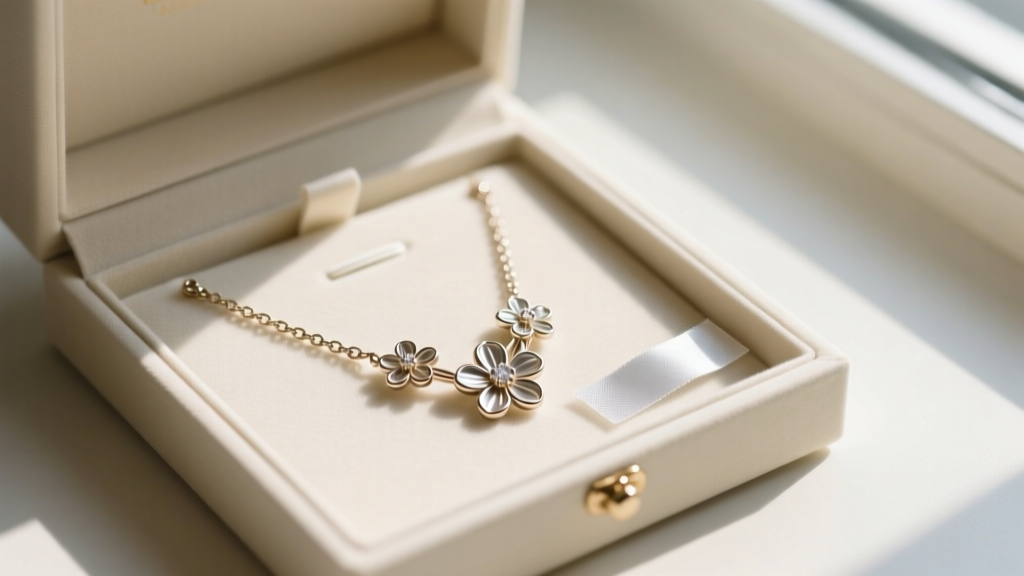
To prevent this, never hang your floral chain on a jewelry tree or hook. The constant pull of gravity on the intricate links will cause the chain to stretch and weaken over time, especially if the necklace features a heavy pendant. Instead, lay the necklace completely flat in a fabric-lined jewelry box. Fasten the clasp to prevent it from weaving through the links.
For sterling silver or oxidized gold floral chains, place a Jewelers of America recommended anti-tarnish strip (such as 3M Pacific Silvercloth or treated paper tabs) inside the compartment. These strips absorb airborne sulfur compounds before they can react with the metal and form silver sulfide (tarnish) deep within the floral detailing.
Professional Servicing: When to Seek Help
While home maintenance will keep your necklace looking pristine, certain issues require a professional bench jeweler. If your white gold flower chain necklace begins to look yellowish, it is time for a rhodium re-plating. The floral crevices can wear through the rhodium flash faster than flat links due to friction against the skin.
Additionally, if a floral link snaps, do not attempt to fix it with standard jewelry glue. A professional jeweler will use a laser welder to fuse the broken petal edge. Unlike traditional torch soldering, which requires heating the entire link and can melt delicate stamped details or destroy enamel, laser welding targets a microscopic focal point, leaving the intricate floral stamp completely intact and virtually seamless.


