Vintage Czech Glass Necklace Value: 2026 Pricing & Buyer's Guide
Discover how to evaluate a vintage Czech glass necklace in 2026. Learn authentication markers, pricing tiers, and investment value for collectors.

The Allure and Legacy of Bohemian Glassmaking
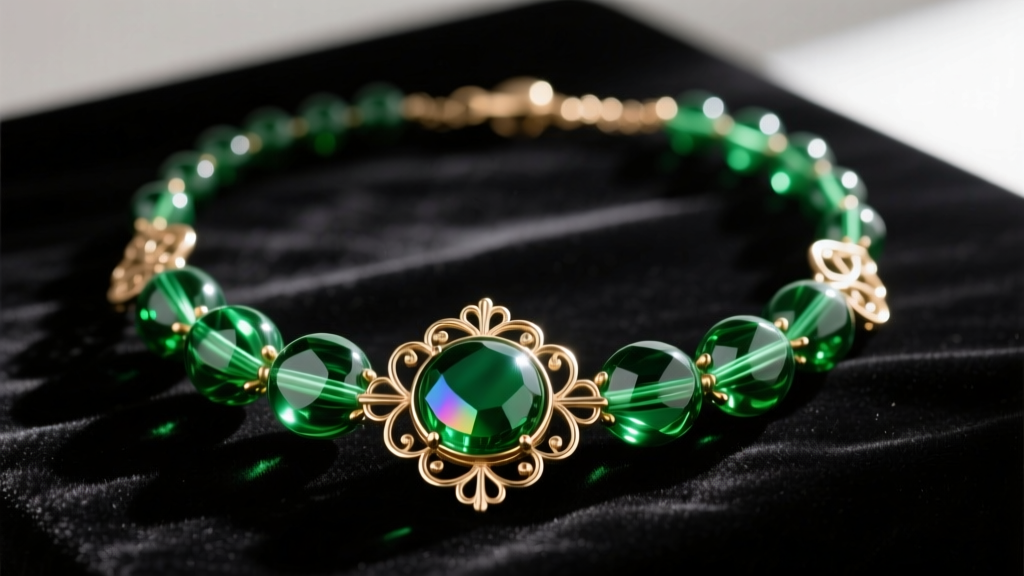
When assessing estate jewelry, few categories offer the intersection of artistry, history, and accessible pricing quite like a vintage Czech glass necklace. Originating primarily from the Jablonec nad Nisou region—historically the epicenter of Bohemian glassmaking—these pieces have captivated collectors for over a century. In 2026, the market for vintage Czech glass has matured, shifting away from mere nostalgic appeal toward serious horological and gemological adjacency, where specific eras, chemical compositions, and hardware types dictate significant value variations.
Whether you are a seasoned collector or a budget-conscious buyer looking for statement pieces, understanding the nuances of Czech glass production is critical. According to the Corning Museum of Glass, Bohemian glassmakers pioneered techniques in pressed, molded, and lampworked glass that allowed them to mass-produce intricate designs while maintaining a level of hand-finished detail that outpaced their European rivals. Today, evaluating these necklaces requires a keen eye for material degradation, historical markings, and structural integrity.
Decoding Value: What Drives the Price of Czech Glass?
Not all vintage Czech glass is created equal. A necklace from the 1970s featuring mass-produced Aurora Borealis (AB) beads holds a vastly different market position than a 1920s Art Deco piece featuring hand-set, foil-backed rhinestones. Value assessment hinges on three primary pillars: glass composition, hardware quality, and verifiable age.
Glass Composition and Color Rarity
The chemical makeup of the glass is a major price driver. While cobalt blue and jet black were produced in massive quantities, certain colors and treatments command premium valuations:
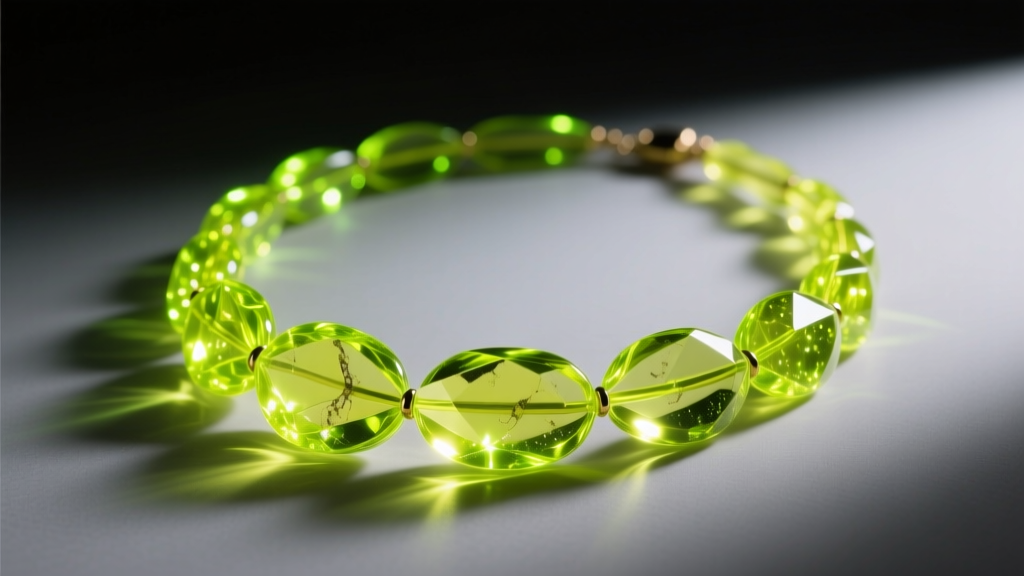
- Uranium Glass (Vaseline Glass): Produced primarily before World War II, this glass contains uranium oxide (usually 0.1% to 2%), giving it a distinct yellow-green hue that fluoresces brilliantly under UV light. Intact uranium glass necklaces are highly sought after due to the cessation of uranium use in consumer glass post-1940s.
- Ruby Gold Glass: Achieved by adding gold chloride to the glass melt, this rich, cranberry-red glass was expensive to produce and is relatively rare in large, multi-strand bib necklaces.
- Aurora Borealis (AB) Coating: Introduced in the mid-1950s, this iridescent vacuum-metalized coating was widely adopted by Czech manufacturers. While beautiful, AB-coated pieces are abundant, keeping their baseline value lower unless the underlying glass molding is exceptionally complex.
Hardware, Clasps, and Findings
As noted by the Vintage Fashion Guild, the hardware on a necklace is often the most reliable indicator of its age and, consequently, its value. Budget buyers should closely inspect the clasp mechanism:
- Push-Pull (Tube) Clasps: Common in the 1920s and 1930s, these cylindrical clasps often feature intricate filigree stamping. If the internal spring mechanism still functions smoothly, the piece's value increases by 15-20% compared to examples with broken or replaced clasps.
- Spring Ring and Lobster Clasps: Standardized in the 1940s and later. While functional, their presence on a piece claiming to be "Art Deco" is a red flag for a replacement or an outright reproduction.
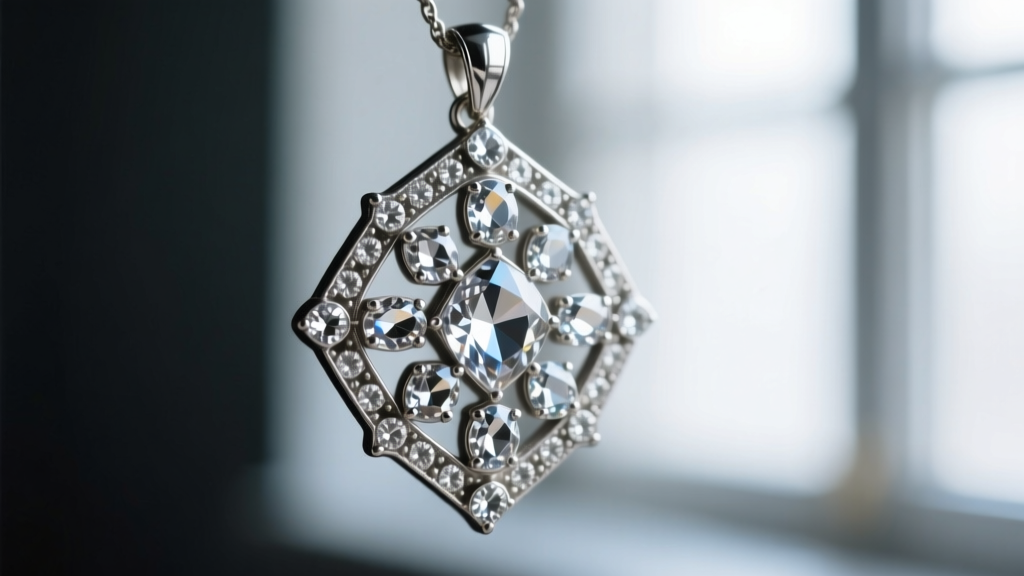
- Filigree Stamping: High-value pieces feature brass or pot-metal findings with hand-applied soldering and intricate openwork. Pot metal (a zinc alloy) is prone to "pot metal disease" (intergranular corrosion), which causes the metal to swell, crack, and crumble. Necklaces with pristine, uncracked pot metal findings are exceptionally rare and priced accordingly.
2026 Market Pricing Matrix for Vintage Czech Glass Necklaces
To help you budget accurately, we have compiled a current market valuation matrix based on recent auction data, estate sale averages, and specialized dealer listings for 2026. Prices reflect pieces in wearable, excellent condition.
| Era / Style | Key Identifiers | Budget Tier | Estimated Market Value (USD) |
|---|---|---|---|
| 1950s-1980s Mass-Produced | AB coating, nylon stringing, spring ring clasps, minimal marking | Entry-Level | $35 - $85 |
| 1920s-1930s Art Deco | Push-pull clasps, foil-backed stones, geometric molded glass, "Czechoslovakia" stamp | Mid-Range Collector | $180 - $450 |
| Pre-WWII Uranium / Vaseline | UV fluorescence, heavy brass findings, barrel or push-pull clasps | High-End Specialist | $600 - $1,400 |
| Rare Ruby Gold / Signed Parures | Gold chloride glass, original matching earrings/bracelets, verified maker marks | Investment / Museum | $1,800 - $4,500+ |
Authentication: Spotting Fakes and Reproductions
The secondary market is currently flooded with modern reproductions manufactured in India and China, designed to mimic the Bohemian aesthetic. Protecting your budget requires knowing the physical hallmarks of authentic vintage Czech glass.
The "Czechoslovakia" Country Mark
The US Tariff Act of 1921 mandated that all imported goods be marked with their country of origin in English. Therefore, authentic pieces made between 1921 and the early 1990s (when the country split into the Czech Republic and Slovakia) will often bear a "Czechoslovakia" stamp on the clasp or a foil tag. However, be aware that modern fakers have begun artificially aging stamped clasps. Look for natural wear patterns: the stamping should show micro-abrasions consistent with decades of friction against skin and clothing, not uniform, chemically induced darkening.
Mold Seams vs. Lampwork
Czech pressed glass beads were formed in two-part molds. Run your fingernail along the edge of the bead; you should feel a faint, sometimes polished, vertical seam. Modern plastic or resin replicas often lack this seam entirely or feature a thick, poorly finished injection-molding line. Conversely, high-end vintage Czech lampwork beads (wound by hand over a flame) will have no seams but may show slight asymmetry and a distinct pontil mark or tumbling smoothness at the drill hole.
Foil Backing Degradation
In the 1920s and 30s, Czech makers frequently used silver or copper foil behind glass cabochons and rhinestones to enhance brilliance. Over time, moisture breaches the setting, causing the foil to oxidize and turn black or flake away completely. While a blackened foil backing is a definitive sign of age (and thus authenticity), it severely impacts the visual appeal and value. When budgeting, deduct 20-30% from the asking price if the foil backing is heavily degraded, as professional re-foiling is a specialized and costly restoration process.
Restoration, Repairs, and Hidden Costs
When evaluating a vintage Czech glass necklace priced at the lower end of the spectrum, factor in the hidden costs of restoration. A $50 necklace might seem like a bargain until you realize it requires immediate intervention to be wearable.
- Restringing: Vintage silk thread degrades, becoming brittle and prone to snapping. Professional restringing using modern Griffin silk or high-tensile nylon, finished with French wire (gimp) to protect the beads from the clasp, typically costs between $40 and $80 per strand.
- Rhinestone Replacement: Sourcing New Old Stock (NOS) Czech glass rhinestones with the correct facet patterns and foil backing can be difficult. Jewelers specializing in antique restoration charge $15 to $35 per stone for sourcing and hand-setting.
- Clasp Repair: If a vintage push-pull clasp has lost its tension, a skilled jeweler can sometimes re-tension the internal spring. If the casing is cracked pot metal, it cannot be soldered; it must be carefully glued or replaced with a period-correct salvaged finding, costing upwards of $60.
Final Verdict: Is It Worth the Investment?
From a budget and value assessment perspective, a vintage Czech glass necklace remains one of the most rewarding categories in estate jewelry. For under $100, buyers can acquire striking, historically significant mid-century pieces that offer unparalleled visual impact compared to modern costume jewelry. For serious investors, allocating $500 to $1,500 toward verified Art Deco or pre-war uranium glass pieces offers strong value retention, as the finite supply of intact, high-grade Bohemian glass continues to shrink. By prioritizing original hardware, verifying chemical compositions, and budgeting for necessary conservation, collectors can build a portfolio that is as financially sound as it is aesthetically breathtaking.


