The Italian Chili Pepper Necklace: A Technical & Cultural Guide
Discover the technical specs, material grades, and cultural significance of the Italian chili pepper necklace in this expert jeweler's deep dive.

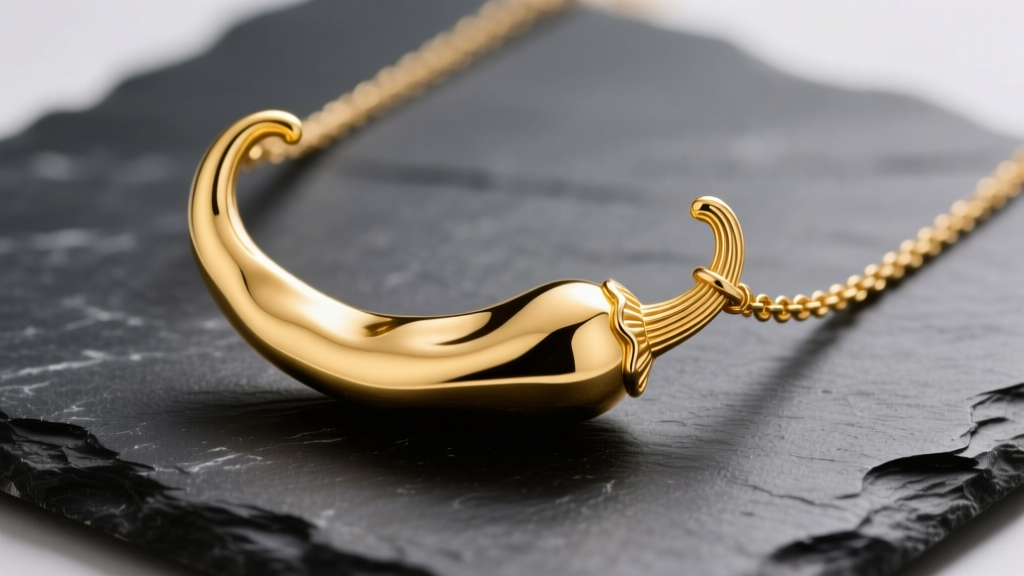
The Italian chili pepper necklace, traditionally known as the cornicello or corno, is far more than a simple aesthetic accessory. Rooted in centuries of Mediterranean folklore, this twisted horn-shaped pendant serves as a powerful amulet against the Malocchio (the Evil Eye). However, from a gemological and metallurgical perspective, the modern Italian chili pepper necklace represents a fascinating intersection of ancient carving techniques, strict material regulations, and precision jewelry engineering.
In this expert deep dive, we bypass the superficial style guides to examine the exact dimensions, material grades, hardware mechanics, and authentication protocols that separate a genuine, heirloom-quality cornicello from a mass-produced tourist trinket.
The Anatomy of the Cornicello: Dimensions and Proportions
The structural integrity of an Italian chili pepper pendant relies heavily on its geometric proportions. Unlike symmetrical pendants, the cornicello features a complex, asymmetrical taper that presents unique challenges in casting and stone carving.
Standard Dimensions and Weight Distribution
- Micro/Minimalist (10mm - 15mm): Typically cast in solid 14k or 18k gold. Weighs between 0.4g and 0.8g. Due to the extreme thinness of the tip, these are prone to bending if snagged.
- Standard/Classic (20mm - 30mm): The most versatile size. Weighs 1.2g to 3.5g depending on the material. Offers the best balance between visibility and structural durability.
- Statement/Heritage (35mm - 50mm+): Usually carved from red coral or fashioned from hollow-formed gold. Solid gold versions in this size are exceptionally heavy (8g+) and require heavy-duty chain support.
The taper of the horn must follow a precise logarithmic curve. If the tip is carved too bluntly, the piece loses its traditional aesthetic; if carved too sharply (especially in materials with low tensile strength like coral), the tip becomes a primary failure point for snapping upon impact.
Material Science: Coral, Gold, and Silver Alloys
The efficacy and value of an Italian chili pepper necklace are dictated by its base material. The three traditional materials—red coral, yellow gold, and sterling silver—each require specific gemological and metallurgical considerations.
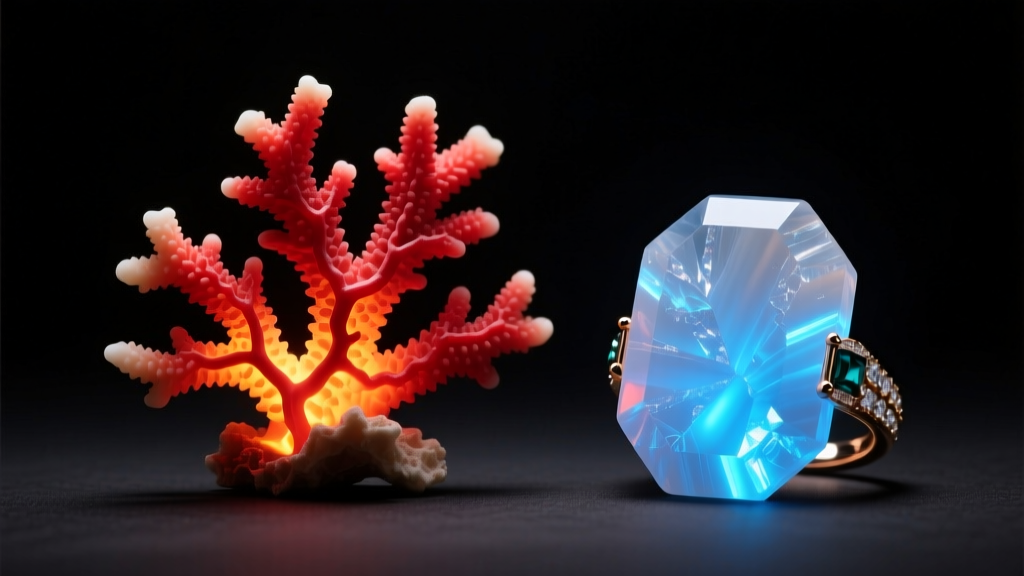
Natural Red Coral (Corallium Rubrum)
Historically, the most potent cornicelli were carved from Mediterranean red coral. According to the Gemological Institute of America (GIA), natural red coral possesses a Mohs hardness of 3.5 to 4.0, making it highly susceptible to scratching and chemical degradation. Furthermore, due to overharvesting, Corallium rubrum is heavily regulated under CITES (Convention on International Trade in Endangered Species) guidelines. Authentic, legally sourced coral commands a premium price, often exceeding $150 per gram for high-grade 'ox-blood' specimens. Buyers must beware of dyed howlite, glass, or resin imitations, which can be identified by their lack of natural wood-grain striations and their reaction to a drop of dilute hydrochloric acid (which will cause genuine calcium carbonate coral to effervesce).
Gold Alloys: 18k vs. 14k
Italian goldsmithing traditionally favors 18k gold (stamped 750), which contains 75% pure gold. While 18k gold offers a richer, warmer hue that perfectly mimics the sun—a secondary symbol of power in Italian folklore—it is inherently softer than 14k gold (stamped 585). The World Gold Council notes that the alloy mix (copper, silver, zinc) dictates the durability. For a cornicello, a slightly higher copper content in the 18k alloy is preferred to increase tensile strength at the pendant's fragile tip.
Sterling Silver and Rhodium Plating
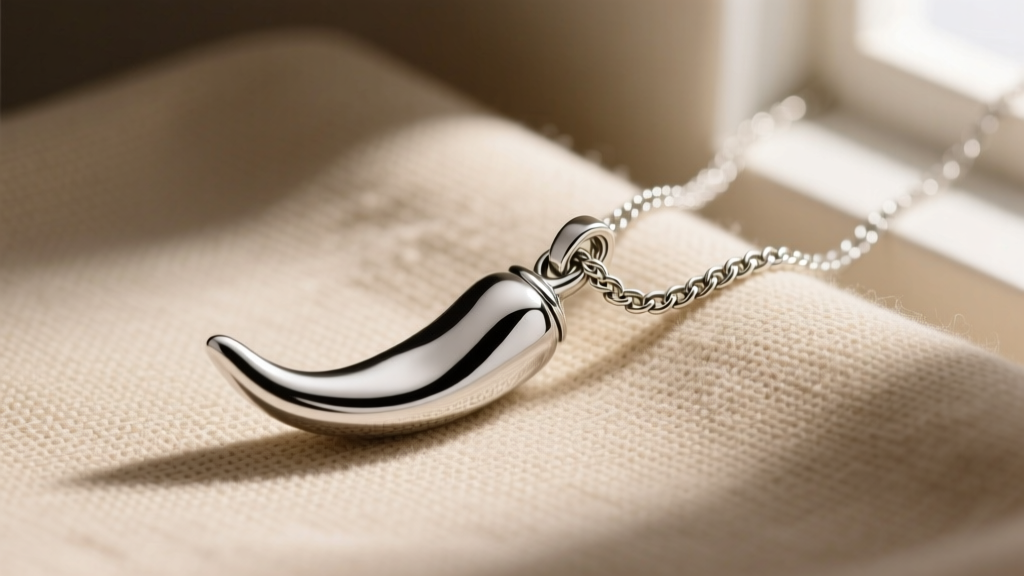
Silver Italian chili pepper necklaces (stamped 925) are highly popular but prone to oxidation. High-end Italian manufacturers will often apply a 0.5-micron layer of rhodium plating over the silver to prevent tarnishing and provide a white-gold-like finish. However, this plating will eventually wear off at the high-friction points where the bail meets the chain.
Hardware Mechanics and Chain Pairing
A pendant is only as secure as its hardware. The bail (the loop that connects the horn to the chain) and the chain itself must be engineered to support the specific weight and center of gravity of the cornicello.
Bail Engineering
Because the chili pepper shape is asymmetrical, a standard soldered jump ring at the top of the horn can cause the pendant to hang crookedly. Master jewelers utilize a hidden bail—a horizontal tube drilled directly through the widened 'crown' or base of the horn. This allows the chain to thread directly through the pendant, ensuring it lays flat against the sternum and distributes the weight evenly, reducing stress on the metal.
Chain Selection and Clasp Failure Modes
Pairing the right chain is critical. A heavy 30mm coral horn will easily snap a delicate 0.6mm cable chain. We recommend the following specifications based on pendant weight:
- Under 2g: 0.8mm - 1.0mm Cable or Rope chain with a 4mm spring ring clasp.
- 2g to 5g: 1.2mm - 1.5mm Figaro or Cuban chain. Crucial: Upgrade to a 5mm or 7mm lobster clasp. Spring rings lack the internal spring tension to securely hold heavier pendants and are the leading cause of loss.
- Over 5g: 2.0mm+ Box or Wheat chain with a heavy-duty locking lobster clasp or a tongue-and-groove box clasp.
Authentication and Quality Markers
When evaluating an Italian chili pepper necklace, use this technical matrix to verify authenticity and assess market value.
| Material | Authenticity Marker / Hallmark | Common Failure Mode | Estimated Price Range (USD) |
|---|---|---|---|
| Mediterranean Red Coral | Natural grain lines; effervescence in acid; CITES documentation | Tip snapping; surface pitting from cosmetics | $400 - $2,500+ |
| 18k Yellow Gold (Italian) | '750' stamp; maker's mark (e.g., a star and province code) | Bail thinning; tip bending if alloy is too soft | $250 - $1,200 |
| 14k Yellow Gold | '585' stamp | Loss of high-polish finish over time | $120 - $600 |
| Sterling Silver | '925' stamp; rhodium flash | Tarnishing at the bail; rhodium wear | $40 - $150 |
| Resin / Dyed Howlite | No hallmark; uniform color; lacks thermal conductivity | Chipping; color fading under UV exposure | $10 - $35 |
Cultural Etiquette and Wearing Protocols
Beyond the physical specifications, owning an Italian chili pepper necklace involves adhering to specific cultural protocols. According to Neapolitan and broader Southern Italian traditions, the cornicello's power to deflect the Malocchio is only activated under one strict condition:
'Il corno non si compra, si regala.' (The horn is not bought, it is gifted.)
Tradition dictates that purchasing a cornicello for yourself renders it merely decorative. To function as a true protective talisman, it must be given as a gift by a loved one. Furthermore, if the coral tip breaks off naturally during wear, it is believed that the amulet has successfully absorbed a fatal blow of negative energy meant for the wearer, and the broken piece should be respectfully retired.
Maintenance and Long-Term Care
To preserve the structural and aesthetic integrity of your necklace, implement a strict maintenance routine. For coral pendants, avoid all ultrasonic cleaners and harsh chemical dips; the high-frequency vibrations can exploit microscopic fissures in the calcium carbonate structure, leading to catastrophic fractures. Instead, wipe coral gently with a damp, lint-free microfiber cloth after wear to remove skin oils and acidic perspiration.
For gold and silver iterations, utilize a mild dish soap and warm water solution, agitating gently with a soft-bristled baby toothbrush to clear debris from the bail and chain links. Store the necklace in a lined jewelry box, ensuring the pendant does not rest against harder gemstones (like diamonds or sapphires) which will easily gouge the metal or coral surface. By respecting both the metallurgical realities and the rich cultural heritage of the piece, your Italian chili pepper necklace will remain a striking, protective heirloom for generations.


