2026 Gift Guide: Gifting a Pave Diamond Cross Necklace
Discover how to choose the perfect pave diamond cross necklace for every occasion in our 2026 gift guide, featuring carat weights, chains, and pricing.

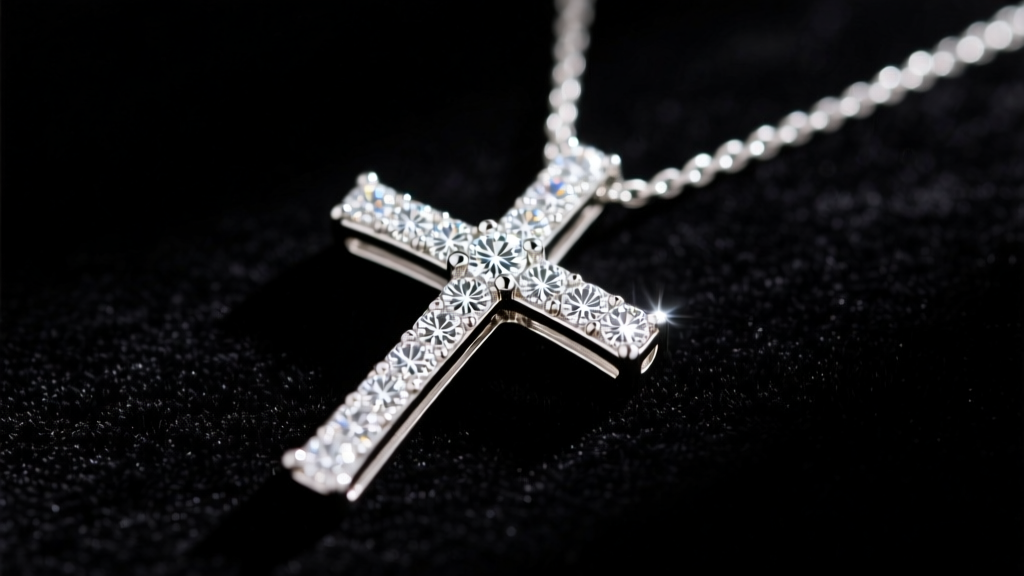
The Enduring Legacy of the Pave Cross in 2026
When it comes to meaningful jewelry gifting, few pieces carry the emotional weight and timeless elegance of a pave diamond cross necklace. Whether marking a religious milestone, celebrating a graduation, or commemorating a milestone anniversary, the cross pendant remains a cornerstone of fine jewelry. However, as we navigate the 2026 jewelry market, buyers are presented with a vast array of setting styles, diamond qualities, and chain pairings that can make selecting the perfect piece overwhelming.
The term pave (pronounced pah-vay) comes from the French word for 'paved.' In jewelry, it refers to a setting technique where the metal surface is paved with closely set diamonds, creating a continuous field of sparkle. This guide cuts through the retail jargon, providing you with the exact specifications, pricing benchmarks, and occasion-matching frameworks needed to make an expert-level purchase.
Anatomy of a Pave Setting: What Buyers Must Know
Not all pave settings are created equal. The brilliance of a pave diamond cross necklace relies entirely on the quality of the melee diamonds used. According to the Gemological Institute of America (GIA), melee diamonds are small diamonds typically ranging from 0.001 to 0.20 carats. In a standard 0.25 CTW (Carat Total Weight) cross pendant, you are looking at roughly 20 to 30 individual stones, each weighing approximately 0.01 carats.
Diamond Color and Clarity Grades
Because melee diamonds are so small, inclusions (I1-I2) are often masked by the faceting and light return. However, color is immediately noticeable if it drops below the J-K range, resulting in a yellowish tint that contrasts poorly with white gold or platinum. For a premium gift, insist on G-H color and SI1-SI2 clarity. This ensures the stones face up bright white and eye-clean.
Micro-Pave vs. Traditional Pave
- Traditional Pave: Uses small, distinct prongs to hold each diamond. It offers a slightly more textured, vintage look and is highly secure for everyday wear.
- Micro-Pave: Utilizes microscopic beads of metal raised from the base to secure the stones. This allows for tighter spacing and maximum diamond exposure, but requires a skilled setter. As noted by Blue Nile's Diamond Education, micro-pave maximizes brilliance but demands gentler care over time.
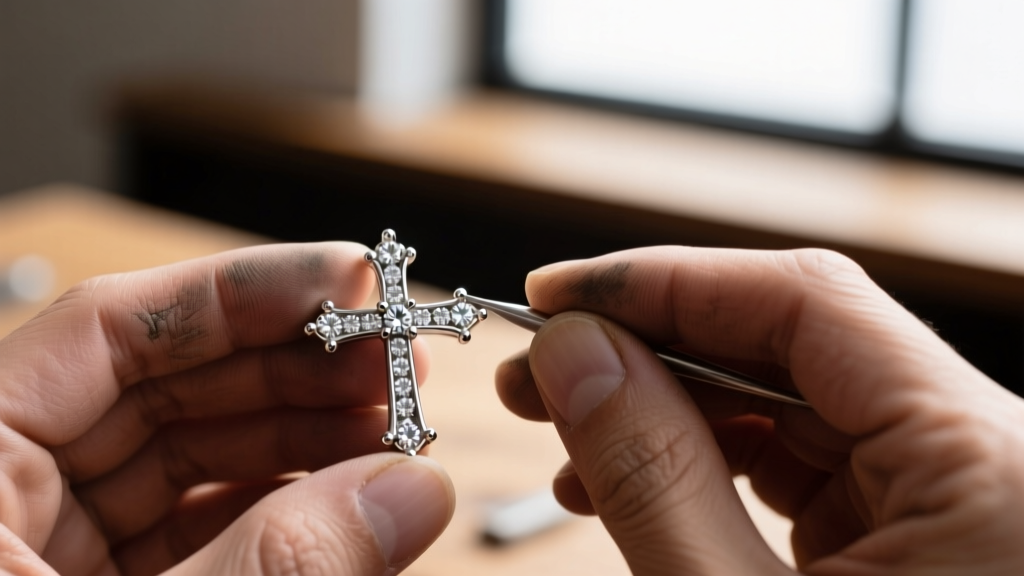
Occasion Matching: Selecting the Right Carat Weight
The appropriateness of a cross necklace is heavily dictated by its scale. Gifting a massive 1.00 CTW cross to a child for their First Communion is a stylistic mismatch, just as a tiny 0.05 CTW cross may feel underwhelming for a 25th anniversary. Use this framework to match the carat weight to the milestone.
Religious Milestones (Baptism, First Communion, Confirmation)
Target CTW: 0.05 to 0.15 CTW
Metal: 14k Yellow or White Gold
Style Notes: For children and young teens, the pendant should be petite (under 15mm in height). A delicate micro-pave setting offers a subtle, age-appropriate shimmer without feeling heavy or ostentatious. Pair with a lightweight 14-inch or 16-inch cable chain.
Sweet 16, 18th Birthdays, and Graduations
Target CTW: 0.20 to 0.35 CTW
Metal: 14k or 18k Gold (Yellow, White, or Rose)
Style Notes: This is the sweet spot for everyday wear. A 0.25 CTW cross (typically around 18mm to 22mm tall) provides substantial sparkle and transitions easily from casual teen wear to young adult professional attire. Rose gold has seen a massive resurgence in 2026 for this demographic, offering a warm, modern contrast to white diamonds.
Milestone Anniversaries and Major Life Events
Target CTW: 0.50 to 1.00+ CTW
Metal: 18k Gold or Platinum
Style Notes: For significant adult milestones, scale and metal quality are paramount. A 0.50 CTW to 1.00 CTW cross commands attention and serves as a statement piece. Platinum is the superior choice here; its density and natural white color will never fade or require rhodium plating, ensuring the micro-prongs remain secure for decades.
Chain Pairings: The Unsung Hero of the Pendant
A common mistake buyers make is pairing an exquisite pave diamond cross pendant with a flimsy, generic chain. The chain must support the pendant's weight while complementing its aesthetic. Below is a structural breakdown of the best chain styles for cross pendants in 2026.
| Chain Style | Ideal Width | Durability | Best For |
|---|---|---|---|
| Box Chain | 0.9mm - 1.2mm | High | Everyday wear; excellent tensile strength for medium crosses. |
| Wheat Chain | 1.2mm - 1.5mm | Very High | Heavier crosses (0.50+ CTW); the woven links resist kinking. |
| Cable Chain | 0.8mm - 1.0mm | Low-Medium | Petite crosses (under 0.15 CTW); offers a classic, minimalist look. |
| Rope Chain | 1.0mm - 1.5mm | High | Adding extra sparkle; the twisted links reflect light independently. |

2026 Market Pricing: What to Expect
Pricing for pave diamond cross necklaces fluctuates based on the metal market and diamond availability. Below is a realistic retail pricing guide for the 2026 market, assuming G-H color and SI clarity melee diamonds. Prices below reflect the complete piece (pendant + chain).
- 0.10 CTW (14k Gold): $350 – $550
- 0.25 CTW (14k Gold): $700 – $1,100
- 0.50 CTW (18k Gold): $1,600 – $2,800
- 0.50 CTW (Platinum): $2,200 – $3,500
- 1.00 CTW (Platinum): $4,500 – $7,000+
Expert Tip: If a retailer is offering a 0.50 CTW pave cross for under $800, they are almost certainly using commercial-grade I-J color, I2-I3 clarity diamonds, or the stones are lab-grown (which should be explicitly disclosed). Always ask for the diamond origin and color grade before purchasing.
Expert Care: Protecting the Micro-Prongs
Pave settings require specific maintenance. The tiny beads or micro-prongs holding the melee diamonds are susceptible to snagging on fabrics and accumulating lotion or soap residue, which dulls the stones' brilliance.
Crucial Warning: Never place a pave diamond cross necklace in an ultrasonic jewelry cleaner. The high-frequency vibrations can easily shake the microscopic prongs loose, causing you to lose stones. Instead, clean the piece at home using a soft-bristled baby toothbrush, a few drops of mild dish soap, and warm water. Gently brush the underside of the cross where dirt accumulates, rinse thoroughly, and pat dry with a microfiber cloth.
The Final Gifting Checklist
Before you finalize your purchase, run through this quick E-E-A-T checklist to ensure you are getting a high-quality piece:
- [ ] Metal Stamping: Verify the hallmark (e.g., 14K, 18K, PT950) is stamped on the bail or the chain clasp.
- [ ] Prong Inspection: Look closely at the pave setting. The metal beads should be uniform in size and smooth to the touch, with no sharp edges that could catch on clothing.
- [ ] Chain Clasp: Ensure the chain features a secure lobster clasp rather than a flimsy spring-ring clasp, especially for heavier pendants.
- [ ] Return Policy: Confirm the jeweler offers at least a 30-day return or exchange window in case the recipient prefers a different metal color or chain length.
By focusing on the precise carat weight, diamond quality, and structural integrity of the chain, your pave diamond cross necklace will transcend being a simple gift and become a cherished, lifelong heirloom.


