Necklace Chandelier Buying Guide: Fit, Metals & Styling
Discover how to choose the perfect necklace chandelier. Learn about weight distribution, clasp types, metal grades, and neckline pairings in our expert guide.


The Architecture of Drama: Understanding the Necklace Chandelier
A necklace chandelier is not merely a pendant on a chain; it is a multi-tiered, cascading piece of wearable architecture. Designed to mimic the sweeping elegance of a grand light fixture, these statement pieces feature a central focal point that branches out into intricate, dangling tiers of gemstones, crystals, or metalwork. While they are a staple on red carpets and at black-tie galas, buying a high-quality chandelier necklace requires a deep understanding of jewelry engineering. Unlike standard chains, the sheer surface area and component count of a chandelier piece introduce unique physical stresses. This comprehensive buying guide will walk you through the critical mechanics, material grades, and styling frameworks you need to know before investing in a luxury necklace chandelier.
Weight Distribution and the 'Pendulum Effect'
The most common failure mode in poorly manufactured chandelier necklaces is severe neck strain and structural warping caused by improper weight distribution. A high-end statement piece can easily weigh between 80 and 250 grams. If the center of gravity is not perfectly calibrated, the necklace will suffer from the 'Pendulum Effect'—constantly swinging, riding up the back of the neck, and tangling the delicate lower tiers.
Counterweighting and Base Chains
To combat this, master jewelers employ strategic counterweighting. Look for designs that feature a heavier, solid metal chain or a discreet counterweight bead at the nape of the neck. This anchors the piece, ensuring the cascading front tiers remain perfectly centered on the sternum. Additionally, the upper chain (the portion wrapping around the neck) should never be a delicate cable chain. Opt for a Wheat chain or a thick Rolo chain (minimum 3mm width), which offer superior tensile strength and resist kinking under the dynamic load of a swinging chandelier silhouette.
Metal Grades and Plating Durability
Because a necklace chandelier covers a significant portion of the décolletage, it is subject to high friction and constant contact with skin oils and cosmetics. The metal foundation must be chosen with longevity in mind. Below is a comparison of the most common metals used in these statement pieces.
| Metal Type | Durability & Tarnish Resistance | Best For | Price Range (Approx.) |
|---|---|---|---|
| Sterling Silver (925) | Moderate; requires rhodium flash to prevent sulfide tarnishing. | Everyday luxury, vintage-inspired designs. | $150 - $600 |
| Gold Vermeil | High; must be at least 2.5 microns of gold over silver per FTC Jewelry Guides. | Bold, high-fashion pieces worn seasonally. | $250 - $900 |
| Solid 14k / 18k Gold | Exceptional; will not flake or wear away. 14k is harder, 18k is richer in color. | Heirloom investments, bridal, and gala wear. | $1,500 - $8,000+ |
| Platinum | Maximum; hypoallergenic, extremely dense, develops a patina over time. | Diamond-encrusted, ultra-high-end chandelier pieces. | $5,000 - $25,000+ |
Expert Tip: If purchasing Gold Vermeil, seek out brands that specify a 3.0-micron or higher plating thickness. The friction points where the chandelier tiers connect to the main chain will wear down standard 1.0-micron gold plating within a single season of heavy wear.
Clasp Mechanics for Heavy Statement Pieces
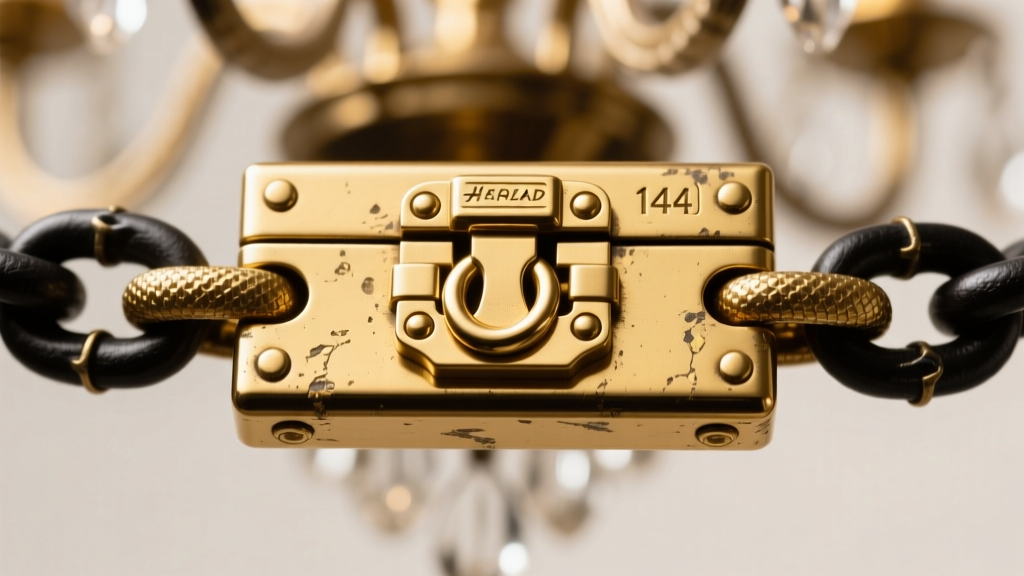
A standard spring-ring clasp will inevitably fail under the sheer stress of a 150-gram necklace chandelier. The shear stress placed on the clasp mechanism when the wearer leans forward or moves abruptly can bend thin metal wires, resulting in a catastrophic drop and loss of the piece.
- Double-Latch Box Clasp: The gold standard for heavy necklaces. The tongue slides into a boxed housing and clicks into place, secured by two external figure-eight safety catches. This distributes the tensile load across three separate locking mechanisms.
- Heavy-Duty Lobster Clasp (12mm+): Acceptable for medium-weight pieces (under 100g), provided the jump ring it connects to is soldered shut. Never rely on an open jump ring for a chandelier necklace.
- Magnetic Clasps: Avoid entirely. While convenient, the neodymium magnets used in jewelry clasps cannot reliably support the dynamic, swinging weight of a multi-tiered chandelier design.
Gemstone and Crystal Selection: Refractive Index Matters
The visual impact of a necklace chandelier relies entirely on how light interacts with its cascading elements. According to the Gemological Institute of America (GIA), the Refractive Index (RI) dictates a stone's brilliance. Understanding these differences is crucial when evaluating price points.
Comparing the Sparkle
Lead-Free Precision Crystal (e.g., Swarovski, Preciosa): With an RI of roughly 1.7 to 1.8, these offer exceptional clarity and consistent machine-cut faceting. They are lightweight, which is a massive advantage for reducing neck strain in large chandelier designs.
Cubic Zirconia (CZ): Boasting an RI of 2.15, CZ mimics the fire of a diamond much closer than crystal. However, CZ is significantly denser and heavier. A chandelier necklace fully paved with CZ can become uncomfortably heavy, requiring robust chain engineering.
Natural Diamonds & Sapphires: Diamonds (RI 2.42) provide unparalleled scintillation. In luxury chandelier pieces, jewelers often use 'rose-cut' or 'briolette' diamonds for the dangling tiers, as these antique cuts catch ambient candlelight beautifully while requiring less carat weight than brilliant rounds.
Neckline Pairing Framework
A necklace chandelier demands negative space to breathe. Pairing it with the wrong garment neckline will result in a cluttered, chaotic aesthetic. Use this framework to ensure your jewelry remains the focal point.
"The golden rule of the chandelier silhouette is boundary respect. The jewelry should either rest entirely on bare skin or terminate exactly one inch above the fabric line. Overlapping the gemstone tiers with ruffled or patterned fabric destroys the visual architecture of the piece." — Senior Editorial Stylist, Vogue
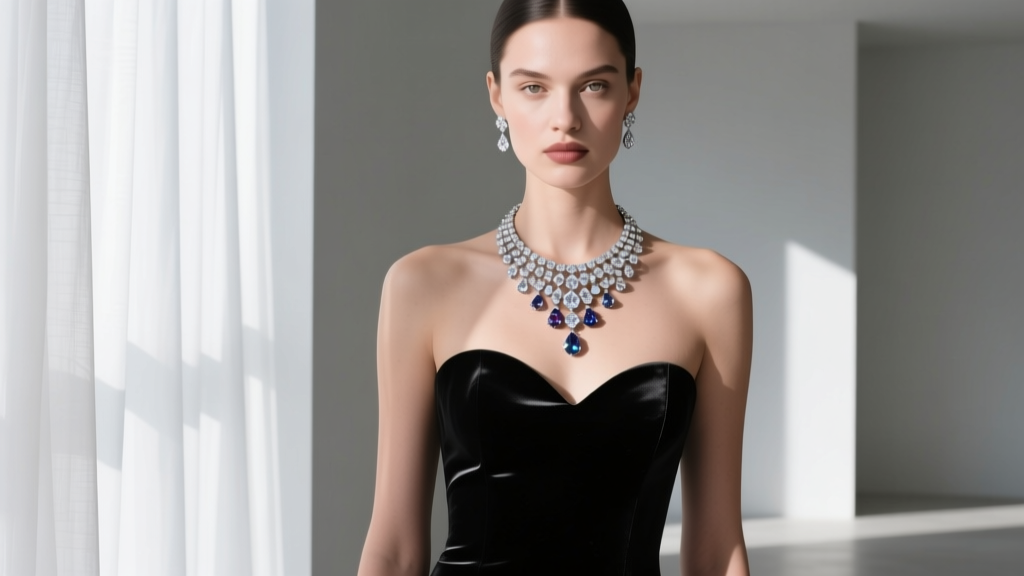
- Strapless & Sweetheart: The ideal canvas. The sweeping curve of a sweetheart neckline perfectly mirrors the inverted triangle shape of a chandelier necklace.
- Deep V-Neck: Works beautifully, provided the central drop of the chandelier does not extend past the apex of the V-neckline.
- Halter & High Collars: Avoid. The visual competition around the collarbone creates a cramped, unflattering silhouette. Opt for chandelier earrings and a bare neck instead.
Maintenance, Storage, and Tangle Prevention
The intricate, web-like tiers of a chandelier necklace are notoriously prone to tangling. Never store this piece in a standard jewelry box where it can shift and knot. Instead, lay the necklace completely flat in a dedicated, velvet-lined drawer, or hang it from a specialized wide-hook jewelry arbor. Before storing, wipe the metal and stones with a lint-free microfiber cloth to remove acidic skin oils. If your piece features porous gemstones like pearls or opals integrated into the chandelier tiers, avoid ultrasonic cleaners entirely; the high-frequency vibrations can shatter the delicate drill holes and fracture the briolette drops.


