Kaleidoscope Necklace Buying Guide: What to Look For
Discover what to look for when buying a kaleidoscope necklace. Our expert guide covers fantasy cuts, backing materials, pricing tiers, and chain pairings.

What Exactly is a Kaleidoscope Necklace?
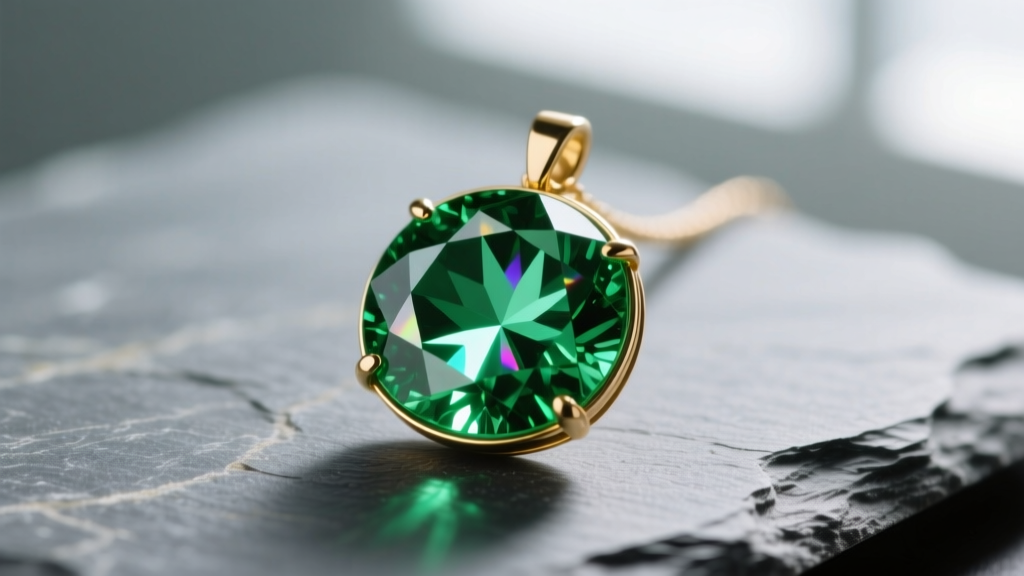
When collectors and gemologists refer to a kaleidoscope necklace, they are rarely talking about a literal toy. In the realm of fine jewelry, this term describes two distinct, highly specialized pendant styles that manipulate light to create a mesmerizing, multi-faceted optical display. Understanding the difference between these two styles is the first step in making an informed purchase.
1. The Fantasy-Cut / Concave Faceted Pendant
The most common interpretation in modern lapidary art is the fantasy-cut gemstone. Unlike traditional flat faceting, precision lapidaries use a grooved pavilion and concave faceting technique. This bends light back on itself multiple times before returning it to the viewer's eye, creating a three-dimensional, kaleidoscopic flash. These stones are often paired with reflective backings to amplify the effect.
2. The Multi-Gem Mosaic Cluster
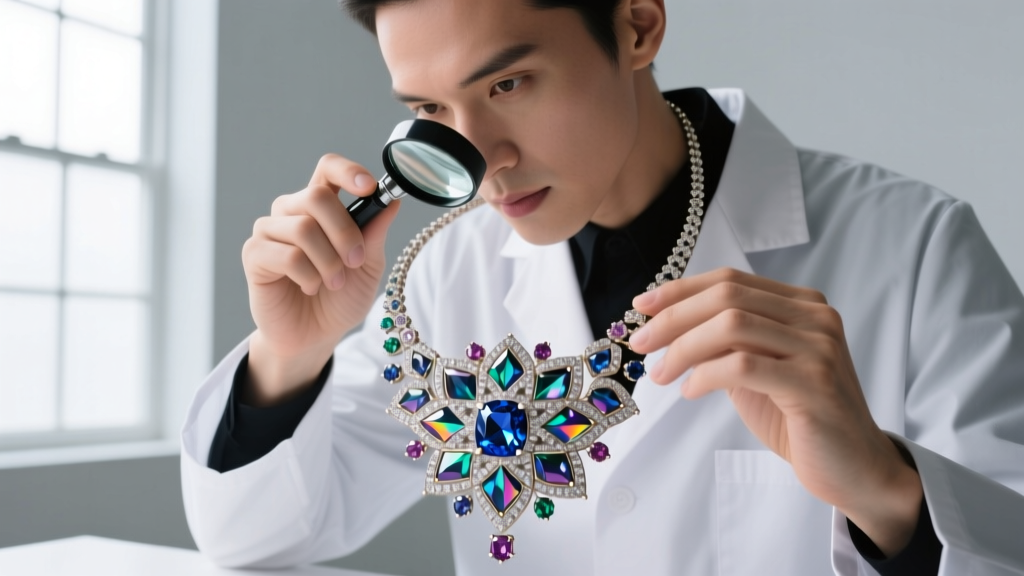
The second style involves a meticulously calibrated cluster of micro-faceted gemstones (such as sapphires, tsavorites, and spinels) set in a geometric, tessellated pattern. When light hits the varying angles of the mosaic, the pendant shifts in color and brilliance, mimicking the shifting shards of a kaleidoscope tube.
Evaluating the Gemstone: Refractive Index & Cut Precision
The brilliance of a kaleidoscope pendant is entirely dependent on the gemstone's Refractive Index (RI) and the lapidary's precision. According to the Gemological Institute of America (GIA), the cut quality dictates how effectively light is trapped and reflected. If you are buying a fantasy-cut stone, look for meet-point symmetry and polished grooves.
- Quartz & Beryl (RI 1.54 - 1.58): Excellent for large, dramatic statement pieces. They require deeper pavilions to achieve the kaleidoscope effect, resulting in a heavier pendant.
- Tourmaline & Spinel (RI 1.62 - 1.71): The sweet spot for fine jewelry. They offer vivid body color combined with high light return, creating a sharp, crisp optical flash.
- Sapphire & Zircon (RI 1.76 - 1.92): Rare and expensive. The high RI means the stone naturally traps light, requiring fewer concave grooves to achieve a blinding kaleidoscopic effect.
The Backing Matrix: Foil, Enamel, and Open-Back Settings
For fantasy-cut kaleidoscope necklaces, the backing material is just as critical as the gemstone itself. A closed-back setting with a reflective surface acts as a mirror, bouncing light back through the pavilion. However, not all backings are created equal. Use this matrix to evaluate the construction of your prospective pendant.
| Backing Material | Optical Effect | Durability | Best Paired Gemstones |
|---|---|---|---|
| 18k Yellow Gold Foil | Warm, vintage flash | Low (tears/tarnishes) | Citrine, Smoky Quartz, Beryl |
| Rhodium-Plated Silver | Cool, mirror brilliance | Medium (wears over time) | Aquamarine, White Topaz, Spinel |
| Guilloché Enamel | Patterned, colorful depth | High (if protected) | Rose Quartz, Amethyst, Moonstone |
| Open-Back (No Foil) | Natural, true-body color | Highest | Sapphire, Tourmaline, Garnet |
Expert Tip: If a seller cannot confirm whether a closed-back pendant uses solid gold backing versus cheap metallic paint or glued foil, walk away. Moisture trapped behind low-grade foil will cloud the gemstone permanently.
Chain Mechanics: Gauge, Length, and Clasp Hardware
A heavy, precision-cut kaleidoscope pendant requires a chain that offers structural integrity without competing for visual attention. Avoid snake chains entirely; they trap skin oils, kink easily under the weight of a heavy pendant, and are nearly impossible to repair.
Recommended Chain Profiles
- 1.2mm - 1.5mm Box Chain: The gold standard for pendants weighing 5 to 15 grams. The square links lay flat, resist kinking, and provide a modern, architectural backdrop to the intricate gemstone.
- 1.0mm Cable Chain with Jump Ring Reinforcement: Ideal for lighter mosaic clusters (under 4 grams). Ensure the jump ring connecting the clasp is soldered shut to prevent the chain from slipping through the pendant bail.
Clasp Selection
For pendants exceeding $1,000, upgrade from a standard spring-ring clasp to a lobster claw or a custom S-clasp. Spring rings are prone to spring fatigue and can pop open if the pendant swings and catches on clothing.
Pricing Tiers & Market Realities
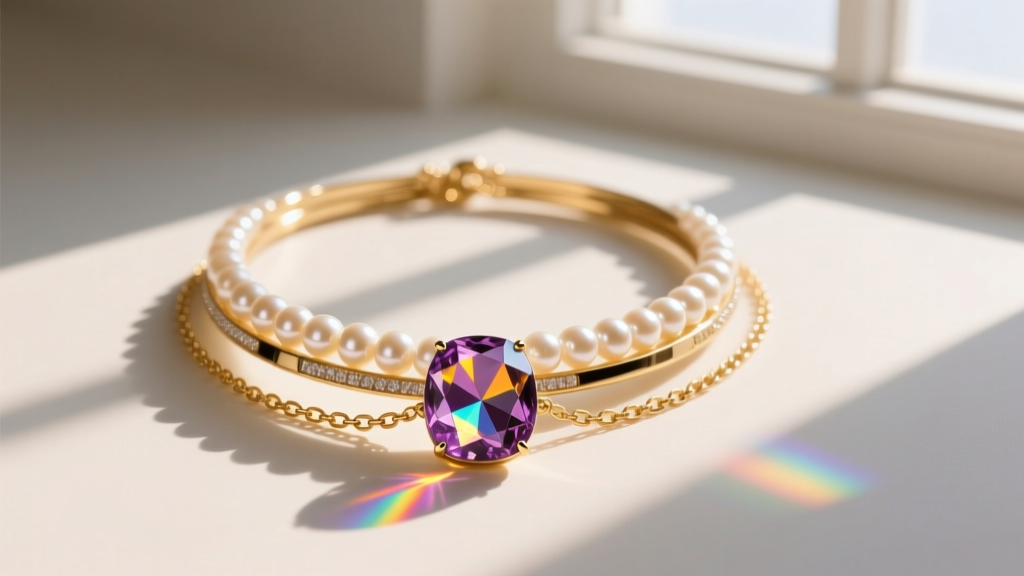
Understanding the market value of a kaleidoscope necklace prevents overpaying for mass-produced imitations. Here is what you should expect to pay based on materials and lapidary origin.
- Entry-Level ($150 - $400): Features mass-faceted quartz or topaz with gold vermeil or glued metallic backings. Chains are typically sterling silver or gold-plated brass. Expect machine-cut stones with slight windowing (light leakage).
- Mid-Range ($800 - $2,500): The domain of precision lapidaries. Features hand-cut tourmaline, beryl, or garnet with solid 14k or 18k gold backings and bezel settings. Chains are solid gold, and the faceting exhibits perfect meet-point symmetry.
- High-End / Custom ($4,000+): Museum-quality pieces featuring fantasy-cut sapphires, spinels, or Paraíba tourmaline. These often include micro-pave diamond halos, custom guilloché enamel work, and heavy 18k gold box chains.
Care, Cleaning, and Optical Maintenance
The optical brilliance of a kaleidoscope necklace is easily compromised by improper cleaning. The American Gem Trade Association (AGTA) strictly advises against using ultrasonic cleaners on any gemstone with a foil backing, fractured surface, or tension-set mosaic cluster. The high-frequency vibrations will shred metallic foils and rattle micro-stones out of their bezels.
The Safe Cleaning Protocol
- Mix a few drops of mild, phosphate-free dish soap (like Dawn) into a bowl of distilled water. Tap water contains minerals that can leave micro-scratches on softer stones like fluorite or apatite.
- Soak the pendant for 3 to 5 minutes to loosen skin oils and cosmetic residue.
- Gently agitate the pavilion (the back of the stone) using a brand-new, extra-soft baby toothbrush. Do not scrub the table (top) of the stone aggressively.
- Rinse under a gentle stream of lukewarm distilled water and pat dry with a lint-free microfiber cloth. Never air-dry, as water spots will ruin the light return.
"A true kaleidoscope pendant is an exercise in optical engineering. When evaluating a piece, always tilt it 45 degrees away from your primary light source. If the internal flash dies and the stone looks flat or 'sleepy,' the pavilion angles were cut too shallow, and the kaleidoscope effect will fail in normal, diffused lighting environments."
By prioritizing precision faceting, high-quality backing materials, and structurally sound chain hardware, you can secure a kaleidoscope necklace that serves as both a wearable art piece and a lasting investment in fine lapidary craft.


