Authentic Ethiopian Necklace Buying Guide: Crosses, Opals & Silver
Discover how to buy an authentic Ethiopian necklace. Learn to identify hand-forged Coptic silver crosses, grade Welo opals, and avoid mass-produced fakes.

The Allure and Heritage of the Ethiopian Necklace
When collectors and jewelry enthusiasts seek out an authentic Ethiopian necklace, they are not merely purchasing an accessory; they are acquiring a wearable artifact of one of the world's oldest continuous cultures. Ethiopian metalwork and lapidary arts are deeply intertwined with the country's ancient Coptic Christian heritage, indigenous Oromo traditions, and historic trade routes. In 2026, the global market for East African jewelry has expanded significantly, but this surge in demand has also introduced a flood of mass-produced, cast-metal imitations and synthetic opals into the supply chain. Whether you are hunting for a centuries-old Axumite cross, a hand-forged silver amulet, or a contemporary Welo opal pendant, understanding the metallurgical and gemological nuances of Ethiopian craftsmanship is essential. This comprehensive buying guide will equip you with the exact specifications, historical markers, and material tests needed to navigate the market with confidence.
Core Styles: What to Look For
Ethiopian necklaces generally fall into three primary categories, each demanding a different set of authentication criteria. Understanding these distinctions is the first step in making an informed purchase.
1. Coptic Crosses (Axumite and Lalibela Motifs)
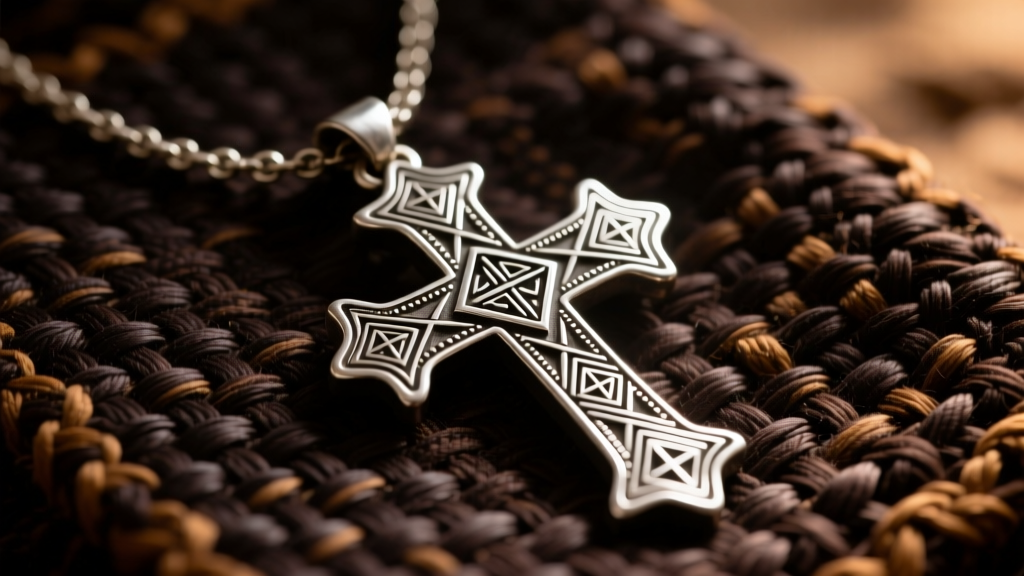
The Coptic cross is the most iconic symbol in Ethiopian jewelry. However, buyers must distinguish between the two dominant styles. The Axumite cross features broad, flat, geometric arms with intricate, labyrinth-like engravings that represent the path to eternal life. The Lalibela cross (often adapted from the massive processional crosses used by priests) is characterized by its delicate, interlocking lattice work and teardrop motifs. Authentic vintage crosses were historically crafted using the lost-wax casting (cire perdue) method. Because each wax model is destroyed during casting, genuine vintage pieces are entirely unique. If you find two identical vintage crosses, they are modern rubber-mold casts.
2. The Tcherot Amulet Cylinder
The Tcherot (or Ketab) is a cylindrical or rectangular amulet case worn on a heavy silver chain or leather cord. Traditionally, these cases held rolled parchment inscribed with protective prayers, Quranic verses, or medicinal herbs. When buying a silver Tcherot necklace, examine the threading mechanism. Authentic pieces feature hand-cut screw threads or a precision friction-fit slide, often capped with a small, stylized bird or pomegranate finial. Standard dimensions for wearable antique Tcherot cylinders range from 3 cm to 5.5 cm in length.
3. Ethiopian Welo Opal Pendants
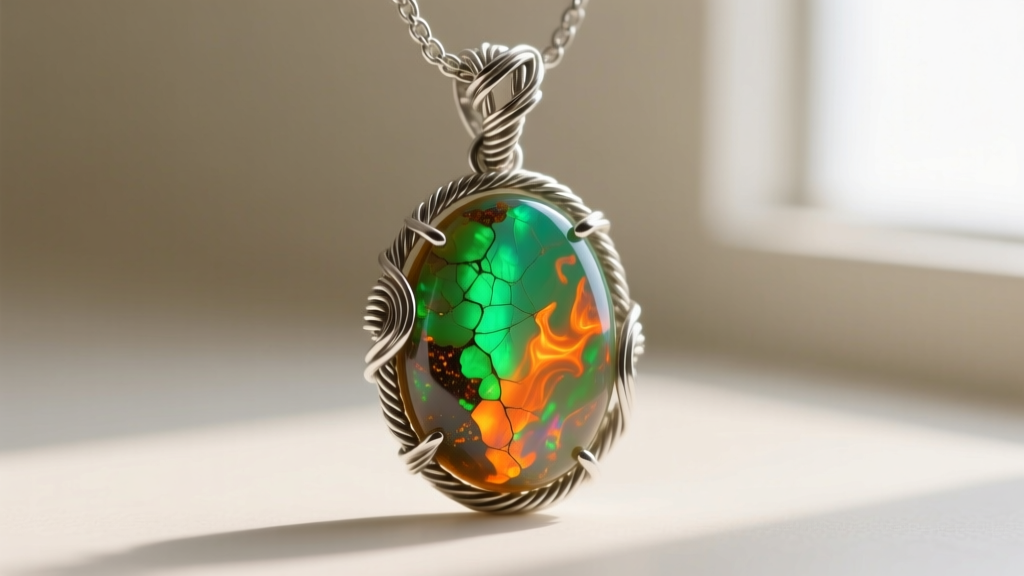
Discovered in the Wollo province in 2008, Ethiopian Welo opals have revolutionized the gemstone market. Unlike Australian opals, Welo opals are renowned for their fiery, three-dimensional play-of-color that seems to glow from deep within a translucent to transparent body. They are frequently set in hand-wrapped silver wire or bezel-set in modern Ethiopian goldsmithing.
Material Authenticity: The Silver Standard
Verifying the metal composition of an Ethiopian necklace is critical. Historically, Ethiopian silversmiths did not use standardized sterling (92.5% purity). Instead, they melted down Maria Theresa Thalers (MTT), an Austrian silver coin that served as the primary trade currency in the Horn of Africa for centuries. These coins have a silver purity of exactly 83.3%. Consequently, authentic antique and mid-century Ethiopian silver will not react to standard 92.5% sterling acid tests in the expected way; it will show a slightly lower purity reading, which is actually a hallmark of its authenticity.
Modern artisans in Addis Ababa's Mercato district increasingly use standard 925 sterling silver to cater to international buyers. However, you must be wary of 'white metal' alloys—mixtures of nickel, zinc, and copper—that are heavily plated to mimic silver. To test a piece in the field, use a rare-earth magnet. Silver is paramagnetic (non-magnetic), while base metal alloys containing nickel or iron will exhibit a slight magnetic pull. Furthermore, genuine hand-hammered Ethiopian silver will feature microscopic planishing marks and a slightly uneven reverse side, whereas stamped tourist-market replicas will be perfectly smooth and uniformly thick.
Sourcing Welo Opals: The Hydrophane Factor
When evaluating an Ethiopian opal necklace, you must understand its hydrophane nature. According to the Gemological Institute of America (GIA), hydrophane opals are highly porous and can absorb water, which temporarily alters their optical properties. If a Welo opal is submerged in water, it may become completely transparent, losing its play-of-color until it slowly dries out over several days or weeks.
What to look for when buying:
- Body Tone: Look for a semi-transparent to translucent body tone. Opaque Welo opals are generally less valuable unless the surface fire is exceptionally dense.
- Play-of-Color: The most prized specimens exhibit a 'patchwork' or 'honeycomb' pattern with strong red and violet flashes, which are rarer than dominant green or blue flashes.
- Crazing: Inspect the stone under a 10x jeweler's loupe for 'crazing' (a network of fine cracks). Because Welo opals are sensitive to rapid humidity changes, poorly stored stones can craze, destroying their structural integrity and value.
Pricing and Value Matrix
Pricing for Ethiopian necklaces varies wildly based on provenance, material, and point of sale. Below is a realistic 2026 market matrix to help you gauge fair value.
| Necklace Type | Tourist Market (Addis/Lalibela) | Specialized Global Dealer | Verified Antique (Auction) |
|---|---|---|---|
| Cast Silver Coptic Cross (Modern) | $25 - $60 | $80 - $150 | N/A |
| Hand-Forged Axumite Cross (Vintage) | $120 - $250 | $350 - $600 | $800 - $1,500+ |
| Silver Tcherot Amulet (Antique) | $90 - $180 | $250 - $450 | $500 - $900 |
| Welo Opal Pendant (1-3 Carats) | $40 - $120 | $150 - $400 | N/A |
| Premium Welo Opal (5+ Carats, Red Fire) | $200 - $500 | $600 - $1,200 | $1,500+ |
Red Flags: Spotting Mass-Produced Fakes
As noted by curators at institutions like The British Museum's African Collection, the integrity of traditional metalwork is threatened by industrial manufacturing. Avoid pieces that exhibit the following red flags:
- Perfect Symmetry on Vintage Claims: True lost-wax castings have slight asymmetries. Laser-cut or CNC-stamped crosses sold as 'antique' are immediate disqualifications.
- Rhodium Plating: Traditional Ethiopian silver is un-plated and develops a rich, dark patina in the crevices over time. If a 'vintage' piece is blindingly bright and uniformly white, it has been rhodium-plated to hide poor casting quality or base metals.
- Opal Doublets/Triplets: Some vendors glue a thin slice of low-grade opal to a dark glass or quartz backing to simulate black opal. Always check the profile of the stone; a Welo opal should be a single, solid piece of natural material.
Long-Term Care and Preservation
Caring for an Ethiopian necklace requires respecting its unique material properties. For silver crosses and Tcherot amulets, avoid harsh chemical dips. Instead, use a mild soap and a soft-bristled brush, intentionally leaving the dark oxidation in the deep filigree grooves to highlight the hand-cut patterns. For Welo opal pendants, the rules are strict: never expose them to water, ultrasonic cleaners, or extreme heat. Store your opal jewelry in a soft pouch away from direct sunlight and extreme dryness to prevent moisture shock and subsequent crazing. By understanding the profound history and exact material science behind these pieces, you can confidently curate a collection that honors Ethiopia's extraordinary artisanal legacy.