Dandelion Necklace Value Guide: Real vs. Resin Pricing
Discover the true value of a dandelion necklace. We compare botanical resin pendants vs. metal castings, pricing tiers, and material longevity.
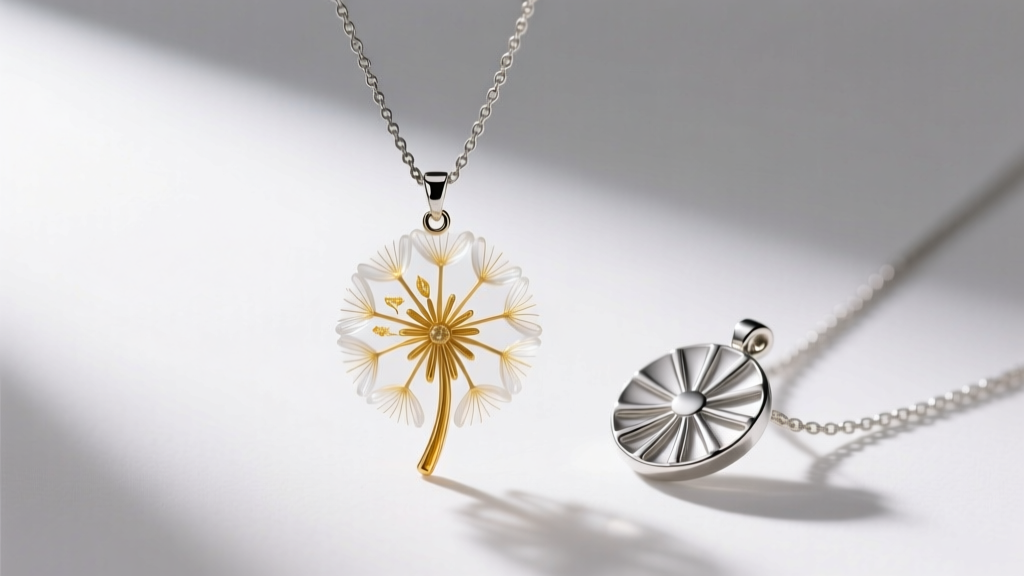
The dandelion necklace has become a staple in nature-inspired jewelry, symbolizing resilience, wishes, and the fleeting beauty of nature. However, as the popularity of botanical jewelry has surged, the market has become heavily saturated. Today, consumers are faced with a confusing landscape: mass-produced, dropshipped pendants priced at $12 sit right next to artisan-crafted, heirloom-quality pieces commanding $200 or more.
If you are evaluating a dandelion necklace for purchase, understanding the manufacturing processes, material grades, and long-term durability is essential. This comprehensive value assessment breaks down the true cost of dandelion jewelry, helping you distinguish between overpriced novelties and genuine wearable art.
The Two Markets: Botanical Resin vs. Metal Castings
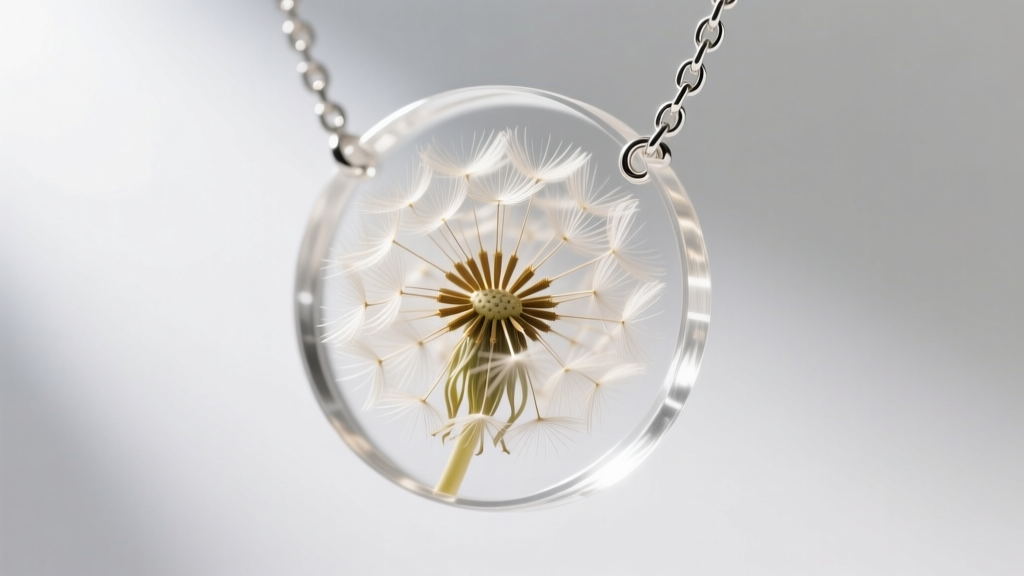
When searching for a dandelion necklace, you will encounter two fundamentally different categories of jewelry. The first is the botanical resin pendant, which encases actual, foraged dandelion seeds (achenes) and their fluffy pappus in a clear synthetic medium. The second is the metal cast pendant, which uses the lost-wax casting method to recreate the intricate geometry of a dandelion puff in solid sterling silver, brass, or gold.
These two styles require entirely different skill sets, raw materials, and pricing structures. A common mistake buyers make is comparing the price of a resin pendant to a metal casting without understanding the labor intensity of the latter.
Pricing Tiers & What You Actually Get
To accurately assess value, we must segment the market into four distinct pricing tiers. Use this framework to evaluate any dandelion necklace you encounter online or in boutique stores.
| Tier | Price Range | Material & Construction | Expected Lifespan |
|---|---|---|---|
| Mass-Market | $10 - $25 | Basic UV resin, faux seeds, brass-plated chain | 3 - 6 months (high yellowing risk) |
| Artisan Botanical | $35 - $75 | HALS-stabilized epoxy, real seeds, 925 silver chain | 3 - 5+ years (with proper care) |
| Entry Metal Cast | $60 - $110 | 925 sterling silver, simple cast, spring-ring clasp | Lifetime (requires occasional polishing) |
| Heirloom Metal | $120 - $250+ | Heavy silver/gold, intricate 3D CAD, lobster clasp | Generational |
The Resin Reality: Yellowing, Bubbles, and Seed Integrity
The most significant value-killer in botanical jewelry is resin degradation. Cheap dandelion necklaces are typically made using UV-cure resin. While UV resin allows for rapid, 5-minute curing times under a UV lamp, it is notoriously susceptible to photodegradation. When exposed to ambient sunlight, the polymer chains break down, resulting in a muddy, yellow-brown tint that completely obscures the delicate white dandelion seeds inside.
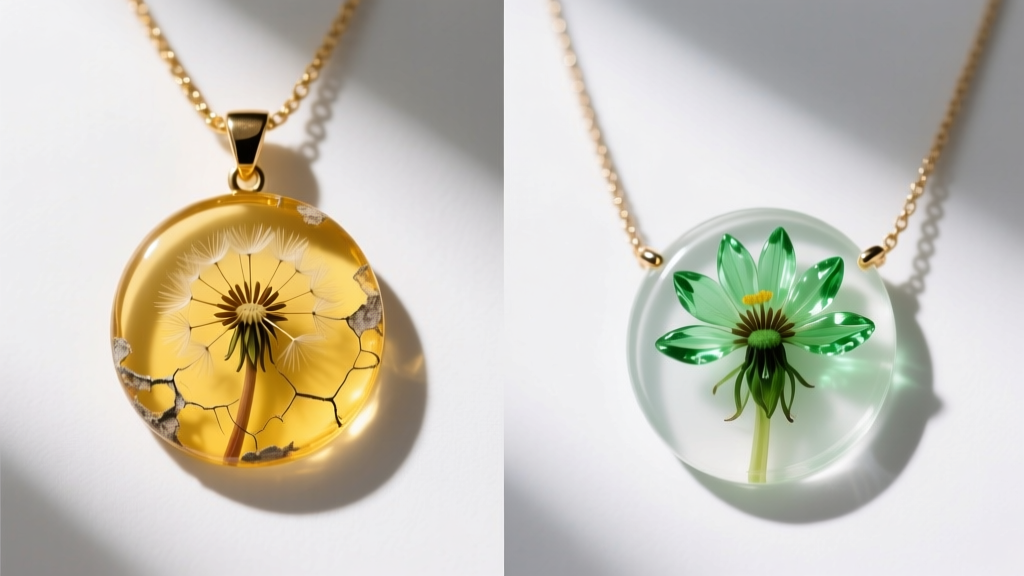
High-value botanical artisans use high-grade, two-part epoxy resin. Epoxy takes 24 to 48 hours to cure in a controlled environment, but it offers vastly superior optical clarity and structural integrity. More importantly, premium epoxy formulations include HALS (Hindered Amine Light Stabilizers) and UV absorbers. According to jewelry material experts at Resin Obsession, these chemical additives act as microscopic sunscreens, absorbing UV radiation before it can sever the polymer bonds, thereby delaying yellowing for years rather than months.
Seed Compression and Micro-Bubbles
Beyond the resin chemistry, inspect the seed head itself. A dandelion pappus is incredibly fragile. When submerged in liquid resin, surface tension and the weight of the fluid often cause the fluffy seeds to collapse inward, resulting in a pendant that looks like a wet, matted clump rather than a floating sphere.
Expert artisans employ a micro-dipping technique, lightly spraying or dipping the foraged seed head in a cyanoacrylate or clear acrylic fixative before encasing it in epoxy. This creates a rigid exoskeleton that withstands the hydrostatic pressure of the pouring resin. Furthermore, high-end pieces are cured in a vacuum pressure pot at 40-50 PSI. This compresses any trapped air bubbles to a microscopic size, rendering them invisible to the naked eye. If you see large, visible air bubbles trapped against the seeds, you are looking at a low-tier, gravity-poured pendant.
Metal Cast Dandelions: Assessing Silver and Gold Value
For those who prefer a metal dandelion necklace, the value proposition shifts from chemistry to metallurgy and labor. Recreating the chaotic, spherical geometry of a dandelion puff in metal is a monumental challenge. Artisans typically use 3D CAD modeling to design the intricate intersecting lines of the seeds, which is then printed in castable wax resin.
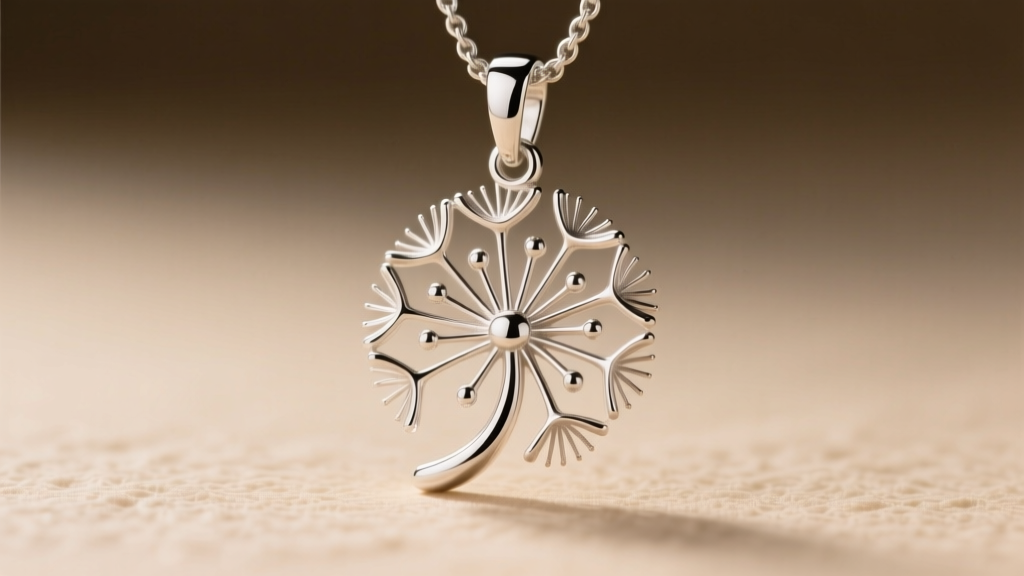
The wax model is encased in investment plaster, burned out in a kiln, and injected with molten 925 sterling silver. The finishing process is where the true cost lies. Because a dandelion casting features hundreds of tiny, sharp undercuts, traditional polishing wheels cannot reach the inner crevices. Artisans must use magnetic pin tumblers—a process where thousands of microscopic stainless steel pins are magnetically agitated in a liquid suspension to burnish the inside of the metal latticework without rounding off the sharp edges of the 'seeds'.
As of 2026, with precious metal markets remaining volatile, the raw silver in a 10-gram dandelion pendant is only a fraction of the retail price. You are paying for the CAD design time, the casting tree setup, and the hours of magnetic tumbling. If a solid sterling silver dandelion pendant is priced under $50, it is almost certainly a hollow electroformed shell or a low-detail, mass-produced casting imported from overseas factories that skip the intricate finishing steps.
Chain & Hardware: The Hidden Cost Cutters
A pendant is only as secure as the chain and hardware holding it. When conducting your budget assessment, never ignore the chain specifications.
- Chain Gauge: A metal dandelion casting can weigh between 8 and 15 grams. A standard 0.5mm or 0.6mm cable chain has a break strength of roughly 4 to 6 pounds and will easily snap under the pendulum motion of a heavy pendant. Demand a chain with a minimum thickness of 0.9mm to 1.2mm. According to manufacturing guidelines from Rio Grande, a 1.0mm rope or box chain offers the necessary tensile strength (15+ lbs) to support heavy botanical castings safely.
- Clasp Hardware: Avoid spring-ring clasps, which are prone to spring failure and difficult to operate. A high-value necklace will feature a solid lobster clasp or a secure magnetic neodymium clasp, complete with a sturdy soldered jump ring rather than an open split ring that can easily pull apart.
Expert Storage Tip: Whether you own a resin or metal dandelion necklace, never store it in a humid bathroom. For resin, humidity fluctuations can cause micro-cracking (crazing) over time. For silver, humidity accelerates hydrogen sulfide tarnishing. Store your pendant flat in an airtight anti-tarnish pouch with a silica gel packet.
Final Verdict: How to Budget for a Dandelion Necklace
If your budget is strictly under $30, you are confined to the mass-market resin tier. In this bracket, prioritize the aesthetic over longevity; expect the resin to yellow eventually and the plated chains to wear down to base brass.
However, if you are seeking a meaningful, long-lasting piece of jewelry, the $45 to $85 range is the sweet spot for artisan botanical resin. Here, you will find real foraged seeds, HALS-stabilized epoxy, vacuum-pot curing, and solid 925 sterling silver chains. For metal cast enthusiasts, expect to invest a minimum of $90 to $150 to secure a piece with sharp, well-defined seed textures, proper magnetic tumbling, and heavy-duty chain hardware. By scrutinizing the materials and manufacturing methods, you can ensure your dandelion necklace remains a beautiful symbol of nature, rather than a fleeting, yellowed disappointment.


