How to Clean and Maintain a Solid Chain Gold Necklace at Home
Learn how to safely clean, polish, and maintain your solid chain gold necklace at home with this expert step-by-step guide and karat-specific tips.

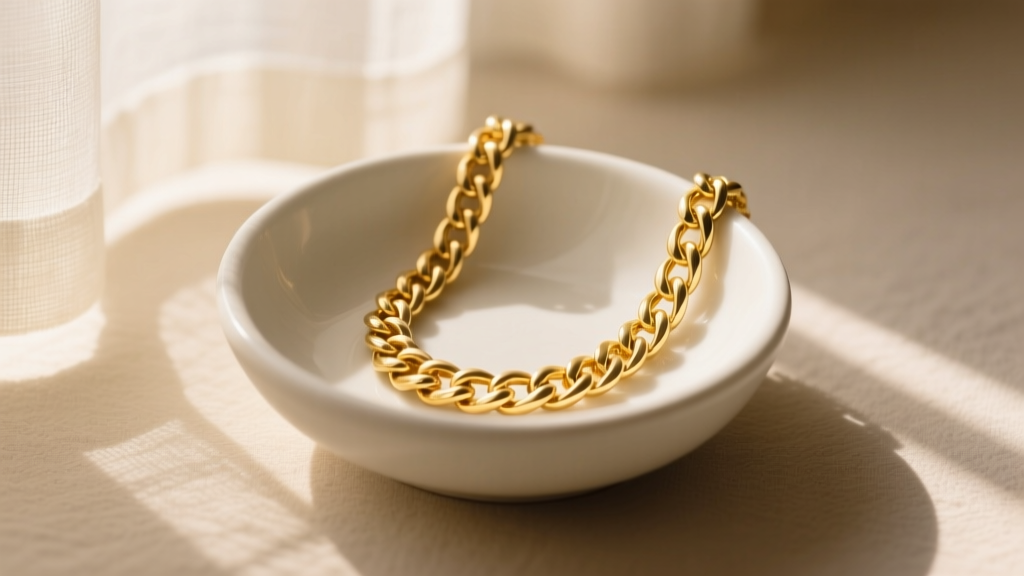
A solid chain gold necklace is a cornerstone of any jewelry collection, offering timeless versatility and enduring value. However, daily wear exposes your gold to sebum, cosmetic residues, environmental pollutants, and microscopic debris. Over time, this buildup dulls the metal's natural luster and can even compromise the structural integrity of delicate links. While pure gold is highly resistant to corrosion, the alloy metals used to create durable jewelry require specific care. In this comprehensive guide, we break down the exact metallurgy of gold tarnish, provide a professional-grade cleaning protocol, and share expert maintenance secrets to keep your necklace looking pristine for decades.
Understanding Your Gold Karat and Chain Link Structure
Before you begin cleaning, it is crucial to understand what your chain gold necklace is actually made of. Pure gold (24k) is too soft for daily-wear chains; it would easily stretch and deform. Therefore, jewelers alloy pure gold with metals like copper, silver, zinc, and nickel to increase tensile strength. According to the Gemological Institute of America (GIA), the karat system dictates the ratio of pure gold to these alloy metals.
- 10k Gold (41.7% pure): Highly durable but contains the highest percentage of alloy metals, making it the most susceptible to tarnish and oxidation.
- 14k Gold (58.5% pure): The industry standard for chain necklaces. It offers an excellent balance of rich color, durability, and moderate tarnish resistance.
- 18k Gold (75% pure): Prized for its deep, warm yellow hue. It is softer than 14k and more prone to micro-scratches, but highly resistant to chemical tarnish.
- 22k Gold (91.6% pure): Rarely used for complex chain links due to its softness, but occasionally found in heavy, simple curb chains.
The physical structure of your chain also dictates your cleaning approach. Intricate designs like rope chains and box chains feature deep crevices and overlapping links that trap dead skin cells and lotion. Conversely, flat designs like Cuban links or curb chains have broader surface areas that are easier to wipe down but show fingerprints and micro-scratches more readily.
The Step-by-Step Cleaning Process for Gold Chains
Forget harsh commercial dips and abrasive pastes. The safest, most effective way to clean a chain gold necklace at home requires only a few gentle, household items. This method is endorsed by the Jewelers of America for routine maintenance.
Step 1: Prepare the Cleaning Solution
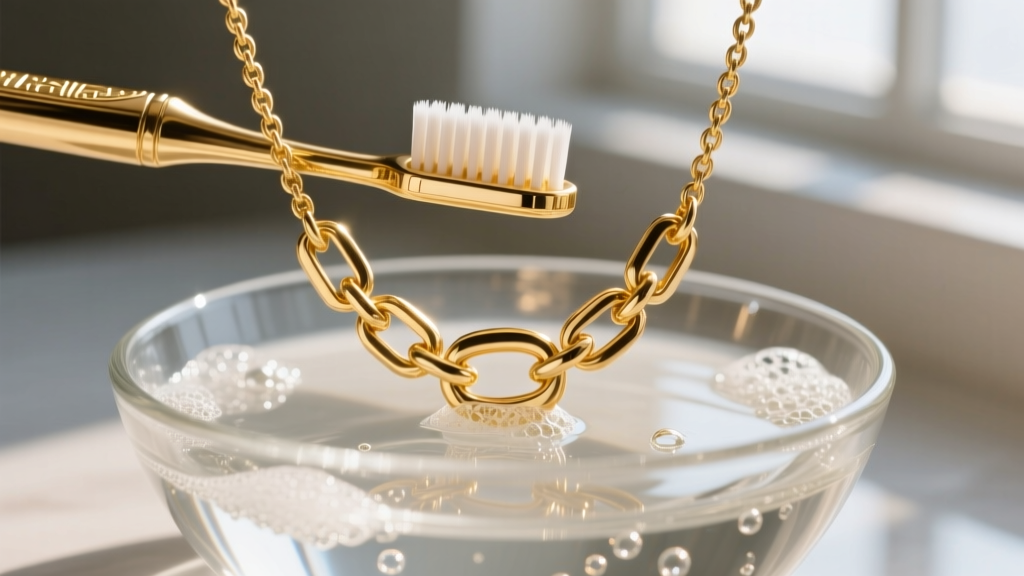
Fill a small glass or ceramic bowl with warm distilled water. Avoid tap water, as it contains chlorine and hard minerals that can leave a cloudy film on the gold. Add 2 to 3 drops of a mild, phosphate-free dish soap (such as original blue Dawn). Phosphates and heavy fragrances can leave a stubborn residue in tight chain links.
Step 2: The Strategic Soak
Submerge the body of the chain into the soapy solution for 10 to 15 minutes. This allows the surfactants in the soap to break down the lipid bonds of body oils and cosmetic buildup trapped between the links. Expert Tip: Leave the clasp out of the water if possible (more on this in the advanced maintenance section).
Step 3: Gentle Agitation
Remove the necklace and lay it flat on a clean, lint-free microfiber cloth. Using an extra-soft baby toothbrush, gently brush along the grain of the links. For rope chains, brush in a circular motion to dislodge debris from the twists. Never use a standard adult toothbrush, as the bristles are too stiff and can cause microscopic abrasions on 18k and 22k gold.
Step 4: The Strainer Rinse
Rinse the necklace under a gentle stream of lukewarm distilled water. Critical Safety Step: Always place a fine mesh strainer over the sink drain before rinsing. A slippery, soapy chain gold necklace is incredibly easy to drop, and retrieving it from a P-trap is a frustrating experience.
Step 5: Thorough Drying
Pat the chain dry with a clean microfiber cloth. Avoid paper towels or tissue paper at all costs; they are made of wood pulp fibers that are actually harder than high-karat gold and will leave a web of micro-scratches. After patting, lay the necklace flat on a dry towel in a well-ventilated area for an hour to ensure all moisture evaporates from the inner links.
What to Avoid: Chemicals and Tools That Damage Gold
Many well-intentioned DIY cleaning hacks can cause irreversible damage to your jewelry. Keep your chain gold necklace far away from the following:
- Chlorine and Bleach: Chlorine reacts with the copper and silver alloys in gold to form gold chloride. This causes a phenomenon known as "stress corrosion cracking," which weakens the solder points of your links and can cause the chain to snap under its own weight.
- Toothpaste and Baking Soda: These are highly abrasive. On the Mohs scale of mineral hardness, pure gold is a 2.5 to 3 (similar to a fingernail). The abrasives in toothpaste will strip away the polished finish, leaving the metal looking permanently dull and scratched.
- Ultrasonic Cleaners (for Hollow Chains): While ultrasonic cleaners are great for solid diamond rings, the high-frequency vibrations can easily collapse the thin walls of hollow rope or tubular curb chains, or shake loose delicate solder joints.
Advanced Maintenance: Polishing and Clasp Care
Routine cleaning removes dirt, but it does not remove oxidation (tarnish) or restore a high polish. If your 10k or 14k chain has developed a dark patina, you will need a specialized gold polishing cloth. These cloths are impregnated with microscopic jeweler's rouge and anti-tarnish agents. Gently pull the chain through the cloth, link by link. Do not use liquid silver polishes, as they are formulated for different metallurgical profiles and can strip the gold's luster.
Fixing Stiff Lobster Clasps and Spring Rings
The clasp is the most mechanically complex part of your necklace. Lobster clasps and spring rings contain a tiny internal spring made of steel or base metal. If water gets trapped inside the clasp housing during cleaning, that steel spring can rust, causing the clasp to stick or fail completely. If your clasp feels stiff, do not force it. Apply a microscopic drop of sewing machine oil or mineral oil to the trigger mechanism, work it back and forth, and wipe away the excess. Never use WD-40, as it contains solvents that degrade jewelry finishes.
Cleaning Frequencies and Tarnish Risks by Karat
Not all gold chains require the same level of maintenance. Use the Federal Trade Commission Jewelry Guides as a baseline for understanding karat standards, and refer to the table below to establish your cleaning schedule.
| Gold Karat | Alloy Content | Tarnish Risk | Recommended Cleaning Frequency | Special Considerations |
|---|---|---|---|---|
| 10k Gold | 58.3% | High | Every 2-3 weeks | Requires regular polishing to remove copper oxidation. |
| 14k Gold | 41.5% | Moderate | Once a month | The most durable; safe for occasional ultrasonic cleaning if solid. |
| 18k Gold | 25.0% | Low | Every 6-8 weeks | Prone to scratching; use only microfiber and baby toothbrushes. |
| 22k Gold | 8.4% | Very Low | As needed | Extremely soft; avoid pulling or snagging during the cleaning process. |
Proper Storage Techniques to Prevent Tangling
How you store your chain gold necklace is just as important as how you clean it. Gold is a relatively soft metal, and storing multiple chains together in a communal jewelry box will result in them scratching one another and tangling into frustrating knots.
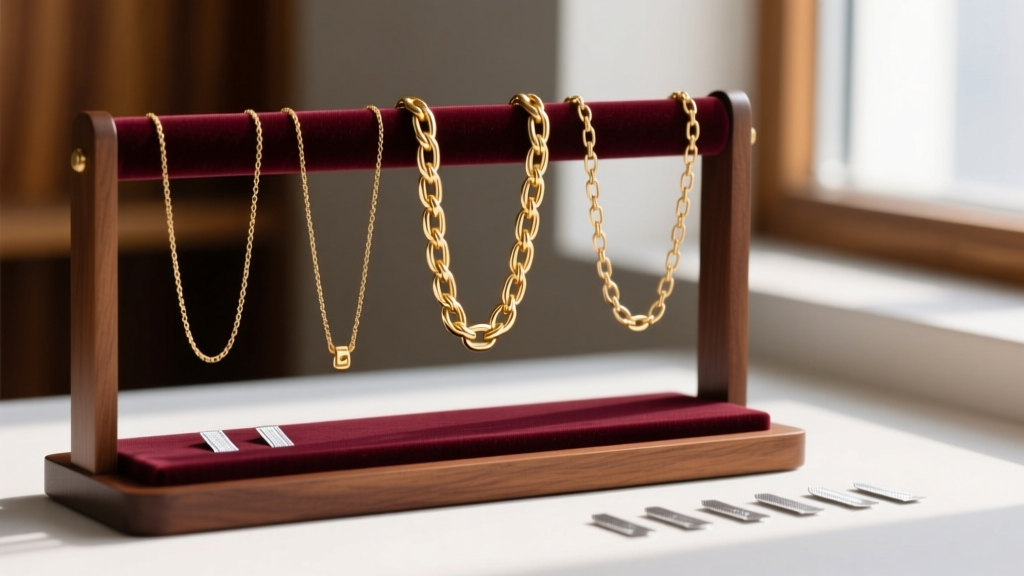
For optimal preservation, store each necklace individually in a soft, acid-free polybag or a dedicated flannel pouch. Squeeze the excess air out of the bag before sealing it to minimize oxygen exposure, which slows down the oxidation of the alloy metals. If you live in a humid climate, drop a small silica gel packet or a specialized anti-tarnish strip (like 3M Anti-Tarnish Strips) into the bag or jewelry box drawer. These strips absorb airborne sulfur compounds before they can react with the copper in your gold chain.
When it comes to physical positioning, hanging your chains on a velvet-lined jewelry stand is the best way to prevent tangling and maintain the structural memory of the links. If you must lay them flat, ensure they are fully extended and not folded over on themselves, which can create permanent kinks in delicate rope or figaro chains.
When to Take Your Necklace to a Professional
While home maintenance is excellent for surface cleaning and light tarnish, certain issues require the tools and expertise of a professional bench jeweler. You should seek professional assistance if:
- Links are Stretched or Warped: If a section of your chain has elongated, it compromises the tensile strength of the entire piece. A jeweler can carefully compress the links back to their original gauge.
- Deep Tarnish in Hollow Chains: If you own a hollow rope chain and notice dark oxidation trapped inside the twists that your toothbrush cannot reach, a jeweler can use professional-grade steam cleaners and specialized chemical baths that are safe for hollow structures.
- Clasp Failure: If the internal spring of your lobster clasp is broken or the solder ring on a spring ring has snapped, a jeweler can laser-weld a new clasp onto the chain without damaging the surrounding gold links.
By understanding the specific metallurgy of your jewelry and following this meticulous, step-by-step protocol, your chain gold necklace will retain its brilliant luster and structural integrity, serving as a flawless staple in your wardrobe for a lifetime.


