Big Turquoise Necklace Guide: Stone Types & Treatments
Discover how to choose the perfect big turquoise necklace. Compare natural, stabilized, and reconstituted stones, matrix types, and care tips.

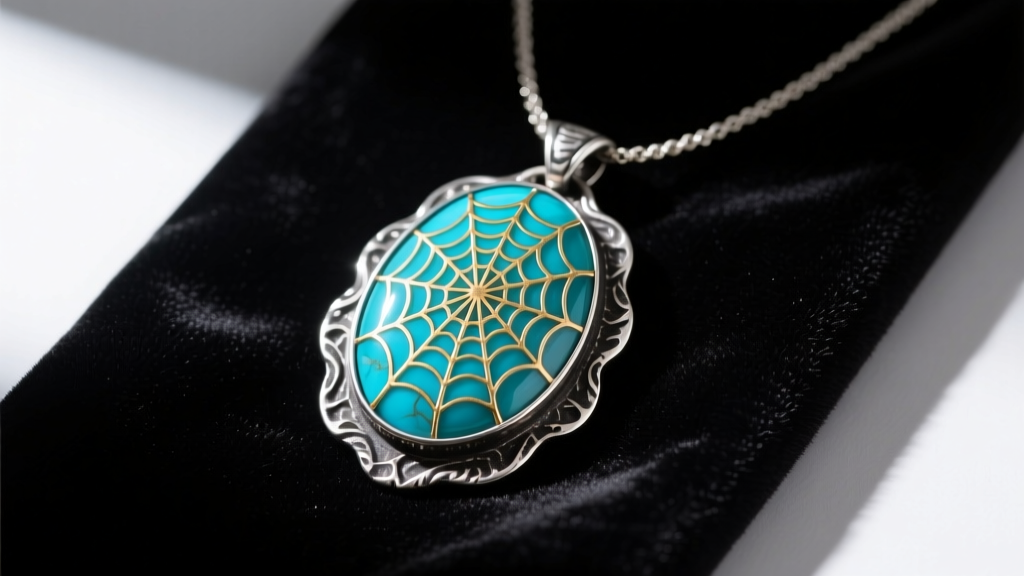
The Material Reality of Statement Turquoise
When sourcing a big turquoise necklace, the sheer surface area of the stone amplifies both its beauty and its material vulnerabilities. A large cabochon—typically defined in the jewelry trade as anything exceeding 30x40mm—presents unique structural challenges. Unlike small accent stones, large-format turquoise is highly susceptible to micro-fractures, color shifting from skin oils, and catastrophic cleaving if the host rock matrix is unstable. According to the Gemological Institute of America (GIA), turquoise is a porous, hydrous copper aluminum phosphate with a Mohs hardness ranging from 3 to 6. This wide variance in hardness dictates whether a large stone can survive being worn as a heavy statement pendant without undergoing chemical stabilization.
Understanding the mineralogy and treatment history of your stone is not just an academic exercise; it directly impacts the necklace's longevity, skin-safety, and resale value. This guide dissects the material properties you must evaluate before investing in a large turquoise centerpiece.
Natural vs. Stabilized vs. Reconstituted
The market for large turquoise cabochons is dominated by treated stones. Because finding gem-grade, naturally hard turquoise (Mohs 5.5-6) large enough for a statement pendant is exceptionally rare and prohibitively expensive, the industry relies on stabilization to make softer material wearable.
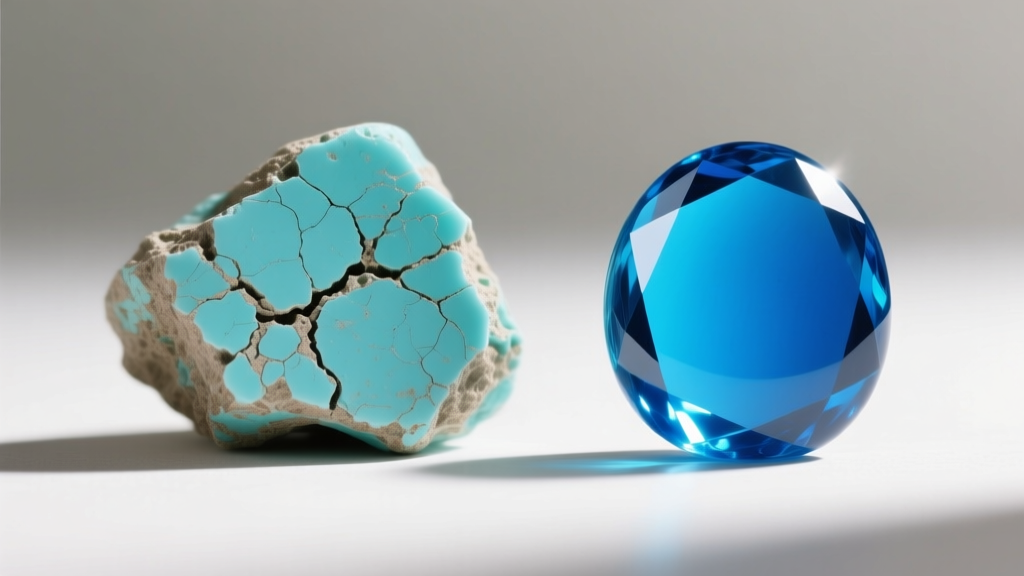
The Stabilization Spectrum
Stabilization is not inherently a 'fake' treatment; it is a necessary lapidary process for 90% of mined turquoise. However, the method used drastically alters the material properties:
- Epoxy/Resin Stabilization: The most common method. Chalk or soft turquoise (Mohs 3-4) is placed in a vacuum chamber with an epoxy resin like Opticon. The resin penetrates the porous structure, hardening the stone to a Mohs 5-6 and locking in the color. While durable, it alters the specific gravity and refractive index of the stone.
- The Zachery Method: A premium, proprietary treatment using potassium silicate rather than polymers. It enhances the stone's hardness and luster without introducing plastics, making it highly prized by high-end lapidaries cutting large cabochons.
- Reconstituted Turquoise: Turquoise dust and chalk are pulverized, mixed with epoxy binders and dyes, and pressed into blocks. While it can be cut into massive, flawless pendants, it lacks the internal crystalline structure of natural stone and holds minimal collector value.
| Treatment Type | Process | Resulting Hardness (Mohs) | Value Impact | Market Share |
|---|---|---|---|---|
| Untreated (Natural) | None, cut directly from gem-grade rough | 5.0 - 6.0 | Highest (Collector Grade) | < 5% |
| Epoxy Stabilized | Vacuum-impregnated with clear polymer | 5.0 - 5.5 | Moderate (Standard Jewelry) | ~ 80% |
| Zachery Treated | Potassium silicate infusion | 5.5 - 6.0 | High (Premium Jewelry) | ~ 5% |
| Reconstituted | Dust mixed with resin and pressed | 4.0 - 5.0 | Lowest (Fashion Jewelry) | ~ 10% |
Decoding the Matrix: Structural Integrity in Large Cuts
The 'matrix' refers to the remnants of the host rock trapped within the turquoise. In a big turquoise necklace, the matrix is highly visible and acts as a structural fault line if not properly understood. The Mindat.org mineral database notes that turquoise forms in crevices of volcanic or sedimentary rocks, meaning the matrix material varies wildly in hardness.
Matrix Types and Durability
- Black Spiderweb (Carbon/Manganese): Found heavily in Nevada and Arizona mines. If the webbing is tight and integrated, it adds structural integrity. However, if the black lines are deep, recessed fissures, the large cabochon is prone to snapping along the web lines under minor impact.
- Golden/Brown Matrix (Limonite/Iron Oxide): Common in Royston and Tonopah deposits. Limonite is relatively hard and bonds well with the turquoise, making large golden-matrix pendants highly durable for daily wear.
- White/Silica Matrix: Often indicates quartz or chalcedony inclusions. Because quartz (Mohs 7) is harder than turquoise (Mohs 5), polishing a large cabochon with heavy silica matrix results in an uneven surface, where the turquoise undercuts and the quartz remains domed.
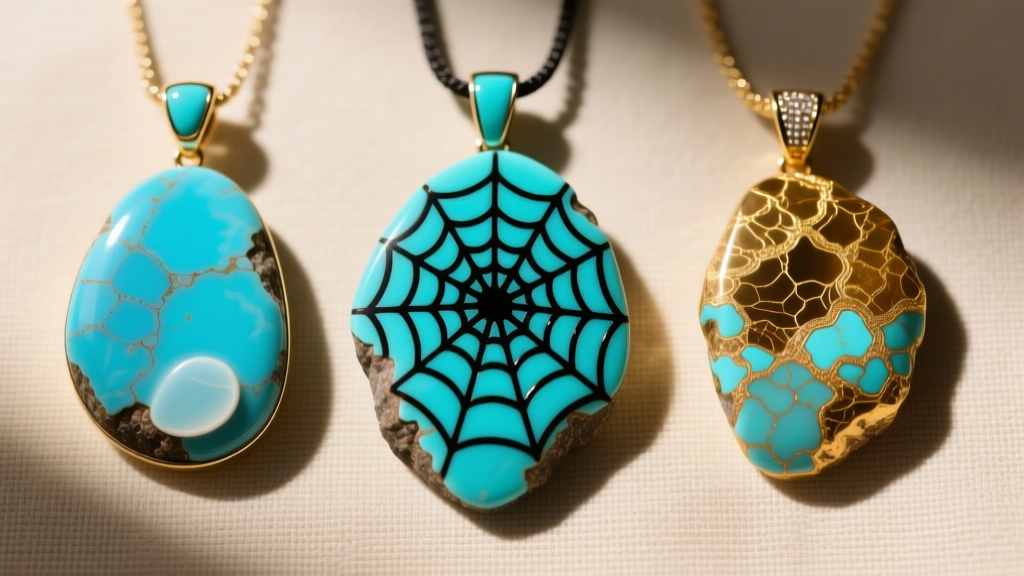
Regional Mine Properties
When buying a large statement piece, the mine of origin dictates the stone's behavior over time. Sleeping Beauty (Arizona, closed in 2012) is famous for its clear, matrix-free blue. Because it was generally hard and uniform, it yields excellent large cabochons, but its scarcity makes authentic, untreated large stones incredibly expensive. Kingman (Arizona) produces classic deep blues with black pyrite or spiderweb matrix; the pyrite inclusions can sometimes oxidize or rust if exposed to prolonged moisture, a critical risk for large pendants resting against the skin. Royston (Nevada) offers stunning green-to-blue gradients with thick golden limonite matrix, prized for heavy, rustic statement necklaces.
Hardware and Setting Considerations for Heavy Stones
A 40x60mm turquoise cabochon can easily weigh between 30 and 50 grams. This concentrated mass requires specialized hardware to prevent catastrophic failure of the necklace.
- Bezel vs. Prong Settings: Large turquoise stones should almost exclusively be set in full or partial bezels. Prong settings concentrate stress on the soft edges of the stone, leading to chipping. A heavy, oxidized sterling silver bezel (minimum 18-gauge thickness) protects the vulnerable girdle of the cabochon.
- Chain and Cord Gauges: Never hang a 40-gram pendant on a standard 1.5mm cable chain; the links will elongate and snap. Opt for 4mm to 6mm box chains, heavy-rope chains, or 4mm braided leather cords with sterling silver end-caps and heavy-duty lobster clasps.
- Wire Wrapping: If wire-wrapping a large, undrilled cabochon, use 14-gauge or 16-gauge (AWG) dead-soft sterling silver or copper wire for the base frame, reserving 22-gauge wire only for the decorative binding wraps. Thinner base wires will warp under the stone's weight.
Authenticity Tests: Spotting Fakes in Large Formats
Because large, high-quality natural turquoise commands premium prices, the market is flooded with dyed howlite and magnesite. Howlite (Mohs 3.5) and magnesite (Mohs 4.0) are naturally white, highly porous minerals that absorb dye readily, mimicking the look of a massive turquoise statement piece.
Practical Field Tests
While advanced spectroscopy is the only 100% foolproof method, you can perform preliminary checks:
- The Acetone Test: Apply a small drop of pure acetone (nail polish remover) to an inconspicuous area or the back of the stone using a cotton swab. If the swab turns blue or green, the stone is surface-dyed howlite or magnesite. (Note: This will not damage stabilized turquoise, only surface dyes).
- The Hot Needle Test: Heat a sewing needle until it is red-hot and touch it to a discreet area of the stone. If it melts into the surface or emits a sharp, acrid plastic smell, you are dealing with reconstituted turquoise or a plastic/resin fake. Natural or properly stabilized turquoise will not melt.
- UV Fluorescence: Under shortwave UV light, epoxy-stabilized turquoise often exhibits a chalky white or pale yellow fluorescence in the resin pockets, whereas natural, untreated turquoise is generally inert.
Final Sourcing Advice
When investing in a big turquoise necklace, demand transparency from the seller. A reputable lapidary or dealer will disclose whether a stone is natural, stabilized, or treated with the Zachery method. Embrace stabilization as a practical necessity for large, durable jewelry, but strictly avoid reconstituted blocks or dyed howlite masquerading as premium southwestern gems. By prioritizing structural integrity, appropriate hardware, and verified material properties, your statement turquoise piece will remain a vibrant, enduring centerpiece for decades.


