Anchor Necklace Meaning: A Step-by-Step Styling & Gifting Guide
Discover the true anchor necklace meaning and follow our step-by-step guide to choosing the right metal, chain gauge, and layering style.

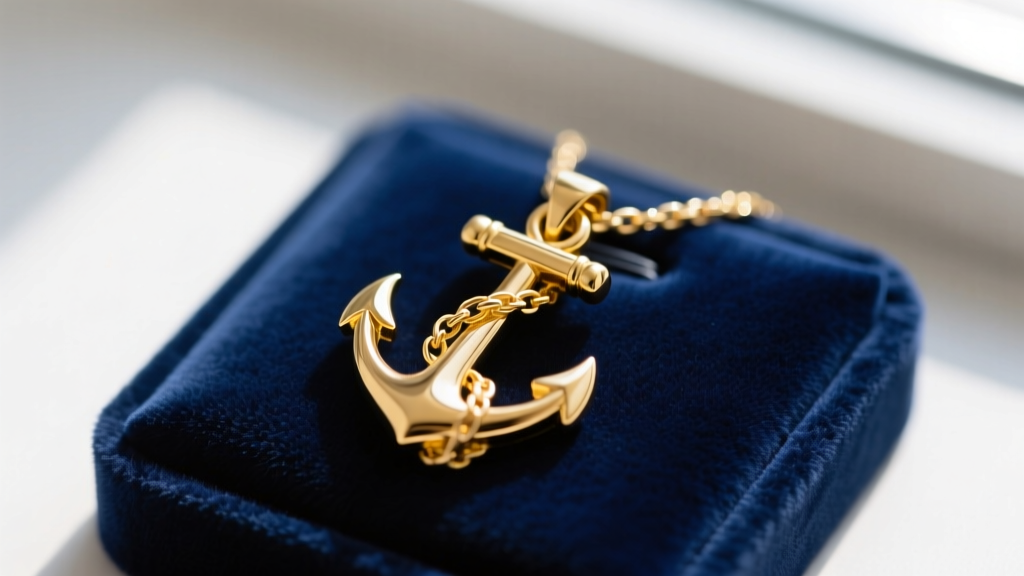
Decoding the Anchor Necklace Meaning: More Than Just Nautical
Before selecting the perfect piece, it is crucial to understand the anchor necklace meaning. Historically, the anchor is one of the oldest symbols in jewelry, predating its maritime associations. Early Christians used the anchor as a disguised cross to signify salvation and hope during times of persecution. By the 18th century, it became the universal emblem of maritime safety, representing a ship's ability to hold fast against violent storms. Today, the anchor symbolizes stability, grounding, and steadfastness in relationships or personal journeys.
According to the Royal Museums Greenwich, the nautical anchor motif gained massive popularity in Victorian mourning and sentimental jewelry, often gifted to sailors or loved ones left behind. When you wear or gift an anchor pendant, you are communicating a message of resilience: a reminder to stay grounded when life gets turbulent.
Step 1: Match the Metal to Your Symbolic Intention
The metallurgical choice of your anchor pendant alters both its physical durability and its symbolic weight. Different metals carry distinct energetic associations and require specific maintenance routines. Below is a decision matrix to help you choose the right alloy based on your budget, lifestyle, and the specific message you wish to convey.
| Metal Grade | Symbolic Meaning | Tarnish Resistance | Ideal For | Avg. Price Range |
|---|---|---|---|---|
| 14k Yellow Gold | Success, warmth, enduring value | High (may oxidize if exposed to chlorine) | Milestone gifts, daily wear | $450 - $850 |
| 925 Sterling Silver | Clarity, emotional balance, intuition | Low (requires monthly polishing) | Budget-conscious buyers, teens | $60 - $150 |
| 316L Surgical Steel | Endurance, modern resilience | Very High (virtually tarnish-proof) | Active lifestyles, water exposure | $25 - $75 |
| Grade 5 Titanium | Unbreakable bonds, lightweight strength | Absolute (hypoallergenic) | Sensitive skin, minimalist aesthetics | $90 - $200 |
Expert Tip: If opting for 925 sterling silver, ensure the piece is rhodium-plated. According to the Gemological Institute of America (GIA), rhodium plating creates a hard, reflective barrier that delays the copper-alloy oxidation process inherent in sterling silver, keeping your anchor bright for up to two years before requiring re-plating.
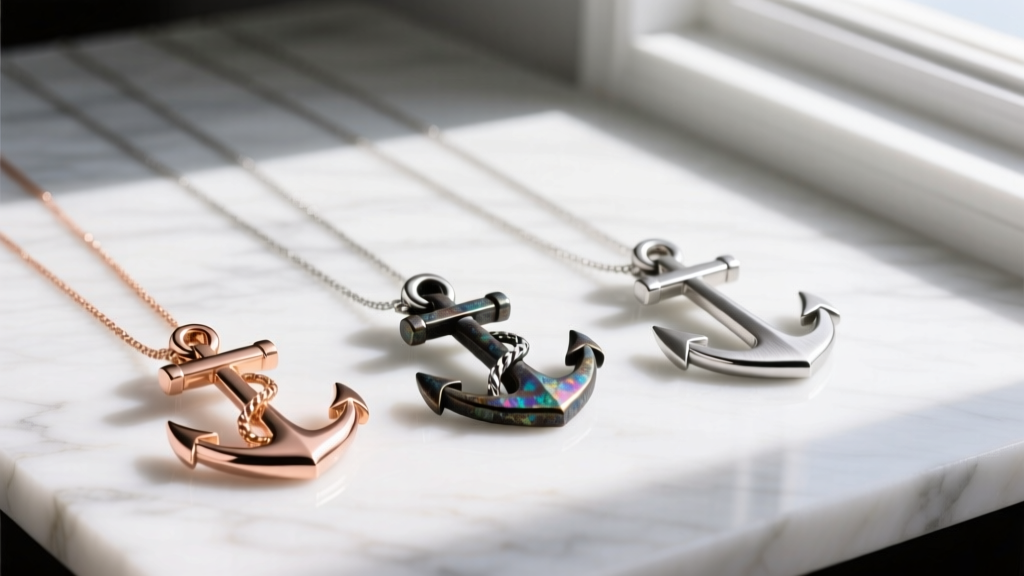
Step 2: Select the Right Anchor Design for Your Message
Not all anchors are created equal. The silhouette of the pendant changes its visual weight and stylistic application. Choose the design that aligns with the wearer's personal aesthetic.
- The Traditional Fluked Anchor: Features the classic crossbar (stock) and curved arms (flukes). Best for vintage aesthetics, maritime enthusiasts, and bold statement pieces. Usually weighs between 5 to 12 grams.
- The Minimalist Bar Anchor: A horizontal or vertical metal bar with a tiny, stylized anchor cutout or engraving. Weighs under 3 grams. Ideal for subtle, everyday layering and modern professional environments.
- The Rope-Wrapped Anchor: An anchor intertwined with a metallic rope motif. Symbolizes being 'tied' or committed, making it the ultimate choice for romantic anniversaries or promise necklaces.
Step 3: Determine the Ideal Chain Length and Gauge
A common mistake is pairing a heavy anchor pendant with a fragile chain, leading to inevitable breakage. The gauge (thickness) of the chain must support the pendant's weight.
Chain Gauge Guidelines
- 18-Gauge (1.0mm): Suitable only for micro-pendants under 4 grams. Offers a delicate, feminine look but will snap if subjected to sudden pulling.
- 16-Gauge (1.2mm): The industry standard for medium anchor pendants (5-10 grams). Provides an excellent balance of visibility and tensile strength.
- 14-Gauge (1.6mm): Required for heavy, solid gold or oversized steel anchors (12+ grams). Often seen in rope or Cuban link styles.
Length Selection
For the anchor to rest correctly over the sternum, a 16-inch chain with a 2-inch extender is the most versatile configuration. This allows the wearer to adjust the drop from a choker-style 16 inches to a standard 18 inches, accommodating different necklines seamlessly.
Step 4: Layering and Neckline Pairing Techniques
The anchor is a highly layerable motif, provided you follow the rules of spatial distribution. To avoid a tangled, cluttered look, apply the 'Two-Inch Rule': every subsequent chain in a stack must be at least two inches longer than the one above it.
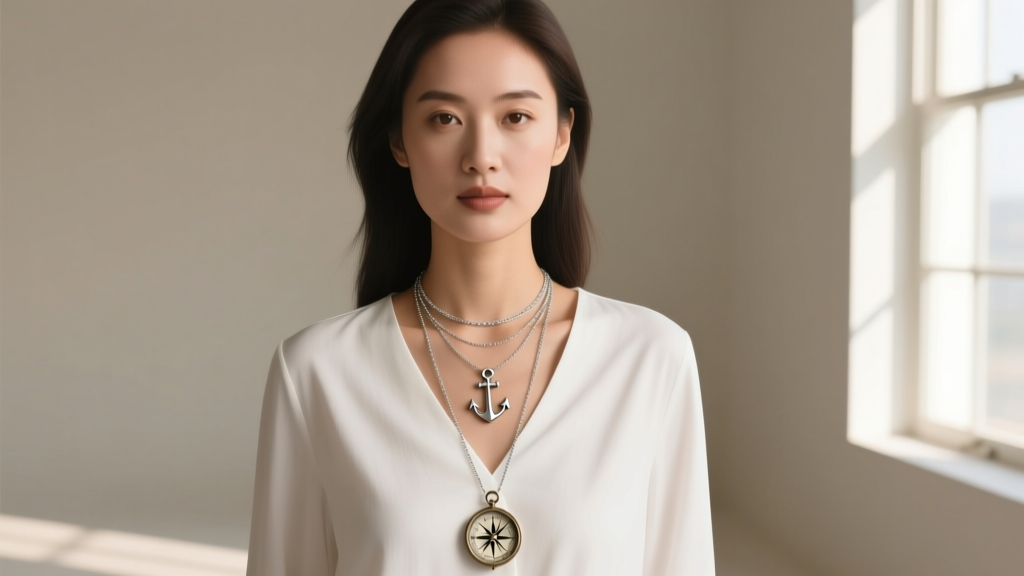
The Navigator Stack (Step-by-Step)
- Base Layer (14 inches): A simple 1.0mm silver choker or tiny initial pendant. This frames the collarbone.
- Focal Layer (16 inches): Your 16-gauge anchor pendant. This sits just below the collarbone, drawing the eye to the center of the chest.
- Accent Layer (18 or 20 inches): A complementary nautical or travel motif, such as a compass rose, a longitude/longitude coordinate bar, or a simple 3mm gemstone solitaire.
Styling Note: Anchor necklaces shine best against V-necks, scoop necks, and unbuttoned Oxford shirts. Avoid wearing a focal anchor pendant over high crew necks or turtlenecks, as the visual weight of the fabric will compete with the pendant, causing it to flip or lay flat against the collarbone.
Step 5: Gifting an Anchor Necklace: Occasion Guide
Because of its deep symbolic resonance, the anchor is a highly intentional gift. Use this framework to match the occasion with the appropriate presentation.
- Graduation & New Beginnings: Gift a minimalist titanium or silver anchor to symbolize staying grounded while navigating new, uncharted waters. Include a card referencing the 'holding fast' meaning.
- Overcoming Hardship: A heavy, solid 14k gold rope-wrapped anchor is the perfect talisman for someone who has survived a difficult year, representing their resilience and the support system that kept them moored.
- Long-Distance Relationships: Pair an anchor pendant with a matching compass necklace for the other partner. The anchor stays put while the compass travels, symbolizing a secure home base waiting for the traveler's return.
Final Thoughts on Anchor Jewelry Care
To preserve the structural integrity of your anchor necklace, always remove it before swimming in chlorinated pools or applying chemical sunscreens. Chlorine reacts aggressively with the copper and zinc alloys in 14k gold and sterling silver, causing micro-pitting and structural weakening over time. Store the piece flat in a lined jewelry box to prevent the chain links from kinking, ensuring your symbol of stability remains physically sound for decades to come.


