How to Clean and Care for a Custom Necklace with Picture
Learn expert methods to clean and protect your custom necklace with picture. Discover safe care routines for laser-engraved, enamel, and glass pendants.

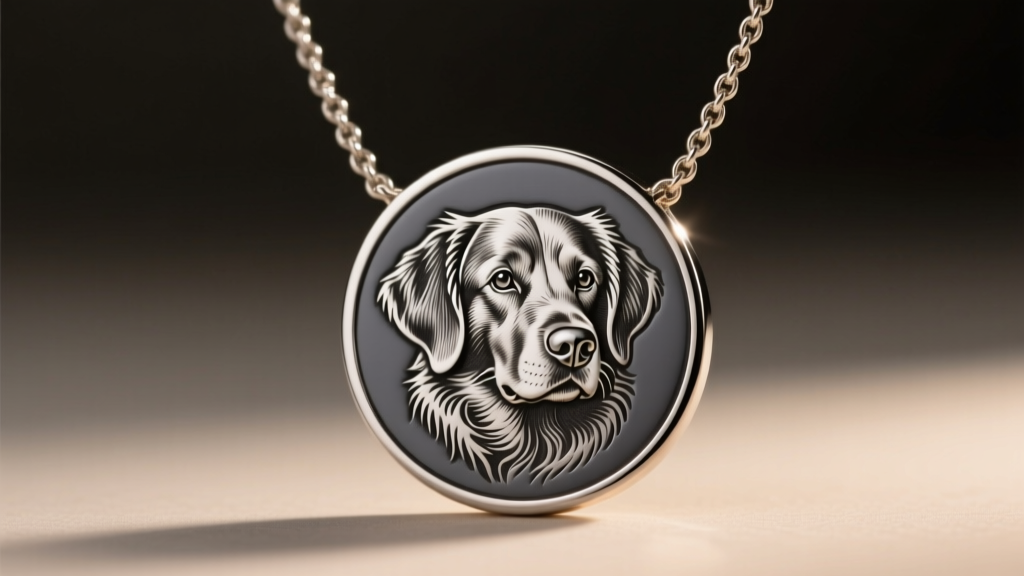
The Science of Photo Jewelry: Why Standard Cleaning Fails
A custom necklace with picture is more than just a standard piece of metal jewelry; it is a composite item that merges metallurgy with delicate imaging techniques. Whether your pendant features a laser-etched family portrait, a vibrant photo-enamel landscape, or a vintage glass cabochon encapsulating a printed photograph, standard jewelry cleaning methods can be catastrophic. According to the Gemological Institute of America (GIA), the chemical agents used in commercial silver dips and ultrasonic cleaners are formulated for solid gemstones and bare metals. When applied to photo-transferred jewelry, these harsh chemicals can dissolve epoxy resins, strip oxidized contrast from laser grooves, or seep beneath glass settings to ruin the paper photograph inside.
To preserve the sentimental and monetary value of your custom necklace with picture, you must first identify the manufacturing technique used to embed the image. Each method requires a highly specific, tailored maintenance routine to prevent irreversible damage.
Identify Your Photo Transfer Method
Before reaching for any cleaning cloth, examine your pendant under a bright light. The way the image interacts with the surface will tell you exactly how it was made. Below is a diagnostic guide to help you identify your necklace type and its inherent vulnerabilities.
| Transfer Method | Visual Characteristics | Primary Vulnerability | Safe Cleaning Agent |
|---|---|---|---|
| Laser Engraving | Image is etched into the metal; recessed areas are often darkened (oxidized) for contrast. | Polishing cloths will erase the dark contrast, leaving a blank, shiny pendant. | pH-neutral dish soap and distilled water. |
| Photo Enamel / Epoxy | Image is printed on metal and sealed under a thick, clear, slightly domed resin or enamel layer. | Alcohol and ammonia will cause the epoxy to yellow, cloud, or micro-fracture. | Damp microfiber cloth only. |
| Glass Cabochon | Image is printed on paper or thin metal, sealed inside a metal bezel under a domed piece of glass. | Water immersion will compromise the adhesive, causing internal condensation and ink bleed. | Glass cleaner applied via cotton swab (avoiding the bezel). |
Step-by-Step Cleaning for Laser-Engraved Picture Necklaces
Laser engraving on metals like 316L stainless steel, sterling silver, or 14k gold involves using high-heat lasers to vaporize microscopic layers of the metal. To make the custom necklace with picture visible, jewelers often apply an oxidizing agent to darken the recessed grooves, creating a striking contrast against the polished surface.
The Cleaning Protocol
- Prepare a Gentle Bath: Mix two drops of pH-neutral, lotion-free dish soap (such as original Dawn) into a bowl of distilled water. Avoid tap water, as heavy minerals can leave microscopic calcium deposits inside the fine laser grooves.
- Agitate Gently: Submerge the pendant for no more than three minutes. Use a soft-bristled baby toothbrush or a cosmetic sponge to lightly sweep across the surface. Never scrub aggressively, as you risk dislodging the oxidized darkening agent.
- Rinse and Dry: Rinse under a gentle stream of distilled water. Pat dry with a lint-free microfiber cloth, and use a hairdryer on the "cool" setting to blow out any trapped moisture from the deep crevices of the portrait.
Expert Warning: Never use treated silver polishing cloths (like Sunshine cloths) on the engraved side of your pendant. These cloths contain embedded micro-abrasives and tarnish-removing chemicals that will literally polish away the dark contrast of the picture, permanently erasing the image details.
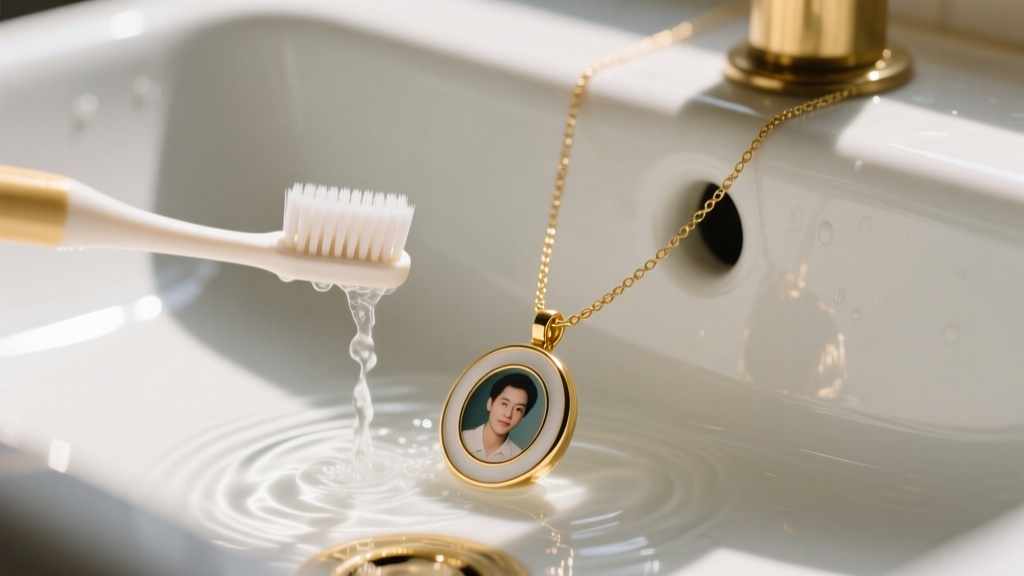
Protecting Photo Enamel and Epoxy Resin Pendants
Photo enamel and epoxy doming are popular techniques for creating vibrant, full-color custom necklace with picture designs. The image is typically sublimated onto a specialized aluminum or copper base, then sealed with a jeweler-grade UV-cured resin or two-part epoxy. While this creates a beautiful, glass-like dome, the chemical structure of the resin is highly reactive to everyday cosmetics and sanitizers.
What to Avoid
- Isopropyl Alcohol & Hand Sanitizers: High-concentration alcohols will break down the molecular bonds of the epoxy over time, leading to a cloudy, yellowed appearance that cannot be reversed.
- Ammonia-Based Cleaners: Household glass cleaners (like Windex) will eat away at the resin's topcoat, causing it to peel away from the metal base.
- Ultrasonic Cleaners: The high-frequency cavitation bubbles generated by ultrasonic machines will shatter the hardened epoxy dome or cause it to delaminate from the metal backing.
To clean an epoxy-sealed photo pendant, simply breathe on the surface to create a light fog of condensation, then gently wipe it away with a clean, optical-grade microfiber cloth. If the pendant has accumulated skin oils, dampen the corner of the cloth with a tiny amount of distilled water and wipe gently.
Glass Cabochon and Crystal Photo Insert Care
For a more traditional or vintage aesthetic, many opt for a glass cabochon custom necklace with picture. In this method, a physical photograph or high-quality inkjet print is cut to size, glued to the metal tray, and sealed beneath a domed piece of glass using strong adhesives like E6000 or specialized UV glues.
The primary enemy of this style is moisture intrusion. If the necklace is submerged in water, or worn in high-humidity environments like a sauna or hot shower, water vapor can bypass the adhesive seal. Once inside, the moisture will cause the paper photograph to warp, and the ink will bleed, ruining the image permanently. Furthermore, the Jewelers of America association advises against exposing glued jewelry settings to extreme temperature fluctuations, which cause the metal and glass to expand and contract at different rates, breaking the adhesive bond.
Cleaning Method: Apply a small amount of standard glass cleaner to a cotton swab (Q-tip). Carefully trace the surface of the glass dome, ensuring the swab is not so wet that liquid drips down into the metal bezel. Use the dry end of the swab to immediately buff the glass to a streak-free shine.
Chain Maintenance: Don't Forget the Hardware
While the picture pendant requires delicate handling, the chain holding it is subjected to immense mechanical stress and environmental exposure. A standard 18-inch cable chain or box chain traps dead skin cells, lotions, and environmental dust in its tiny links.
For sterling silver (925) chains, sulfur in the air causes black tarnish. Clean the chain separately from the pendant using a specialized silver dip, ensuring the photo pendant is kept entirely out of the chemical bath. For 14k gold vermeil chains (which feature a thick layer of gold over a sterling silver core), avoid silver dips entirely, as they will strip the gold plating. Instead, wash vermeil chains in warm, soapy water, and gently pull the chain through a soft cotton towel to dislodge dirt from the links.
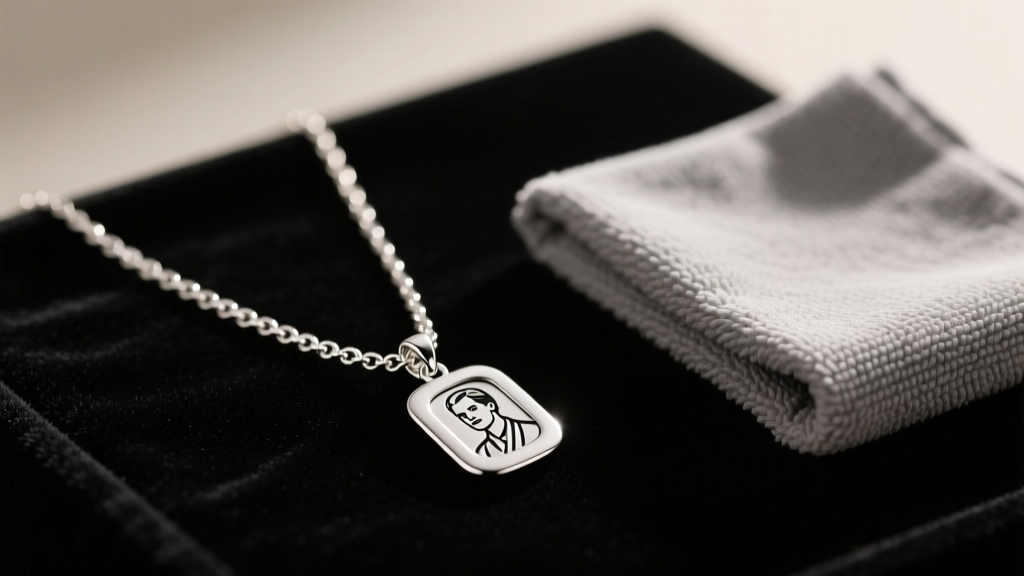
Storage and Environmental Hazards
Proper storage is just as critical as active cleaning. When you are not wearing your custom necklace with picture, it must be protected from three main environmental hazards:
- UV Radiation: Prolonged exposure to direct sunlight will fade the pigments in photo enamel and paper inserts. Always store the necklace in a dark jewelry box or a velvet drawstring pouch.
- Abrasion: Storing multiple necklaces together in a single box will cause the metal chains to act like microscopic saws, scratching the surface of the photo pendant. Store each piece in its own individual soft-lined compartment.
- Chemical Off-Gassing: If your chain is sterling silver, place a 3M anti-tarnish strip inside the storage bag. These strips absorb ambient sulfur and hydrogen sulfide gases, preventing the chain from tarnishing and reducing the need for frequent, risky cleanings.
By understanding the specific material science behind your custom necklace with picture and adhering to these targeted maintenance protocols, you can ensure that your cherished memories remain vivid, intact, and beautifully displayed for decades to come.


