How to Choose the Perfect Silver Star Necklace: A Buyer's Guide
Discover how to choose the perfect silver star necklace. Learn about sterling silver grades, chain pairings, star motifs, and pricing in our buyer's guide.

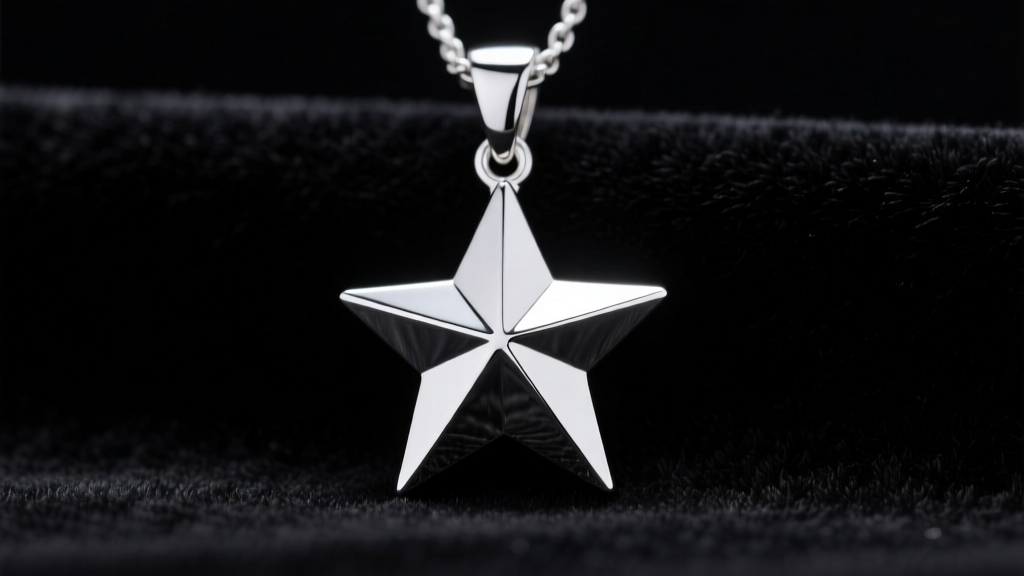
The Celestial Staple: Why Material Provenance Matters
The silver star necklace has transcended seasonal trends to become a permanent fixture in modern jewelry wardrobes. Whether you are drawn to the minimalist geometry of a four-point compass star or the romantic asymmetry of a shooting star motif, the celestial theme offers unparalleled versatility. However, the market is saturated with varying qualities of silver, ranging from heirloom-grade sterling to cheap plated alloys that tarnish within weeks. As we navigate the jewelry market in 2026, understanding the metallurgical and structural nuances of these pieces is critical. This comprehensive buying guide will equip you with the exact specifications, material grades, and structural checkpoints needed to invest in a silver star necklace that withstands daily wear while maintaining its brilliant luster.
Decoding Silver Alloys: What You Are Actually Buying
When shopping for a silver star necklace, the term "silver" is heavily regulated but frequently misunderstood. According to the FTC Jewelry Guides, marketers must accurately represent the purity of the precious metal. Here is how the three most common silver grades break down for pendant jewelry:
Sterling Silver (925)
Sterling silver is the undisputed champion for everyday star pendants. Composed of 92.5% pure silver and 7.5% alloy metals (usually copper), this mixture provides the necessary tensile strength to prevent the delicate points of a star pendant from bending or snapping. Always look for the ".925" or "STER" stamp on the back of the star or on the chain's end tag.
Fine Silver (999)
Fine silver is 99.9% pure. While it boasts a slightly brighter, whiter luster and is highly resistant to tarnish, it is far too soft for structural jewelry. A solid fine silver star pendant will easily warp if snagged on clothing, making it a poor choice for daily wear.
Silver-Plated and Silver-Filled
Plated jewelry features a microscopic layer of silver over a base metal like brass or copper. Once the plating wears off from friction against the skin, the necklace will discolor and potentially cause contact dermatitis. Silver-filled options (which contain a thicker layer of silver, usually 5% to 10% of the total weight) are a better budget alternative but still lack the longevity of solid 925 sterling.
| Silver Grade | Purity Stamp | Durability for Pendants | Tarnish Resistance |
|---|---|---|---|
| Fine Silver | .999 | Poor (Bends easily) | Excellent |
| Sterling Silver | .925 | Excellent (Ideal for daily wear) | Moderate (Requires care) |
| Silver-Filled | 1/20 SF | Good (Until layer wears) | Moderate |
| Silver-Plated | SP or EP | Poor (Base metal degrades) | Poor |
Star Motif Anatomy: Proportions, Points, and Settings
The aesthetic and physical behavior of your necklace depend heavily on the specific star geometry you choose. Different point configurations dictate not only the style but also the weight distribution of the pendant.
- The 4-Point Star (Compass/Celestial): Highly minimalist and geometric. Because the points are usually shorter and wider, 4-point stars have a low center of gravity and lay perfectly flat against the sternum. They are ideal for layering with longer chains.
- The 5-Point Star (Classic): The traditional star shape. Look for stars with slightly rounded inner vertices; sharp inner corners are stress points where the metal can fracture if the pendant is dropped or bent.
- The 6-Point Star (Astronomical): Often featuring sharper, elongated points. These require a slightly thicker gauge of silver (at least 1.2mm depth) to prevent the tips from catching on knitwear and bending.
- The Shooting Star (Asymmetrical): These feature a star attached to a curved or straight bar. Buyer Beware: Because the weight is unevenly distributed, shooting stars require a heavily soldered, oversized bail to prevent the pendant from constantly flipping upside down on the chain.
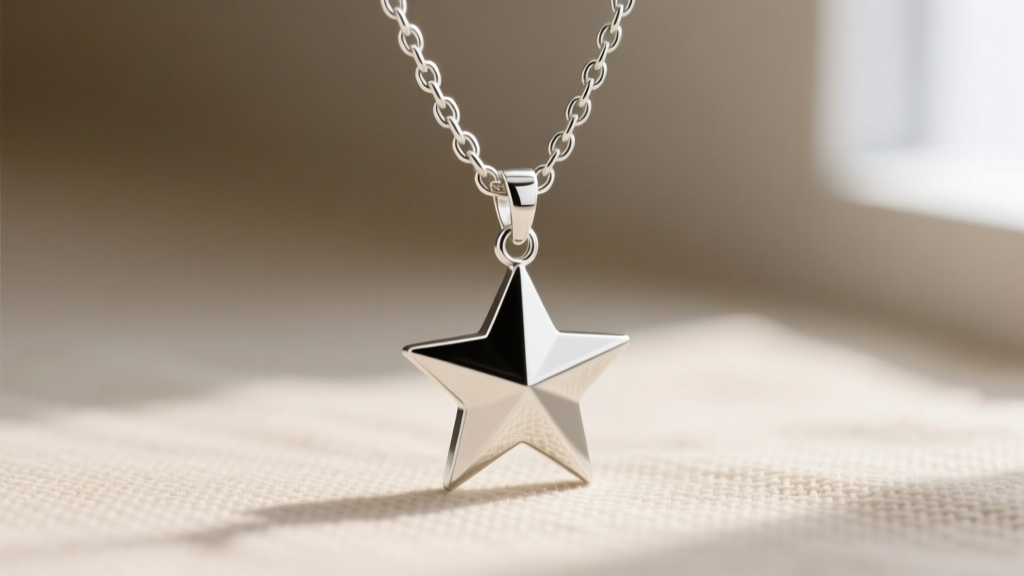
Chain Pairings: The Mechanics of Drape and Bail Sizing
A common failure point in silver star necklaces is the mismatch between the pendant's bail (the loop the chain passes through) and the chain itself. The chain must complement the visual weight of the star without overwhelming it or causing excessive friction.
Optimal Chain Widths and Types
For small to medium star pendants (8mm to 15mm), a chain width between 0.8mm and 1.2mm is ideal.
- Box Chains: The best overall choice. Their geometric, square links reflect light beautifully and are incredibly resistant to kinking. A 1.0mm sterling silver box chain provides a modern, structured look that mirrors the geometry of a star.
- Cable Chains: A classic choice, but ensure the links are soldered (closed). Unsoldered cable chains can easily pull apart if the star pendant snags.
- Snake Chains: Avoid these for star pendants. Snake chains are prone to permanent kinking and create a stiff drape that prevents lightweight star pendants from laying flat against the skin.
Gemstone Accents: Navigating the Inlays
Many silver star necklaces incorporate gemstones to enhance their celestial vibe. The setting technique used to secure these stones is a major indicator of overall craftsmanship.
Pave and Micro-Prong Settings: Often used with Cubic Zirconia (CZ) or white sapphire to create a "diamond dust" effect. Ensure the prongs are smooth and do not catch on a silk test. If a prong is rough, it will eventually wear through the silver and lose the stone.
Bezel Settings: Frequently used for cabochon moonstones or opals set in the center of the star. A well-crafted bezel will have the silver pushed smoothly over the edge of the stone with no visible gaps. According to the Gemological Institute of America (GIA), silver is an excellent reflector of light, making it a superior backdrop for colorless stones like CZ or white topaz, amplifying their brilliance without the need for expensive platinum or white gold.
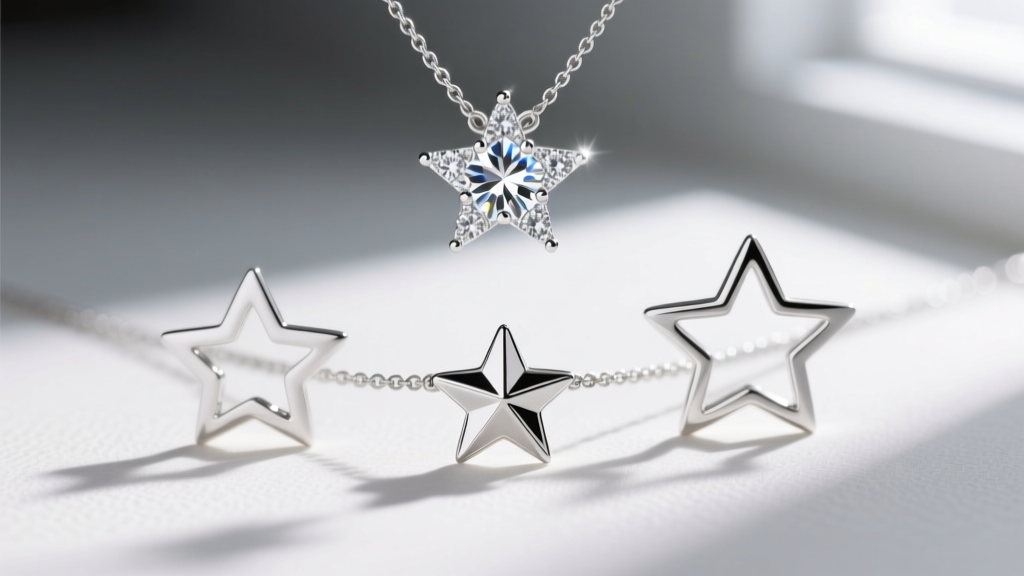
2026 Pricing Tiers: What to Expect
Understanding the current market pricing will help you identify genuine quality versus overpriced fast fashion. Here is a realistic breakdown of what you should expect to pay for a solid 925 silver star necklace in 2026:
- Entry-Level ($25 - $45): Mass-produced, lightweight 925 sterling silver stars (usually under 10mm) on thin, unsoldered cable chains. Often treated with a thin anti-tarnish e-coating.
- Mid-Tier ($50 - $120): The sweet spot for quality. Expect solid 925 silver with substantial weight, soldered jump rings, high-quality box chains, and rhodium plating for enhanced tarnish resistance. May include high-grade CZ accents.
- Artisan & Designer ($150 - $400+): Hand-forged or cast pieces featuring unique textures (like hammered or stardust finishes), ethically sourced natural gemstones (like salt-and-pepper diamonds or natural moonstone), and heavy-duty custom clasps.
Quality Control: The Pre-Purchase Checklist
Before finalizing your purchase, whether online or in a boutique, run the necklace through this physical or visual checklist to ensure structural integrity:
- The Bail Solder Check: Look closely at the loop (bail) at the top of the star. The seam where the metal meets itself must be completely closed and soldered. An open jump ring will eventually pull apart under the pendulum motion of daily wear.
- The Clasp Mechanism: Avoid spring-ring clasps for anything heavier than a 5mm star; the internal springs fail frequently. Insist on a lobster clasp, which features a more robust internal mechanism and is easier to operate.
- The Rhodium Factor: Ask if the sterling silver is rhodium-plated. Rhodium is a platinum-group metal that gives silver a bright, white-gold-like finish and acts as a physical barrier against sulfur-induced tarnish.
Tarnish Mitigation and Long-Term Care
Sterling silver will naturally react with sulfur in the environment, leading to tarnish. To preserve your silver star necklace, remove it before swimming in chlorinated pools or visiting hot springs, as sulfur and harsh chemicals will rapidly oxidize the copper alloy in the silver. Store the necklace in an airtight polyethylene bag with an anti-tarnish silica strip. When cleaning, avoid abrasive liquid dips that strip away rhodium plating; instead, use a treated microfiber polishing cloth to gently buff the star's surface, working carefully around any gemstone settings to avoid dislodging the stones.


