How to Choose and Wear a Necklace for Protection Against Evil
Learn how to select, cleanse, and wear a necklace for protection against evil. Explore apotropaic symbols, durable chain gauges, and gemstone care.

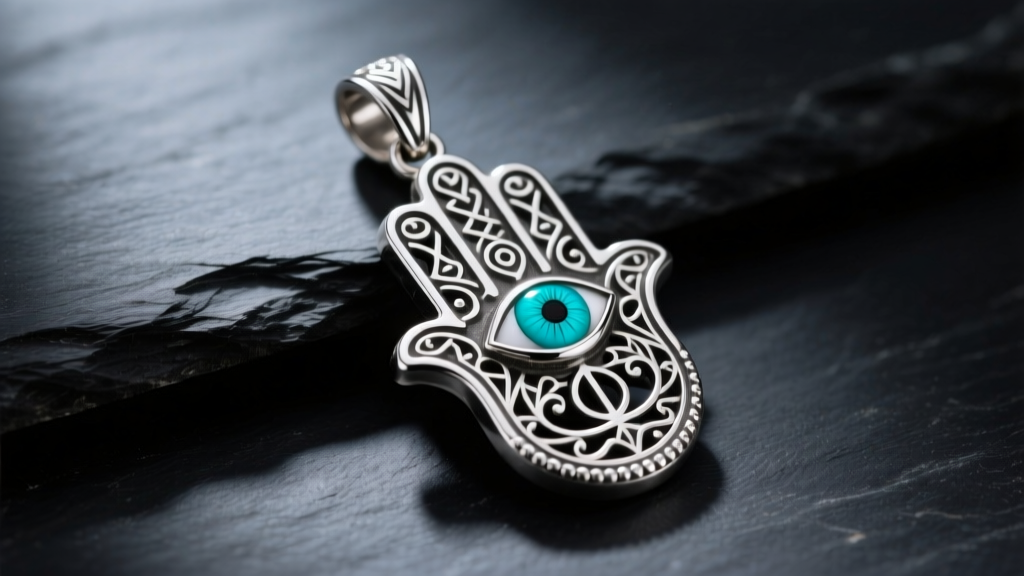
Throughout human history, jewelry has served as more than mere adornment. For millennia, humans have worn amulets and talismans to ward off malevolent forces, deflect envy, and anchor the spirit. If you are searching for a necklace for protection against evil, navigating the intersection of ancient folklore, material science, and modern styling requires a deliberate approach. This step-by-step guide will teach you how to select, wear, and maintain a protective pendant with both spiritual intention and gemological expertise.
The History of Apotropaic Jewelry
The concept of protective jewelry falls under the anthropological umbrella of apotropaic magic—from the Greek word apotropaios, meaning "to ward off." According to Encyclopædia Britannica, the belief in the "evil eye" (a malevolent glare believed to cause misfortune) dates back to at least 3000 BCE in Mesopotamia. To counteract this, early civilizations crafted reflective surfaces, glaring eyes, and divine symbols to bounce negative energy back to its sender. Today, choosing the right protective necklace means understanding these historical roots and matching them to your specific energetic needs.
Step 1: Selecting the Right Protective Symbol
Not all protective amulets function the same way. Some are designed to reflect negativity, while others are meant to absorb and ground it. Use the framework below to identify which talisman aligns with your lifestyle.
| Symbol / Stone | Origin / Tradition | Primary Function | Ideal Material Grade |
|---|---|---|---|
| Nazar (Evil Eye) | Mediterranean / Turkish | Reflects envy and malicious stares | Cobalt blue glass, 14k Gold bezel |
| Hamsa / Khamsa | Middle Eastern / North African | General protection, health, and fortune | .925 Sterling Silver, Turquoise inlay |
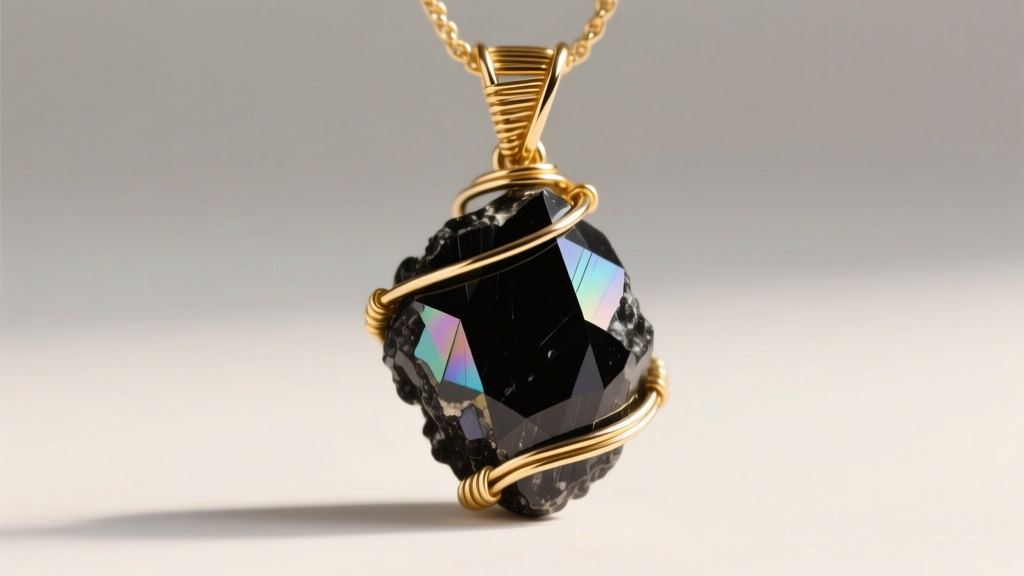
| Black Tourmaline (Schorl) | Global (Brazil, Africa) | Absorbs negative energy, EMF grounding | Raw or faceted, Mohs 7-7.5 |
| Obsidian | Global (Volcanic regions) | Severs energetic cords, deep shielding | Mahogany or Apache Tear, Mohs 5-5.5 |
| St. Christopher | Christian / European | Safe travel, physical protection | Solid 14k or 18k Gold, Enamel detailing |
Step 2: Choosing the Metal and Chain Gauge
A protective pendant is only as effective as its ability to stay securely over your heart. The metallurgical and structural choices of your chain are paramount. Historically, .925 sterling silver is the preferred metal for protective amulets due to its association with lunar energy, purity, and its natural antimicrobial properties. However, silver tarnishes and requires maintenance.
Chain Gauge and Durability Specs
- Box Chains (1.2mm - 1.5mm): The optimal choice for heavy pendants like cast silver Hamsas or large raw tourmaline points. The interlocking square links distribute weight evenly and resist kinking.
- Rope Chains (2.0mm - 2.5mm): Best for standalone wear or lightweight glass Nazar beads. The twisted links offer high tensile strength but can trap skin oils and require ultrasonic cleaning.
- Clasp Selection: Avoid spring-ring clasps for protective jewelry. Always opt for a 10mm to 12mm lobster clasp with a soldered jump ring to prevent accidental loss during daily wear.
Step 3: Cleansing and Charging Your Talisman
According to gemologists and energy workers alike, stones like Black Tourmaline and Obsidian act as energetic sponges. If you are wearing a necklace for protection against evil, you must routinely clear the accumulated debris. The Gemological Institute of America (GIA) notes that while stones are physically durable, their porous nature (in the case of turquoise or lapis often used in protective amulets) dictates how they must be cleaned.
The 3-Step Cleansing Protocol
- Physical Cleaning: Use a soft, untreated microfiber cloth to remove sebum and lotions. Warning: Never use ultrasonic cleaners or harsh chemical dips on porous stones like Turquoise or Malachite, as this will destroy their matrix.
- Smoke Cleansing: Pass the pendant through the smoke of burning Palo Santo, cedar, or rosemary for 30-60 seconds. This is safe for all metals and gemstones, including delicate glass Nazars.
- Sound Bathing: Strike a 432Hz tuning fork and hold it near the stone. The acoustic vibrations disrupt stagnant energy fields without risking water damage or thermal shock.
Never cleanse your protective jewelry using salt water. Salt is highly abrasive and will cause rapid oxidation in sterling silver and degrade the polish of soft stones like obsidian and turquoise.
Step 4: Layering and Placement for Maximum Efficacy
Where the pendant rests on your body dictates its energetic and aesthetic impact. For maximum protective efficacy, the pendant should rest directly over the thymus gland (the upper center of the chest), which is historically associated with the heart chakra and the body's immune system.
Layering Framework
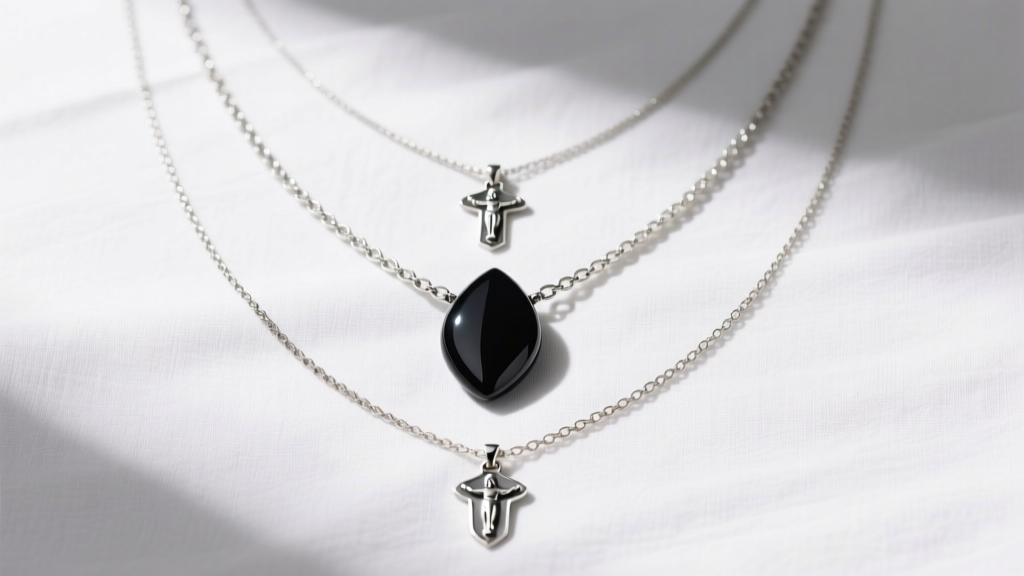
If you prefer a layered look, follow the "Rule of Three" to prevent the protective amulet from being visually or energetically drowned out:
- Layer 1 (14-16 inches): A delicate 1mm cable chain with a small, personal initial or minimalist diamond stud. This sits at the base of the throat.
- Layer 2 (18-20 inches): Your primary necklace for protection against evil (e.g., a 25mm Hamsa or Tourmaline point). This anchors the stack at the collarbone/upper chest.
- Layer 3 (24-28 inches): A longer, heavier rope chain with a grounding stone like Smoky Quartz or Lapis Lazuli to draw the eye downward and elongate the torso.
Maintenance and Recognizing Breakage
In esoteric traditions, if a protective stone cracks or a chain suddenly snaps, it is believed that the amulet has "taken a hit" for you, absorbing a massive amount of negative energy or deflecting a severe curse. While the spiritual interpretation is deeply personal, the gemological reality is often tied to material stress.
Obsidian, for instance, is a volcanic glass with a Mohs hardness of 5 to 5.5. It lacks a crystalline structure, meaning it has conchoidal fracture and will easily chip if bumped against a marble countertop or dropped on tile. Black Tourmaline (Mohs 7-7.5) is harder but possesses perfect cleavage planes; a sharp impact can cause it to split cleanly in half.
What to do if your amulet breaks:
- Thank the piece for its service.
- Do not attempt to glue a cracked protective stone back together. The structural integrity is compromised, and esoterically, its protective matrix is considered "full."
- Bury the broken stone in the earth to neutralize its accumulated energy, and have the metal components melted down or recycled by a professional jeweler.
Selecting and wearing a necklace for protection against evil is a deeply intentional practice. By respecting the historical origins of these symbols, choosing structurally sound chains, and maintaining both the physical and energetic integrity of your materials, you ensure your talisman remains a steadfast shield in the modern world.


