Is a 925 Italy Milor Necklace Worth It? 2026 Value Guide
Assessing the true value of a 925 Italy Milor necklace in 2026. We break down silver purity, pricing, chain durability, and if it's worth your budget.

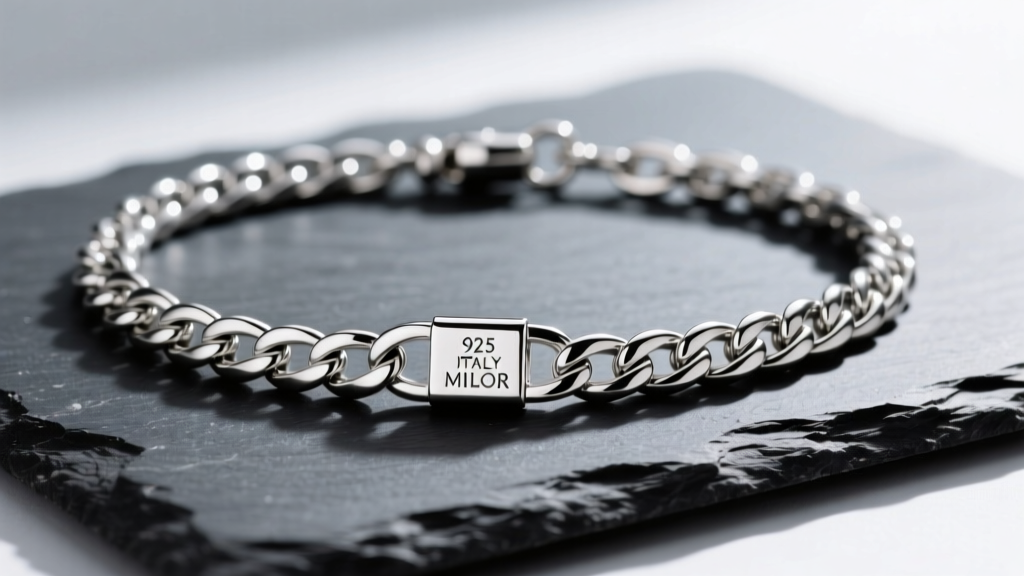
The Anatomy of a Milor Sterling Silver Chain
When shopping for affordable luxury in the silver market, the 925 italy milor necklace is a ubiquitous find. Stamped on everything from delicate box chains to heavy Cuban links, the Milor hallmark represents one of the largest jewelry manufacturing conglomerates based in Arezzo, Italy. But what does this stamp actually guarantee, and more importantly, does it justify the price tag in 2026?
To assess the true value, we first have to look at the metallurgy. The "925" stamp indicates sterling silver, an alloy consisting of 92.5% pure silver and 7.5% copper. Pure silver (999 fine silver) has a Vickers hardness of roughly 25 HV, making it far too malleable for daily-wear chains; it would stretch and snap under minimal tension. The addition of copper raises the hardness to approximately 65 HV, providing the necessary tensile strength for chain links. However, this copper content is also the culprit behind silver's natural tendency to tarnish when exposed to sulfur compounds in the air and human sweat.
Milor addresses this by utilizing advanced laser-welding techniques and high-polish finishing in their Arezzo facilities. Unlike cheaper mass-produced chains that use torch soldering (which leaves visible, oxidation-prone seams), Milor's laser welds are microscopic and structurally sound, drastically reducing the risk of links snapping at the solder joints.
2026 Pricing Breakdown: What Should You Actually Pay?
The secondary market and direct-to-consumer platforms are flooded with Milor chains, leading to wild price discrepancies. As of 2026, the spot price of raw silver hovers around $0.80 to $1.10 per gram. Therefore, you are not just paying for the metal; you are paying a "craftsmanship multiplier" for Italian manufacturing, diamond-cutting, and rhodium plating.
Below is a realistic value matrix for an 18-inch Milor chain. If you are paying significantly above these ranges, you are overpaying for the brand name rather than the intrinsic value.
| Chain Style | Avg. Weight (18") | Fair Market Price (2026) | Value Rating |
|---|---|---|---|
| 1.2mm Box Chain | 4.2g - 4.8g | $35 - $45 | Excellent (High Utility) |
| 2.5mm Figaro Chain | 8.0g - 9.5g | $65 - $85 | Good (Classic Staple) |
| 3.0mm Diamond-Cut Rope | 10.5g - 12.0g | $85 - $110 | Fair (High Snag Risk) |
| 4.5mm Solid Cuban Link | 16.0g - 18.5g | $130 - $165 | Good (Statement Piece) |
A fair retail markup for Italian sterling silver ranges from $6 to $10 per gram, depending on the complexity of the weave. A simple box chain requires less machine time than a diamond-cut rope chain, which involves precision faceting to catch the light. If a seller is charging $20 per gram for a basic Milor curb chain, walk away.
Durability and Common Failure Modes
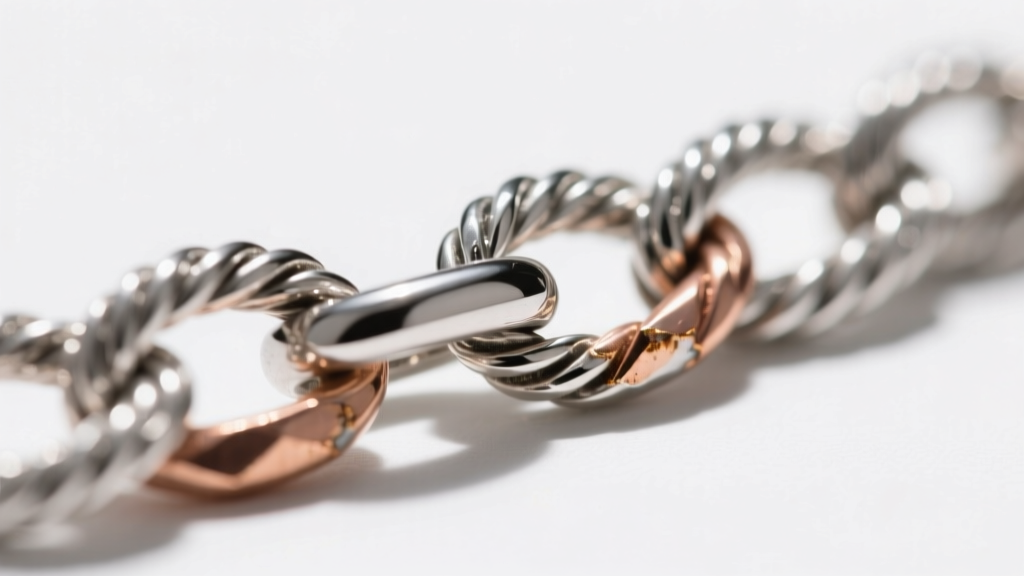
While Milor chains are structurally superior to hollow or flash-plated alternatives, they are not immune to wear and tear. Understanding the specific failure modes of sterling silver will help you manage your expectations and protect your investment.
The Rhodium Plating Factor
Most Milor necklaces are flash-plated with rhodium, a precious metal in the platinum group that provides a bright, white, tarnish-resistant finish. However, flash plating is exceptionally thin—typically between 0.1 and 0.5 microns. According to the Gemological Institute of America (GIA), rhodium plating on silver is a surface treatment, not a permanent shield. Over 12 to 24 months of daily wear, friction from clothing and the acidic pH of human sweat (which ranges from 4.5 to 7.0) will wear the rhodium away, particularly at the nape of the neck and around the clasp. Once the rhodium is gone, the underlying copper alloy will begin to oxidize, requiring regular polishing.
Clasp Mechanics and Snagging
Milor typically utilizes cast lobster clasps rather than stamped sheet-metal clasps. While cast clasps offer a premium, rounded aesthetic, they can occasionally suffer from microscopic porosity. The internal spring mechanism is usually made of stainless steel (which is why the clasp will lightly attract a magnet, even though the silver chain will not). The most common failure point is the lever arm bending if the chain is caught on a sweater or hair.
Furthermore, diamond-cut styles, while visually stunning, feature sharp faceted edges that act like tiny hooks. These chains are notorious for snagging on wool garments and tangling in fine hair, which can eventually distort the links.
Milor vs. Competitors: A Value Comparison
How does a 925 italy milor necklace stack up against other market options? Let us break down the competitive landscape:
- Milor vs. Generic Amazon Silver: Milor wins easily. Generic unbranded chains often use inferior solder alloys that contain nickel, causing contact dermatitis. Milor adheres to strict EU nickel-release directives.
- Milor vs. High-End Designer Silver (e.g., Tiffany, David Yurman): Designer brands charge a 500% to 1000% markup for their name and proprietary designs. Milor offers 90% of the build quality for 20% of the price, making it the undisputed king of budget value.
- Milor vs. Solid Gold Alternatives: If your budget allows for 14k gold, gold is inherently superior for daily wear because it does not tarnish and requires zero maintenance. However, for buyers strictly capped at a $150 budget, Milor's heavy silver chains offer a visual weight and presence that thin, low-karat gold chains simply cannot match.
How to Authenticate Your Milor Necklace
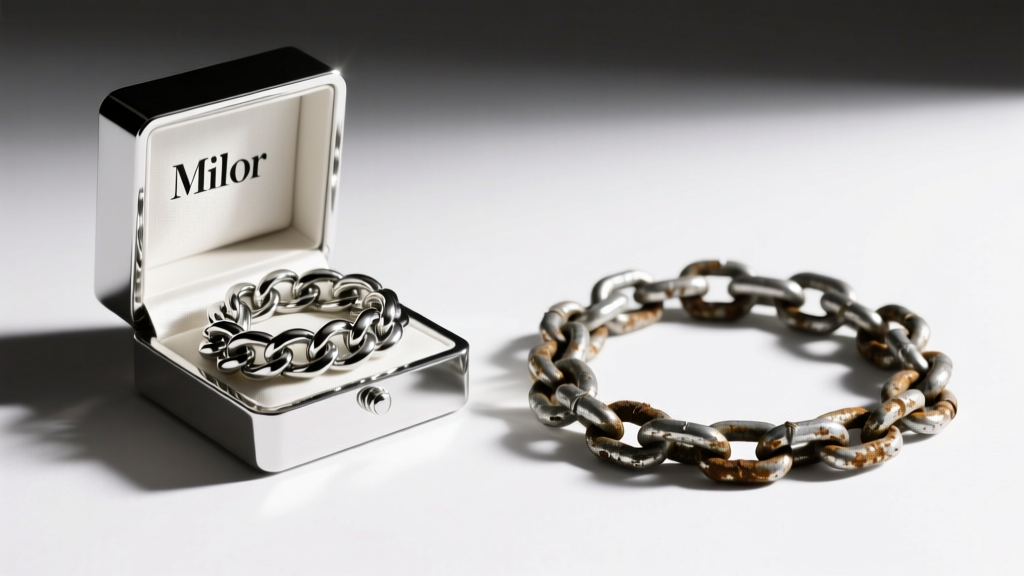
Because of Milor's reputation for quality, counterfeiters frequently stamp cheap brass or nickel-silver chains with fake "925 Italy Milor" hallmarks. Here is a practical framework to verify authenticity:
The Magnet Test: Sterling silver is diamagnetic. If your chain is strongly attracted to a neodymium magnet, it is fake. Note: The tiny spring inside the lobster clasp is steel and will attract the magnet. Test the chain links, not the clasp.
Next, examine the stamp under a 10x jeweler's loupe. Genuine Milor stamps are laser-engraved or struck with high-pressure dies, resulting in crisp, clean, and perfectly aligned lettering. Counterfeit stamps often look blurry, shallow, or slightly crooked. Finally, check for the "Italy" country of origin stamp. By international trade laws, if it is stamped Italy, it must be manufactured there. While fakes will copy this, combining the magnet test, the loupe inspection, and a specific gravity test (sterling silver has a density of 10.36 g/cm³) will confirm authenticity with near 100% certainty.
Proper Care for Long-Term Value Retention
To maximize the lifespan of your Milor chain and preserve the rhodium plating for as long as possible, avoid ultrasonic cleaners. The high-frequency vibrations and harsh chemical baths can strip the microscopic rhodium layer in minutes. Instead, the Jewelers of America recommends using a few drops of mild, phosphate-free dish soap in warm water. Gently agitate the chain, rinse thoroughly, and pat dry with a non-abrasive microfiber cloth. Never use tissue paper or paper towels, as the wood fibers can inflict micro-scratches on the high-polish finish.
Final Verdict: Budget Buy or Buyer's Remorse?
So, is a 925 italy milor necklace worth your hard-earned money in 2026? From a strict budget and value assessment perspective, the answer is a resounding yes—provided you are paying fair market gram-weight prices. Milor bridges the gap between disposable fast-fashion jewelry and unattainable luxury. You are purchasing genuine Italian craftsmanship, reliable structural integrity, and classic designs that will last decades if properly maintained. Just remember that you are buying an alloy that requires occasional care, not a maintenance-free precious metal. Treat it with respect, and a Milor chain will remain a staple in your jewelry rotation for years to come.


