Monkey Necklace Materials: A Complete Metal & Enamel Guide
Discover the best materials for a monkey necklace. Compare sterling silver, gold, and bronze properties, durability, and enamel finishes for zodiac pendants.

The Metallurgical Challenge of Figurative Pendants
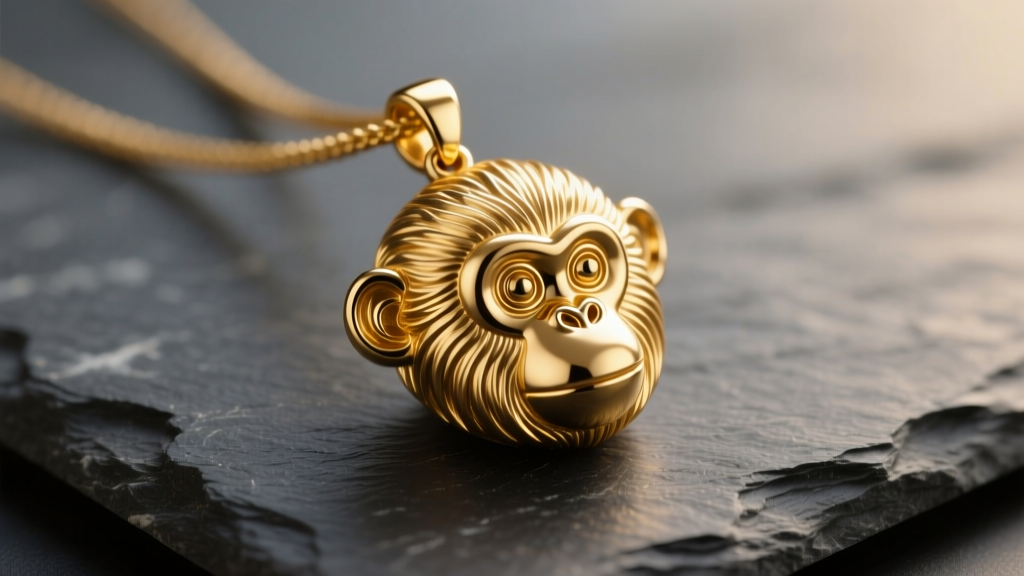
When selecting a monkey necklace—whether it represents the Chinese Zodiac, the classic "three wise monkeys" proverb, or a playful fashion motif—you are not just choosing a symbol; you are investing in a complex piece of metallurgical engineering. Unlike flat, geometric pendants, a 3D figurative monkey pendant requires deep relief casting, intricate fur texturing, and complex facial expressions. These design elements create severe "undercuts" during the lost-wax casting process, demanding specific metal alloys that flow perfectly into silicone molds and capture microscopic details without porosity or brittleness.
Understanding the material properties of your monkey necklace is critical for long-term wearability, skin compatibility, and the preservation of the pendant's artistic integrity. In this comprehensive guide, we break down the exact metallurgical profiles, enamel techniques, and chain mechanics required to support these intricate primate designs.
Base Metal Comparison: Hardness, Detail, and Wearability
The base metal dictates how crisply the monkey's features—such as the ridges of its brow, the texture of its fur, and the curl of its tail—will be preserved over years of friction and wear. According to the Gemological Institute of America (GIA), the alloy composition of precious metals drastically alters their Vickers hardness (HV) and scratch resistance.
| Metal Alloy | Vickers Hardness (HV) | Tarnish Resistance | Casting Detail Retention | Avg. Price Tier |
|---|---|---|---|---|
| Sterling Silver (925) | 60 - 75 | Low (Prone to Sulfide Tarnish) | Excellent (Ideal for Antiquing) | $ |
| 14k Yellow Gold | 120 - 140 | High | Superior (Crisp Edges) | $$$ |
| 18k Yellow Gold | 90 - 110 | Very High | Good (Softer, Prone to Wear) | $$$$ |
| Jeweler's Bronze | 80 - 100 | Low (Develops Patina) | Excellent (Heavy, Solid Casts) | $$ |
Sterling Silver and the Power of Oxidation
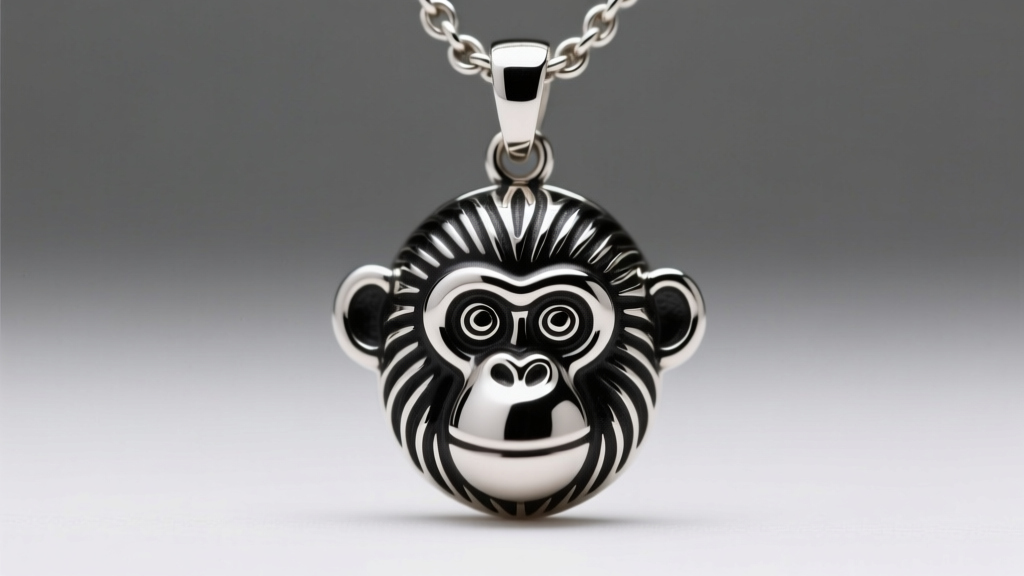
Sterling silver (92.5% silver, 7.5% copper) is the most popular choice for intricate monkey pendants. The copper content provides enough structural integrity for casting, but its true advantage lies in oxidation. Silversmiths deliberately apply liver of sulfur to sterling silver monkey pendants to create a blackened patina. This darkens the recessed areas (like the fur and facial crevices) while the high-relief areas (the nose, cheekbones, and knuckles) are polished bright. This contrast is what gives a silver monkey pendant its striking, lifelike depth.
Gold Alloys: 14k vs. 18k for 3D Relief
While 18k gold offers a richer, more buttery yellow hue, its lower hardness makes it susceptible to detail loss. If a monkey pendant features delicate, protruding elements like tiny fingers or a curled tail, 18k gold will slowly wear down and round off at the edges due to friction against clothing. 14k gold, alloyed with higher percentages of silver and copper, offers superior durability and maintains the razor-sharp edges of the original wax carving for decades.
Enameling Techniques in Primate Jewelry
Many premium monkey necklaces incorporate enamel to add vibrant color to the eyes, clothing, or background elements. The London Assay Office recognizes vitreous enamel as a permanent, glass-like finish, but its application on figurative jewelry requires immense skill.
Champlevé vs. Cloisonné
- Champlevé Enamel: This is the most common technique for monkey pendants. The jeweler carves or casts recessed "troughs" into the metal (such as the monkey's eyes or a banana it might be holding) and fills them with enamel powder before firing. The metal walls separate the colors, providing a durable, flush finish.
- Cloisonné Enamel: Thin silver or gold wires are soldered onto the surface to create cells. While beautiful, cloisonné is rarely used on highly textured 3D monkey pendants because the wires cannot easily conform to the curved, organic shapes of a figurative casting.
Failure Modes: Why Enamel Cracks
Vitreous enamel is essentially glass fused to metal at temperatures exceeding 1400°F. The primary failure mode for enameled monkey necklaces is thermal shock or impact. If the pendant is dropped onto a hard tile floor, the glass can shatter or "craze" (develop microscopic spiderweb cracks). Furthermore, the Coefficient of Thermal Expansion (CTE) of the enamel must perfectly match the base metal. If a jeweler uses a low-firing enamel on a high-expansion bronze alloy, the enamel will pop off as the metal cools. For everyday wear, "cold enamel" (a two-part epoxy resin) is sometimes used as a flexible, shatter-proof alternative, though it will yellow after 5 to 10 years of UV exposure.
Skin Chemistry and Copper Alloys
If you are purchasing a bronze or brass monkey necklace, you must consider your personal skin chemistry. Bronze (typically 88% copper and 12% tin) and brass (copper and zinc) are highly reactive to human sweat. The amino acids, salts, and fatty acids in your perspiration react with the copper to form copper chloride and copper carbonate—the familiar green or black stains on the skin. This is not an allergy or a sign of "fake" metal; it is a basic chemical reaction. To mitigate this, many modern jewelers apply a micro-thin layer of clear electrophoretic lacquer or rhodium-plate the back of the pendant where it rests against the sternum.
Chain Mechanics and Bail Engineering
A solid cast 3D monkey pendant in sterling silver or bronze typically weighs between 8 and 18 grams. This concentrated weight demands a chain with specific mechanical properties to prevent stretching or breakage.
Gauge and Link Style
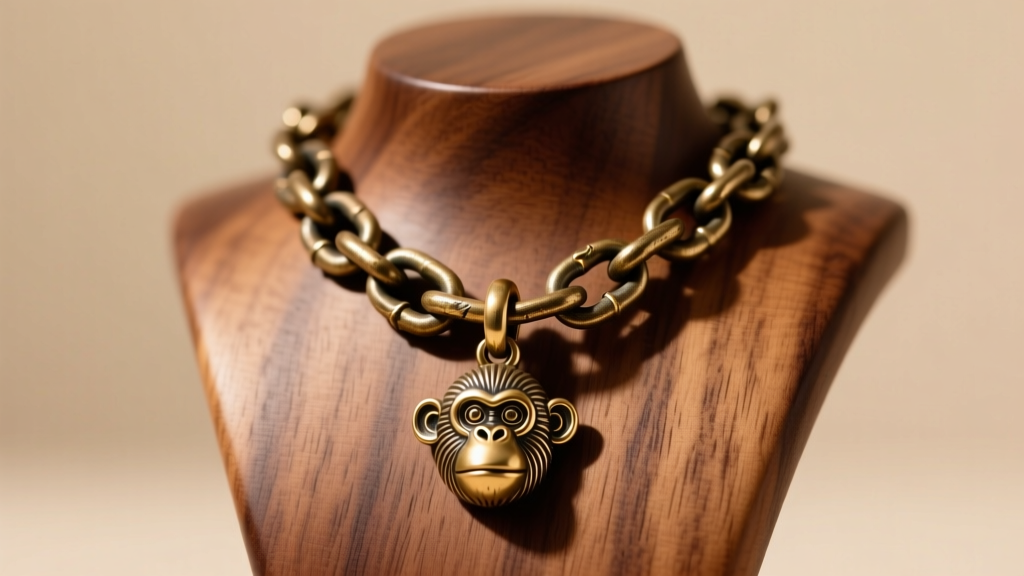
Avoid delicate chains under 1.0mm. For a pendant of this weight, a 1.5mm to 2.0mm rope chain or a flat curb chain is ideal. Curb chains lay flat against the chest and distribute the pendulum motion of the heavy monkey pendant more evenly than round box chains, which can kink under dynamic stress.
The Bail and Jump Ring
Figurative pendants often utilize a "hidden bail" (a tube drilled horizontally through the top of the monkey's head) or a sculpted loop integrated into the tail. If the pendant uses a traditional soldered jump ring at the top, ensure the ring is fully soldered shut. An open, unsoldered jump ring will inevitably pull apart under the 15-gram leverage of a swinging monkey pendant, resulting in the loss of the piece.
Maintenance Protocols by Material
Proper maintenance ensures the intricate details of your monkey necklace remain sharp and legible.
- Sterling Silver: Use a polishing cloth infused with jeweler's rouge for the high-relief areas. Avoid liquid silver dips, as they will strip the deliberate black oxidation from the fur textures, leaving the pendant looking flat and lifeless.
- Gold: Clean with a soft toothbrush and warm water mixed with a few drops of mild dish soap. Gold does not tarnish, so aggressive chemical cleaners are unnecessary and can damage secondary gemstone accents.
- Enameled Pieces: Never place an enameled monkey pendant in an ultrasonic cleaner. The high-frequency acoustic cavitation will vibrate the glass enamel right off the metal substrate. Wipe gently with a damp microfiber cloth.
- Bronze/Brass: If you prefer the bright, original metal color, use a paste of lemon juice and baking soda to strip the patina. If you prefer the antique look, simply let the oils from your skin naturally age the metal over time.
Final Verdict
Choosing the right monkey necklace material depends entirely on your lifestyle and aesthetic preferences. For collectors who want maximum contrast and a vintage feel, oxidized sterling silver is unmatched. For those seeking a generational heirloom that resists tarnish and holds crisp casting details, 14k yellow gold is the superior metallurgical choice. By understanding the hardness, casting requirements, and chain mechanics outlined above, you can confidently select a primate pendant that will endure both as a meaningful symbol and a masterclass in jewelry engineering.


