Turquoise Jewelry Necklace Trends: 2026 Style Guide
Discover 2026 turquoise jewelry necklace trends, from Sleeping Beauty matrix styles to layering techniques, pricing guides, and stone grading.

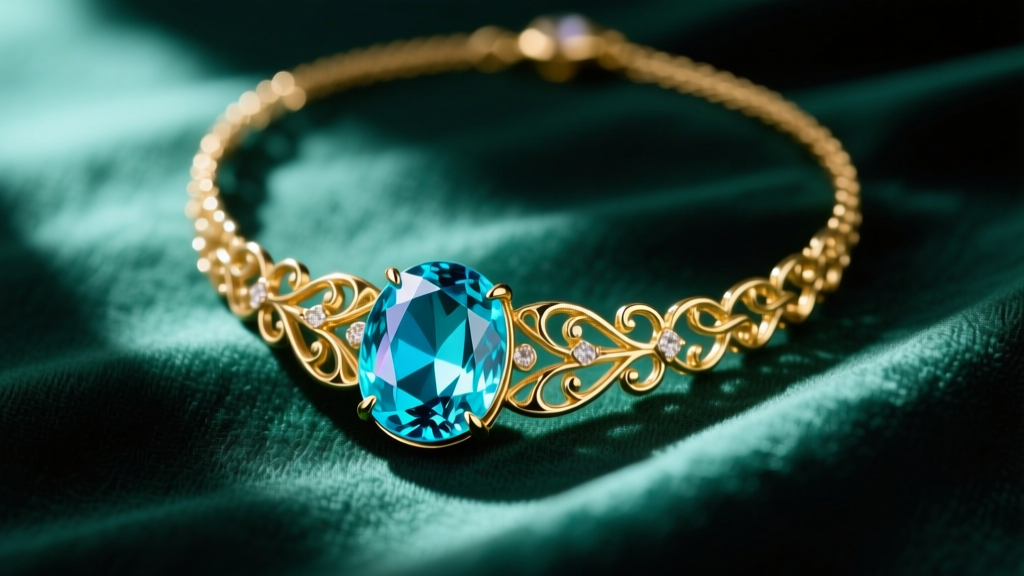
The 2026 Resurgence: Why Turquoise is Dominating High Jewelry
Once relegated to seasonal bohemian trends and southwestern souvenir shops, turquoise has undergone a radical elevation in the fine jewelry sector. As we navigate the 2026 style landscape, the turquoise jewelry necklace has emerged as a cornerstone of both architectural minimalism and neo-heritage styling. Designers are moving away from heavy, ornate silver settings, opting instead for sleek 18k recycled gold bezels that allow the stone's natural matrix and color saturation to take center stage. According to market analyses reported by JCK Industry News, consumer demand for opaque, semi-precious stones with traceable origins has surged by over 34% this year, with ethically sourced turquoise leading the charge.
This shift is driven by a desire for 'imperfect luxury.' Unlike the flawless uniformity of diamonds, high-grade turquoise offers a geological fingerprint. Whether it is the copper-rich robin's egg blue of Arizona or the iron-laced green of Nevada, modern collectors are treating these necklaces not just as accessories, but as wearable mineralogical artifacts. Understanding the nuances of stone grading, treatment disclosure, and precise chain pairing is essential for anyone looking to invest in a piece that holds both aesthetic and financial value in 2026.
Decoding Turquoise Grades: What to Look for in 2026
Turquoise is a hydrous phosphate of copper and aluminum, ranking between 5 and 6 on the Mohs hardness scale. Because of its inherent porosity, rough turquoise is highly susceptible to discoloration from skin oils, cosmetics, and environmental pollutants. Consequently, the Gemological Institute of America (GIA) notes that the vast majority of turquoise on the market undergoes some form of treatment. However, not all treatments are created equal, and the 2026 market heavily penalizes undisclosed enhancements.
Matrix vs. Clear: The Sleeping Beauty and Kingman Debate
The 'matrix' refers to the remnants of the host rock—often brown limonite, black sandstone, or golden pyrite—that remain webbed through the stone. In 2026, the market is distinctly bifurcated into two camps:
- The Purists (Sleeping Beauty): Prized for its solid, uniform, 'robin's egg' blue color with little to no matrix. Because the Sleeping Beauty mine in Arizona closed in 2012 (the land was prioritized for copper mining), genuine, untreated Sleeping Beauty turquoise commands a massive premium. It is the ultimate status symbol for minimalist gold necklace settings.
- The Character Seekers (Kingman & Royston): The Kingman mine produces stones famous for their 'spiderweb' matrix, often laced with glittering copper pyrite inclusions. Meanwhile, Nevada's Royston district yields stunning two-tone stones that transition from deep forest green to sky blue. These are heavily favored in mixed-metal layering stacks.
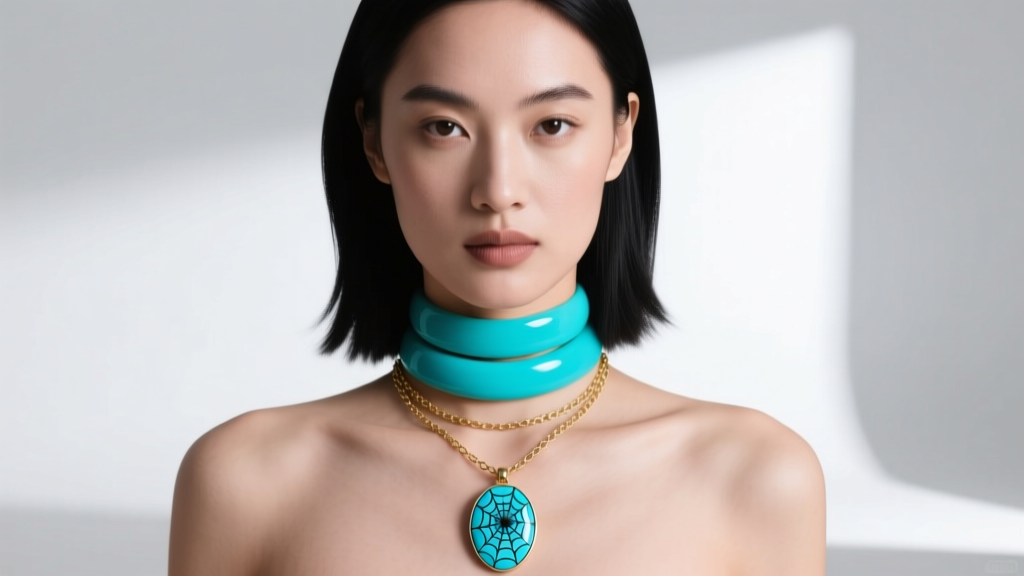
The Zachery Treatment: The 2026 Gold Standard
If a stone is too porous to be cut into a cabochon without crumbling, it must be stabilized. While traditional epoxy resin stabilization is widely accepted if disclosed, the high-end 2026 market favors the Zachery treatment. Developed by electrical engineer James E. Zachery, this proprietary process uses a potassium silicate solution that penetrates the stone, increasing its hardness and reducing porosity without introducing polymers or artificial dyes. A Zachery-treated turquoise jewelry necklace retains the natural thermal feel of the stone and can be repolished, making it a superior investment over heavily epoxied alternatives.
Pricing Matrix: Natural vs. Stabilized Turquoise Necklaces
Navigating the pricing of turquoise can be treacherous for the uninitiated. A necklace featuring a 20-carat natural, untreated cabochon will cost exponentially more than a similarly sized stabilized stone. Below is a breakdown of current 2026 wholesale-to-retail pricing metrics based on origin and treatment.
| Origin / Mine | Treatment Status | Visual Profile | Avg. Price Per Carat | Best Necklace Application |
|---|---|---|---|---|
| Sleeping Beauty (AZ) | Untreated / Natural | Solid sky blue, no matrix | $25.00 - $60.00+ | Solitaire bezel pendants |
| Kingman (AZ) | Zachery Treated | Blue with black/pyrite web | $8.00 - $18.00 | Layered statement pieces |
| Royston (NV) | Traditional Epoxy | Two-tone green/blue web | $3.00 - $7.00 | Rustic silver cuff links/chokers |
| Howlite (Imitation) | Dyed / Artificial | White with fake gray veins | $0.05 - $0.20 | Fast-fashion costume jewelry |
When purchasing a high-end turquoise jewelry necklace, always request a gemological disclosure report. Reputable jewelers in 2026 will explicitly state whether the stone is natural, stabilized, Zachery-treated, or backed (a practice where a weak stone is glued to a stronger substrate).
Styling & Layering: The Modern Turquoise Jewelry Necklace
The days of wearing a single, heavy squash blossom necklace are largely behind us. The 2026 styling ethos revolves around 'curated asymmetry' and precise chain gauge selection. Turquoise is an opaque, light-absorbing stone, meaning it requires specific metal reflections to prevent it from looking flat against the skin.
Neckline Pairings and Length Specifications
To maximize the visual impact of your turquoise jewelry necklace, adhere to these structural styling guidelines based on garment necklines:
- The 14 to 16-Inch Choker: Ideal for V-neck blouses and off-the-shoulder knits. Opt for a 2mm oxidized sterling silver snake chain holding a single, horizontally oriented 15x10mm Kingman cabochon. The horizontal placement mimics the natural collarbone line, creating an architectural, modern silhouette.
- The 18-Inch Princess Length: The most versatile placement, resting perfectly on the clavicle. Pair this with crew necks and scoop necks. Use a delicate 1.2mm 18k yellow gold rope chain. The twisted texture of the rope chain catches the light, complementing the waxy luster of a high-polish Sleeping Beauty pendant.
- The 24 to 28-Inch Matinee/Opera Length: Reserved for turtlenecks, blazers, and heavy winter wools. At this length, a heavier 4mm oxidized silver curb chain is necessary to support the weight of a larger, 30-carat Royston turquoise pendant. The deep drop creates a striking vertical line that elongates the torso.
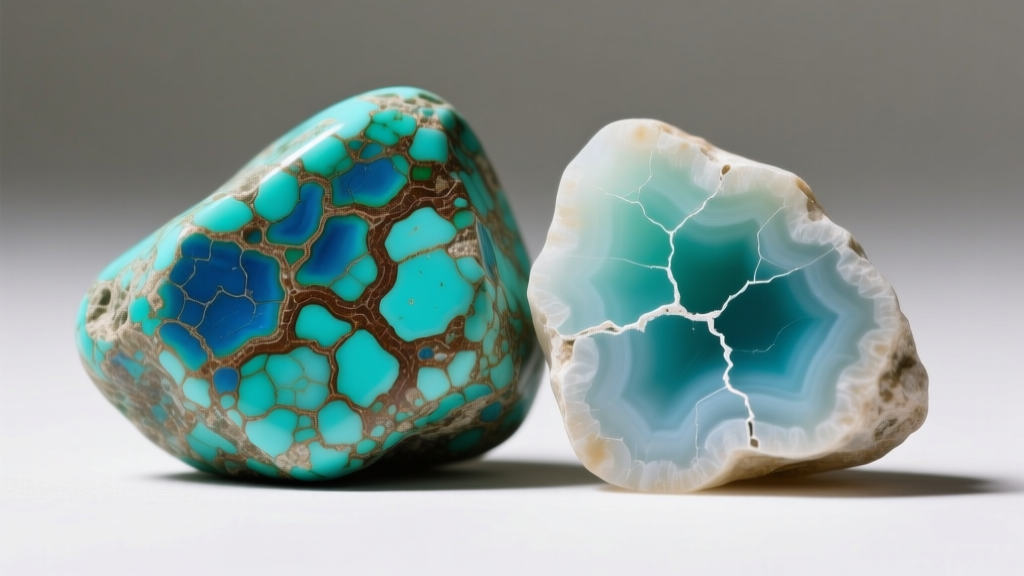
Authenticity Checks: Avoiding Dyed Howlite and Magnesite
As the price of genuine turquoise skyrockets, the market has been flooded with dyed howlite and magnesite. These are naturally white, porous stones that are pressure-injected with synthetic blue dyes to mimic turquoise. Because howlite has a Mohs hardness of 3.5 (softer than turquoise), it is prone to scratching and rapid degradation when worn against the skin.
As a domain expert, I recommend two non-destructive field tests before purchasing a vintage or estate turquoise jewelry necklace:
- The Acetone Swab Test: Dip a cotton swab in pure acetone (nail polish remover) and rub it vigorously on an inconspicuous area of the stone, such as the back of the cabochon or a deep matrix crevice. If the cotton turns blue, the stone is dyed. Natural turquoise will not bleed color onto a swab.
- The Magnification Matrix Check: Using a 10x jeweler's loupe, examine the dark matrix lines. In natural turquoise, the matrix is either flush with the surface or slightly recessed, and the color boundary between the blue stone and the black/brown host rock is sharp and distinct. In dyed howlite, the dye is absorbed unevenly; you will notice 'color pooling'—darker concentrations of blue dye trapped inside the microscopic cracks and veins of the artificial matrix.
"The most critical error a collector can make in 2026 is assuming that a flawless, vivid blue stone with black matrix is natural and cheap. If the price does not align with the scarcity of the Kingman or Royston mines, you are almost certainly looking at pressure-dyed magnesite." — Senior Gemologist Appraisal Notes, 2025-2026.
Final Verdict: Investing in Turquoise for 2026 and Beyond
The turquoise jewelry necklace has successfully transcended its historical stereotypes, cementing itself as a vital component of modern, high-end jewelry wardrobes. For the serious collector, the strategy for 2026 is clear: prioritize traceable origins, demand full transparency regarding stabilization methods like the Zachery process, and invest in minimalist, high-karat gold settings that protect the stone while highlighting its natural geological imperfections. Whether you are drawn to the pristine, unblemished blue of a closed-mine Sleeping Beauty or the rugged, pyrite-laced web of a Kingman cabochon, a well-chosen turquoise pendant is both a masterclass in earth science and a timeless style anchor.


